What To Wear On A Rotorua Helicopter Flight
The operator's checklist for Rotorua flights is short: camera, sunglasses, a jacket, and closed-toe comfortable footwear for flights with landings. Everything else on a packing list is a decision about layers, fit and season.
Short answer
Bring a camera, sunglasses and a jacket on every Rotorua flight, and wear closed-toe comfortable footwear on any flight with a landing, such as the Mt Tarawera summit walk, from NZ$675 per person. Dress in fitted layers you can adjust, skip loose items that could blow around, and check in 30 minutes before helicopter departures.
Clothing on a Rotorua flight comes down to a short checklist published by the operator: bring a camera, sunglasses and a jacket, and wear closed-toe comfortable footwear on any flight with a landing. The rest of a packing decision is about fit, layers and the season, because a 15-minute lake circuit and a 3-hour dual-landing expedition put very different demands on the same wardrobe. For a broader run-through of the flying day itself, start with the Rotorua helicopter ride planning overview.
| Quick Fact | Detail |
|---|---|
| Operator checklist | Camera, sunglasses, a jacket; closed-toe comfortable footwear for flights with landings |
| Base and check-in | Lakefront, 1 Lakefront Drive, Rotorua; 30 minutes prior for helicopters, 20 for floatplanes |
| Landing flights | Mt Tarawera summit walks and Orakei Korako visits call for sturdy closed-toe shoes |
| Example price | Helicopter Landing, Guided Summit Walk, from NZ$675 per person |
| Cancellation | Free cancellation up to 24 hours before departure on the trips covered here |
| Season | Operates all months of the year, daylight hours |
What To Wear On A Helicopter Flight: The Core Answer
The core answer is a short one: fitted layers, a jacket, sunglasses, a camera, and closed-toe comfortable footwear whenever the itinerary includes a landing. That checklist comes from the operator's own FAQ, which asks guests to bring exactly those items and to wear closed-toe shoes on landing flights. Nothing exotic is required, and nothing on the official list needs to be bought new for a single flight.
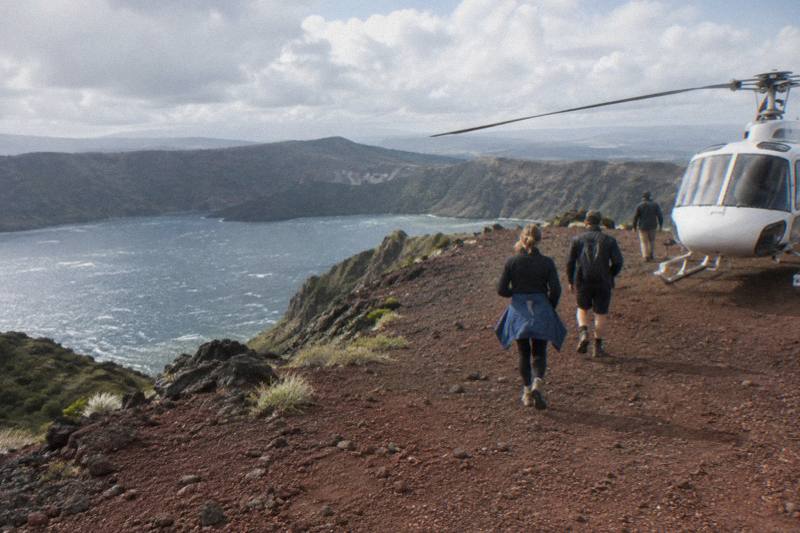
The reason footwear is singled out is the landing itself. On the Mt Tarawera summit flights, passengers step out of the aircraft onto volcanic terrain for a guided walk, and the operator's landing page describes a 15 minute guided walk on the summit after touchdown. Volcanic rock is rough, loose in places and unforgiving on thin soles, so a shoe with a closed toe and a grippy sole does real work. The same logic applies to the Orakei Korako landing flights, where the walk crosses a geothermal field reached by a short ferry ride from the lake shore.
Layers matter for a different reason. The cabin of a light helicopter or floatplane is neither heated like a car nor sealed like an airliner, and flights move from a warm lakefront to cooler air within minutes of takeoff. A t-shirt under a zip-up midlayer under a jacket gives three settings without bulk. Fitted beats baggy: loose hems and flapping sleeves are awkward around seatbelts, headsets and door frames, and the operator's safety briefing asks passengers to stay seated and secured throughout.
Two trips show how differently the same checklist scales. The "Helicopter Landing, Guided Summit Walk" flight, from NZ$675 per person, pairs a short flight with that summit walk, so shoes carry the day. The "Crater Lakes By Helicopter, 15 Minutes" flight never lands, so the footwear rule relaxes even if the layers advice does not. Deciding which of those two days you are dressing for answers most of the wardrobe questions before they come up.
Layers: How To Dress For The Cabin And The Summit
A three-layer approach works for almost every Rotorua flight: a fitted base layer against the skin, a midlayer such as a fleece or zip-up that can come off in the cabin, and a wind-resistant outer jacket that stays on from check-in to disembark. The operator's FAQ explicitly lists a jacket among the items to bring, which is the strongest signal that a single layer is rarely enough, even in a Rotorua summer.
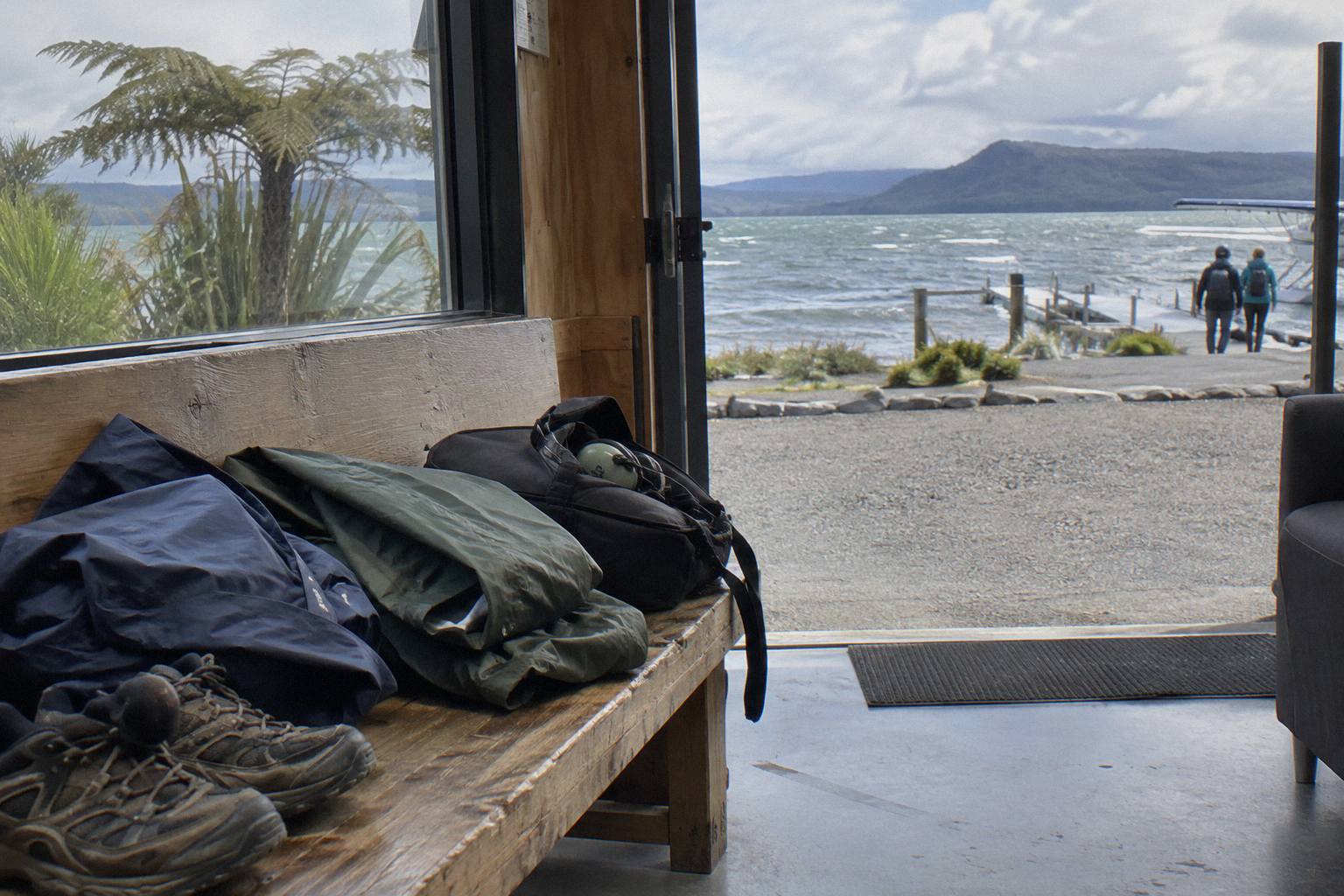
The jacket earns its place on the checklist for the moments either side of the flight. Waiting at the Lakefront pier before a floatplane departure, standing on the summit of Mt Tarawera after a helicopter landing, or walking the boardwalks at Orakei Korako all involve still air and exposure that a t-shirt alone does not cover. Because the flights operate in daylight hours all year, a winter booking and a summer booking can share an itinerary and still feel like different planets on the ground.
Midlayers should be things you can remove while strapped in. A half-zip fleece or a light merino layer slips off over the head restraints without a struggle, and it packs flat into a small day bag stowed at check-in. Avoid long trailing scarves and loose shawls, which the rotor wash at the pad can lift, and avoid hooded layers with long drawstrings that can catch on latches and headsets. A beanie or a snug cap is a better head solution than anything that flaps.
Fabric choice is a small decision with a long tail. Synthetic and merino layers keep working if a passing shower dampens a sleeve on the walk to the aircraft, while cotton holds moisture and feels colder for longer afterwards. Long trousers beat shorts for landing flights, not for warmth alone but for the volcanic ground itself, which scrapes and dusts. Dark colours show less of the fine grey ash that a Tarawera landing can leave on clothing.
Among the landing flights, the trio below covers the range of commitment: a short summit walk, a pure volcano landing, and a full one-hour volcanic adventure. Dress for the longest of them and the shortest becomes easy.
Footwear: Why Closed-Toe Shoes Matter For Landing Flights
Closed-toe comfortable footwear is the operator's stated requirement for flights with landings, and volcanic terrain is the reason. Mt Tarawera's summit surface is broken rock along the 8 km of rift the flight wording describes, and Orakei Korako adds boardwalks, geothermal ground and a boat transfer to the mix. A sturdy walking shoe or light trail shoe with grip handles all of it; sandals, heels and smooth-soled sneakers do not.
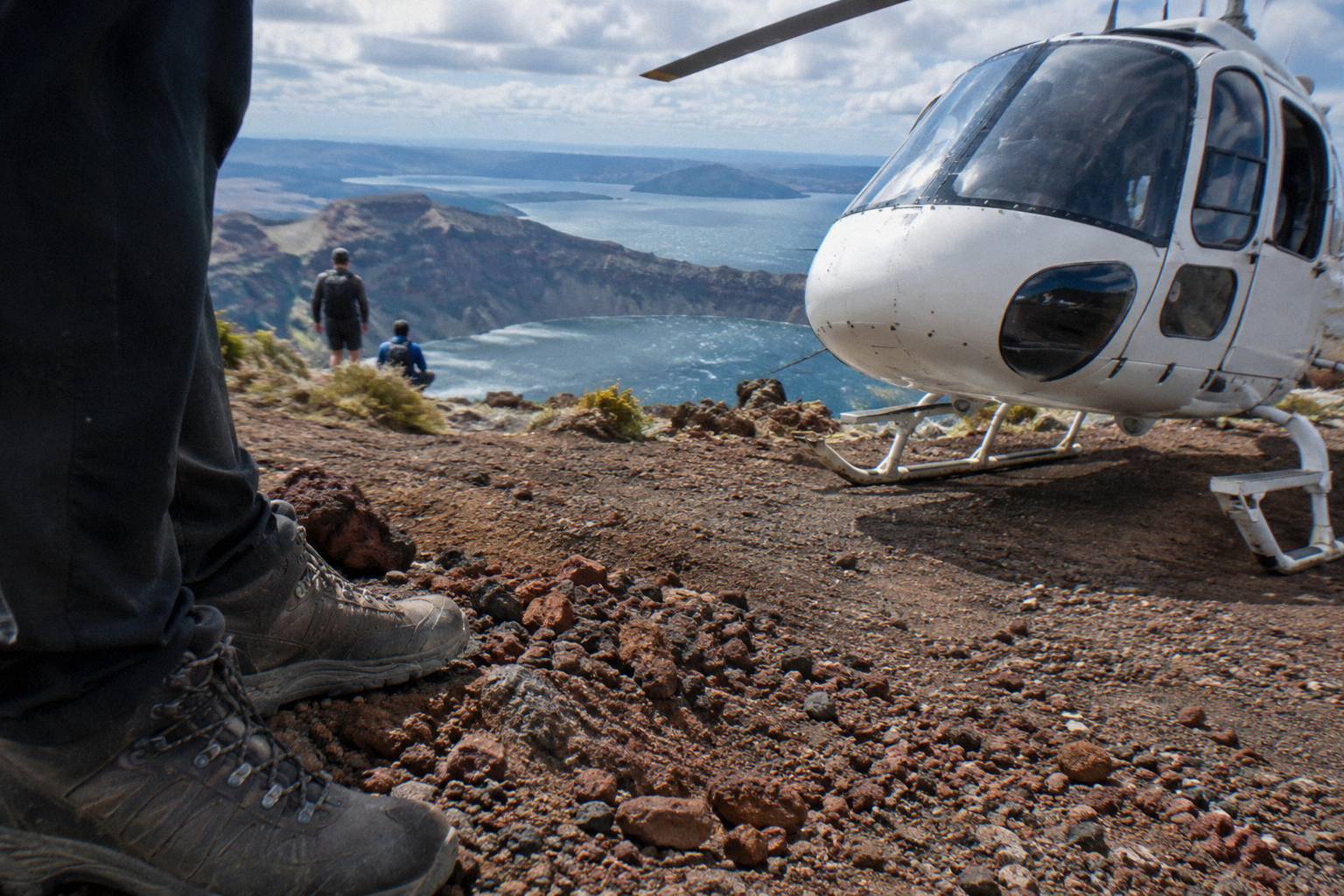
The rule deserves weight because the landing is the part of the day most worth being ready for. On the featured "Helicopter Landing, Guided Summit Walk" flight, the walk on the summit is guided and short, described by the operator as 15 minutes, but it is on the mountain itself. Shoes that hold the ankle a little and grip a lot turn that quarter hour from careful shuffling into comfortable looking around. The operator's FAQ asks for closed-toe comfortable footwear on landing flights specifically, so this is guidance with an operator's name on it, not internet folklore.
Floatplane passengers need the same thinking at Orakei Korako. The "Floatplane, Orakei Korako Landing" flight, from NZ$845 per person, touches down on the Waikato River, and the park side of the visit involves a ferry crossing and geothermal tracks where the surface changes underfoot every few hundred metres. Wet timber boardwalk near hot springs is a classic slip hazard, and a shoe with tread is the cheap insurance. The park's geothermal field is reached only by boat from the visitor centre side, so footwear that can handle a small vessel's steps matters too.
One caveat belongs here rather than repeated later: a landing is never guaranteed. The operator's own terms say excursion landings are undertaken at the passenger's own risk and at the pilot's sole discretion, and that durations and inclusions can vary with weather, volcanic activity and loading. Dress for the landing, and treat it as the plan rather than the promise. More on that trade-off sits in the Mt Tarawera landing decision guide.
Shoes also interact with the weigh-in. Every passenger is weighed on arrival, and clothing weight is part of what the scales see, so heavy boots add a little to the number on the day. That is a rounding error next to the real rule, which is that the declared weight at booking must match: the operator's terms state that a deviation can mean a reschedule, a surcharge or a cancelled booking. Wear the boots if the itinerary needs them; declare weight in them from the start.
Accessories: Sunglasses, Cameras And Headgear
Sunglasses and a camera are on the operator's checklist for every flight, and headgear is the one accessory category to treat with care. A securely fitted cap or beanie is fine; loose hats are not, because the air around a running aircraft moves hard enough to lift them into a hazard. Skip dangling earrings, long necklaces and anything that fights the headset that every passenger wears for the whole flight.
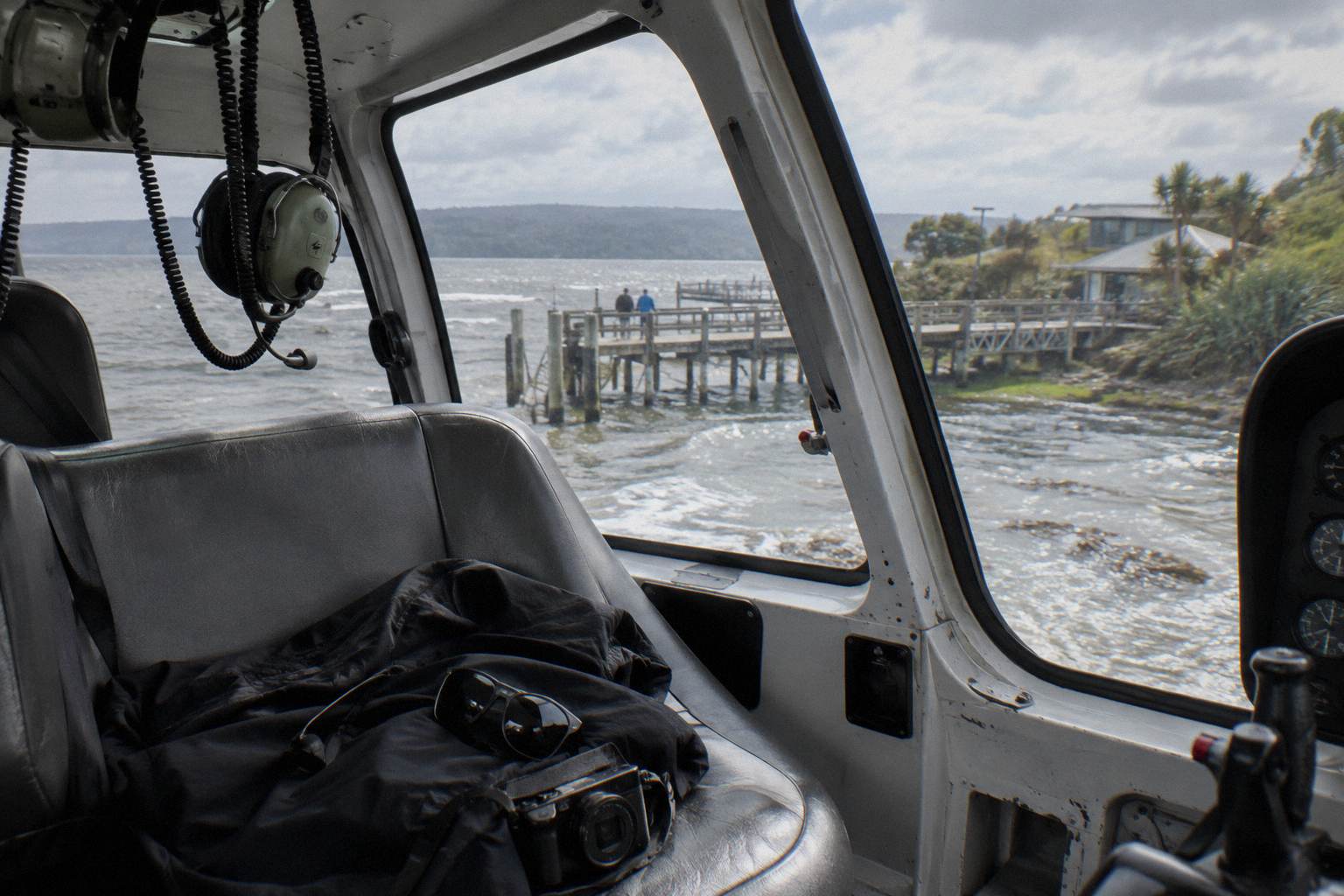
Sunglasses earn their slot through glare, not fashion. Flights over the crater lakes chain pass bright water surfaces on lakes Tarawera, Okataina, Okareka, Rotomahana, Rotokakahi and Tikitapu, and low sun over a lake can be brutal on unprotected eyes for a full circuit. Polarised lenses have one quirk worth knowing: they can darken or rainbow some aircraft window plastics, so a non-polarised backup pair or a quick test against the window in the first minute saves squinting for the rest of the flight. The operator lists sunglasses for all flights, and the lake circuit explains why.
Cameras are explicitly welcome, which is not true everywhere in aviation. A camera with a wrist strap or a small neck strap is the practical choice, because hands get busy with seatbelts, headsets and the door frame at boarding. Phones are fine in a zipped pocket. The photography angle, from window choice to settings, is covered in full in the helicopter flight photography guide, so the clothing-side advice is simple: wear clothes with a zip pocket, because a phone in an open side pocket has a short life expectancy near an open cabin door.
Bags are the accessory to leave behind. Small items go with you to the cabin if the crew allows, but the clean answer is to travel with pockets rather than a handbag or backpack, and to leave anything larger in a vehicle or with a non-flying companion at the Lakefront base. Jewellery that jangles against the headset cable, heels that mark the aircraft floor, and vapour devices of any kind are all better left on the ground. The operator's FAQ keeps a short what-to-bring list deliberately, and it does not grow to fit bulky extras.
Headsets are issued on board and worn by everyone, and that single fact shapes hair and hat choices. A low ponytail or a braid sits comfortably under a headset band; a high bun fights it. Long hair loose in an open-door moment is unpleasant at best. A fitted cap worn backwards usually coexists with a headset; a wide-brimmed sun hat does not. None of this is a rule from the operator; all of it is comfort arithmetic that anyone who has worn a headset for an hour already knows.
| Item | Bring It Or Leave It | Why |
|---|---|---|
| Sunglasses | Bring | Glare off the crater lakes on every circuit |
| Camera with strap | Bring | On the operator's checklist; straps keep hands free |
| Jacket | Bring | Pier waits, summit stops and pier spray |
| Closed-toe shoes | Wear on landing flights | Operator guidance for volcanic and geothermal terrain |
| Loose hat or scarf | Leave | Rotor wash and open doors lift anything unsecured |
| Backpack or handbag | Leave in a vehicle | Cabin stowage is minimal, hands stay busy |
Seasonal Clothing Choices For Rotorua Flights
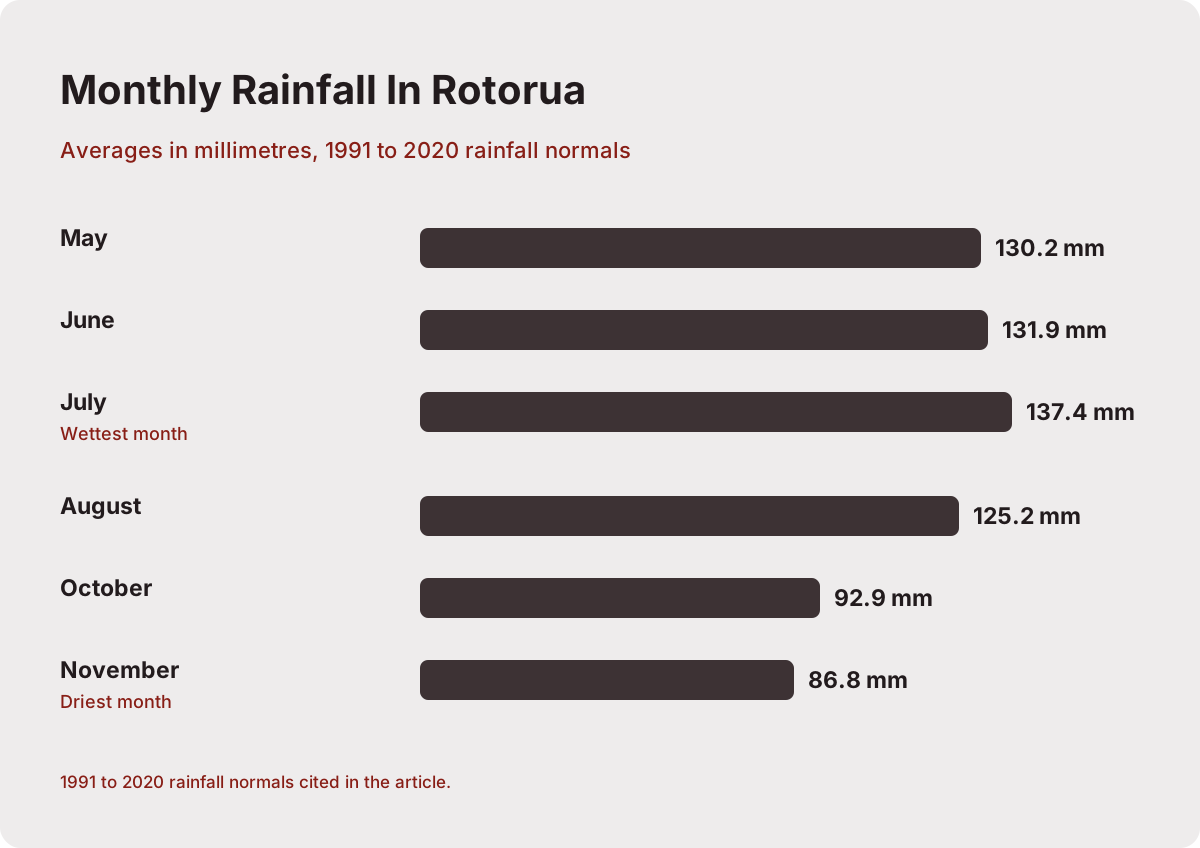
Rotorua flights run in every month of the year during daylight hours, so the clothing answer bends with the season rather than breaking. Rotorua's driest and warmest stretch runs from late spring in October to early autumn in April, and July is the wettest month on the 1991 to 2020 rainfall normals at 137.4 mm, with November the driest at 86.8 mm. Layers solve both ends: a light setup in summer, a serious jacket from May to September.
The monthly rainfall figures deserve a place in a clothing article because they are the one dataset that turns "bring a jacket" from a reflex into a forecast. The winter half-year runs wet: May averages 130.2 mm, June 131.9 mm, July 137.4 mm and August 125.2 mm, while October sits at 92.9 mm and November at 86.8 mm. Rain on a scenic flight day usually means cloud, and cloud means the flight may be rescheduled rather than flown, since the operator's own weather wording says flights do not go ahead if it is not safe or the views cannot be seen. Clothing plans should include a plan B date, and the Rotorua helicopter weather guide works through that in detail.
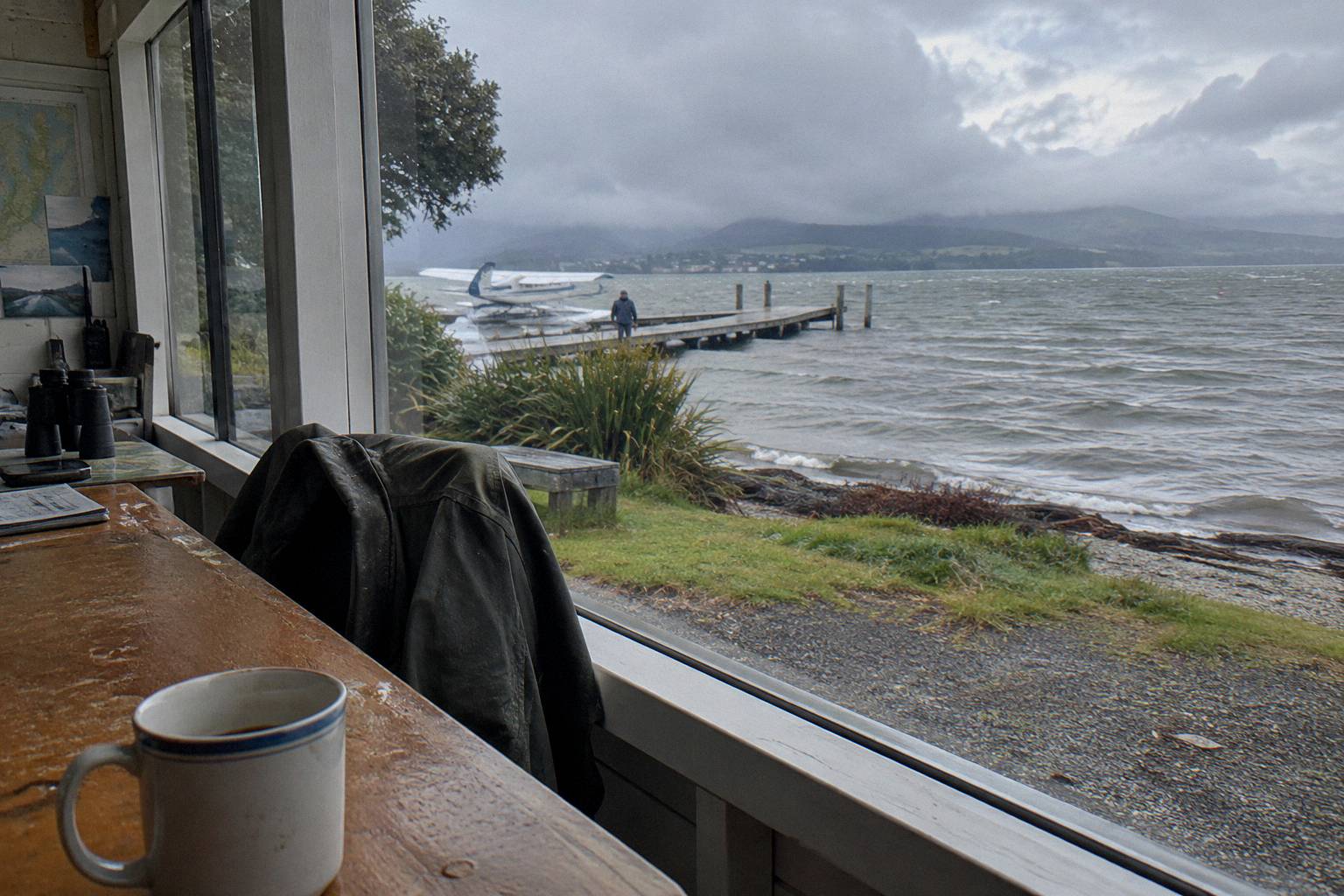
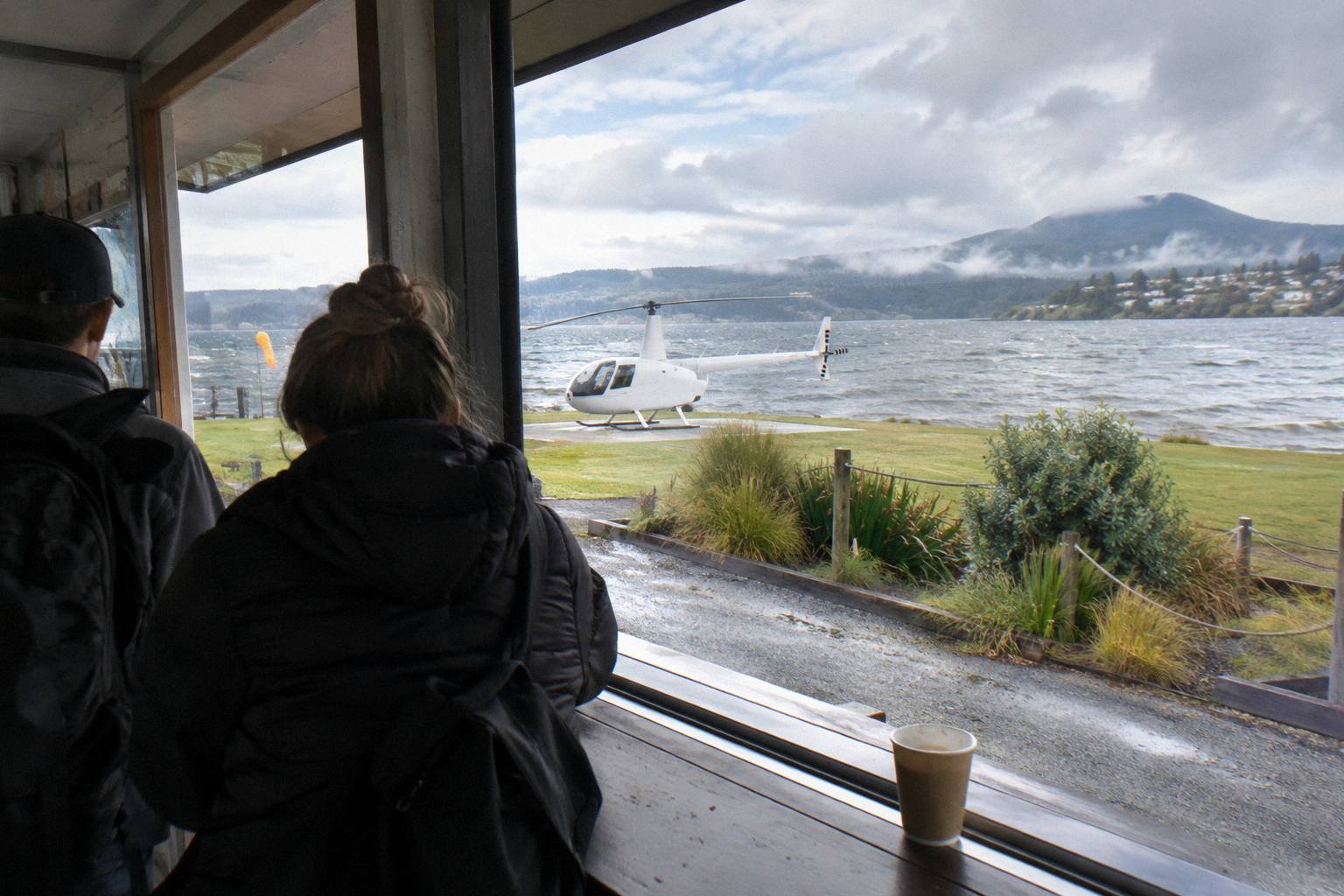
Season also changes the landing experience more than the flight. A summer Tarawera landing means sun-exposed rock and warmth on the summit; a winter one means cold wind on the same surface, and the summit of the mountain stands 1,111 m high, high enough that the ground temperature at touchdown sits below whatever the lakefront thermometer said. Gloves and a warm hat stop being optional somewhere around June. In the warm months, sun protection rises up the list instead: sunscreen before boarding, sunglasses on, and a shirt that covers shoulders for the walk. The wider set of guides lives on Rotorua Helicopter Tours.
| Season | Months That Shape It | Clothing Emphasis |
|---|---|---|
| Late spring to early autumn | October to April | Light layers, sun protection, sunglasses, a packable jacket |
| Autumn shoulder | April to May | Midlayer plus jacket, long trousers, tread for damp tracks |
| Winter | June to August | Warm hat, gloves, serious outer layer, booked with date flexibility |
| Early spring | September to October | Layers again, waterproof outer, shoes that handle wet boardwalks |
One seasonal habit is worth building whatever the month: keep the flight outfit ready the night before. Check-in for helicopters is 30 minutes prior at the Lakefront office, and for floatplanes 20 minutes, measured from the moment the safety briefing starts, not from wheels-up. Arriving flustered and re-dressing in the car park is a self-inflicted problem, and it is the one part of the clothing question with a hard clock attached.
What To Wear On Floatplane Flights From Lake Rotorua
Floatplane passengers should plan for water contact at both ends, because these flights take off from and land on Lake Rotorua itself, from the lakefront pier. The operator runs floatplane variants of the crater lakes flight and the Orakei Korako landing, and the practical clothing read is waterproof-adjacent: shoes that do not mind a wet pontoon step, a jacket that shrugs spray, and nothing that turns a damp hem into a ruined day.
The floatplane fleet shares the Lakefront base with the helicopters, but the surfaces differ. Boarding means stepping onto a pontoon or float at the waterline, where everything is at least damp and occasionally actively wet. A shoe with grip and a closed toe handles the step down and the step off; a smooth sole on a wet float is the single most avoidable slip in the whole flying day. The "Crater Lakes By Floatplane, 15 Minutes" flight keeps the exposure brief, while the "Floatplane, Waimangu Included" flight, from NZ$1,230 per person, spends around 2 hours between lake takeoff, the flight over Tarawera and Waimangu and the return, so comfort over that span matters.
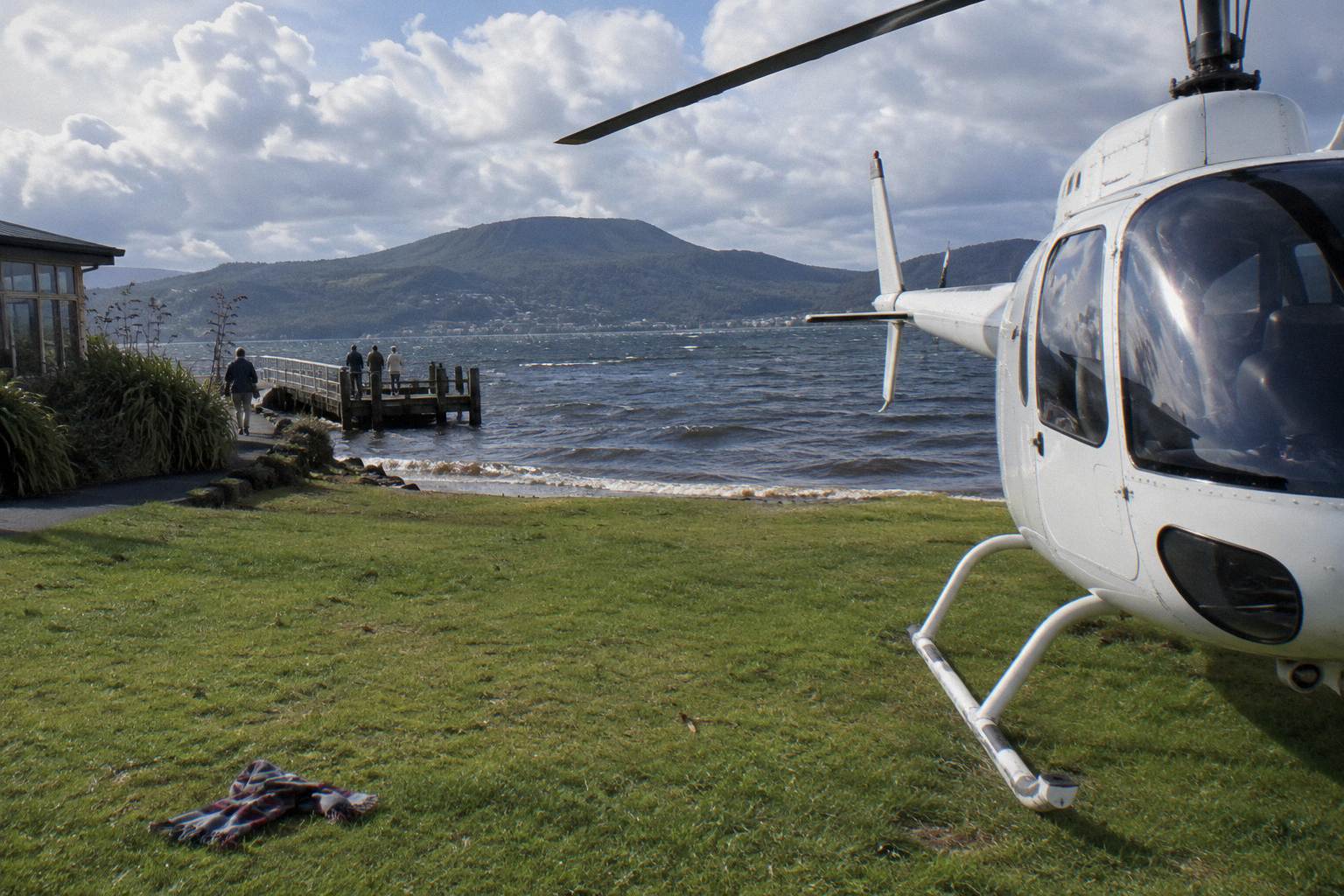
Wind on the pier is the floatplane's second clothing factor. Departures and arrivals generate spray and moving air at the water's edge, and a jacket with a collar does more work there than in the sheltered helicopter pad. Sunglasses stay on the checklist for the same reason as on the helicopter side: the climb out often circuits Mokoia Island, which the operator describes as a native bird sanctuary, across open bright water. The lake district the floatplane crosses is the same chain of crater lakes, so the glare logic is shared.
For flights that land at Orakei Korako by floatplane, the wardrobe is a hybrid. The river landing on the Waikato side, the ferry crossing to the geothermal field, and the walking tracks together ask for one outfit that can do boat, boardwalk and volcanic gravel. That is less intimidating than it sounds: a pair of worn-in trail shoes, long trousers, a midlayer and a light shell cover all three. The park reaches from a boat that leaves on request rather than a timetable, so there is standing-around time at the jetty too, another argument for the jacket.
Weight rules apply identically across both aircraft types, so the same declared-at-booking discipline covers the whole line-up. Children of all ages are welcome, with under 2s on a lap and child rates for ages 2 to 11, which means family floatplane outfits are just scaled-down versions of the adult answer: layers, closed toes, one jacket each. The family side of the decision, from lap infants to which flight suits which age, is unpacked in the helicopter flights for families guide.
Clothing Rules For Children And All Ages
Children follow the adult checklist at smaller sizes: layers, closed-toe shoes on landing flights, sunglasses and a jacket, with under 2s flying on a parent's lap and ages 2 to 11 on child rates. All ages are welcome on Volcanic Air flights. The operator asks that infants and small children be dressed so they can be secured quickly, and the practical version of that is simple clothing with no loose ties, hoods or scarves.
The lap-infant detail changes the outfit more than it first appears. A child under 2 shares an adult's belt and body heat for the flight, so the adult's layers become the child's climate: the adult jacket should be sized so it can wrap or fasten around both, and the child needs a warm hat, since heads lose heat fastest and the child is the one not moving. On a 15-minute lake circuit that is comfort; on a 40-minute Tarawera expedition with a summit walk it is the difference between a memory and a mission. The minimum-fare structure on the Tarawera landing flights, 2 adult fares with children aged 2 to 11 at 75% of the adult fare, means family bookings are usually at least this substantial.
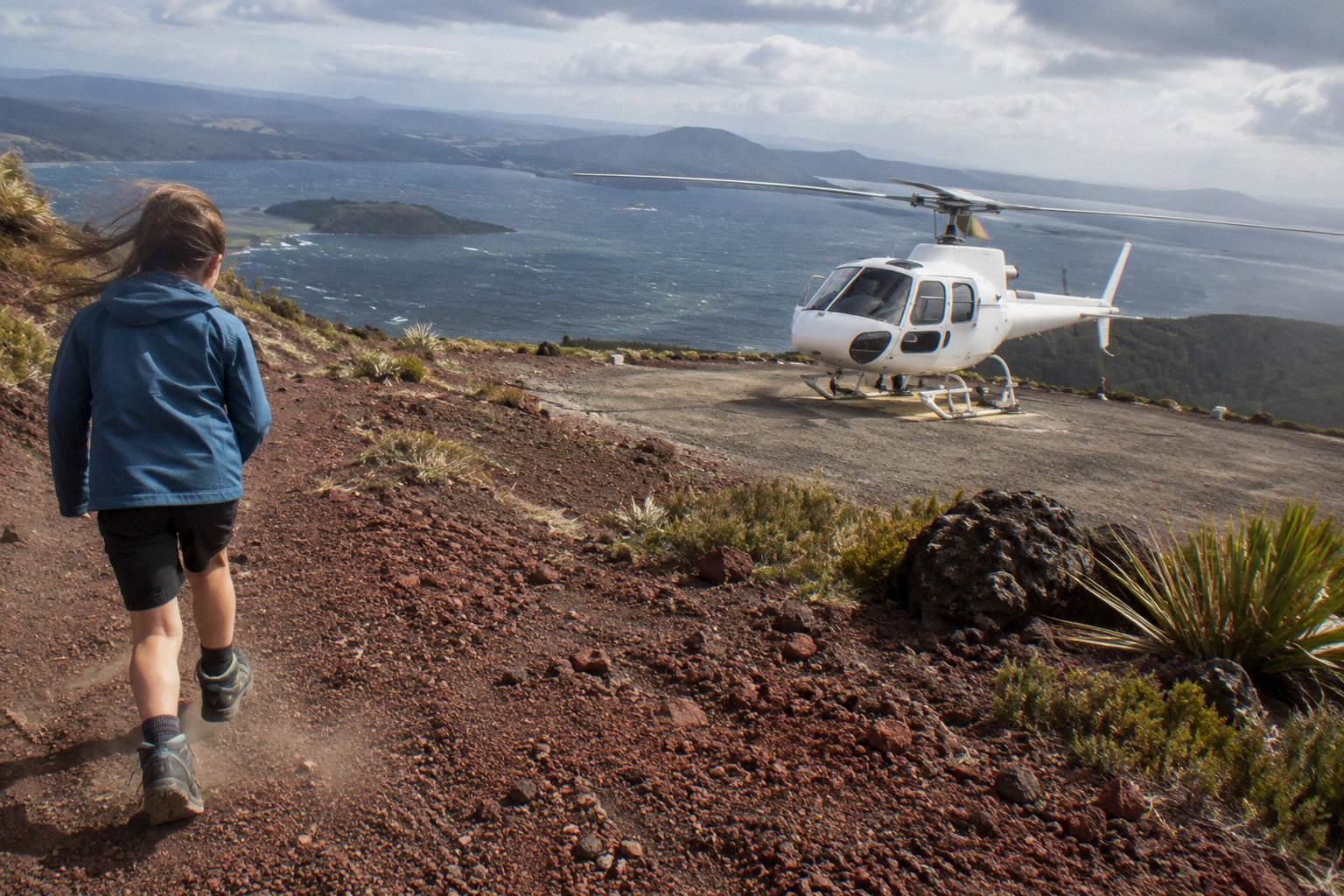
Footwear for children is the same rule, strictly enforced by the same rock. A child in sandals on the Tarawera summit walks the same volcanic surface as the adults, and the operator's closed-toe guidance does not carry an age exemption. Trail shoes or sturdy sneakers that are already broken in are ideal; new stiff boots bought for the trip tend to end the walk early. Socks matter more than they get credit for, since fine volcanic dust works its way into every shoe, and a spare pair in the car is a small kindness on the drive back.
Cold-weather family flights add one more layer of planning. Winter morning departures are the calmest flying window, the operator's FAQ notes mornings often give the calmest weather and smoothest flying, and that is also the coldest hour at the lakefront. Dress children one layer warmer than the adults, plan for a wait at check-in, and keep gloves where they can be reached rather than at the bottom of a bag. Snacks belong before check-in, not in the cabin, and the operator's short bring-list leaves no room for a picnic.
Common Mistakes People Make With Flight Clothing
The recurring clothing mistakes are loose items that blow, footwear chosen for the cabin rather than the landing, under-dressing for the summit, and declaring a weight that the check-in scale disagrees with. Each one is avoidable with a five-minute wardrobe pass the night before. The operator's terms make the weight point binding: a declared weight that drifts can mean a reschedule, a surcharge or a cancelled booking at the operator's sole discretion.
The first mistake is the loose-item trap. Hats without a firm fit, scarves, trailing straps and unzipped jackets all meet moving air at the pad, and the aircraft's own environment adds doors, headsets and harnesses that catch anything floppy. The fix is boring and total: fitted layers, zips done up, hair tied low, nothing in an open pocket. The second is the footwear miss, usually sandal-season optimism on a landing itinerary. The summit walk is short, but it is on broken volcanic ground, and it follows a flight in which the shoes were irrelevant; the shoes are for the middle part, not the flying part.
The third mistake is under-dressing the top half. The lakefront can be warm while the summit air is not, and passengers who dressed for the departure point spend the landing portion hunched and hurry-along. The jacket on the operator's checklist is the hedge against exactly that gap. The fourth is the weight declaration, which is clothing-adjacent but real: the operator's FAQ asks for individual weights at booking so seating stays balanced, passengers are weighed on arrival, and clause 1.17 of the terms adds that over 110 kg a surcharge may apply and over 135 kg as weighed requires two adult fares. Heavy boots belong in the declared number if they will be on the scale.
| Mistake | Why It Bites | The Fix |
|---|---|---|
| Loose hat or scarf | Rotor wash and cabin doors catch anything unsecured | Fitted cap or beanie, hair tied low |
| Sandals on a landing flight | Volcanic rock scrapes and dusts bare feet | Closed-toe walking shoes with grip |
| No jacket on a warm morning | Summit and pier are colder than the lakefront | Packable wind layer, always |
| Under-declared weight | Reschedule, surcharge or cancellation at the operator's discretion | Declare with boots and camera included |
| Everything in a backpack | Cabin stowage is minimal and hands stay busy | Zip pockets, bag left with a companion |
The last mistake is scheduling clothing against the clock. Check-in closes into a safety briefing 30 minutes before helicopter departures and 20 minutes before floatplanes, and re-lacing shoes or swapping layers in the car park eats that margin. The outfit decided the night before is the cheapest upgrade available on any of these flights, and it costs nothing but a look at the weather and the itinerary.
One scope note belongs here once: clothing guidance has natural limits, and what a flight day feels like at altitude varies with aircraft, load and weather, none of which an outfit controls. The wardrobe gets you ready; the conditions decide the rest, and the operator's reschedule-and-refund weather terms are the backstop.
Common Questions About Flight Day Clothing
What To Wear On A Helicopter Flight?
Fitted layers with a jacket over the top, sunglasses, and closed-toe comfortable footwear on any flight with a landing. That is the operator's own checklist: camera, sunglasses, a jacket, and closed-toe shoes for landing flights. Long trousers beat shorts where a summit walk is involved.
Do I Need Closed-Toe Shoes If The Flight Does Not Land?
The operator's closed-toe guidance applies to flights with landings. On a scenic-only flight such as the 15-minute crater lakes circuit, comfortable secure shoes of any style work, though tread still helps on the pier for floatplane departures.
Can I Wear A Hat On The Flight?
A snugly fitted cap or beanie is fine and useful on winter summit landings. Loose hats and scarves are a poor choice around rotor wash and open cabin doors, and a low ponytail or braid sits more comfortably under the headset everyone wears.
Should I Bring A Bag For My Jacket And Camera?
Travel with pockets rather than a bag where possible. Cabin stowage is minimal, hands are busy with headsets and harnesses, and anything larger is best left in a vehicle or with a non-flying companion at the Lakefront base.
Does Clothing Count Toward The Weigh-In?
Yes, in practice. Passengers are weighed on arrival and the declared weight from booking must match closely, so heavy boots and layers belong in the number you declare. The operator's terms allow a reschedule, surcharge or cancellation where declared and actual weights diverge.
What Should Children Wear On A Landing Flight?
The same as adults, scaled down: layers, a warm hat, and closed-toe shoes that are already broken in. Under 2s fly on a lap, so the adult jacket should be able to wrap around both, and ages 2 to 11 pay child rates on the Tarawera landing flights.