Mount Tarawera Helicopter Flights With A Crater Landing: What Happens
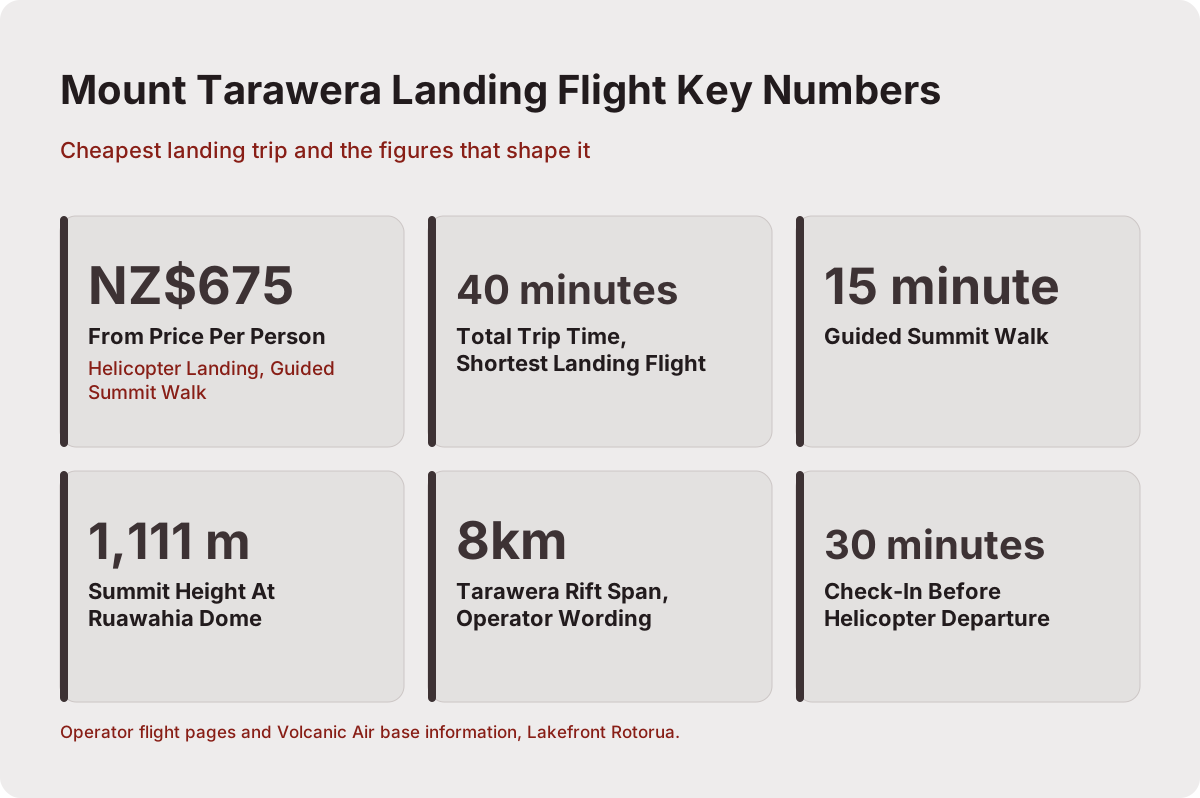
A Mount Tarawera helicopter flight with a crater landing packs a scenic flight over the lakes region, a summit touchdown inside the 1886 rift, and a short guided walk into roughly 40 minutes. Here is what the trip involves, what it costs, and what decides whether the landing itself goes ahead.
Short answer
A Mount Tarawera landing flight departs from the Volcanic Air base at 1 Lakefront Drive, Rotorua, with check-in 30 minutes before departure. The flight crosses lakes Okareka, Okataina and Tarawera, overflies the rift, then attempts a summit landing with a 15 minute guided walk. From NZ$675 per person, and the landing is always at the pilot's sole discretion.
For the wider picture of every operator and aircraft type, see the guide to helicopter rides across Rotorua; if the price is the sticking point, the Mount Tarawera flight cost breakdown covers it in detail.
| Quick fact | Detail |
|---|---|
| Operator | Volcanic Air, flying in the region since 1992 |
| Meeting point | Rotorua City Lakefront, 1 Lakefront Drive, Rotorua 3010 |
| Check-in | 30 minutes before departure for helicopters |
| Flight path out | Lakes Okareka, Okataina and Tarawera |
| Landing | Mt Tarawera summit, 15 minute guided walk, pilot's sole discretion |
| Cheapest landing trip | Helicopter Landing, Guided Summit Walk, from NZ$675 per person |
| Currency | All amounts are New Zealand dollars |
| Cancellation | Free cancellation up to 24 hours in advance on the booking page |
What The Mount Tarawera Landing Flight Actually Involves
The Mount Tarawera Landing Flight is a single loop combining three parts: a scenic helicopter flight over the lakes country south of Rotorua, an overflight of the Tarawera rift and craters, and, when the pilot approves it, a landing on the summit followed by a roughly 15 minute guided walk. Everything starts and ends at the Volcanic Air base on the Lakefront, and the shortest landing flight runs about 40 minutes door to door.
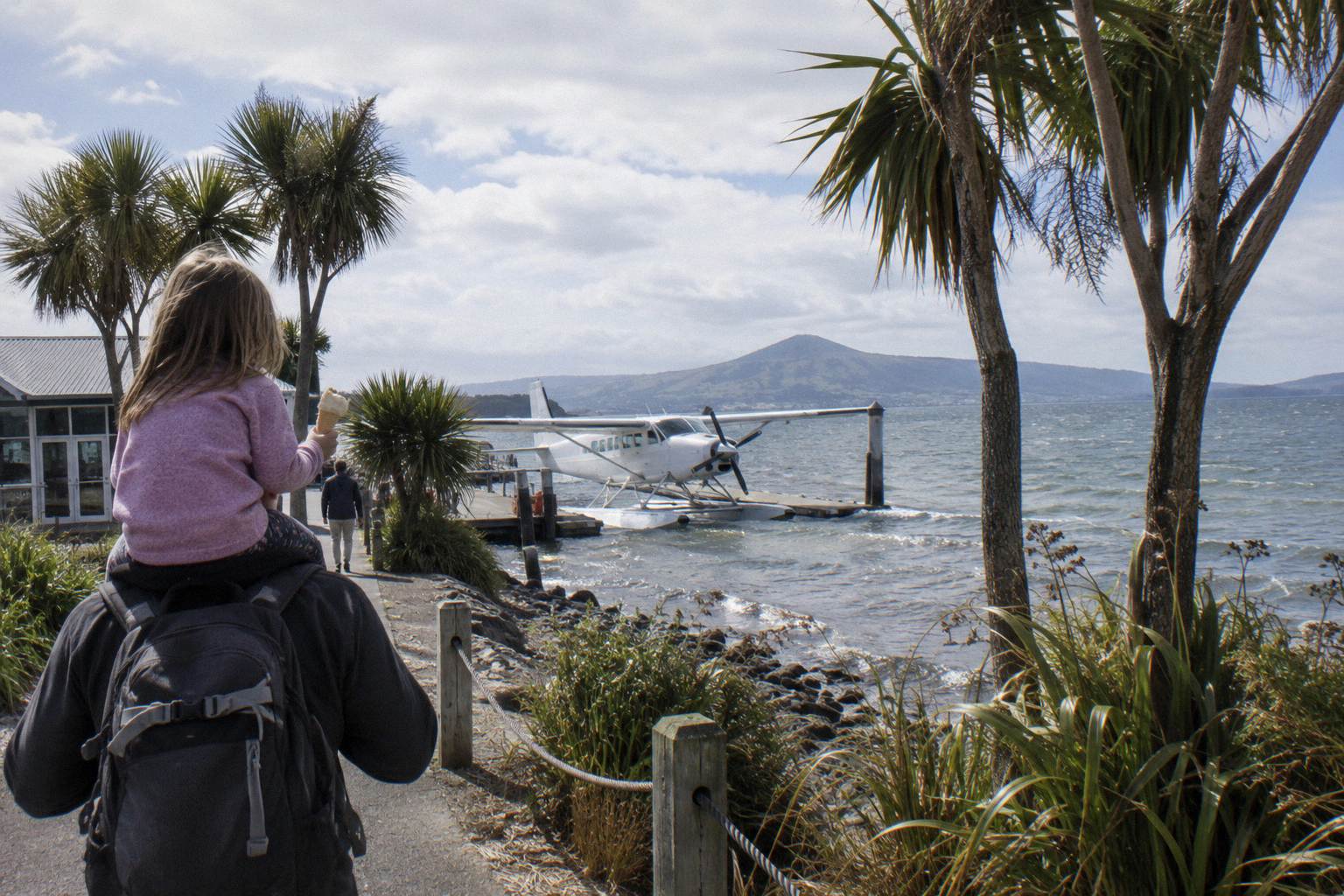
Every booking in the line-up that lands on Tarawera meets at the same place: the Volcanic Air office at Rotorua City Lakefront, 1 Lakefront Drive, less than 1 km from the town centre. Hotel pickup is not part of standard flights, so the walk from most central accommodation is short. On arrival, check in at the office for a full safety briefing; helicopters require this 30 minutes before departure, floatplanes 20 minutes. The briefing covers seating, harnesses and the landing procedure, and it is where passengers are weighed, a step explained further down.
From there the aircraft lifts off the Lakefront pad and tracks southeast. The operator's flight description for the landing tour says the route crosses lakes Okareka, Okataina and Tarawera before reaching the mountain. Volcanic Air's own page for the landing flight describes the overflight as a chance to "fly over Mt Tarawera's 8km rift and craters", that figure being the operator's wording for the span over the mountain itself. The geological rift is longer, 17 km end to end, running across the mountain top, through Lake Rotomahana and into the Waimangu Valley area, and that figure comes from GNS Science rather than the operator.
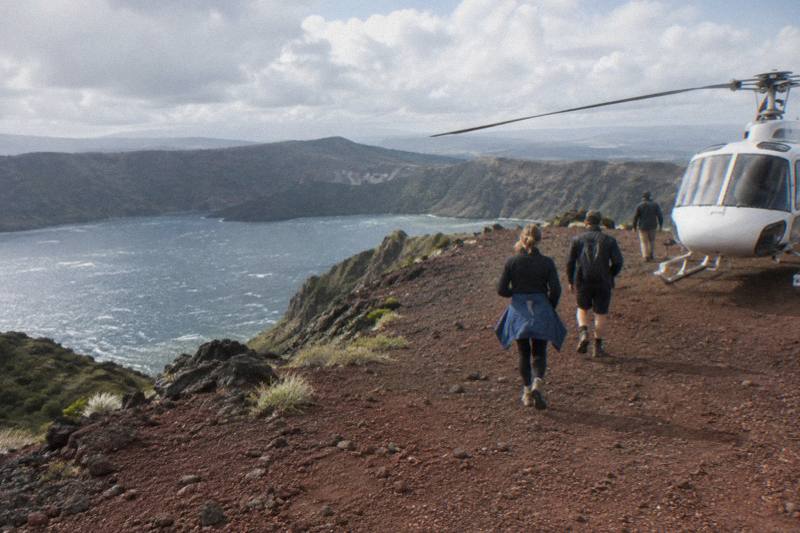
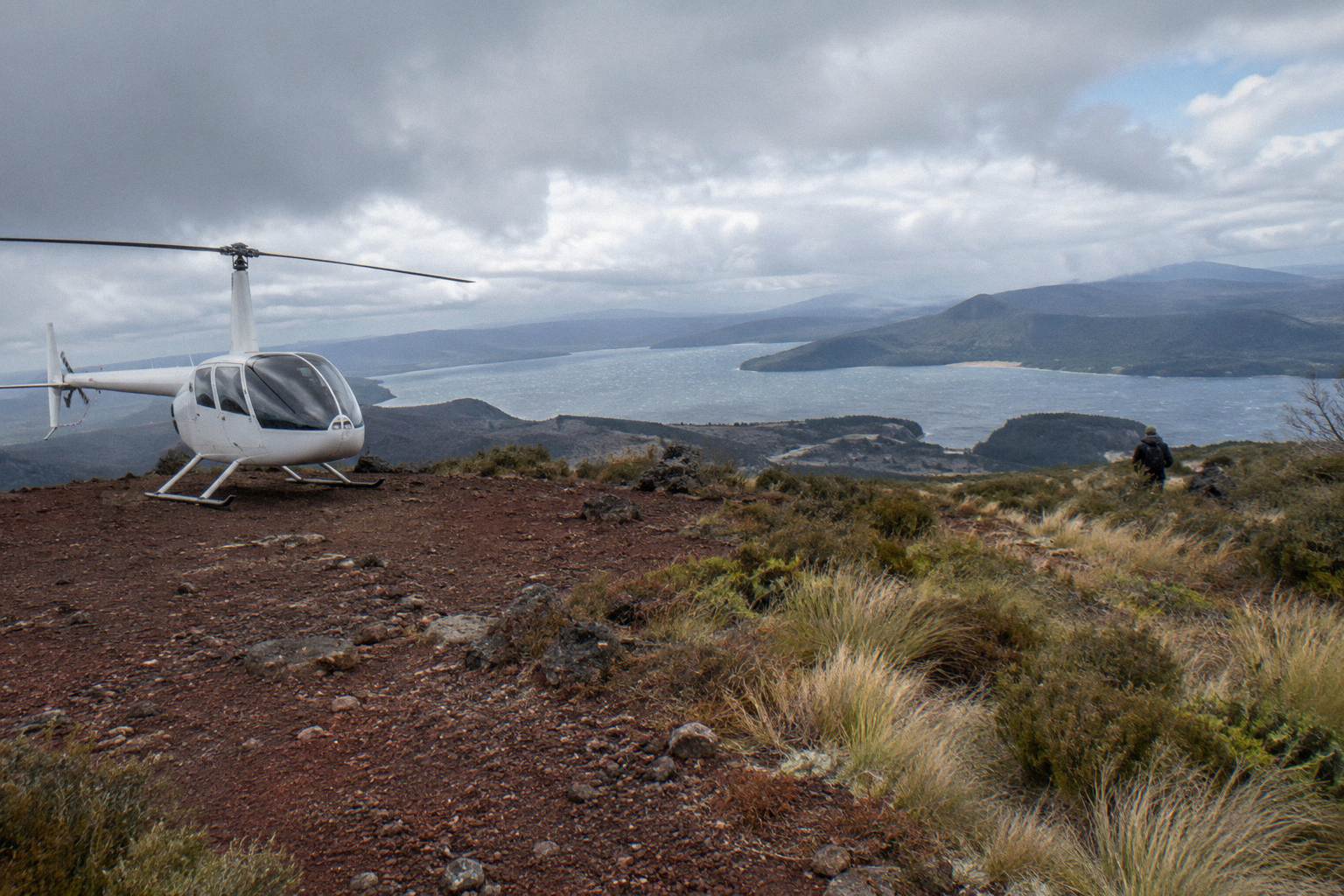
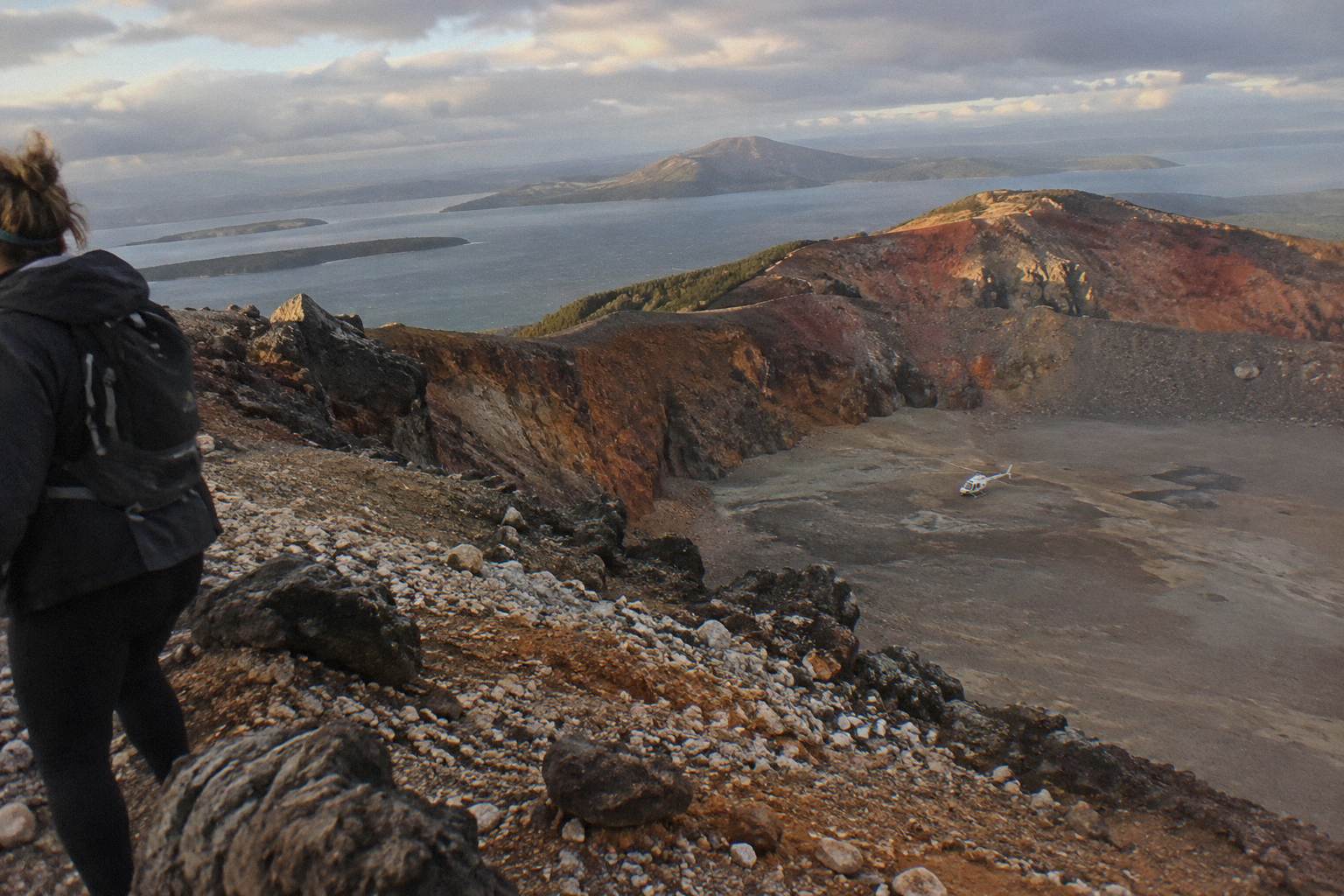
The landing, when it happens, puts the helicopter down on the summit plateau of a mountain that stands 1,111 m at its highest dome, Ruawahia. Passengers step out with the pilot guide for the walk, take in the crater landscape from ground level, then reboard for the return flight. If the pilot judges the conditions unsuitable, the flight continues as an overflight instead, a point the operator states plainly in its own terms.
The Flight Out Over Lakes Okareka, Okataina And Tarawera
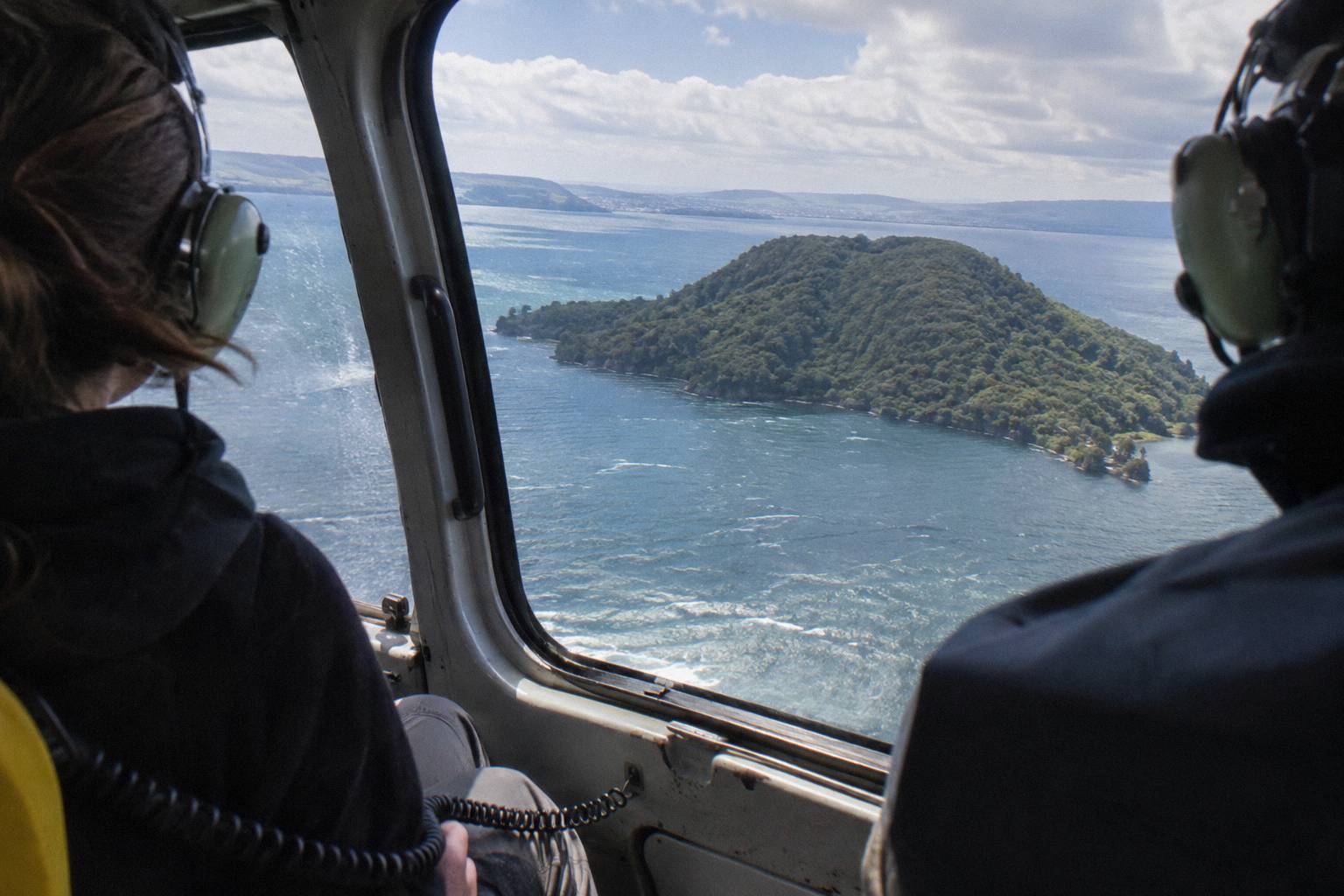
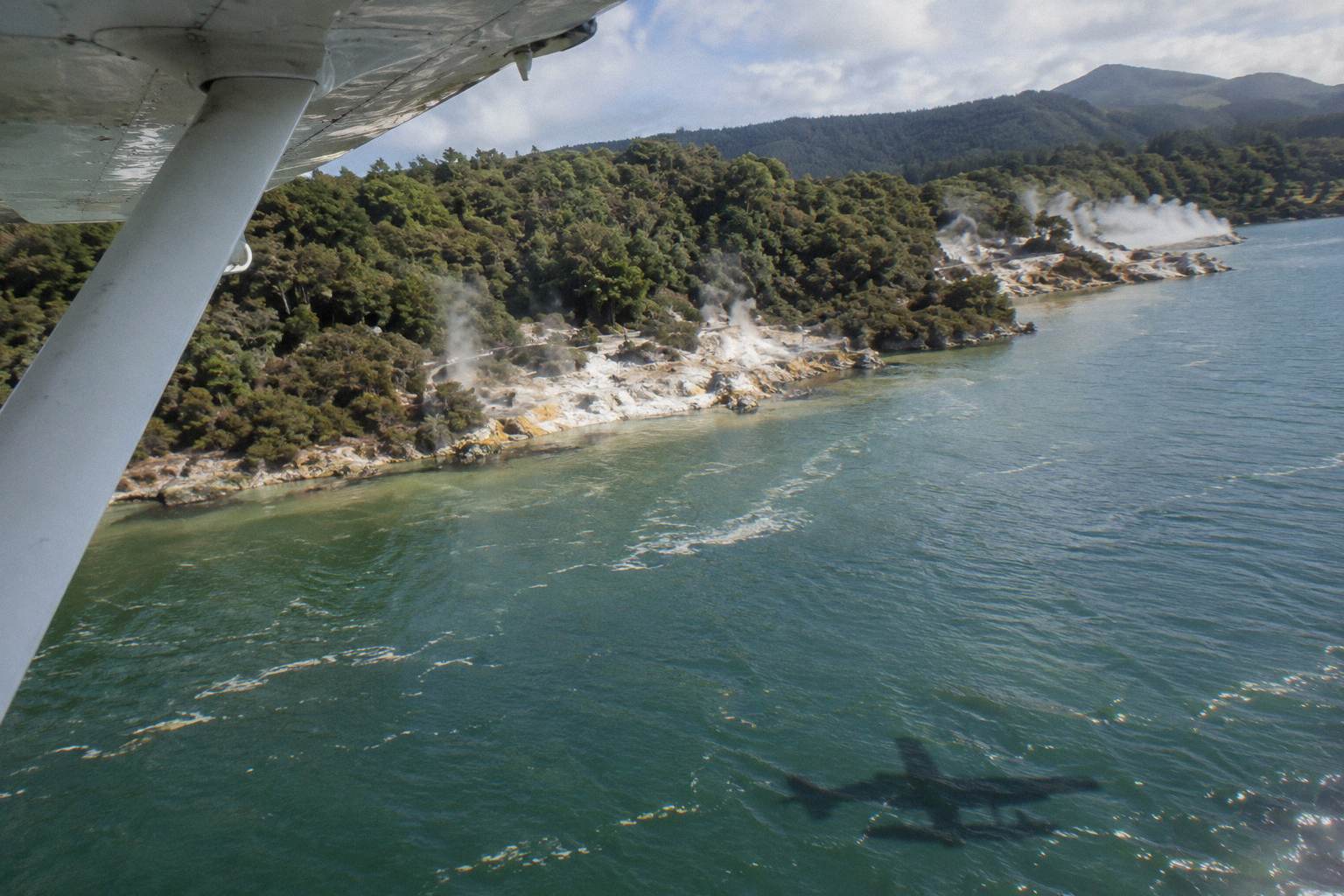
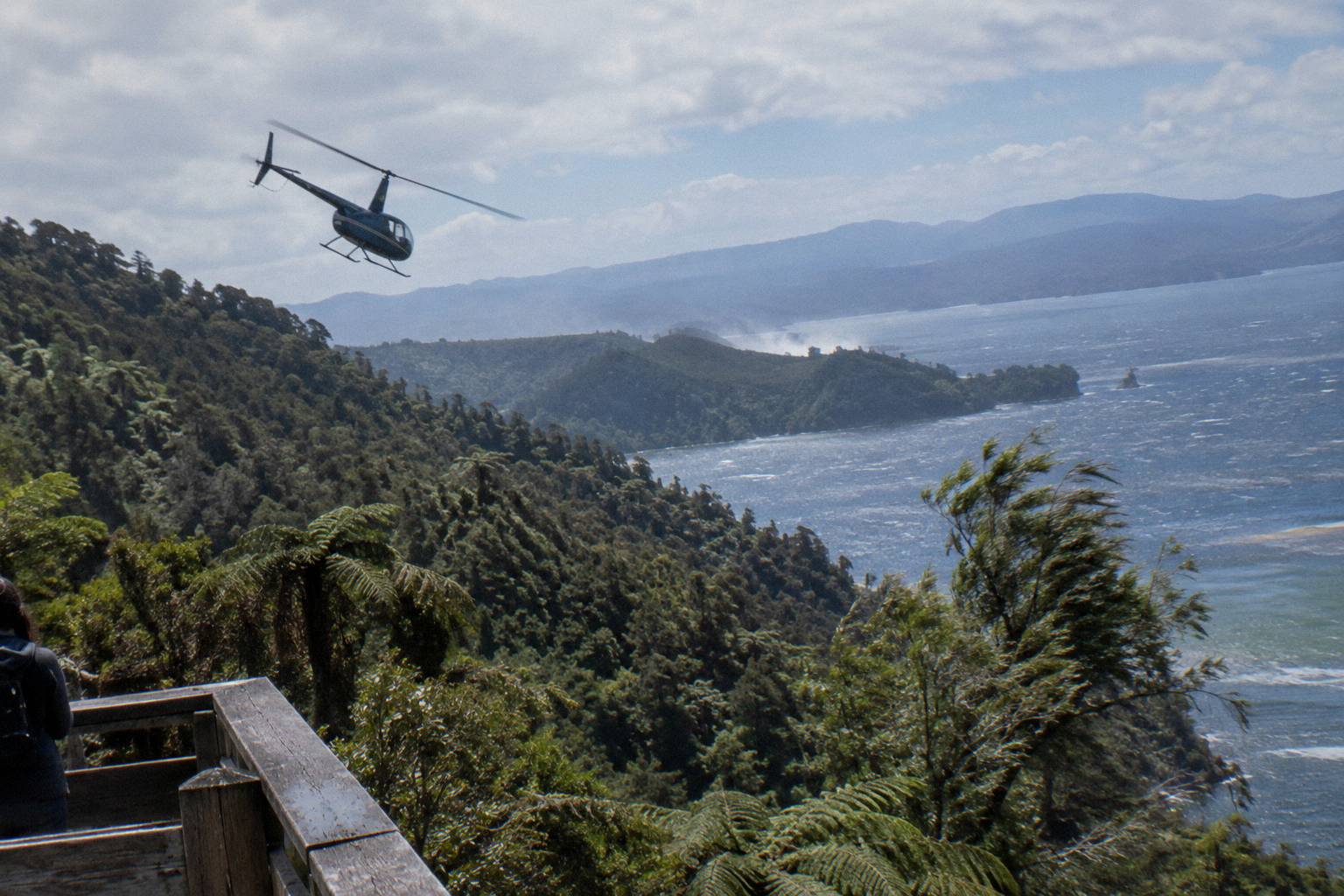
The outbound leg is a scenic crossing of the lakes that sit between Rotorua and the mountain, and it is a real part of the product rather than dead time. The operator's route crosses Lake Okareka, Lake Okataina and Lake Tarawera in succession, each of them a volcanic crater lake in the Okataina volcanic centre, before the aircraft climbs toward the mountain itself. Passengers get water views, forested ridgelines and, on clear days, a long sightline to the rift.
The Okataina volcanic centre is the geological setting for the whole flight: Tarawera and its surrounding lakes all sit within it, and GeoNet monitors the area as an active volcanic centre. That context is worth knowing before boarding, because it explains why the landscape changes so abruptly. Lake Okareka and Lake Okataina are quiet blue bodies ringed in bush, while Tarawera itself carries the raw, gullied face left by the 1886 eruption. The three domes of the old volcano, Ruawahia, Tarawera and Wahanga, line up along the rift and become easy to tell apart from above.
What you can actually see depends on the day, and the operator is careful to say so. One scenic flight in the line-up carries the plain statement that a weather dependent tour "will not go ahead if it is not safe to do so, or if the views cannot be seen", which captures the operator's general approach to visibility. Mornings often give the calmest weather and smoothest flying with soft light for photographs, while afternoons can bring warmer temperatures and late day colour, especially in winter. There is no single best time; it depends on the weather that day, and if conditions are unsuitable the operator works to reschedule.
Readers weighing a lake focused flight against a mountain landing may find the comparison in scenic flight options around Rotorua useful. If the question is purely how much flying time a Tarawera trip includes, how long a Rotorua helicopter flight lasts sets out the timings across the line-up.
Two aircraft types fly this route from the same Lakefront base, and the difference matters less on the way out than on the landing. Helicopters can put down on the summit; floatplanes cannot, and every Tarawera floatplane product in the line-up is a flyover. For a sense of that trade-off, the guide to choosing between a Rotorua helicopter and floatplane works through it trip by trip.
The Summit Landing And The Guided Walk
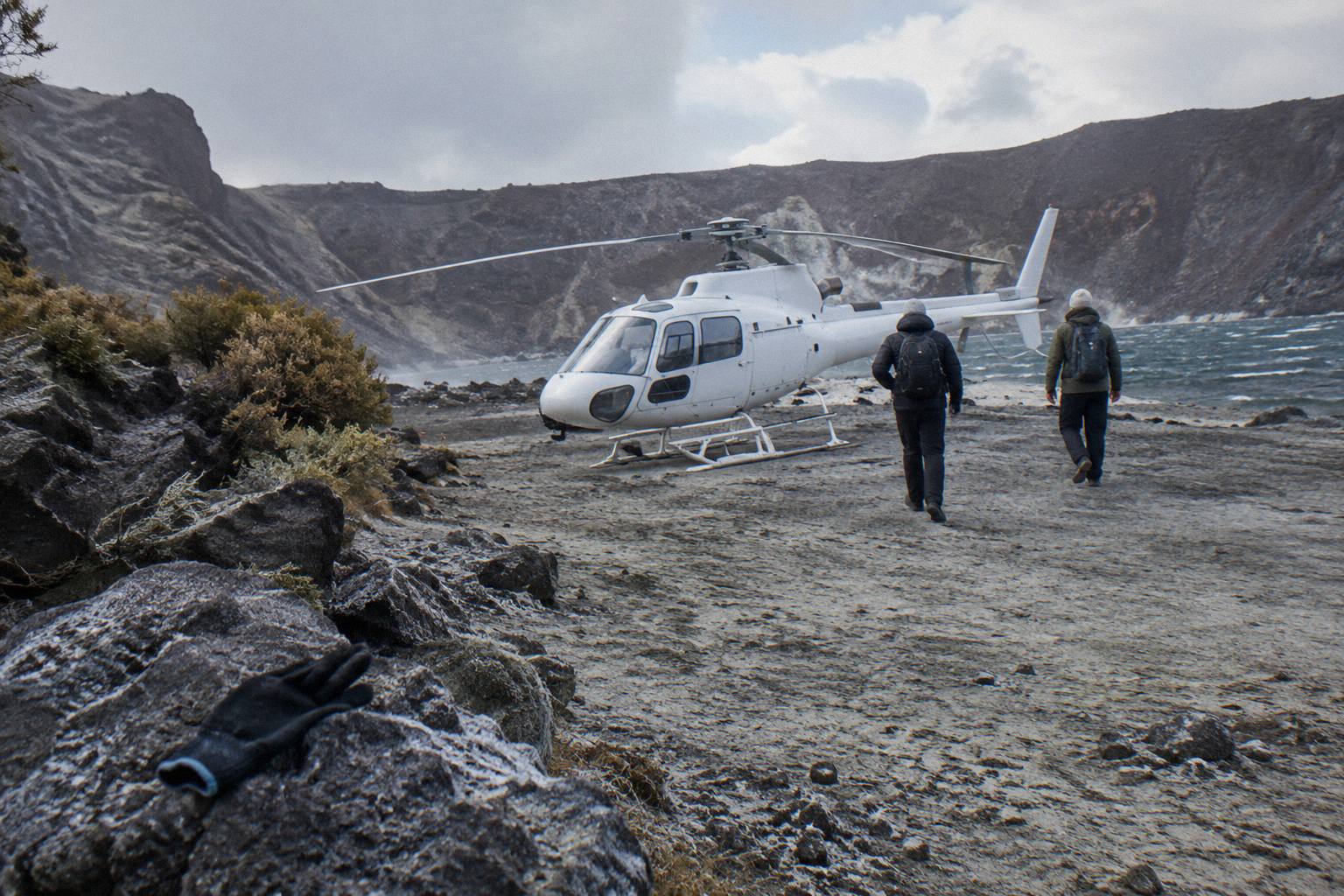
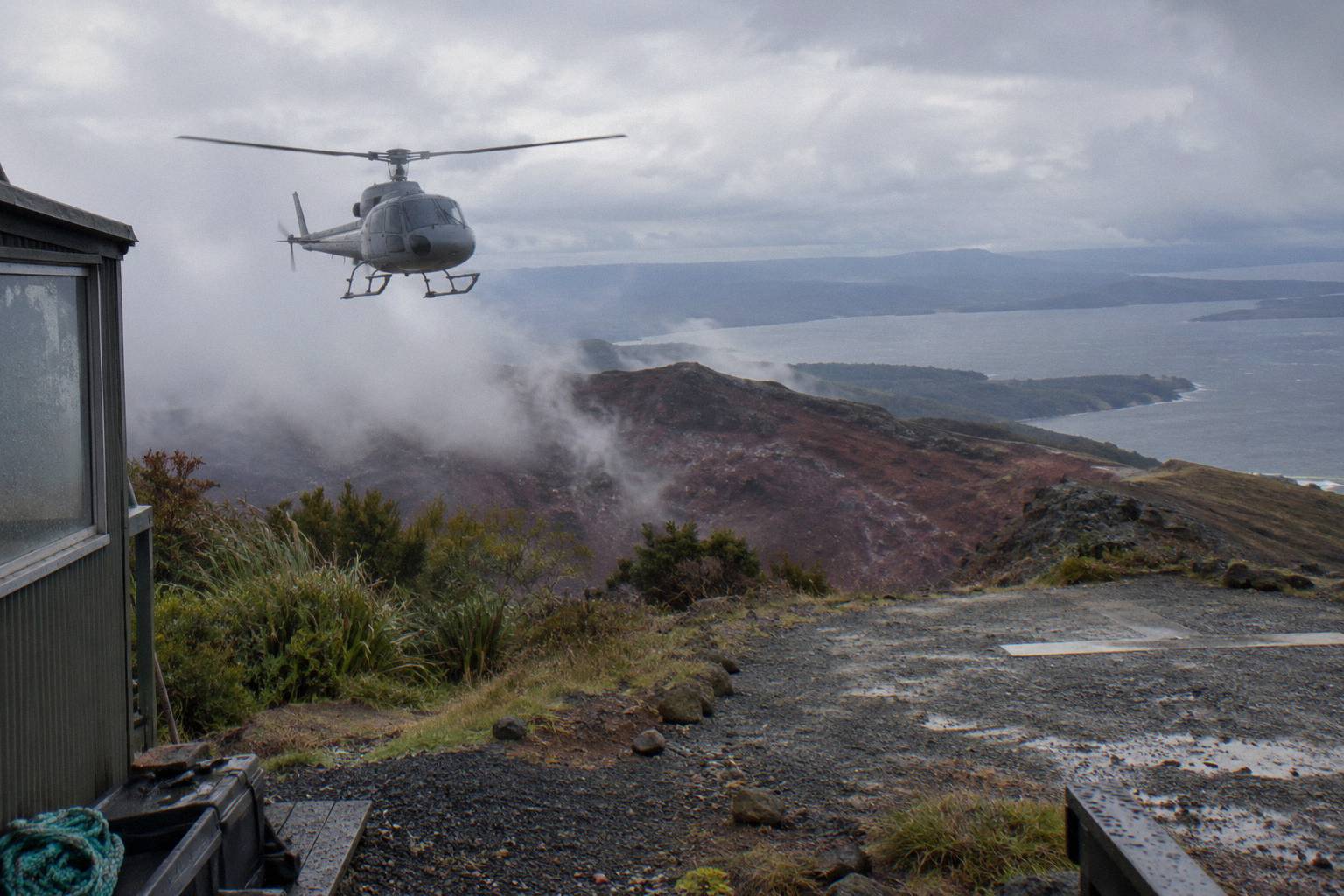
The landing puts the helicopter down on the summit of Mount Tarawera for what the operator describes as a 15 minute guided walk, led with the pilot, on the crater surface inside the rift. Access to this summit is not open to independent walkers: it comes only through authorised guided tours or approved helicopter landings, which is exactly what the concession arrangements described below provide. The stop is short by design, sized to the flight rather than a tramp.
Independent summit access is not permitted on Tarawera, so the helicopter landing is one of a small number of ways to stand on top. The mountain is governed by the Ruawahia 2B Trust, which reinvests most tourism concession revenue into conservation, and Volcanic Air operates as a concessionaire working alongside Ngati Rangitihi, the iwi that holds kaitiakitanga, or guardianship, of the maunga. In practical terms, the landing fee inside the ticket supports both the iwi and the protection of the mountain, and the guided walk format exists because unguided visitors are not allowed up there.
The walk itself stays close to the aircraft. The summit surface is bare volcanic rock, loose in places, and the operator asks for closed-toe comfortable footwear on flights with landings, along with a camera, sunglasses and a jacket. The wind on an exposed 1,111 m summit is a different proposition from the Lakefront, and the operator's gear list reflects that. The pilot guide points out the rift, the craters and the view down over Lake Rotomahana and the lakes country just flown over.
The trip that leads with the walk as its identity is the Mount Tarawera Helicopter Flight and Guided Walk, a 40 minute total outing priced from NZ$675 per person. Its booking page terms carry free cancellation up to 24 hours in advance, as do the landing trips around it.
A longer version of the same idea, the Mount Tarawera Volcanic Adventure by Helicopter, spends about an hour in the air and includes the same summit landing. Booking terms on its page list a maximum of 6 travellers and a total weight per passenger of 110 kg, figures that shape who can fly it, covered in the weight section below.
Every Tarawera Landing Helicopter Trip Compared
Five helicopter trips in the line-up include a Mount Tarawera summit landing, and they differ mainly in total time, in what else is bundled with the landing, and in price. The shortest is the 40 minute flight and guided walk at from NZ$675 per person; the longest is a 3 hour geothermal park tour at from NZ$1,490 per person that lands on both Tarawera and Orakei Korako. Two floatplane Tarawera products exist but they are flyovers, not landings.
| Trip | Aircraft | Total time | Landing | From price | Rating |
|---|---|---|---|---|---|
| Helicopter Landing, Guided Summit Walk | Helicopter | 40 minutes | Mt Tarawera summit | NZ$675 per person | 5.0 from 12 reviews |
| Helicopter Volcano Landing | Helicopter | varies | Mt Tarawera summit | price on the booking page | 4.9 from 43 reviews |
| One-Hour Volcanic Adventure | Helicopter | about 1 hour | Mt Tarawera summit | price on the booking page | 11 reviews |
| Geothermal Park Landing, 3 Hours | Helicopter | 3 hours | Mt Tarawera summit and Orakei Korako | NZ$1,490 per person | no rating |
| Dual Landing Thermal Explorer | Helicopter | varies | Mt Tarawera and Orakei Korako | price on the booking page | 10 reviews |
The differences between these five are bigger than the table suggests. The 40 minute trip is a single loop with the walk. The one hour Volcanic Adventure extends the flying around the mountain. The two Orakei Korako combinations turn the day into a two-park itinerary: the Geothermal Park Landing tour runs 3 hours total and includes a landing at Orakei Korako as well as Tarawera, while the Dual Landing Thermal Explorer pairs the same two landings in a different package. For readers curious about the second half of those days, the guide to pairing a helicopter flight with Orakei Korako covers the park side.
Ratings deserve a careful read here. The Helicopter Volcano Landing carries 4.9 from 43 reviews, the only landing trip in the line-up with both a rating worth printing and a review pool behind it. The Helicopter Landing, Guided Summit Walk carries 5.0 from 12 reviews, a smaller pool behind a perfect score.
The featured trip of the five is the Mount Tarawera Helicopter Tour with Volcano Landing, the one carrying that 4.9 from 43 reviews, with its price on the booking page and free cancellation up to 24 hours in advance. You can check availability via the booking page, or read Helicopter Volcano Landing on the operator's the booking page.
For the full picture of where these flights fit among every option in the region, Rotorua Helicopter Tours keeps the complete line-up with prices and timings.
What Decides Whether The Landing Happens
The landing is conditional, always. Volcanic Air's terms state that tour duration, flight times and inclusions may vary due to weather conditions, volcanic activity and passenger loadings, and that excursion landings are undertaken at your own risk and at the pilot's sole discretion. In practice, wind, cloud on the summit and aircraft loading are the usual deciding factors. If the landing cannot happen, the flight becomes an overflight, and the operator's weather policy governs what happens next.
That wording is not legal boilerline; it is the operating reality of a summit at 1,111 m in a changeable maritime climate. The operator's FAQ puts it directly: all flights operate subject to suitable weather and safe flying conditions, and if a flight cannot go ahead due to weather, the operator will work with passengers to reschedule or provide a full refund. Where the operator itself cancels before commencement for circumstances beyond its control, weather or volcanic activity among them, the terms provide a full refund.
Rotorua's rainfall pattern shapes the odds across the year. Monthly rainfall norms for 1991 to 2020 run from 86.8 mm in November to 137.4 mm in July, with the wettest stretch from May through August and the driest months in October, November and January. Regional tourism guidance notes the driest and warmest weather in Rotorua runs from late spring in October until early autumn in April, which lines up with the better flying window, though any individual day can differ and Rotorua's official weather note says as much.
| Factor | What the operator says | Where it bites |
|---|---|---|
| Wind and cloud | Flights operate subject to suitable weather and safe flying conditions | Summit landings need calmer air than a flyover |
| Volcanic activity | Inclusions may vary due to volcanic activity | Tarawera sits in the monitored Okataina volcanic centre |
| Passenger loading | Inclusions may vary due to passenger loadings | Weight and balance decide whether a summit stop is possible |
| Pilot discretion | Landings are at your pilot's sole discretion | The final call is made in the air, not at booking |
| Operator cancellation | Full refund if cancelled before commencement | Weather or volcanic activity grounds the flight |
Passengers booking the landing should hold it loosely in the plan: budget for the flight, hope for the stop, and treat an overflight as a real possible outcome rather than a failure. The question of what happens when weather cancels a flight is answered in full elsewhere, including the refund path. Volcanic monitoring for the wider Okataina centre is published by GeoNet's Okataina volcanic centre page, the authoritative source for activity status.
Weight, Age And Check-In Rules That Affect A Landing Flight
Landing flight rules are strict because the aircraft must stay within balance limits on a high, exposed summit landing zone, so every passenger declares an individual weight at booking and is weighed on arrival, with inaccurate declarations risking rescheduling, a surcharge or cancellation. Passengers over 110 kg may pay a surcharge and over 135 kg need two adult fares. Children of any age can fly, with under 2s on a lap and child rates for ages 2 to 11.
The weighing is not a judgement; it is physics. The operator's FAQ explains that individual weights at booking help provide safe and balanced seating in the aircraft, and that passengers are weighed so the aircraft stays within balance limits. On a Tarawera summit the balance matters twice: once on the way up with fuel and bodies aboard, and once lifting off a high, exposed landing zone. The One-Hour Volcanic Adventure's booking page states the policy in numbers, with a maximum of 6 travellers and a total weight per passenger of 110 kg.
| Rule | Detail | Source |
|---|---|---|
| Declared weight | Individual weights required at booking | Operator FAQ |
| Weigh-in | Passengers are weighed on arrival | Operator FAQ |
| Surcharge threshold | Over 110 kg, a surcharge may apply at the operator's sole discretion | Terms clause 1.17 |
| Two-fare threshold | Over 135 kg as weighed requires two adult fares | Terms clause 1.17 |
| Declared deviation | May result in rescheduling, a surcharge or cancellation | Terms clause 1.16 |
| Children | All ages welcome; under 2 on a lap; child rates 2 to 11 | Operator FAQ |
| Landing flight minimum | Minimum 2 adult fares on the Tarawera landing flight | Operator landing page |
The operator's FAQ page also covers pregnancy and mobility, and both are more nuanced than many expect. Pregnancy is not automatically a barrier; it depends on the weeks, whether the pregnancy is uncomplicated and which flight is involved, with advice to talk to a maternity carer especially from 28 weeks and to contact the operator with a due date. Mobility is likewise not automatically a barrier: the operator asks to be told at booking, and passengers need to follow the safety briefing, stay seated and secured, and board and leave with agreed assistance. A summit landing adds uneven volcanic rock underfoot, so that conversation is worth having before booking rather than at check-in.
Full detail on the weighing question sits in whether passengers get weighed before a flight, and family logistics are covered in flying with children on a Rotorua helicopter tour.
The 1886 Eruption, The Rift And Why The Summit Looks That Way
The summit passengers walk on was torn open on the night of 10 June 1886, when Mount Tarawera erupted and split a rift that GNS Science measures at 17 km long, running across the mountain top, through Lake Rotomahana and into the Waimangu Valley area. The eruption killed more than 100 people in villages near the mountain, razed Te Wairoa and buried the famed Pink and White Terraces, and every feature visible from the landing dates from that night.
The figures deserve their attributions. The 17 km rift length comes from the GNS Tarawera fact sheet, with Te Ara and NZ History printing the same figure; the operator's flight wording instead describes "8km of rift" over the mountain, which is the portion the landing flight overflies, and the two numbers describe different spans rather than contradicting each other. The death toll is shown only as "more than 100", because the official counts differ by source. Even the eruption's start time varies between GNS and Te Ara, so the night of 10 June 1886 is as precise as the record supports. NZ History's account of the eruption and the GNS Tarawera fact sheet are the primary sources.
Two consequences of that night matter to a visitor. First, Lake Rotomahana, the lake the rift ran through, grew dramatically after the eruption, though DOC and GNS print different multiples of its original size. Second, the Pink and White Terraces, the silica hot springs the eruption buried, were destroyed or submerged: GNS notes the White Terraces were largely destroyed and remnants of the Pink Terraces may lie at the bottom of Lake Rotomahana. The story of what a flight can and cannot show of them is told in the Pink and White Terraces flight guide, and the broader view-from-above history is in the 1886 eruption from the air.
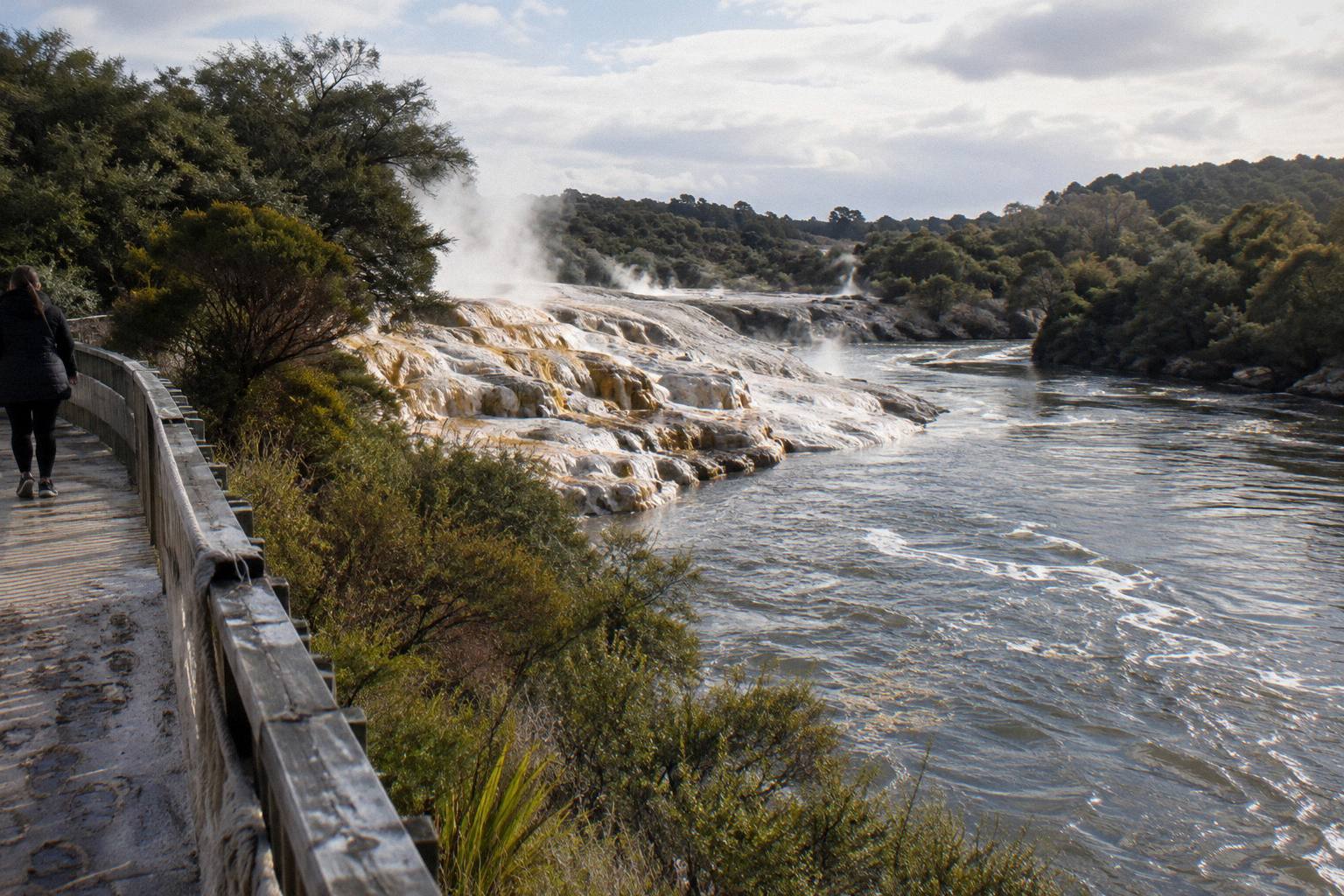
The connection runs forward in time, too. Waimangu Volcanic Valley, which several floatplane trips overfly, was formed along the line of the rift, and its geothermal system is the direct result of the 1886 eruption. Standing on the summit, the line from the craters underfoot toward Lake Rotomahana and the valley beyond is, in effect, the eruption's footprint seen from its highest point.
Common Mistakes People Make Booking A Tarawera Landing
The most common mistakes are booking with too little time to spare, giving an inaccurate weight declaration, assuming the landing is guaranteed, and confusing the floatplane and helicopter Tarawera products. Weather calls happen close to departure, weight errors can reschedule or cancel a booking outright, and only helicopter trips land on the summit, since both floatplane Tarawera flights are flyovers.
The time mistake is the most fixable. Because the operator reschedules when weather or volcanic activity intervenes, a Tarawera landing flight works best with at least one spare morning or afternoon in the itinerary, ideally two in the shoulder season. The booking window advice for Rotorua helicopter flights works through lead times, but the short version is that the landing trips carry small aircraft capacities, the One-Hour Volcanic Adventure caps at 6 travellers, and peak season dates fill.
The weight mistake is the most expensive. Declaring a weight accurately at booking costs nothing; a deviation found at the weigh-in, in the operator's own terms, may result in a flight being rescheduled, a surcharge being applied, or a booking being cancelled. The second mistake family is expectation: arriving certain of a summit touchdown sets up disappointment on a windy day, when the same flight still delivers the rift, the craters and the lakes from above. The final one is product confusion: the Scenic Floatplane over Tarawera and Waimangu, from NZ$395 per person with a 4.9 rating from 28 reviews, is a fine flight, but it lands nowhere, and readers wanting the summit need a helicopter product from the table above.
For the double-landing day trips, the Geothermal Park Landing tour at from NZ$1,490 per person is the 3 hour flagship, pairing the Tarawera summit with an Orakei Korako landing, where the operator's floatplane wording describes touching down on the winding Waikato River before the boat crossing to the geothermal field.
Common Questions About The Tarawera Landing
Can You Land On Mount Tarawera By Helicopter?
Yes, five helicopter trips in the line-up include a Mount Tarawera summit landing with a 15 minute guided walk. The landing is at the pilot's sole discretion and depends on weather, volcanic activity and loadings, so it is never guaranteed at booking.
How Much Does A Tarawera Landing Flight Cost?
From NZ$675 per person for the 40 minute Helicopter Landing, Guided Summit Walk, and from NZ$1,490 per person for the 3 hour Geothermal Park Landing tour. Several landing trips show their price on the booking page rather than a from-figure. All amounts are New Zealand dollars.
Is The Landing Guaranteed If I Book?
No. Volcanic Air's terms state that excursion landings are undertaken at your own risk and at the pilot's sole discretion, and that duration and inclusions may vary with weather, volcanic activity and passenger loadings. If a landing cannot happen, the flight operates as an overflight.
What Happens If Weather Cancels The Flight?
The operator's policy is to work with passengers to reschedule or provide a full refund when a flight cannot go ahead due to weather. Where the operator cancels before commencement for circumstances beyond its control, the terms provide a full refund. Bookings also carry free cancellation up to 24 hours in advance on the booking page.
What Should You Wear For The Landing?
The operator recommends closed-toe comfortable footwear for flights with landings, because the summit surface is loose volcanic rock, plus a camera, sunglasses and a jacket for the exposed 1,111 m summit.
Can Children Take A Tarawera Landing Flight?
Yes. All ages are welcome, with children under 2 sitting on a parent or guardian's lap and child rates for ages 2 to 11. On the Tarawera landing flight, ages 2 to 11 pay 75% of the adult fare, and there is a minimum of 2 adult fares.