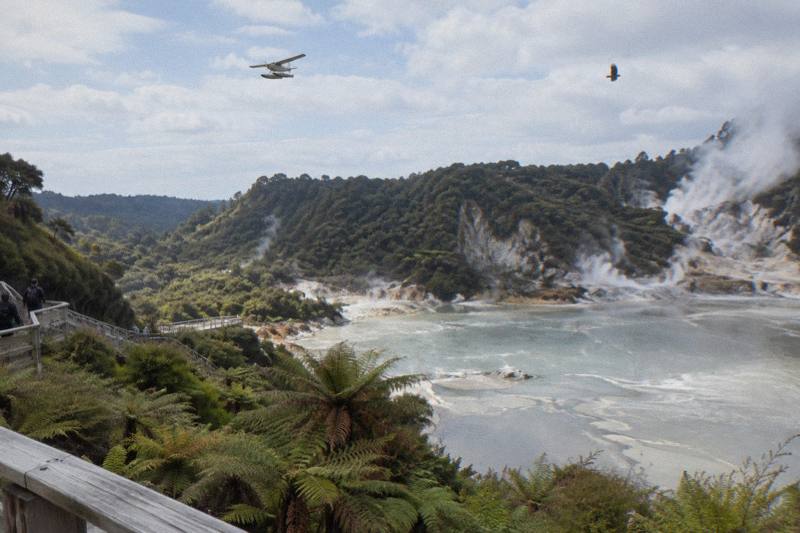
Whakaari Helicopter Flyover Versus Landing: What Is Possible Now
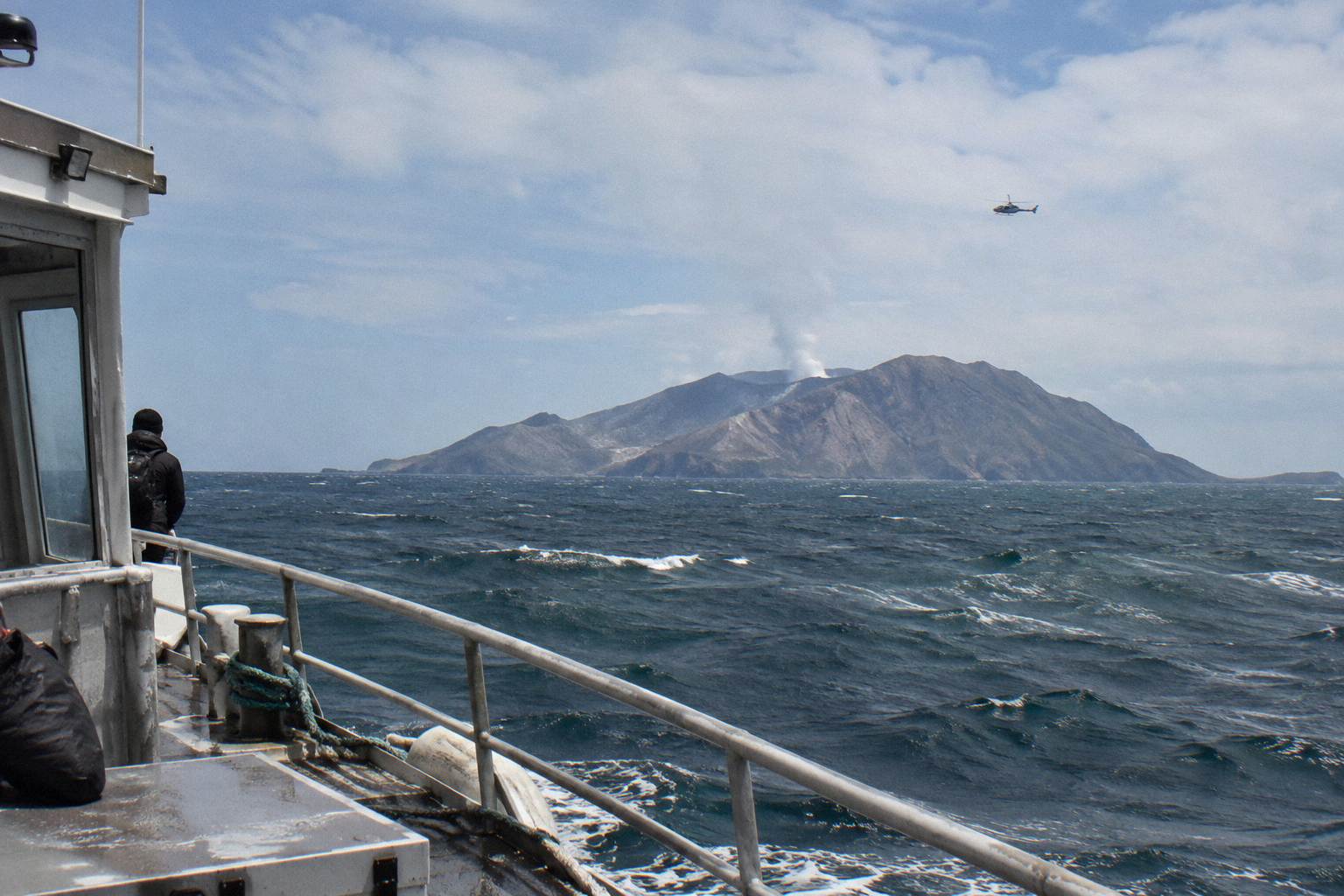
Whakaari / White Island is New Zealand's most famous active offshore volcano, and the question every buyer asks first is simple: can a helicopter still land on it? The short answer is no, and it has been no since December 2019. What is possible now is a flyover, on several fixed routes from Rotorua, and that difference shapes every booking decision.
Short answer
No helicopter lands on Whakaari / White Island. Landings have been suspended since the 9 December 2019 eruption, which killed 22 people. Scenic flights over the island operate from Rotorua by floatplane and helicopter, run by Volcanic Air from the Lakefront, from NZ$1,230 per person for the floatplane route that also crosses Mt Tarawera and Waimangu.
For the wider picture of every White Island flight option, see the complete White Island helicopter flights overview.
| Quick Fact | Detail |
|---|---|
| Can you land on Whakaari now | No, landings are suspended |
| Since when | 9 December 2019 eruption |
| What runs instead | Scenic flyovers from Rotorua |
| Operator | Volcanic Air, flying since 1992 |
| Meeting point | Lakefront, 1 Lakefront Drive, Rotorua |
| Cheapest Whakaari flyover listed | Floatplane, Waimangu Included, from NZ$1,230 per person |
| Cancellation on the booking pages | Free cancellation up to 24 hours in advance |
Can You Land On Whakaari By Helicopter Right Now?
No. There is no helicopter landing on Whakaari / White Island, and there has been none since the island erupted on 9 December 2019. New Zealand's official tourism information states plainly that there are currently no boat tours to the island and no helicopter flights that land on it. Any product sold today from Rotorua is a flyover, and the only decision left to make is which flyover route, aircraft and price suits your trip.
That single fact is the reason a "White Island helicopter tour" in 2026 means something different from what it meant a decade ago. The island, about 48 km off the coast of Whakatane, is still an active volcano, and its status is tracked continuously by GeoNet, New Zealand's geological hazard monitor. The airspace above it was reopened to scenic flights after restrictions were lifted in 2020, which is why flyovers from Rotorua are legitimately available, but the ground itself is closed to visitors.
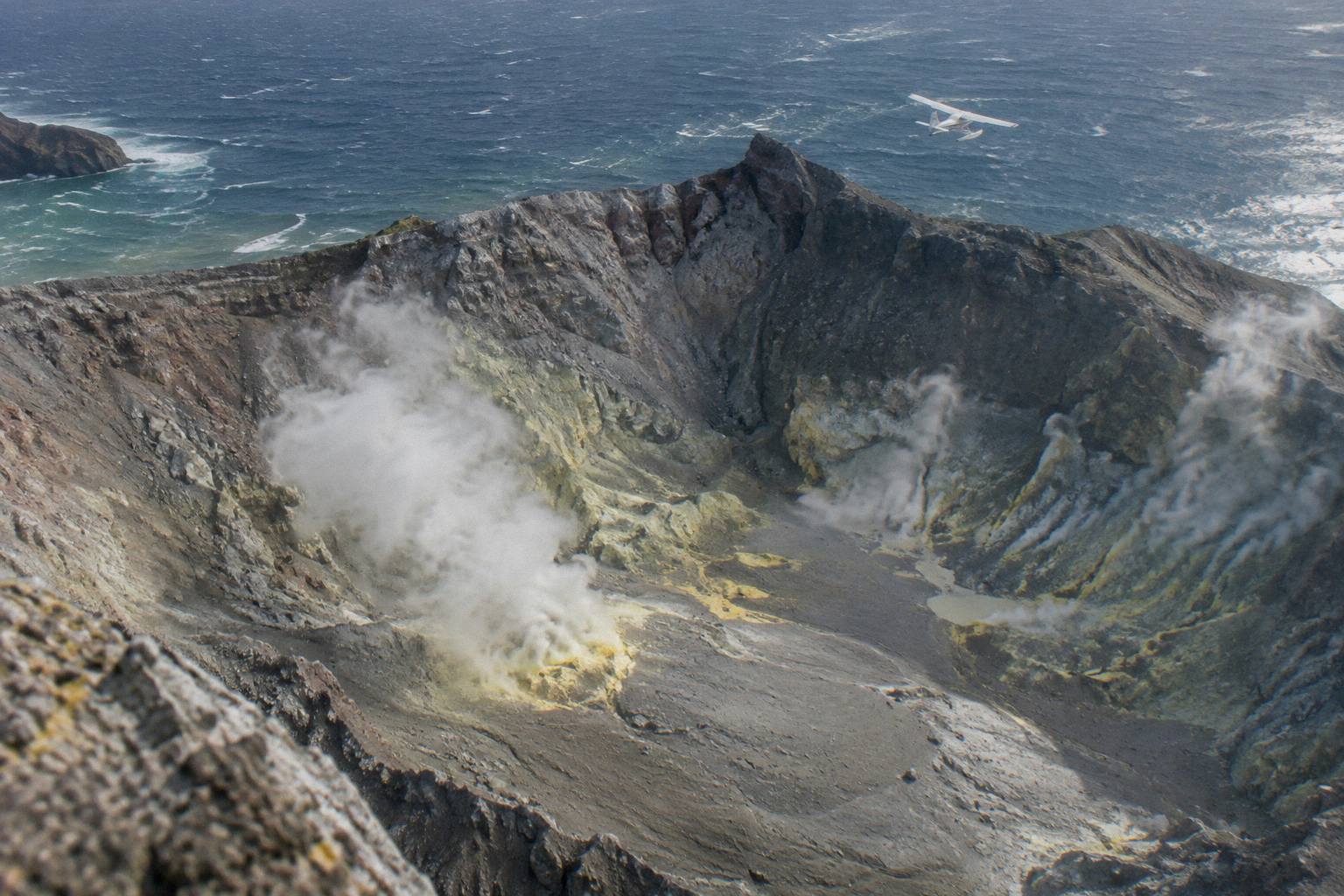
The buyer risk here is real. Search results and older articles still describe landing tours, walks on the crater floor, and gas-mask visits, because those trips existed for years and left a long trail of pages behind them. If you book something expecting to stand on the island, you will be disappointed. Every current Volcanic Air route involving Whakaari is aerial only, and the line-up confirms it: the floatplane trips list no landing, and the helicopter trip that includes White Island lands instead at Mt Tarawera.
The short question and its short answer are covered in detail at whether you can land on White Island by helicopter; what follows here is the fuller status, the rule changes behind it, and the trip-by-trip picker.
Why Whakaari Landings Stopped And What Changed
The eruption of 9 December 2019 ended commercial landings on Whakaari. The eruption resulted in the deaths of 22 people and injuries to 25 others, and in its aftermath the island was closed to visitors. Official tourism guidance now states there are no boat tours and no helicopter flights landing on the island. The airspace above was reopened to scenic flying in 2020, so the island is visible from the air, but nobody steps onto it.
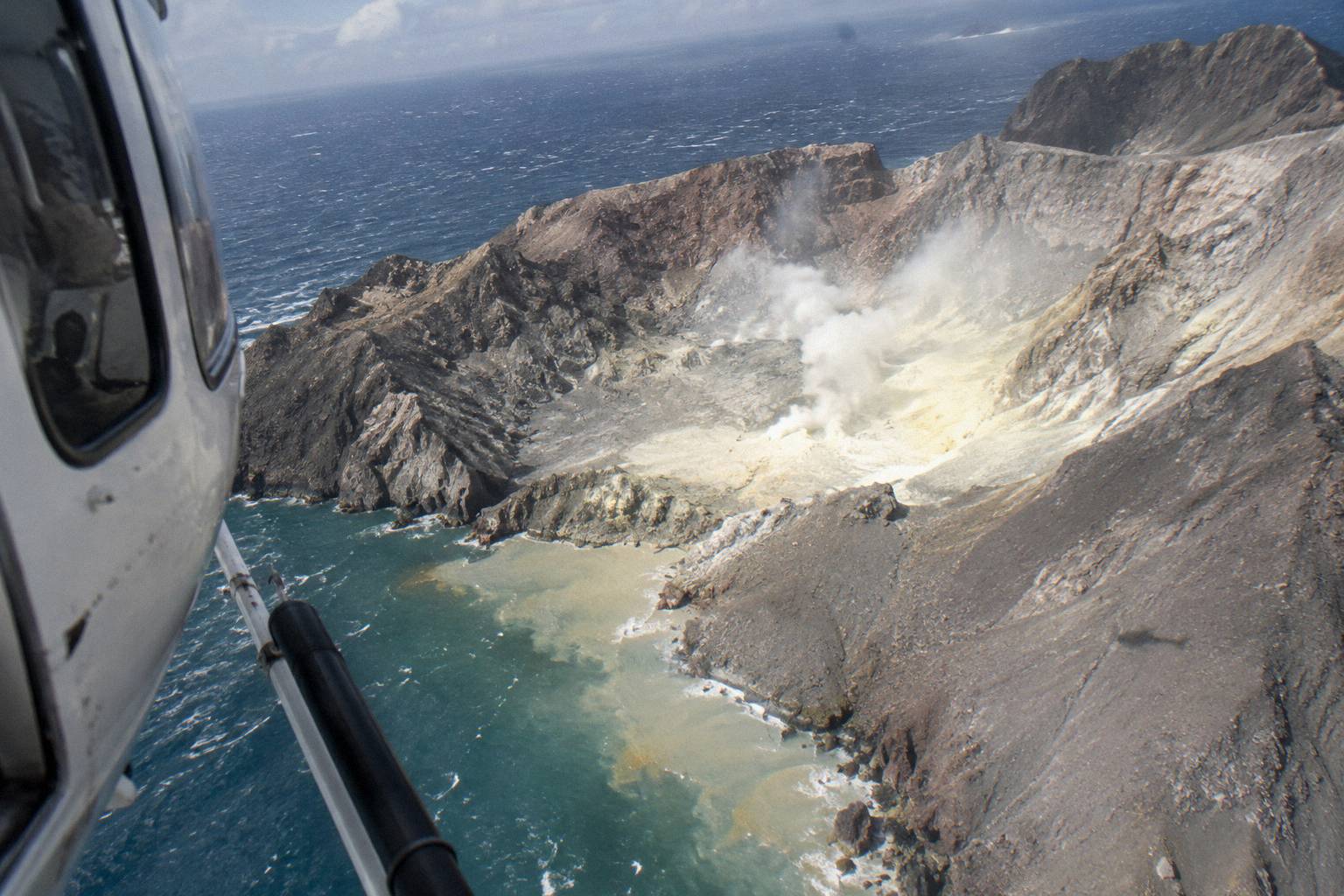
Before that day, White Island was one of the world's few places where tourists could walk inside an active volcanic crater. The economics and the regulations around access were argued over for years afterwards, including a coronial inquiry, but for a traveller planning a trip the outcome is settled: landing access has not returned, and nothing on the current booking line-up suggests it is about to.
What returned instead is the flyover. Volcanic Air, which has been flying in the region since 1992, sells Whakaari as an aerial destination, describing the island as New Zealand's only permanently active offshore volcano. A Whakatane-based operator lists set departure times from Rotorua subject to weather, which signals a functioning scenic market over the island rather than a temporary loophole.
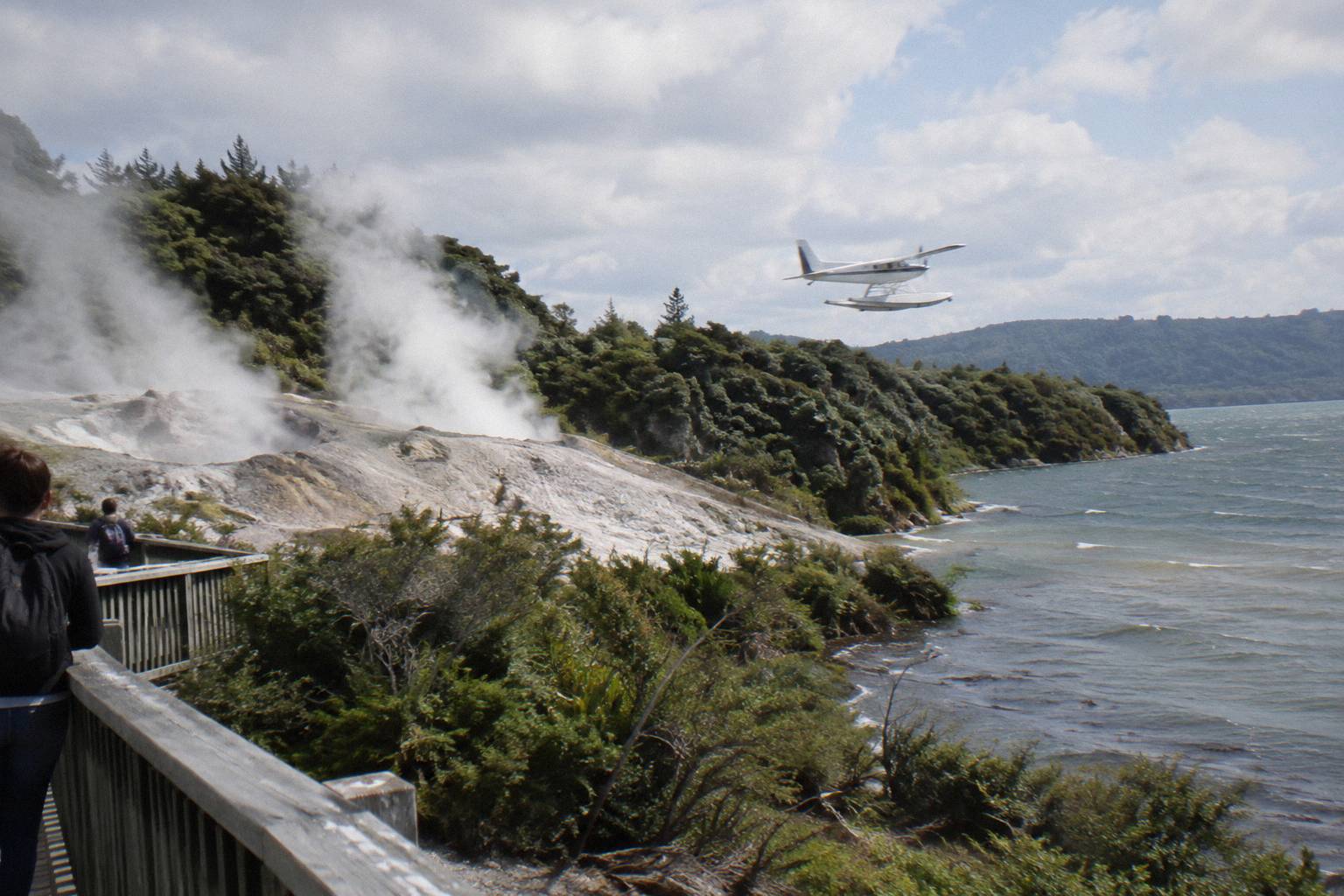
One more distinction matters. Whakaari's volcanic alert level is a live scientific reading, published by GeoNet's Whakaari/White Island volcano page, and it can change any day. Flights over the island are planned around that monitoring and around weather, and the operator's terms reserve the right to cancel for circumstances beyond its control, including volcanic activity, with a full refund when it does. The rule for you as a buyer: check the live status on GeoNet close to your travel date, and never treat a copied alert level from an article, including any article, as current.
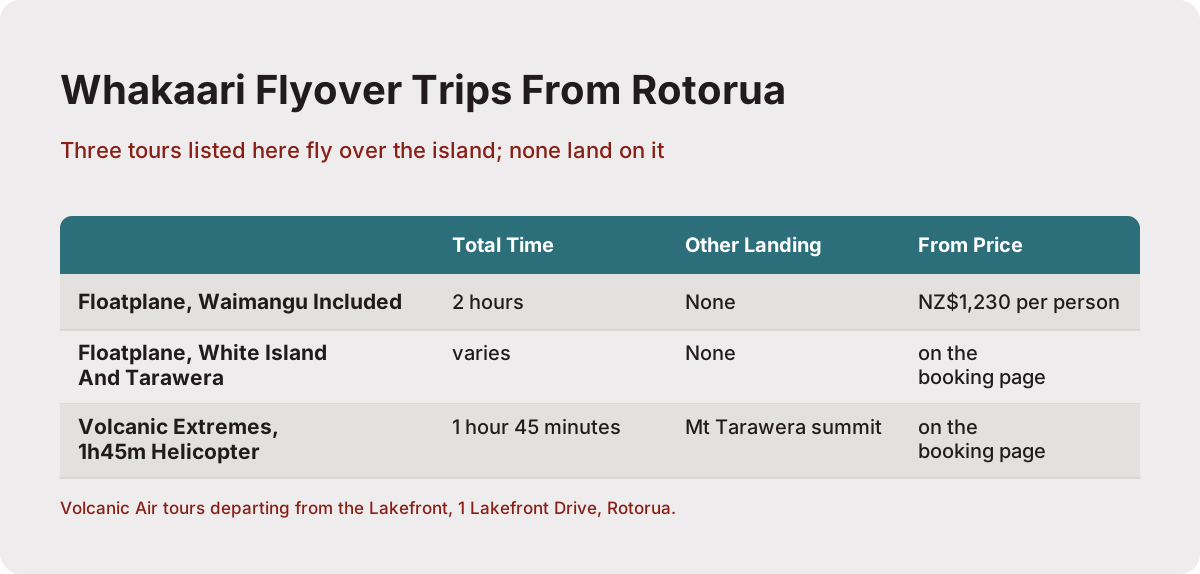
Three routes make up the realistic shortlist for a Whakaari flyover from Rotorua, and they are the trio below: a floatplane circuit that adds Tarawera and Waimangu, a second floatplane adventure, and the long helicopter route that lands at Tarawera instead.
What A Whakaari Flyover Actually Gives You
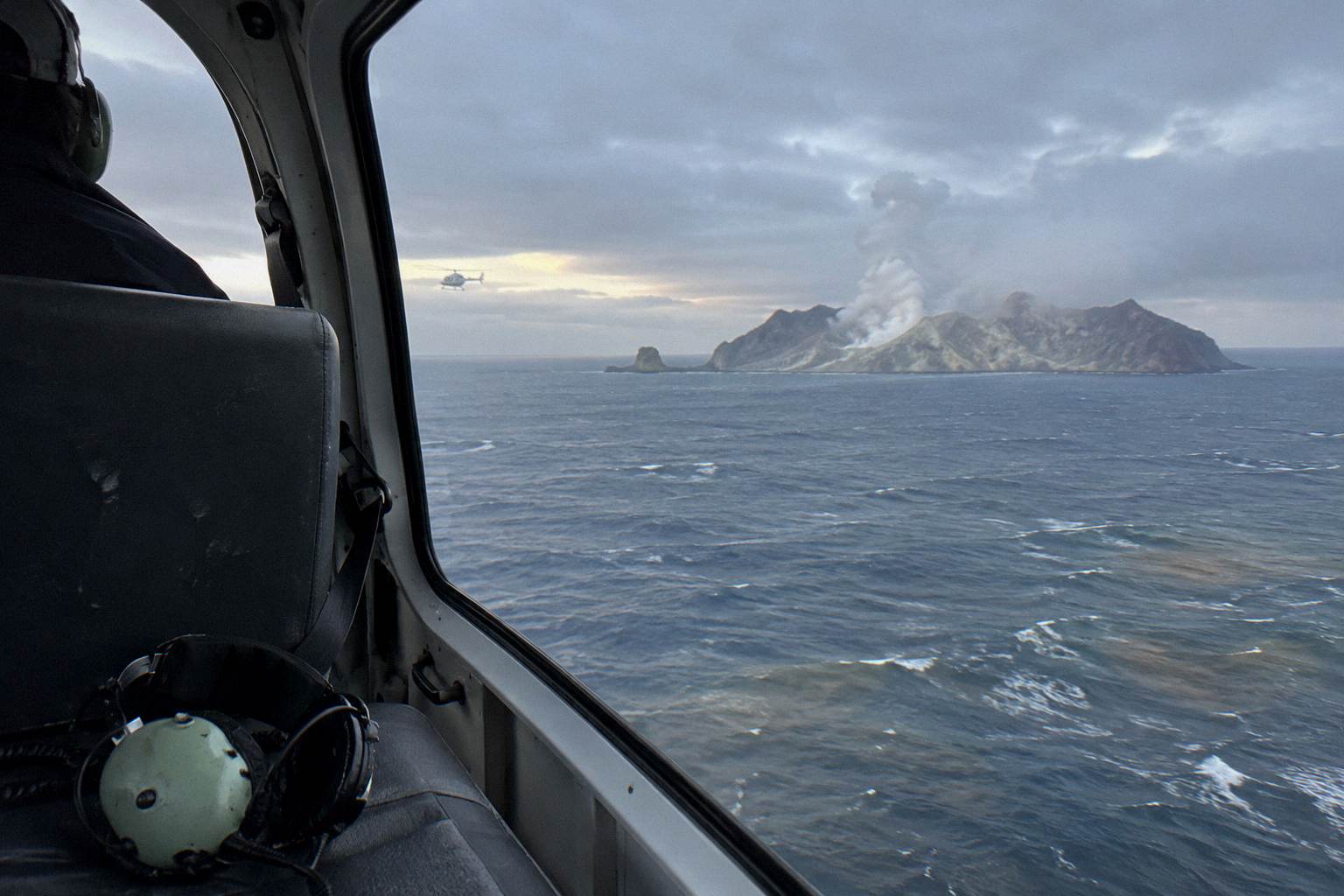
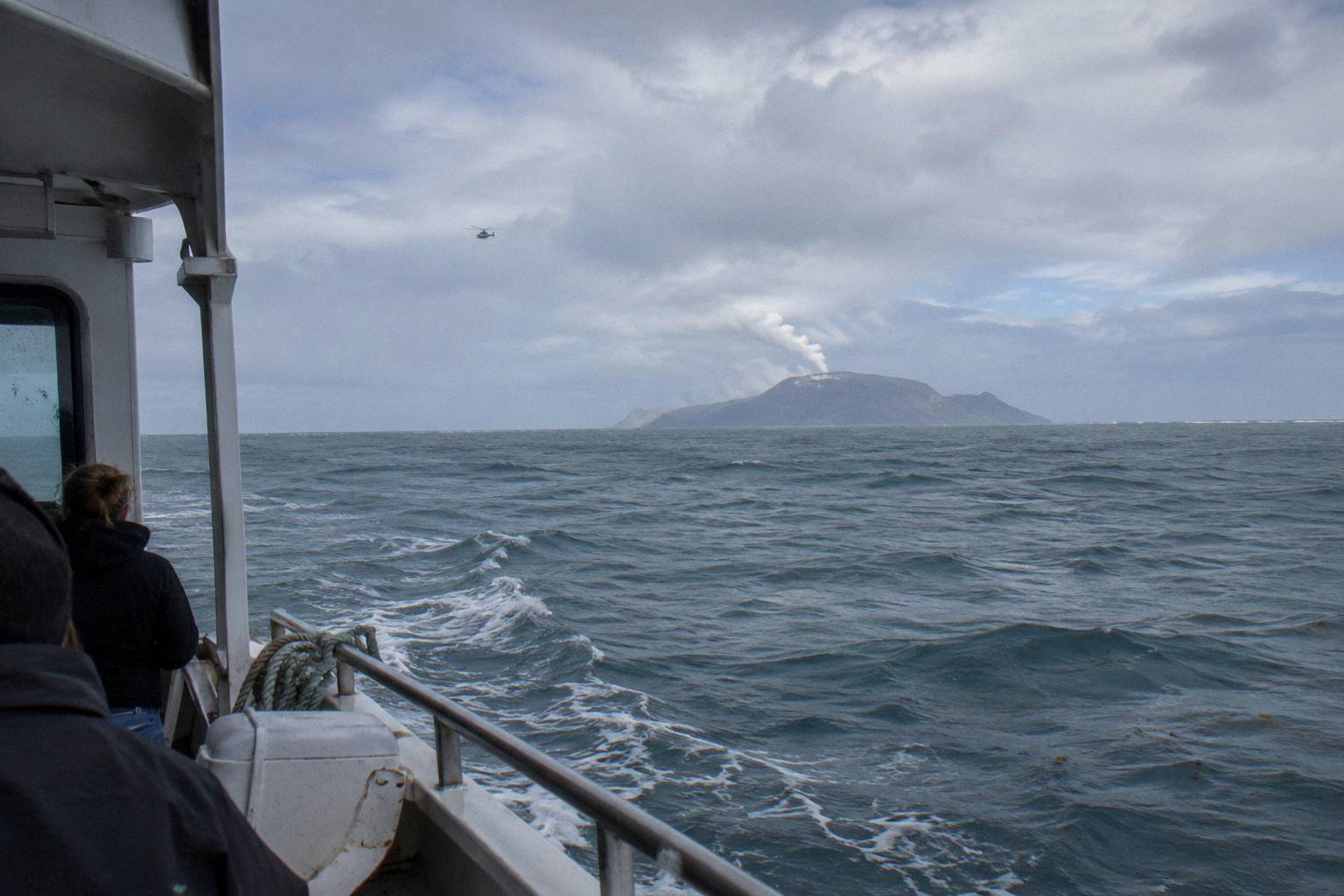
A flyover is a circuit of the island at sightseeing altitude, showing the crater walls, the steam and the colouring of an active hydrothermal system from the air. It includes no landing, no crater walk and no boat transfer. What you get instead is scale: the island sitting alone about 48 km off the Whakatane coast, seen in full in a way no landing visitor ever got, paired on most routes with other volcanic landmarks.
The operator describes the island as New Zealand's only permanently active offshore volcano, and that character is what the flyover sells. From the air the crater forms, old mining ruins and the plume activity of the day read as one picture. What the plume looks like on any given day depends on the volcano and the weather; a flight does not go ahead if it is unsafe or if the views cannot be seen, which is weather-dependence working in your favour rather than against you.
The routing is the part buyers underweight. Whakaari is not close to Rotorua, so every trip that reaches it spends significant flight time crossing the Bay of Plenty coastline, and the products use that time deliberately. The "Floatplane, Waimangu Included" route pairs the island with Mt Tarawera and the Waimangu Volcanic Valley, the geothermal valley that formed along the 1886 Tarawera rift, so one ticket covers three volcanic stories: an active offshore volcano, a breached eruption mountain and the valley its eruption created.
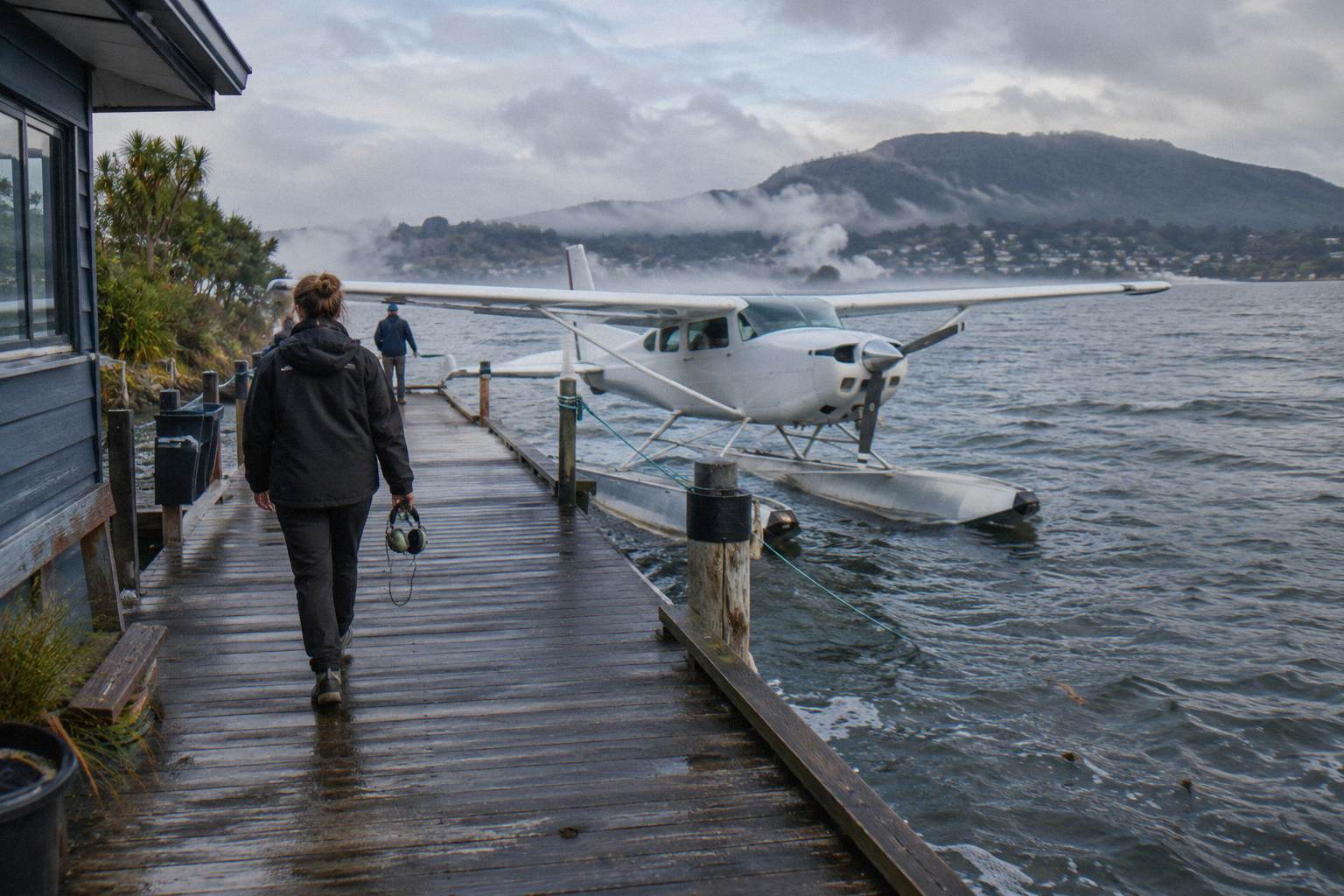
That triple-header is the featured route for a reason: it is the most complete volcanic circuit available without landing anywhere. At roughly two hours total, from NZ$1,230 per person in New Zealand dollars, with free cancellation up to 24 hours in advance, it suits a traveller whose main goal is Whakaari but who does not want to fly all that way for one island.
If your interest in White Island is more specific, the reviews and reputation of Whakaari flights are worth a look before you commit, since the review pools on these long routes are small and a bare number can mislead.
Which Rotorua Flights Fly Over Whakaari
Three trips on the current line-up include Whakaari: two floatplane routes and one helicopter route. The floatplane trips, "Floatplane, Waimangu Included" and "Floatplane, White Island And Tarawera", are flyovers with no landing. The helicopter trip, "Volcanic Extremes, 1h45m", is also a flyover of Whakaari, but it lands at Mt Tarawera on the way back, making it the only rotor-wing option that touches the ground.
| Trip | Aircraft | Whakaari landing | Other landing | Total time | From price |
|---|---|---|---|---|---|
| Floatplane, Waimangu Included | Floatplane | No | No landing (flyover) | 2 hours | NZ$1,230 per person |
| Floatplane, White Island And Tarawera | Floatplane | No | No landing (flyover) | varies | on the booking page |
| Volcanic Extremes, 1h45m Helicopter | Helicopter | No | Mt Tarawera summit | 1 hour 45 minutes | on the booking page |
The two floatplanes differ mainly in what they pair with the island. The Waimangu-included version adds the volcanic valley crossing described above; the White Island And Tarawera adventure covers the same two headline landmarks with a different itinerary shape. Neither lands anywhere, and both take off from and return to the lakefront pier on Lake Rotorua. If your only measure is time over the island, the two routes are close enough that price and schedule, rather than routing, should decide between them.
The helicopter route is the structural outlier. "Volcanic Extremes" spends 1 hour 45 minutes in the air, flies over White Island, then lands on the summit of Mt Tarawera for a guided walk before returning. Since a Whakaari landing is off the table everywhere, it is the one product that converts your Whakaari day into a somewhere-you-can-stand day, at Tarawera instead. That trade, island from the air plus mountain underfoot, is the closest current experience to what the old White Island landing trips offered in spirit.
If your budget rules out the long routes, the alternative is to drop Whakaari rather than the landing: Tarawera landing flights and scenic circuits cost a fraction of the island routes, a trade-off explored in the Mt Tarawera helicopter landing guide.
After that comparison, the floatplane adventure is the mid-list option worth a closer look on its own terms.
One practical point worth weighing before you book: the flight out to Whakaari is a long leg over open water. The island sits roughly 48 km off the coast from Whakatane, so from the Rotorua lakefront you are crossing a substantial stretch of the Bay of Plenty before the volcano comes into view. That geography is what makes these trips the longest scenic flights on the local menu, and it also explains the price gap between them and the shorter lake-and-crater circuits closer to town.
Timing matters for both experience and photography. Every departure is subject to weather. Because weather calls are made close to departure, it pays to build some slack into your Rotorua schedule rather than booking a flyover on your last day.
Keep in mind, too, that the situation over the island can shift. That is one more reason a flexible booking matters when a Whakaari flyover is the centrepiece of your day, and GeoNet's Whakaari page publishes the current status.
Helicopter Versus Floatplane For The Whakaari Flyover
The aircraft choice is partly practical and partly price. Floatplanes depart from the lakefront pier on Lake Rotorua, take off from the water and carry the sea-landing character of the route itself; the helicopter route offers the Tarawera summit landing that no floatplane trip can match. Over Whakaari both give an aerial circuit only. Decide on the strength of your legs-and-ground preference, then on price, because the landing, not the view, is what separates them.
| Factor | Floatplane routes | Helicopter route |
|---|---|---|
| Take-off | Lake Rotorua, from the pier | Lakefront pad |
| Whakaari | Flyover circuit | Flyover circuit |
| Landing elsewhere | No landing (flyover) | Mt Tarawera summit walk |
| Check-in | 20 minutes prior | 30 minutes prior |
| Best for | Longest air circuit per dollar | Standing on a volcano the same day |
The floatplane has one quiet advantage that has nothing to do with the volcano. Landing and taking off from Lake Rotorua is part of the experience the operator sells, and the return legs cross farmland and ranges rather than retracing the outbound line. For a photographer, the window seat over water on climb-out is a distinct moment; for a nervous flyer, the steady amphibious hull can feel less intense than a rotor start-up. More of these guides are collected on Rotorua Helicopter Tours.
The helicopter answers with the only landing available on any Whakaari route. The Tarawera summit walk is a 15 minute guided walk on a mountain that cannot be climbed independently; access runs through authorised tours and approved landings, with the operator a concessionaire working alongside Ngati Rangitihi, the iwi who hold kaitiakitanga of the maunga. That exclusivity of access is factual, and it is the strongest argument for paying the helicopter premium.
Weights matter on both. Every passenger declares individual weight at booking and is weighed on arrival, because the aircraft must stay within balance limits; a declared weight over 110 kg may attract a surcharge and over 135 kg requires two adult fares, per the operator's terms. The full rules are covered in the rotorua helicopter flight weight limits guide, and the operator FAQ is the primary source for check-in timing and what to bring.
The long helicopter route deserves its own paragraph, because it is the product that best matches what many Whakaari searchers actually want: a volcano underfoot.
What The Flyover Costs And What The Booking Terms Say
The one firmly published Whakaari price is from NZ$1,230 per person for "Floatplane, Waimangu Included", a 2 hour floatplane route; the other two Whakaari trips carry their prices on the booking page, so check them there. All amounts are New Zealand dollars. Every Whakaari route on the line-up shows free cancellation up to 24 hours in advance for a full refund, and if the operator cancels for weather or volcanic activity you receive a full refund.
That cancellation structure is unusually forgiving for a weather-dependent product, and it changes how you should book. Because you can pull out free up to 24 hours ahead, the rational move is to book the day you want and hold the option, rather than waiting for a forecast that may not sharpen until the morning of the flight. If the weather turns, the operator will work with you to reschedule or refund.
| Term | What applies to your booking |
|---|---|
| Guest cancellation | Free up to 24 hours before, full refund |
| Operator cancels for weather or volcanic activity | Full refund |
| Rescheduling | Offered where practical |
| Weight declaration | Required at booking, verified at check-in |
| Check-in | Helicopters 30 minutes prior, floatplanes 20 minutes prior |
| Children | All ages welcome, under 2 on a lap, child rates 2 to 11 |
Two caveats keep the terms in proportion. First, the 24 hour free-cancellation window is the booking-page term; miss it and the operator's own fee ladder applies, so treat the 24 hour mark as hard. Second, nothing in the terms guarantees a flight on your chosen day. All flights operate subject to suitable weather and safe flying conditions, and excursion landings are at the pilot's sole discretion, a point the operator's terms and conditions state directly.
Against the Whakaari price tags, the short scenic circuits put the gap in perspective. The 30 minute "Scenic Floatplane, Tarawera And Waimangu" runs from NZ$395 per person and rates 4.9 from 28 reviews, the only rating in the family with a review pool worth reading. It does not reach Whakaari at all, which is exactly the point: the island costs roughly three times the local sightseeing floor because of the distance flown. For travellers pairing a Whakaari flight with other plans in town, that arithmetic is worth doing before anything is booked.
For a tighter budget that still wants the volcanic story, that shorter circuit is the contrast pick.
Rules, Safety And Who Decides Whether The Flight Runs
Three layers govern a Whakaari flyover. GeoNet monitors the volcano's status, which can change any day. The operator, which describes itself as a CAA-certified NZ air operator, decides whether conditions are safe to fly, while the pilot alone decides whether landings on the route, such as the Tarawera summit stop, happen on the day. Booking terms put duration, flight times and inclusions subject to weather, volcanic activity and passenger loading, with landings at your own risk.
That chain of decisions is not small print, it is the operating reality of aviation over an active volcano. The 2020 reopening of the Whakaari airspace was conditional on exactly this monitoring regime, and official guidance on Whakaari / White Island remains explicit that no tours land there. For passengers, the practical consequence is freedom to book far ahead without gambling: the refund terms on both sides remove the financial risk of a cancellation you did not choose.
Safety on the day is a quieter story than the volcano's history suggests. The operator has flown in the region since 1992 and describes itself as Qualmark Gold assured, with pilots whose logged hours the company states on its own pages. The aircraft families used, helicopter and floatplane, both operate under New Zealand's air rules for small commercial operations, the rules that govern holders of an air operator certificate. Nothing in any of that promises a particular view or plume, and no summary should.
Families and accessibility are covered by the FAQ in plain terms: all ages are welcome, mobility constraints are not automatically a barrier if declared at booking, and pregnancy depends on the individual case, with the operator asking expectant mothers to make contact. Those answers belong to the operator, and they are the right primary source for a specific circumstance. The risks section of the terms also notes that flights land and take off on hard terrain or water, and that natural hazards in the region include earthquakes, geothermal activity, landslides and fast changing weather, which is why the discretion built into every itinerary exists.
Mistakes To Avoid When Booking A Whakaari Flyover
The common mistakes are booking an old landing product that no longer exists, assuming the helicopter route lands on White Island when it lands at Tarawera, trusting a copied alert level instead of GeoNet's live page, and skipping the weight declaration, which can reschedule or reprice a flight on arrival. A fifth is quieter: ignoring the 24 hour free-cancellation window and treating the booking as fixed, when the terms actually reward booking early and deciding late.
The landing-product mistake is the expensive one. If a page, an old brochure or a forum thread promises a crater walk on Whakaari, it is describing a product that ended in 2019. The current line-up has exactly three Whakaari trips and none lands on the island. The second mistake flows from sloppy reading of the helicopter itinerary: "Volcanic Extremes" flies over White Island and lands at Mt Tarawera, a different volcano, an hour of flight time away.
The alert-level mistake deserves its own sentence: volcanic status changes any day, and a number quoted anywhere in print is a snapshot, not a promise. Check GeoNet's live Whakaari page near your travel date. The weight mistake is administrative but real: declared weights are verified on arrival, and a significant deviation can mean a reschedule, a surcharge or a cancelled booking at the operator's discretion.
Finally, plan the day around check-in. The Lakefront base is under 1 km from the Rotorua town centre, helicopters check in 30 minutes before departure and floatplanes 20 minutes, and hotel pickup is not part of standard flights. Building the margin into your morning costs nothing and protects the flight.
Common Questions About Whakaari Flyovers
Can You Land On Whakaari By Helicopter?
No. Landings have been suspended since the eruption of 9 December 2019, and official guidance confirms no helicopter flights land on the island. Only scenic flyovers operate.
Can You Fly Over Whakaari In A Helicopter?
Yes, on one line-up route: "Volcanic Extremes, 1h45m Helicopter" flies over White Island and lands at Mt Tarawera for a guided summit walk. Two floatplane routes also fly over the island.
How Much Does A White Island Flyover Cost?
The verified price on record is from NZ$1,230 per person for the floatplane route that includes Mt Tarawera and Waimangu. The other two Whakaari trips show prices on the booking page.
Is White Island Still Active?
Yes. The operator describes it as New Zealand's only permanently active offshore volcano, and GeoNet monitors it continuously. Its alert level can change any day, so check the live GeoNet page before you fly.
What Happens If My Whakaari Flight Is Cancelled For Weather?
The operator will work with you to reschedule or provide a full refund, and its terms provide a full refund when it cancels for circumstances beyond its control, including weather and volcanic activity.
Which Trip Is Closest To The Old White Island Landing Tour?
The helicopter route, because it is the only one that lands anywhere: after flying over Whakaari it touches down on Mt Tarawera for a 15 minute guided summit walk, subject to the pilot's discretion on the day.