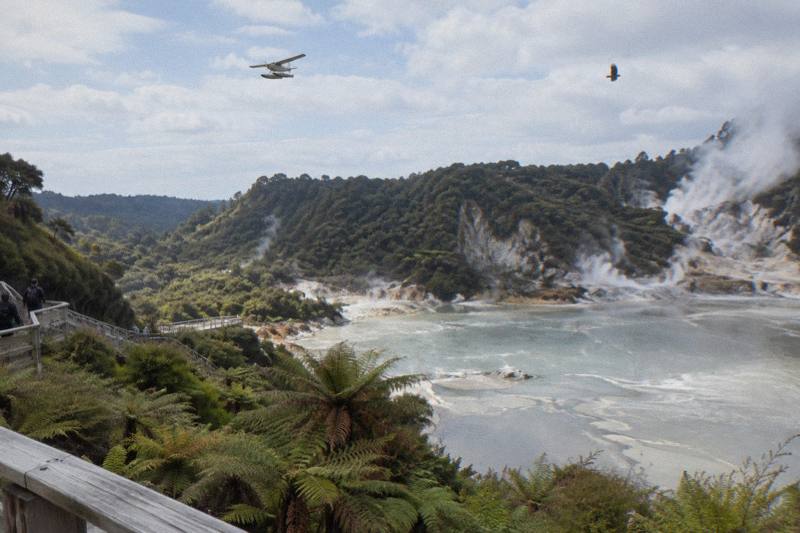
Can You Land On White Island By Helicopter?
No, helicopter landings on Whakaari / White Island are suspended, but flyover flights from Rotorua still run. What changed, what you can book instead, and what to check first.
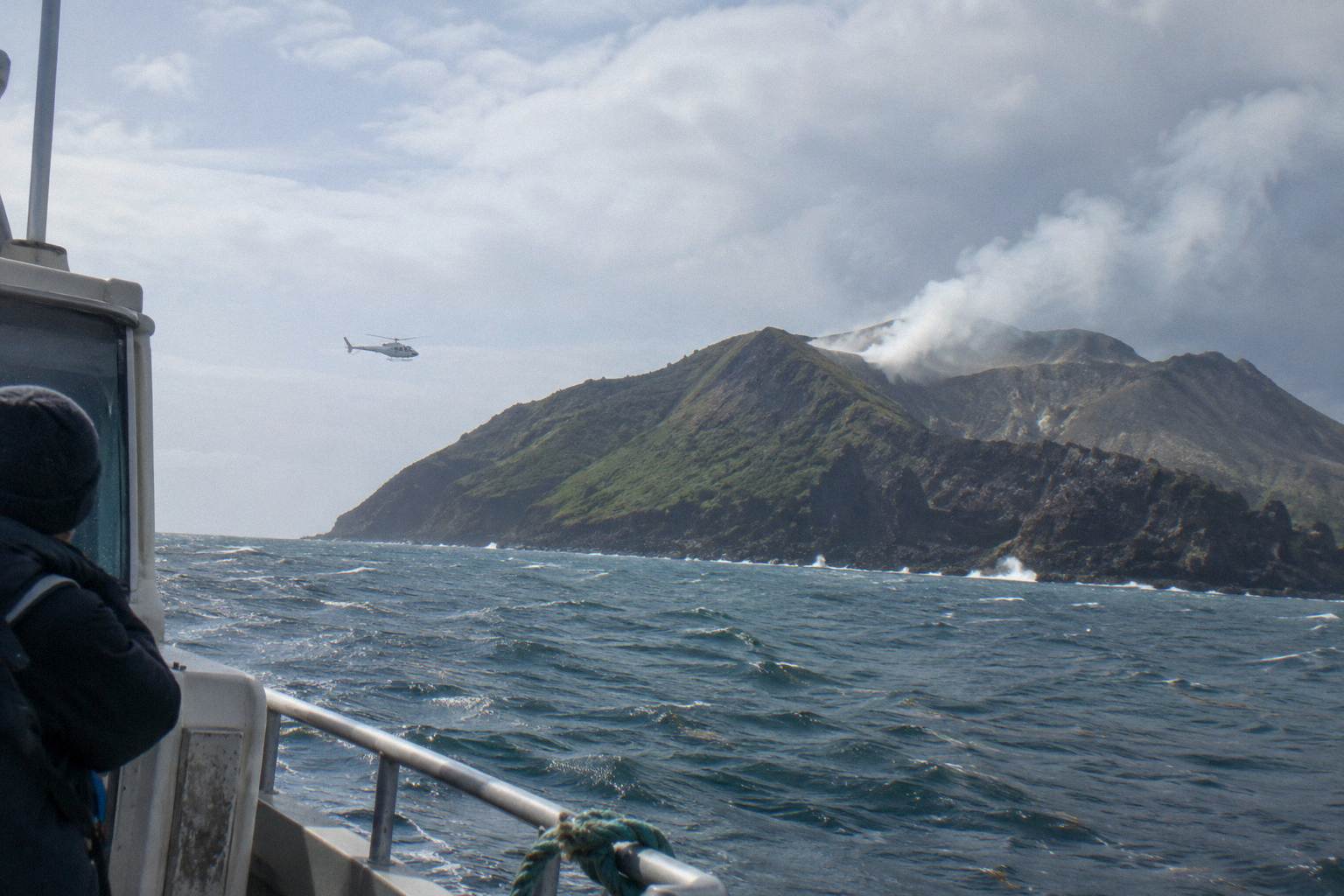
No. Helicopter landings on Whakaari / White Island are suspended, and the same restriction applies to boat tours: there are currently no boat tours to, or helicopter flights that land on, the island, in the words of New Zealand's official tourism site. Flights over the island continue, and several of them depart from Rotorua. So the question shifts from whether you can land to which flyover gives the view worth paying for, and that comparison is what occupies the rest of the decision.
Not currently. Landing on Whakaari by helicopter stopped after the eruption of 9 December 2019 and has not resumed. The official New Zealand tourism guidance says there are no boat tours and no helicopter flights that land on the island. Overflights are a different matter: scenic flights above the island operate, including departures from Rotorua, so the island is closed to footsteps and open to cameras.
That single distinction shapes every booking decision around Whakaari. Before 2019, guided walking tours on the island were a fixture of Bay of Plenty tourism, reached by boat and by helicopter, and the island's steaming crater floor was a place people stood on. Today the island is seen from above, at a distance set by aviation and safety authorities, and the experience has moved from geology underfoot to geology laid out below the aircraft.
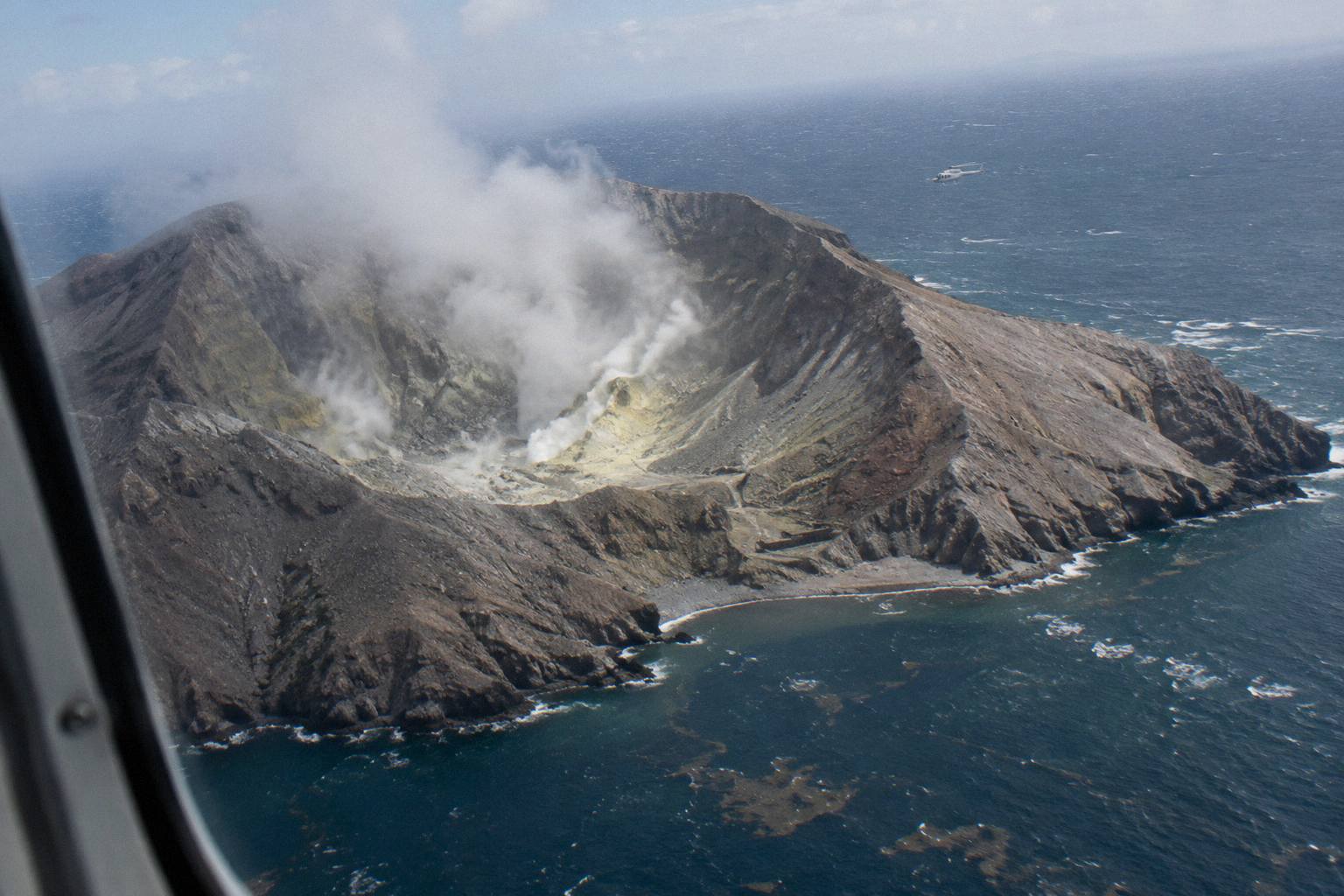
The suspension is not a seasonal closure or a short-term pause. It has held since December 2019, through changes in the island's volcanic condition, and there is no published timeline for landings resuming. The island's status is monitored continuously by GeoNet, whose Whakaari / White Island volcano page carries the current alert bulletins. Anyone planning around a future reopening should watch that page rather than a tour operator's marketing, because the condition that matters is volcanic, not commercial.
What remains bookable is the flyover. From Rotorua that means trips such as the White Island, Mount Tarawera & Waimangu Volcanic Valley floatplane flight, a 2 hour trip from the lakefront that includes Whakaari, Tarawera and the Waimangu Valley in one loop, from NZ$1,230 per person. Its helicopter counterpart, the Volcanic Extremes flight, pairs the same island with a Tarawera summit landing where conditions allow. These are the trips a landing question routes to, and the shortlist below shows the three that fit best.
Why Are Landings On Whakaari Suspended?
The suspension follows the eruption of 9 December 2019, which killed 22 people and injured 25 others while tours were on the island. After that event, land-based tourism on Whakaari ended, and official guidance now states plainly that no boat tours or landing helicopter flights operate there. The decision sits with safety authorities and the island's owners rather than with tour operators, and no operator can opt back in on its own.
The 2019 eruption is the reason the question even needs asking. Whakaari lies about 48 km off the coast of Whakatane, an active volcano rising from the Bay of Plenty, and its accessibility was exactly what made it popular: a short flight or boat ride put visitors inside a live volcanic crater. On 9 December 2019 the volcano erupted while visitors and guides were on the island. The coronial inquiry that followed recorded the toll of 22 deaths and 25 injuries. Landings have not operated since.
Airspace over the island was restricted in the immediate aftermath, and the Civil Aviation Authority lifted those restrictions in 2020, which is why flyovers could resume while landings could not. The distinction is between flying above a volcano, which a suitably certified aircraft does at a safe altitude, and putting people on a volcano, which requires confidence the ground will stay quiet for the length of a visit. That confidence does not exist for Whakaari at present, and the official position reflects it.
It helps to understand what kind of volcano Whakaari is. The operator Volcanic Air describes it as "New Zealand's only permanently active offshore volcano", and GeoNet monitors it as one of New Zealand's most active volcanic systems, with an alert level that moves as the volcano's unrest rises and falls. An island whose condition can change within days is an island where a landing permission, once given, could be wrong by the weekend. The suspension removes that timing risk entirely.
| Aspect | Landing era, before December 2019 | Flyover era, today |
|---|---|---|
| Access | Boat tours and helicopter landings put visitors on the island | No boat tours and no landing helicopters; overflights only |
| Island position | Inside the crater, at vent level | Above the whole island, crater and reef in one frame |
| Availability | Daily when conditions allowed | Three Rotorua trips include Whakaari in their route |
| Set by | Tour operators and island owners | Safety authorities and official guidance |
What A Whakaari Flyover Actually Gives You
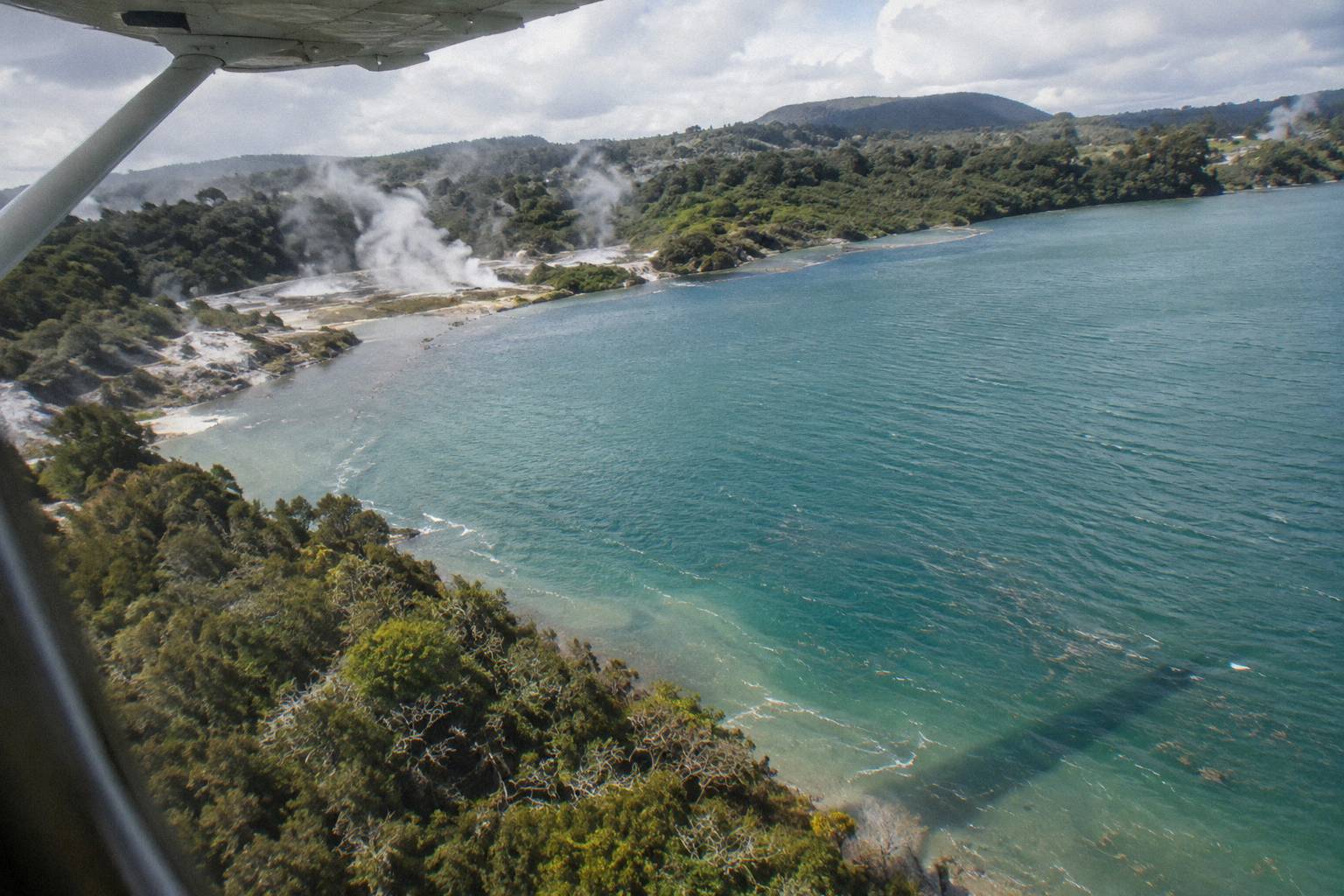
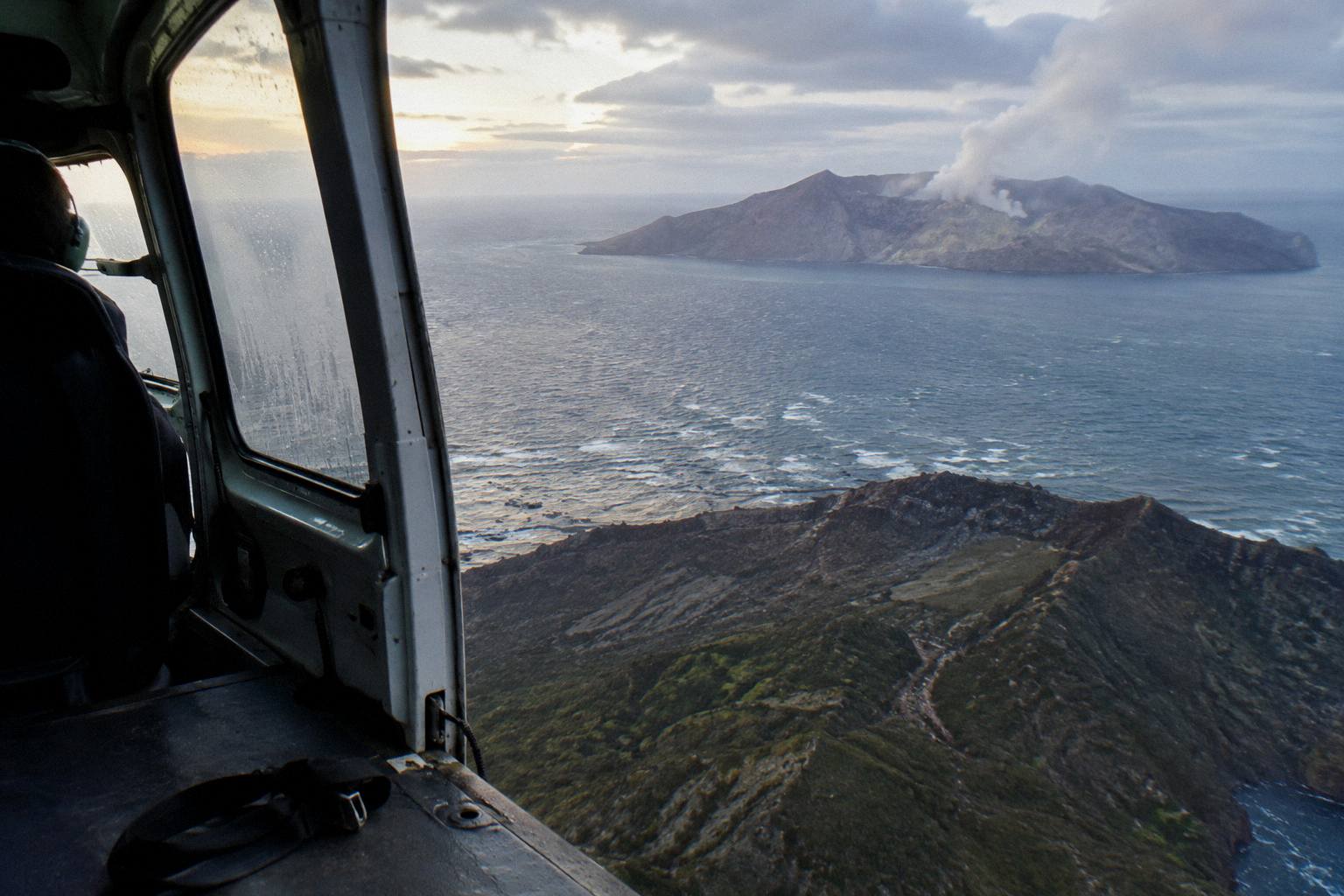
A flyover puts the whole island in view at once: the crater walls, the steaming vents, the sulphur-stained slopes and the sea breakers on the reef around it, seen from a fixed wing or helicopter cabin. You do not walk the crater floor, but from altitude the scale of the volcano, reads far more clearly than it does from ground level.
The view changes with the volcano. Whakaari vents steam more or less continuously, and the plume is visible from a long way off, often before the island itself resolves. From the air the crater's structure is laid out: the main crater floor, the remnants of older walls, and the active vent area that produces the plume. What any given flight sees depends on the volcano's behaviour and the weather that day, and no operator promises a plume, a particular vent condition, or visibility on any specific departure.
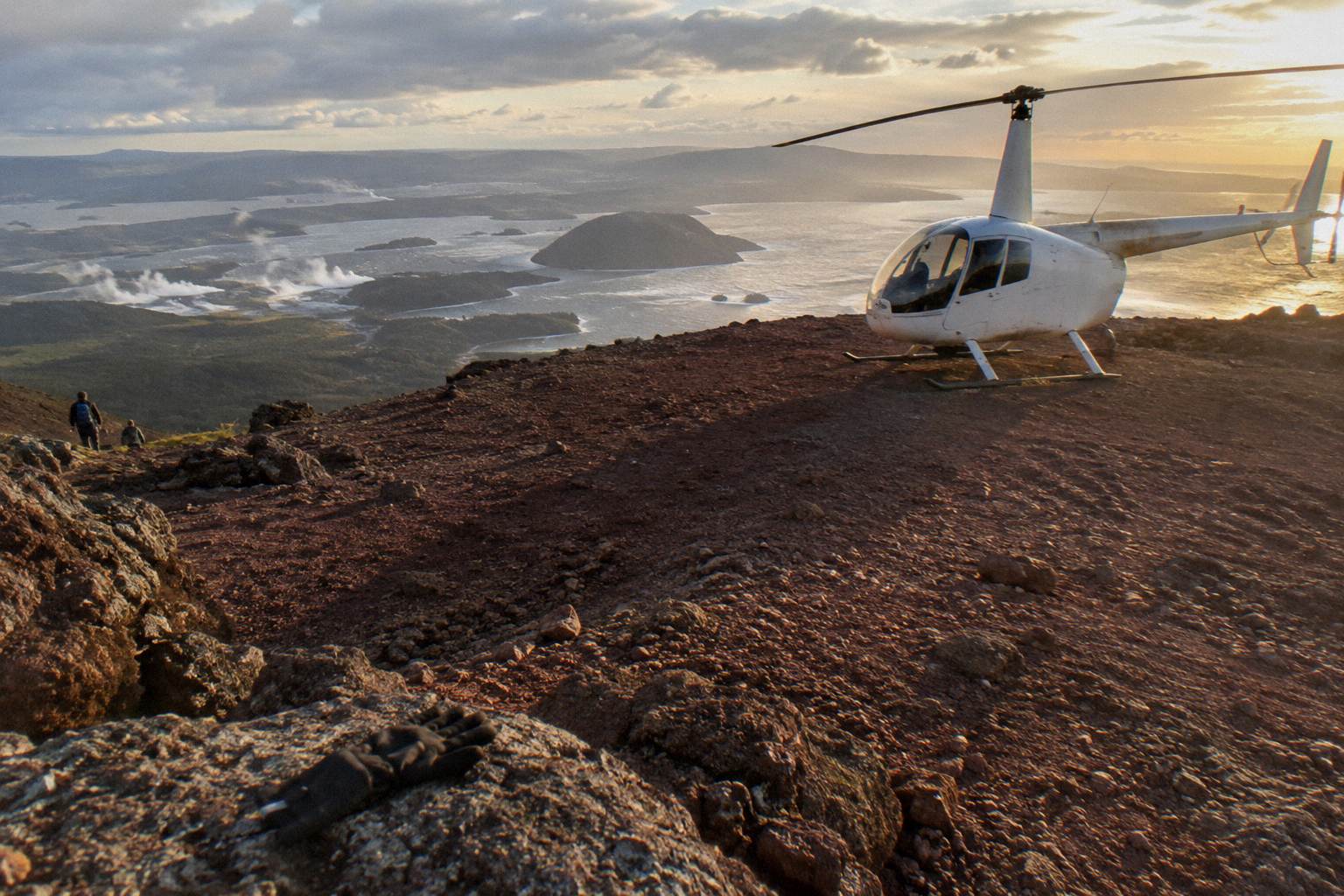
Flights from Rotorua to Whakaari typically pair the island with volcanic features closer to home. The White Island, Mount Tarawera & Waimangu Volcanic Valley floatplane flight is built exactly that way: out over the Bay of Plenty to the island, then back across the mainland's volcanic belt. The helicopter version, Volcanic Extremes, adds a Mount Tarawera summit landing where the pilot judges conditions suitable. That combination, a closed island seen from above and an open mountain landed on, is currently the closest a Rotorua visitor gets to the pre-2019 Whakaari experience.
Which Rotorua Flights Include Whakaari?
Three trips on the Rotorua roster include Whakaari in their route: the White Island, Mount Tarawera & Waimangu Volcanic Valley floatplane flight, the White Island & Mount Tarawera Floatplane Adventure, and the Volcanic Extremes helicopter flight. All three depart from the Volcanic Air base at 1 Lakefront Drive, and none lands on the island, because no landing flights exist.
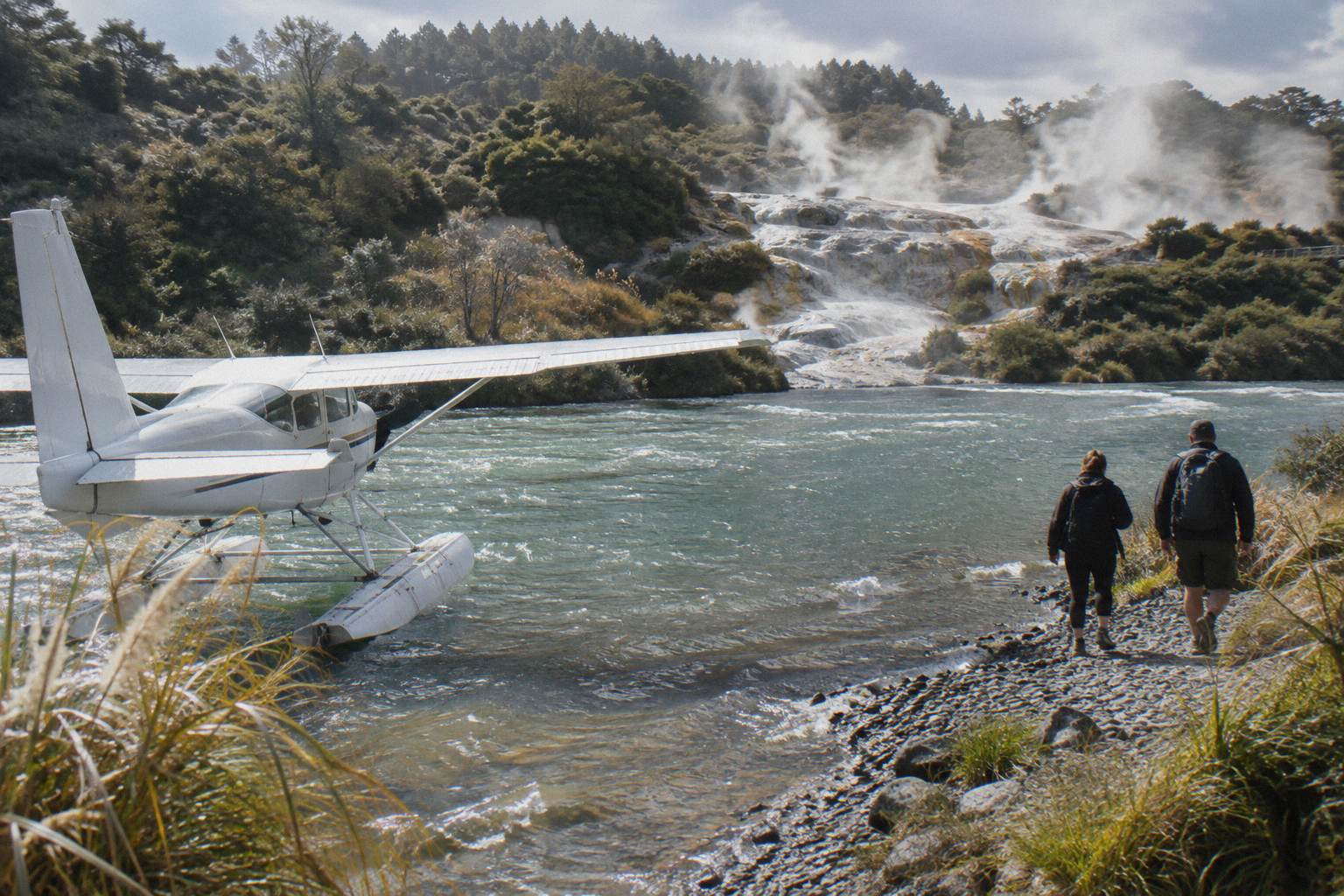
The differences between them are aircraft, duration and what else the route covers. The floatplane trips take off from and land on Lake Rotorua itself, off the lakefront pier, which is an experience in its own right: a waterborne departure from the middle of town. The helicopter trip uses the Lakefront pad and, on its return leg, can land on Mount Tarawera, subject to the pilot's sole discretion and conditions on the day.
| Trip | Aircraft | Total time | Whakaari landing | Other highlights |
|---|---|---|---|---|
| White Island, Mount Tarawera & Waimangu Volcanic Valley | Floatplane | 2 hours | No, flyover | Mt Tarawera, Waimangu Valley, from NZ$1,230 per person |
| White Island & Mount Tarawera Floatplane Adventure | Floatplane | Set at booking | No, flyover | Mt Tarawera |
| Volcanic Extremes | Helicopter | 1 hour 45 minutes | No, flyover | Mt Tarawera summit landing where conditions allow |
A fourth consideration is seating and aircraft type. A floatplane cabin is quieter in a different register than a helicopter, with wing-level views rather than open doors, and floats mean the trip begins on the water. A helicopter manoeuvres around features more tightly and, on the Volcanic Extremes route, is the aircraft that can set down on Tarawera's summit. Neither aircraft type gets closer to Whakaari than the other; the overflight distance is set by aviation rules, not by rotor count.
Booking practicalities are shared across all three. Check in at the Lakefront office, 30 minutes before a helicopter flight and 20 minutes before a floatplane, for a safety briefing. Weights are declared at booking and confirmed on arrival. All flights operate subject to suitable weather, and if weather stops a flight the operator works with passengers to reschedule or refund. Each of the three trips carries free cancellation up to 24 hours in advance on the booking page terms, which matters for a weather-dependent flight over open sea.
How The 2019 Eruption Changed Whakaari Tourism
The 9 December 2019 eruption ended walking tours on Whakaari overnight and restructured volcanic tourism across the Bay of Plenty. Before it, visitors landed on the island by boat and helicopter; after it, the island became an overflight destination only, and mainland volcanoes such as Mount Tarawera absorbed the demand for a landed volcanic experience. Rotorua's flight operators sit at the centre of that shift.
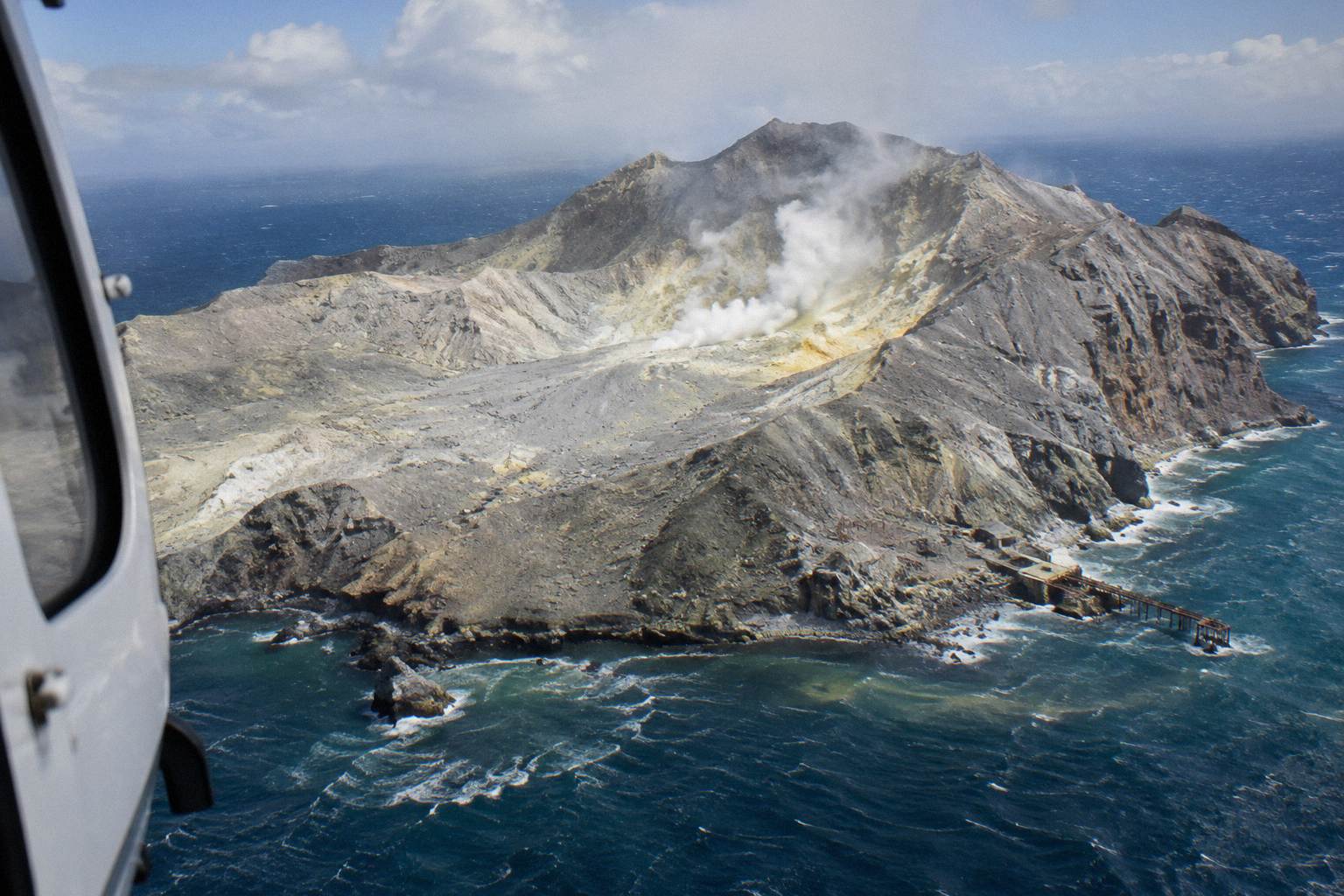
The before and after is stark. Pre-2019, Whakaari was one of the few places where a tour could walk inside an active volcanic crater, and operators ran daily trips when conditions allowed. The eruption of 9 December 2019 killed 22 people and injured 25, and the official guidance now states there are no boat tours or landing helicopter flights to the island. What replaced the landing product is the flyover product: same island, same crater, seen from an altitude the authorities judge safe.
The demand did not disappear with the landings. People still want to see an active offshore volcano, and a flyover answers that want in a way few places on earth can. Volcanic Air describes Whakaari as "New Zealand's only permanently active offshore volcano", and from Rotorua it is reachable in a single morning or afternoon alongside the mainland's own volcanic landscape. The pairing of Whakaari with Tarawera on all three Rotorua routes is not accidental: it sells the Bay of Plenty's full volcanic arc in one seat. The full index of guides sits on Rotorua Helicopter Tours.
There is a comparison worth making with Rotorua's other drawcards in the guide to Rotorua scenic flights. The crater lakes flights stay local and short; the Whakaari flights are among the roster's longer commitments, 1 hour 45 minutes to 2 hours, crossing open sea to reach the island. That length is the point: no other Rotorua flight covers as much volcanic geography in one booking.
Is A Flyover Worth It Without The Landing?
For most travellers asking the landing question, yes: the flyover delivers the part of Whakaari people actually remember, the sight of an active volcano exhaling steam in the open ocean, and it does so without the ground risk that ended landing tours. A landing adds crater textures underfoot; an overflight adds context, the island's full scale, its reef, the empty sea around it, and pairs it with mainland volcanoes in the same flight.
The honest trade-off is texture versus perspective. Landing tours let people touch sulphur-crusted ground and stand beside steaming vents. Flyovers show the whole system at once: how the crater sits inside the island, how the reef breaks the swell, how small a live volcano looks against the Bay of Plenty and how much steam it produces. Photographers often prefer the aerial geometry, and the pilot can position the aircraft around the island in a way a walking route never could.
Value also depends on the route. A Whakaari-only flight would spend much of its duration over water in each direction. The Rotorua trips avoid that by loading the route: the Waimangu floatplane adds Mount Tarawera and the Waimangu Volcanic Valley, the valley that formed along the 1886 rift, and the Volcanic Extremes helicopter adds a Tarawera summit landing. A reader weighing this against a shorter local flight can compare the options in whether helicopter tours are worth the money; the short version is that the Whakaari routes are the roster's premium tier, priced accordingly, from NZ$1,230 per person on the Waimangu floatplane trip.
One more angle: the flyover is the only Whakaari product that has ever been available to most visitors in this decade. The landing tours people read about in older articles and guidebooks no longer exist, and a traveller who arrives expecting to book one will be re-planning on the spot. Asking the landing question early, and routing to a flyover, saves that disappointment.
What To Check Before Booking A Whakaari Flight
Check four things: the island's current status on GeoNet, the weather outlook for the Bay of Plenty, the aircraft and route that suits you, and the cancellation terms. Whakaari's condition changes, flights are weather dependent, and the three Rotorua routes differ enough that the right choice depends on whether a Tarawera landing or a lakes departure matters more.
Status first. Whakaari's volcanic alert level moves over time, and GeoNet publishes the bulletins as they are issued. The current condition does not change whether flyovers run, but it does change what the island is doing when you pass over it, and travellers who care about the volcano usually care about that too. The GeoNet Whakaari page is the primary source, updated directly by the monitoring scientists.
Weather second. Every flight on the roster operates subject to suitable weather and safe flying conditions, and a Whakaari flight crosses open sea, so the bar is higher than for a lake circuit. If conditions do not allow the flight to run, the operator works with passengers to reschedule or provide a full refund. Practical advice: book the Whakaari flight early in your stay, not on your last day, so a reschedule has room to land on. Mornings often give the calmest conditions in Rotorua, and the driest, warmest stretch of the local year runs from October to April.
Third, match the route to your priorities. If the Tarawera landing is the draw, the helicopter is the only aircraft that offers it. If the lakes departure appeals, take the floatplane. If time is the constraint, the helicopter's 1 hour 45 minute total is the shorter commitment against the floatplane's 2 hours. Check in times differ too, 30 minutes for helicopters and 20 for floatplanes, and hotel pickup is not part of standard flights, so plan to reach the Lakefront under your own steam; the base sits under a kilometre from the town centre.
| Check | Why it matters | Where to look |
|---|---|---|
| Island volcanic status | Steam and vent behaviour vary with unrest | GeoNet Whakaari page |
| Bay of Plenty weather | Sea crossing needs better conditions than a lake flight | Operator on the day; reschedule or full refund if cancelled |
| Route and aircraft | Only the helicopter offers a Tarawera landing; the floatplane departs from the lake | Trip pages on this site |
| Cancellation terms | Free cancellation up to 24 hours in advance on booking terms | Booking page at checkout |
Fourth, read the terms for your own situation before you pay. Weights are declared at booking and verified on arrival, with a surcharge possible above 110 kg and a second seat required above 135 kg as weighed. Children of all ages are welcome, with under 2s on a lap and child rates for ages 2 to 11. Pregnancy and reduced mobility are not automatic barriers, but the operator asks to be told at booking so assistance can be arranged. The weight limits guide covers the weighing process in detail.
Common Mistakes When Planning A White Island Flight
The recurring mistakes are assuming landings still run, booking a Whakaari flight for the final day of a trip, expecting a guaranteed view of steam or the crater, and confusing the island's alert level with flight availability. Each one is avoidable with a small amount of planning, and none is rare: the landing assumption in particular catches readers of older guidebooks and out-of-date articles every week.
Assuming landings run is the big one. Some international content still describes Whakaari walking tours in the present tense, and a traveller who books around that expectation arrives to find no such product exists. The current position has held since December 2019: no boat tours, no landing helicopters, flyovers only.
Scheduling the flight last is the second. A sea-crossing flight is among the first things weather will move, and a cancellation on departure eve leaves no room to rebook. Mid-stay is the safe slot, with the morning departures often the calmest.
Expecting guarantees is the third. No operator promises steam, clear crater views, or a particular plume on any given day, and the booking terms say plainly that a weather dependent flight will not go ahead if it is not safe or the views cannot be seen. Buy the flight for the route and the odds, not for a single frame.
Confusing status with availability is the fourth. The alert level describes the volcano, not the flights: flyovers operate within whatever airspace rules apply at the time, and the flyover product has continued through changes in the island's condition. Checking GeoNet is worthwhile, but a level change does not automatically mean the flight you booked is off. The operator will tell you if it is, and the reschedule or full refund terms cover it.
A final small one: turning up at the wrong check in time. Helicopter passengers check in 30 minutes before the flight, floatplane passengers 20, both at the Lakefront office, and late arrival risks the seat. The briefing is part of the safety system, not a formality.
The Bottom Line For Whakaari Travellers
Landing on White Island by helicopter is not possible, and anyone booking a Whakaari experience from Rotorua is booking an overflight. The three roster trips that include the island, two floatplane routes and one helicopter route with a Tarawera landing, are the full current range, and each departs from the Lakefront base under free cancellation up to 24 hours in advance. Choose by aircraft preference and route, book mid-stay, watch the weather, and treat GeoNet as the island's status page.
For a fuller comparison of the helicopter and floatplane experience over water, the Rotorua helicopter versus floatplane guide works through cabin, views and take off differences, and the broader Whakaari flyover or landing guide covers the history of the question. The short answer to this one, though, is settled: no landings, good flights, and an island best understood from above while the restriction holds.
Common Questions About Whakaari Flights
Can You Land On White Island By Helicopter?
No. Landings have been suspended since the 9 December 2019 eruption, and official New Zealand guidance states there are currently no boat tours or helicopter flights that land on the island. Scenic flyovers continue, including departures from Rotorua.
Can You Still Fly Over White Island?
Yes. Overflights operate, and three trips from the Rotorua lakefront include Whakaari in their route: two floatplane trips and one helicopter trip that also covers Mount Tarawera with a summit landing where conditions allow.
Why Did White Island Landing Tours Stop?
The eruption of 9 December 2019 killed 22 people and injured 25 while tours were on the island. Land-based tourism ended after that event, and the suspension has remained in place, with flyovers the only product currently offered.
How Long Is A Whakaari Flight From Rotorua?
The Volcanic Extremes helicopter trip runs about 1 hour 45 minutes in total, and the White Island, Mount Tarawera & Waimangu floatplane trip runs about 2 hours, island time plus the crossings and the mainland volcanic route.
Does The Volcano's Alert Level Affect Flights?
The alert level describes the volcano's state of unrest, not whether flights run. GeoNet publishes the current status, and airspace rules govern flying. If a flight cannot operate safely, the operator reschedules or refunds.
What Happens If Weather Cancels A Whakaari Flight?
All flights operate subject to suitable weather. If the flight cannot go ahead, the operator works with passengers to reschedule or provide a full refund, and bookings carry free cancellation up to 24 hours in advance, so book mid-stay to leave room for a rebook.