Helicopter Passenger Weight Limits: How Rotorua Flights Handle Them
Rotorua helicopter flights weigh every passenger, apply a discretionary surcharge above 110 kg, and require two adult fares above 135 kg as weighed. Here is how the rules work, where they come from, and what to do about them before you book.
Short answer
Rotorua flights by Volcanic Air require each passenger's weight to be declared at booking, and everyone is weighed on arrival. Above 110 kg a surcharge may apply at the operator's sole discretion, and above 135 kg as weighed two adult fares are required. The reason is aircraft balance, not judgement, and one trip lists a 110 kg per passenger limit.
Weight logistics sit inside the wider planning picture covered in the complete Rotorua helicopter ride overview, and this piece goes deep on the one variable many travellers quietly worry about.
| Quick Fact | Detail |
|---|---|
| Weight declared at booking | Yes, individual weights for every guest |
| Weighed on arrival | Yes, all passengers, before the safety briefing |
| Surchage threshold | Above 110 kg, at the operator's sole discretion |
| Two-fare threshold | Above 135 kg as weighed |
| Per-trip limit | One-Hour Volcanic Adventure: 110 kg per passenger, max 6 travellers |
| Check-in | Helicopters 30 minutes prior, floatplanes 20 minutes prior |
| Meeting point | Lakefront, 1 Lakefront Drive, Rotorua |
What Is The Helicopter Passenger Weight Limit In Rotorua?
Rotorua helicopter flights do not publish a single hard weight limit that applies to every trip. The operator's terms set two thresholds: above 110 kg a surcharge may apply at the operator's sole discretion, and above 135 kg as weighed, two adult fares are required. On top of those, individual booking pages can print their own numbers, and one trip, the One-Hour Volcanic Adventure, lists 110 kg per passenger with a maximum of six travellers. A lighter passenger has nothing to arrange in advance beyond an accurate declared weight. A heavier passenger benefits from knowing the thresholds before booking rather than discovering them at the Lakefront counter.
The thresholds come from the operator's published terms, clause 1.17 in particular, and they are written as discretion rather than a wall. Over 110 kg, the wording is that a surcharge may apply at Volcanic Air's sole discretion. Over 135 kg as weighed, two adult fares are required. The distinction matters: the first is a commercial judgement the operator can make flight by flight, the second is a structural rule about how many seats a passenger effectively occupies in the weight and balance calculation.
It is also worth separating the general terms from what a single booking page prints. The One-Hour Volcanic Adventure, the Mount Tarawera Volcanic Adventure by Helicopter, carries a line on its own booking page reading "Total weight per passenger: 110 kg" alongside its six traveller maximum. That is a limit stated for that one trip, and it should not be read onto any other trip in the line-up. Flights differ in aircraft, route and duration, and the per-trip numbers travel with their own pages.
Nothing in the terms is hidden until departure. The operator's FAQ asks all guests to provide individual weights at the time of booking, precisely so seating can be planned before anyone arrives. The system works smoothly when the declared number matches the weighed number, and the terms exist for the case where it does not.
| Rule | Number | Where It Comes From | How It Applies |
|---|---|---|---|
| Surchage threshold | Above 110 kg | Operator terms, clause 1.17 | May apply, at the operator's sole discretion |
| Two-fare threshold | Above 135 kg as weighed | Operator terms, clause 1.17 | Two adult fares required |
| Declared weight | At booking, per guest | Operator FAQ | Needed for safe, balanced seating |
| Weigh-in | On arrival | Operator FAQ | All passengers weighed before boarding |
| Per-trip limit | 110 kg per passenger, max 6 | One-Hour Volcanic Adventure booking page | Applies to that trip only |
Why Are Passengers Weighed Before A Rotorua Helicopter Flight?
Every passenger is weighed because a helicopter's centre of gravity must sit inside a narrow safe envelope, and that envelope is calculated from actual individual weights, not estimates. The operator's FAQ puts it plainly: providing individual weights at booking helps the crew achieve safe and balanced seating in the aircraft. Weighing on arrival confirms the declared numbers so the aircraft stays within its balance limits. It is an engineering requirement shared across commercial helicopter operations, not an assessment of any individual traveller.
A small helicopter carrying four to six people is far more sensitive to weight distribution than an airliner. Two passengers of very different weights seated on the same side can shift the centre of gravity enough to matter, which is why the operator needs real numbers in advance to plan the seat plan, and why the weigh-in on arrival is routine for everyone rather than a targeted check. The New Zealand rule framework for these operations, Civil Aviation Rule Part 135, titled "Air operations: helicopters and small aeroplanes", governs holders of an air operator certificate, and weight and balance discipline sits at the core of that regime.
The practical consequence for a passenger is simple: declare accurately, get weighed, board. The consequence of a declared weight that drifts from the real one is spelled out in clause 1.16 of the operator's terms. Any deviation from your declared weight may result in a flight being rescheduled, a surcharge being applied, or a booking being cancelled, at Volcanic Air's sole discretion. In other words, the risk of a wrong declaration is borne by the booking, not by the operator.
If you are comparing which trip to book with weight logistics in mind, the choice spans short scenic hops and long landing adventures, and the three below cover the range.
The Mt Tarawera Helicopter Tour with Volcano Landing, which holds a 4.9 rating from 43 reviews, is the Tarawera summit landing flight. The 15-Minute Crater Lakes Flight by Helicopter from Rotorua is the shortest rotor option in the line-up. The Mount Tarawera Volcanic Adventure by Helicopter, the One-Hour Volcanic Adventure, is the trip whose booking page prints the 110 kg per passenger line and the six traveller maximum, so heavier passengers planning that specific flight should read its numbers first.
What Happens If You Weigh Over 110 Kg?
Above 110 kg, the operator's terms say a surcharge may apply at the operator's sole discretion, and the right response is to declare your accurate weight at booking and ask the operator about the surcharge before travel day. Declaring accurately does not cost you the flight: it lets the crew plan seating around real numbers. Concealing or underestimating weight is what triggers the harsher outcomes in clause 1.16, which include rescheduling, a surcharge, or cancellation of the booking.
The surcharge threshold is a may, not a must, and that word carries real meaning. The operator can weigh the decision against the aircraft, the other passengers on the flight and the route. A passenger slightly over the threshold on a lightly loaded flight may face a different outcome from the same passenger on a full flight where every seat matters to the balance calculation. That variability is exactly why the conversation belongs at booking time, when there is room to plan, rather than at the Lakefront 30 minutes before departure.
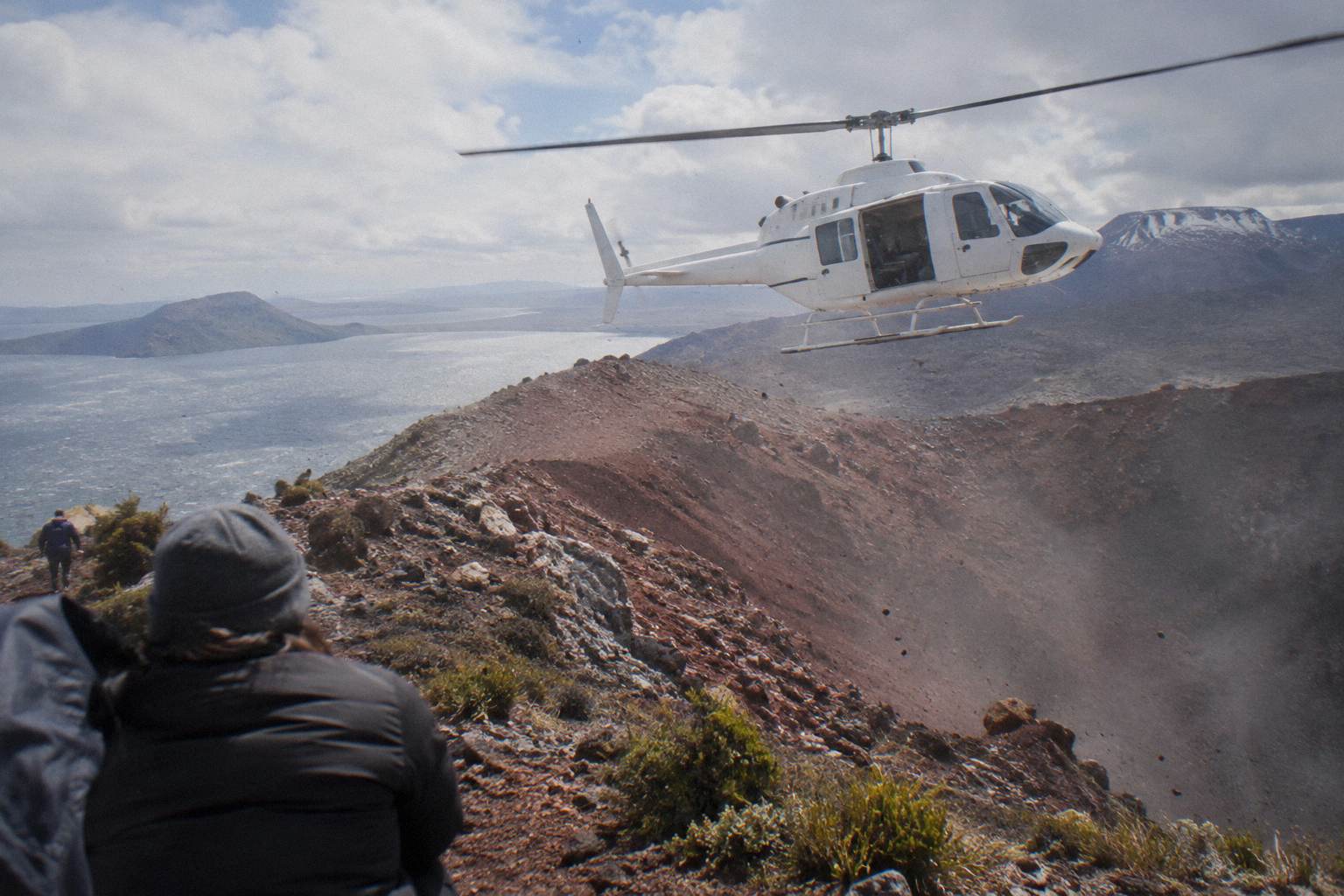
The two-fare rule above 135 kg as weighed works differently. It is not discretionary: it reflects that a passenger above that weight occupies the effective weight allowance of two seats in a small aircraft. Booking two adult fares also usually means more physical space, which many passengers above that weight prefer anyway in a small cabin. If a booking page price is shown for a trip, it is a per person fare, such as from NZ$675 per person on the Helicopter Landing, Guided Summit Walk, and a second fare doubles that figure, a cost worth knowing about before you commit rather than at check-in.
There is a procedural safety net worth knowing about. All flights operate subject to suitable weather and safe flying conditions, and if the flight cannot go ahead, the operator works with passengers to reschedule or provide a full refund. Weight logistics add one more reason to have the operator's contact details handy, and one more reason accuracy at booking protects your own money as much as the operator's schedule.
Do Children And Lap Infants Count Toward The Weight Limits?
Children of all ages are welcome, and every child still counts toward the aircraft's weight calculation, because balance math does not distinguish between adult and passenger kilograms. Under 2, a child sits on a parent or guardian's lap. Ages 2 to 11 pay child rates, and on the Mt Tarawera landing flight specifically the published detail is a minimum of two adult fares with children aged 2 to 11 paying 75% of the adult fare. Individual weights are still declared for every guest at booking, whatever their age.
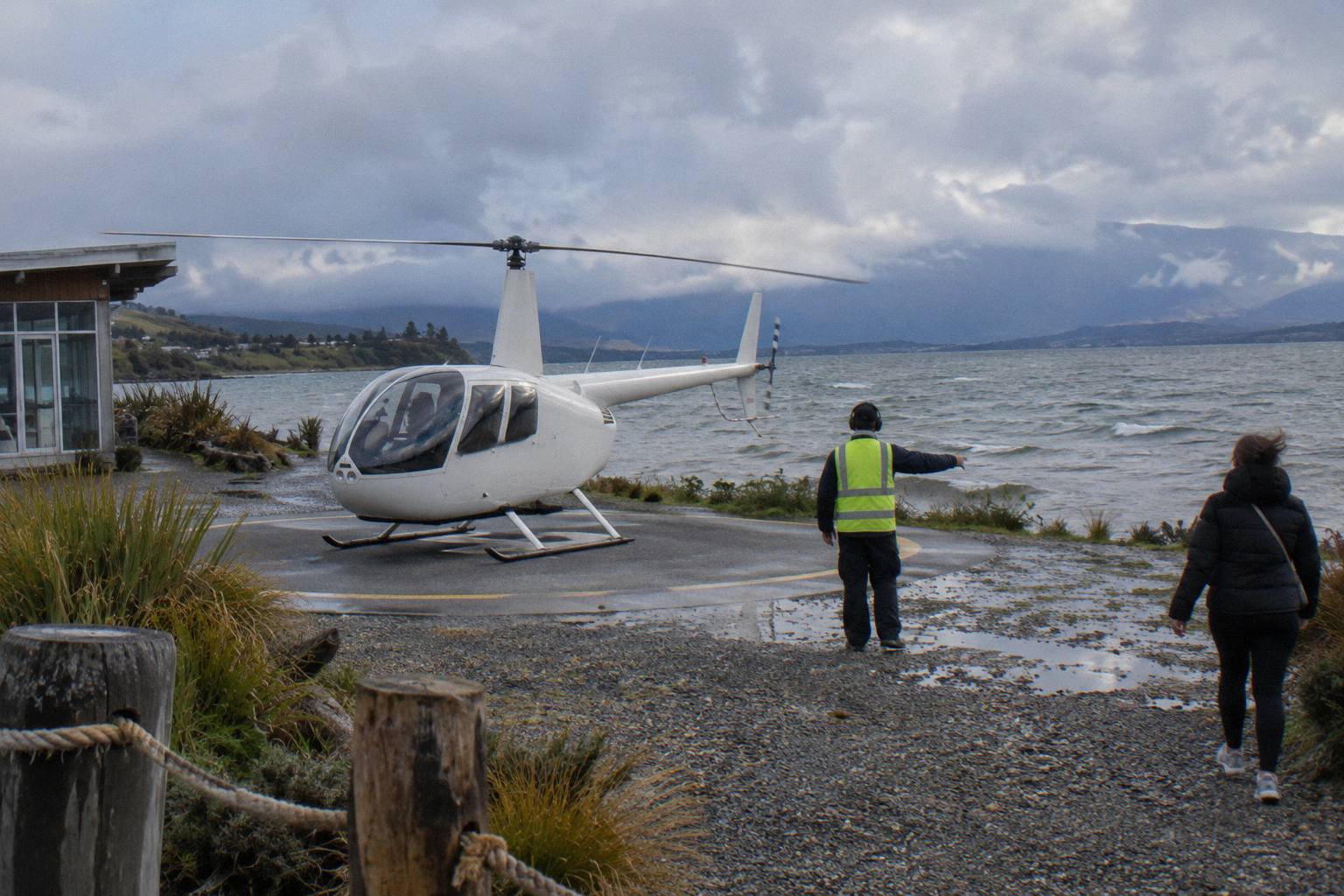
A lap infant is the one case where the seat count and the weight count move differently: the infant occupies no seat but still adds mass, which is why the declared-weight request covers all guests rather than only ticketed seats. For older children the logic is identical to adults. The weigh-in on arrival includes them, the seat plan includes them, and a family of five booking a Tarawera landing will find the operator planning around ten real numbers, not five.
Families weighing up whether a helicopter flight suits their crew can read the fuller picture in the guide to helicopter flights for families in Rotorua, and the question of what younger flyers can expect on board is covered separately in whether children can fly on a helicopter tour in Rotorua. For weight purposes, the short version is that nothing about the thresholds changes for a child; only the fare structure does.
The Geothermal Park Landing, 3 Hours trip, the Rotorua: Volcano Landing and Geothermal Park Helicopter Tour, from NZ$1,490 per person, shows how the fare structure scales on the longer itineraries. It is the line-up's three-hour helicopter product, landing at both the Mt Tarawera summit and Orakei Korako, and like every other trip it needs declared individual weights for each guest at booking.
No review pool is published for that trip yet, but the weight mechanics are the same ones described above, and its free cancellation up to 24 hours before travel means a family still finalising numbers can book and adjust.
What Happens At Check-In And The Weigh-In?
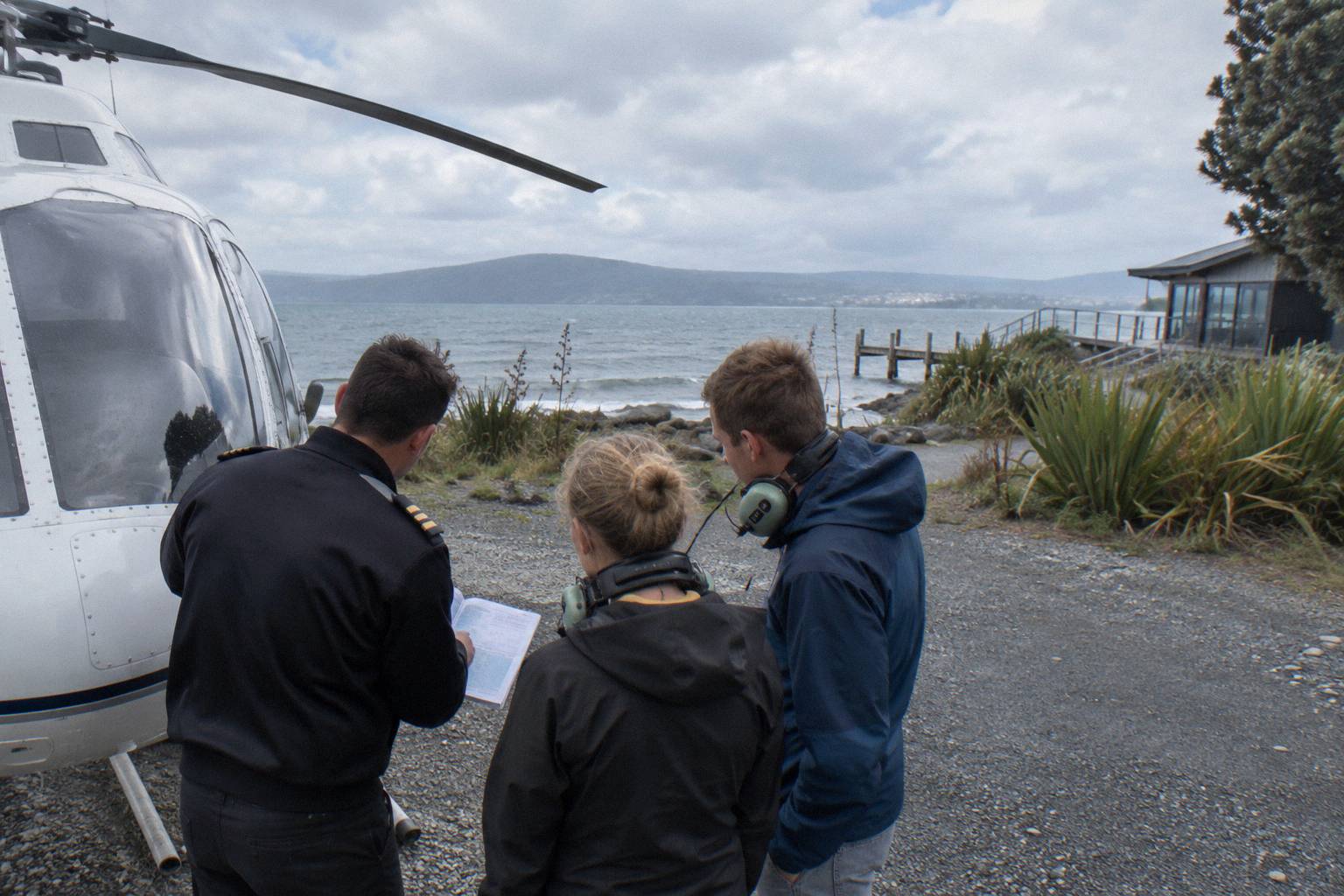
Arrive at the Lakefront office at 1 Lakefront Drive, Rotorua, 30 minutes before a helicopter flight or 20 minutes before a floatplane flight, because the safety briefing and the weigh-in both happen in that window. Passengers are weighed individually, the numbers are checked against the declared weights, and the crew finalises the seating plan. Hotel pickup is not part of standard flights, so build the walk or drive to the Lakefront into your timing.
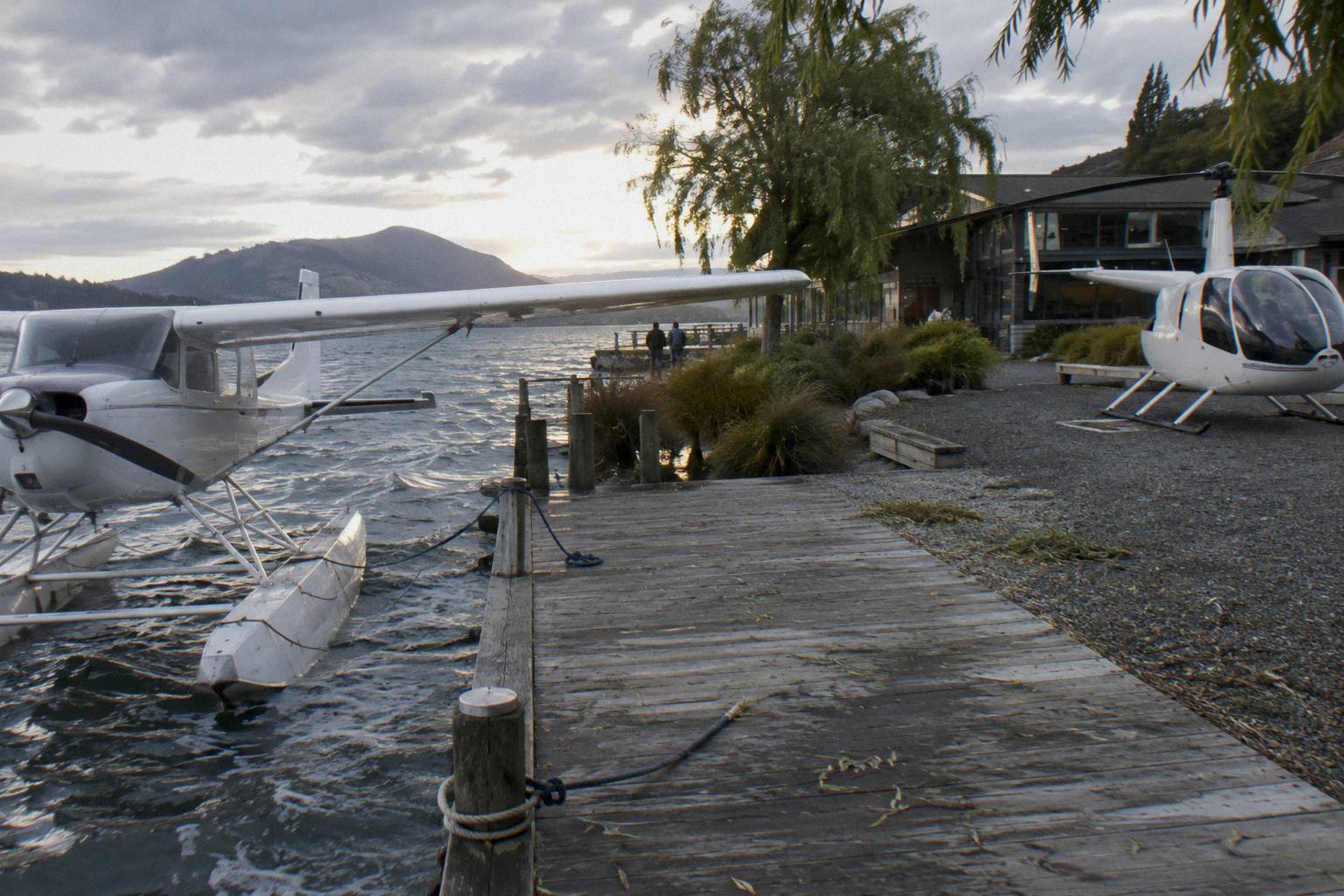
The operator's FAQ walks through the practicalities. Check in at the Lakefront office before the flight for a full safety briefing, helicopters 30 minutes prior, floatplanes 20 minutes prior. The weigh-in is part of that process, handled matter-of-factly for every passenger. If the scales disagree with the declared weight, clause 1.16 applies, and the outcomes range from a quiet seat-plan adjustment to a surcharge, a reschedule, or in the worst case a cancelled booking. None of that is likely when the original declaration was accurate.
What to bring intersects with the weight question in one small way. The FAQ recommends a camera, sunglasses, a jacket, and closed-toe comfortable footwear for flights with landings. Bags and loose items are handled per the safety briefing, so the weight that matters on the scales is body weight, and heavy carry-ons are best left behind or stored. For the floatplane products, departure is from the lakefront pier onto Lake Rotorua itself, which adds a short walk across the pier to the boarding step.
| Check-In Step | Timing or Detail | Why It Exists |
|---|---|---|
| Arrive at Lakefront office | 30 min prior, helicopters | Window for briefing and weighing |
| Arrive for floatplanes | 20 min prior | Floatplane boarding from the pier |
| Individual weigh-in | All passengers | Confirms declared weights for balance |
| Safety briefing | Before boarding | Operator requirement for all guests |
| Seating plan finalised | After weighing | Centre of gravity within limits |
The Dual Landing Thermal Explorer, the Mount Tarawera/Orakei Korako Thermal Explorer Dual Landing, is one of the longer helicopter days in the line-up, landing at both Mt Tarawera and Orakei Korako. Its review pool sits at only 10 reviews, too small for a rating to mean much, so none is shown, but as a full-day commitment it is the kind of trip where you want the weigh-in to be the least interesting part of the morning.
Which Trip Should A Heavier Passenger Choose?
Choose by aircraft load and trip length rather than by avoiding the rules, because the weight thresholds apply line-up-wide. The sequence is: declare accurate weight at booking, ask the operator directly about the 110 kg surcharge or the 135 kg two-fare rule for your situation, and then pick the itinerary you actually want. Shorter flights and smaller groups give the operator more seating flexibility, while landing trips with multi-stop itineraries involve more weight-sensitive legs, so the conversation with the operator matters most on those.
The line-up spans fifteen-minute scenic hops, such as the Crater Lakes By Helicopter, 15 Minutes flight, through to the One-Hour Volcanic Adventure and the three-hour Geothermal Park Landing. Duration and stops change the experience, but the weighing process is the same at every length: declared at booking, confirmed on arrival. The one shown per-trip number remains the 110 kg per passenger limit on the One-Hour Volcanic Adventure's own booking page, and heavier passengers eyeing that trip should treat it as a real constraint and check with the operator before booking.
| Trip | Type | Landing | Booking-Page Price |
|---|---|---|---|
| Helicopter Landing, Guided Summit Walk | Helicopter, 40 min total | Mt Tarawera summit | From NZ$675 per person |
| Scenic Floatplane, Tarawera And Waimangu | Floatplane, 30 min flight | No landing | From NZ$395 per person |
| Geothermal Park Landing, 3 Hours | Helicopter, 3 hours | Mt Tarawera summit and Orakei Korako | From NZ$1,490 per person |
| Floatplane, Orakei Korako Landing | Floatplane, 2 hours | Orakei Korako | From NZ$845 per person |
| Floatplane, Waimangu Included | Floatplane, 2 hours | No landing | From NZ$1,230 per person |
| One-Hour Volcanic Adventure | Helicopter, 1 hour | Mt Tarawera summit | Price shown at booking |
Price context helps frame the choice. The Helicopter Landing, Guided Summit Walk runs from NZ$675 per person for a 40-minute total experience with a Mt Tarawera summit landing, while the Scenic Floatplane, Tarawera And Waimangu flies from NZ$395 per person as a 30-minute flight with no landing, and it carries a 4.9 rating from 28 reviews. All amounts are New Zealand dollars. A heavier passenger is not steered toward or away from either by the rules themselves; the deciding factor is the operator's seating plan on your chosen date.
The Scenic Floatplane, Tarawera And Waimangu, the Rotorua: Scenic Flight over Mt Tarawera & Waimangu Valley, is worth naming here because floatplanes carry the same declared-weight process, and its flyover format has no landing leg to complicate the balance picture.
Its booking page carries the clearest weather wording in the line-up, saying the tour will not go ahead if it is not safe or if the views cannot be seen, which pairs with the operator's reschedule-or-refund commitment on weather. For the full comparison between the two aircraft types, read how Rotorua helicopter flights compare with floatplanes.
What Mistakes Catch Passengers Out On Weight Rules?
The mistakes are predictable and avoidable: guessing or trimming your declared weight instead of stating it accurately, arriving without the 30 or 20 minute buffer the weigh-in needs, assuming the 110 kg limit shown on one trip's page applies to all of them, and booking a multi-stop landing itinerary without asking the operator how the two-fare rule prices out. Every one of these creates friction that a single accurate declaration or a short pre-trip email would have removed. None of them ends a trip when handled in advance.
The costliest mistake is the doctored declaration. Clause 1.16 does not punish accuracy; it punishes deviation. A passenger who declares a weight under the 110 kg threshold and then weighs in above it on arrival has handed the operator three bad options, reschedule, surcharge or cancellation, while the same passenger declaring the true number at booking would simply have had the seat plan built around it and, possibly, a surcharge quoted up front with time to decide. The scales at the Lakefront are the arbiter, and they are not negotiable.
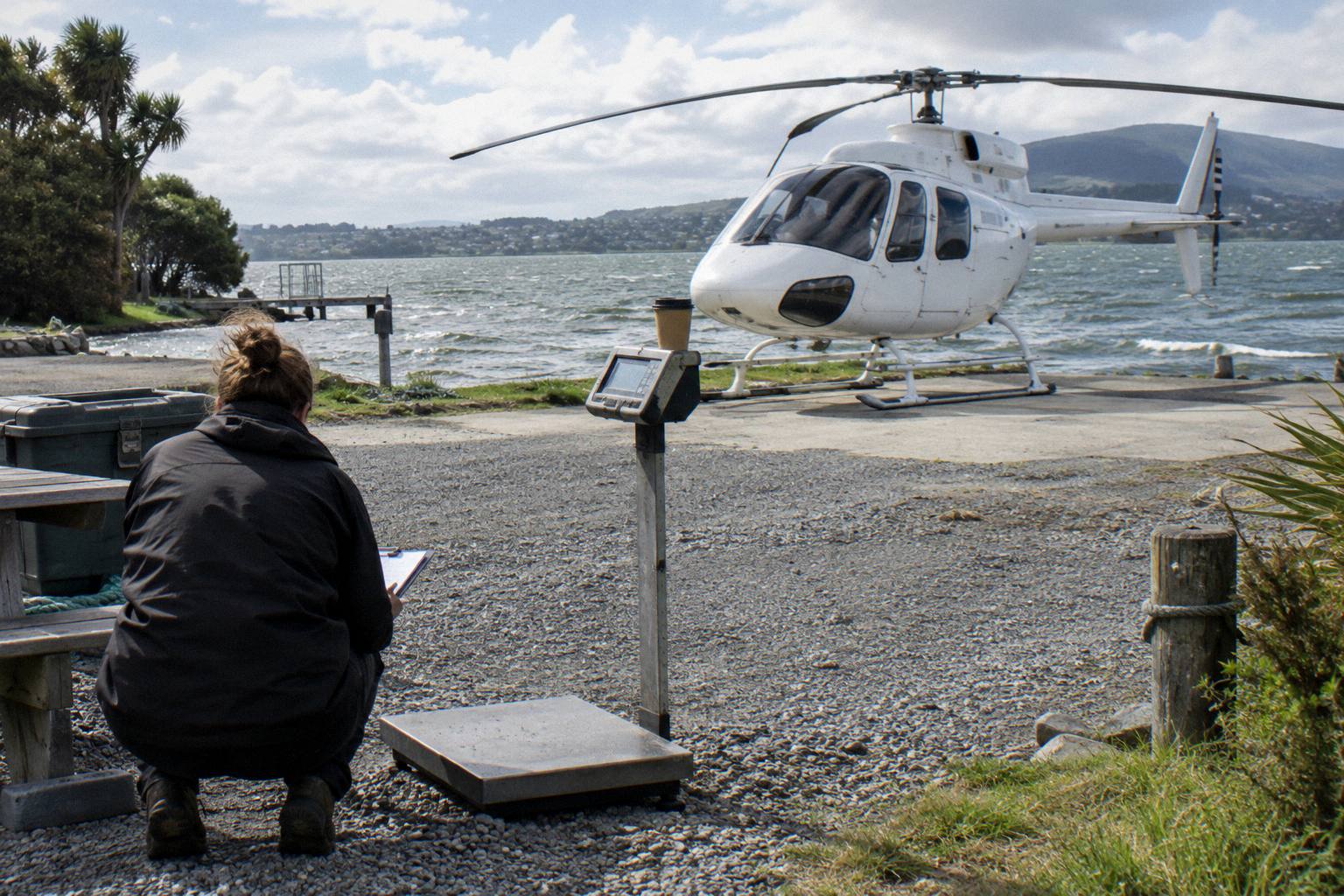
The second tier of mistakes is logistical. Arriving at departure time rather than check-in time compresses the briefing and weigh-in into minutes that do not exist. Assuming hotel pickup exists, when standard flights do not include it, adds stress the Lakefront walk does not need. And reading the One-Hour Volcanic Adventure's 110 kg per passenger line onto a different trip, or assuming a different trip's page carries no limit at all when its numbers simply are not shown, leads to planning on the wrong facts. When in doubt, the operator's own FAQ and terms answer the weight questions directly.
A final mistake affects near-threshold passengers on the fence about timing: booking late. Weight conversations go better with schedule room to spare, and the broader booking-window question is covered in how far ahead to book a Rotorua helicopter flight. Free cancellation up to 24 hours before travel, shown across the line-up's booking pages, means an early booking with an accurate declaration is the low-risk move, not the reckless one.
Planning around Rotorua Helicopter Tours means the weigh-in is one of the few genuinely routine parts of the day, and it stays routine exactly as long as the numbers on the booking match the numbers on the scales.
Common Questions About Weight Rules On Flights
What Is The Helicopter Passenger Weight Limit In Rotorua?
The operator's terms set two thresholds: above 110 kg a surcharge may apply at the operator's sole discretion, and above 135 kg as weighed, two adult fares are required. Separately, the One-Hour Volcanic Adventure's booking page lists 110 kg per passenger and a maximum of six travellers for that trip.
Do I Have To Declare My Weight When Booking A Rotorua Helicopter Flight?
Yes. The operator asks all guests to provide individual weights at the time of booking so seating can be planned safely and the aircraft stays within balance limits. Infants and children are included, since every body on board affects the calculation.
Will I Be Weighed At The Airport Or Lakefront Before The Flight?
Everyone is weighed on arrival at the Lakefront office at 1 Lakefront Drive. Arrive 30 minutes before a helicopter flight or 20 minutes before a floatplane flight so the weigh-in and full safety briefing both fit before boarding.
What Happens If My Declared Weight Is Wrong?
Clause 1.16 of the operator's terms says any deviation from your declared weight may result in a flight being rescheduled, a surcharge being applied, or a booking being cancelled, at the operator's sole discretion. Accurate declaration avoids all three outcomes.
Is There A Surcharge If I Weigh Over 110 Kg?
Above 110 kg a surcharge may apply at the operator's sole discretion, per clause 1.17. It is not automatic: ask the operator about your situation at booking so any surcharge is known and decided well before travel day.
Do Children Have To Be Weighed Too?
Yes, children of all ages are weighed along with everyone else. Under 2 they sit on a parent or guardian's lap, and ages 2 to 11 pay child rates, with the Mt Tarawera landing flight publishing 75% of the adult fare for that age band alongside a two adult fare minimum.