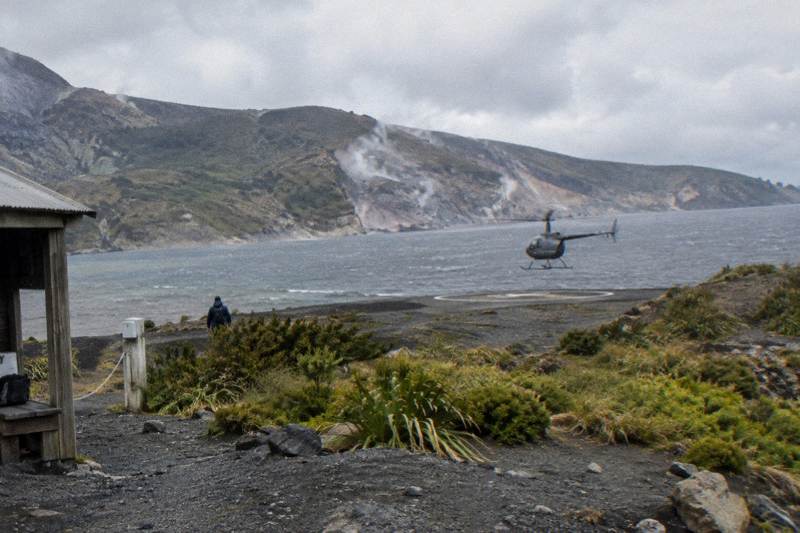
Helicopter Versus Floatplane Scenic Flights In Rotorua
Rotorua's Volcanic Air flies both helicopters and floatplanes from the same Lakefront pier, and the aircraft you pick changes what the flight can do: helicopters can put you on the summit of Mt Tarawera, floatplanes land on water, and the Orakei Korako river landing is a floatplane trip.
Short answer
Choose a helicopter if landing on the summit of Mt Tarawera is the point of the flight, from NZ$675 per person for the 40 minute landing and guided walk. Choose a floatplane for water take-offs and landings, from NZ$395 per person for a 30 minute Tarawera and Waimangu flyover, or the Orakei Korako landing from NZ$845. Check-in is 30 minutes for helicopters and 20 for floatplanes.
Both aircraft types are covered across Rotorua Helicopter Tours, and the full list of flights from the city is in the Rotorua scenic flights Overview. That page covers the line-up of 13 flights; the question here is narrower, which aircraft suits the trip you actually want.
Quick Facts
Helicopters and floatplanes leave from the same Lakefront base but split cleanly on landings. The helicopter fleet holds the Mt Tarawera summit landing from NZ$675 per person; the floatplane fleet lands on water, including the Orakei Korako river landing from NZ$845. Floatplane flyovers start at NZ$395 per person, check-in is 30 minutes for helicopters and 20 for floatplanes, and free cancellation up to 24 hours applies across the line-up.
| Question | Helicopter | Floatplane |
|---|---|---|
| Take-off and landing | Land pad at the Lakefront | Lake Rotorua water, from the lakefront pier |
| Check-in before flight | 30 minutes | 20 minutes |
| Can it land on Mt Tarawera? | Yes, on summit landing trips | No, flyover only |
| Water landing available | No | Yes, Orakei Korako on the Waikato River |
| Shortest trip | 15 minutes, crater lakes | 15 minutes, crater lakes |
| Cheapest listed from-price | NZ$675 per person | NZ$395 per person |
| Free cancellation | Yes, up to 24 hours | Yes, up to 24 hours |
What Is The Actual Difference Between The Two Aircraft?
The difference that matters is where each aircraft can land. A helicopter can descend onto the summit of Mt Tarawera, the only practical way a visitor stands on that mountain by air, while a floatplane needs water, so its landing trips touch down on Lake Rotorua or the Waikato River at Orakei Korako. Everything else, check-in length, price overlap, the views from the window, follows from that single distinction. Choose the landing, and the aircraft chooses itself.
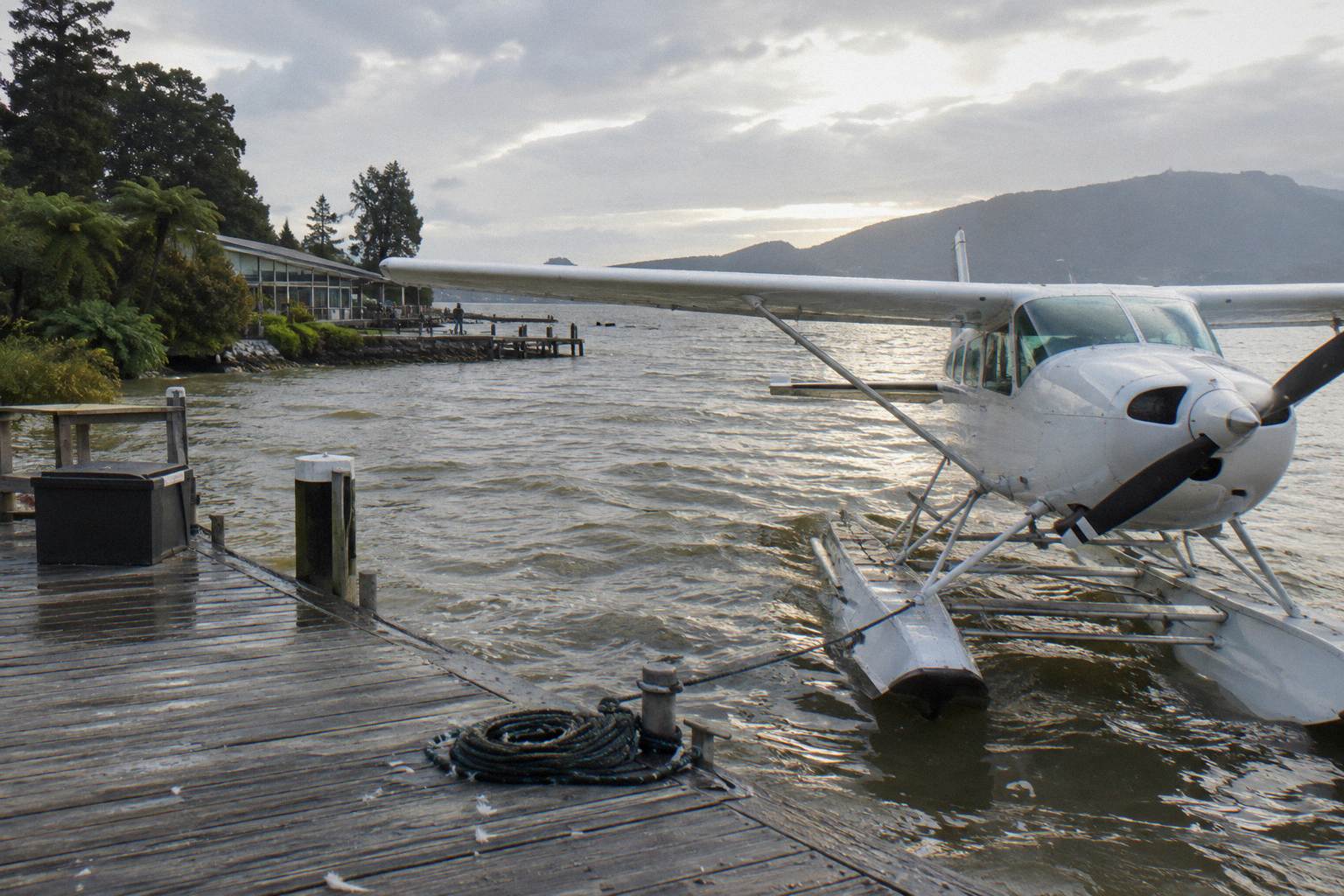
Volcanic Air, the operator behind every flight in the line-up, has been flying in the region since 1992 and runs both aircraft from one base. Helicopters lift off from a land pad at the Lakefront; floatplanes depart from the lakefront pier and take off from the water of Lake Rotorua, which is itself part of the experience, the run across the lake surface on departure is something a helicopter flight simply does not have.
The window experience differs too. Helicopters fly lower and slower on scenic segments and can hover or orbit a feature; floatplanes fly a steadier sightseeing line at a cruising speed suited to covering the distance to Whakaari or Orakei Korako. Neither is better in the abstract, a 15 minute crater lakes circuit works well in either aircraft, and the line-up offers that exact trip both ways: "Crater Lakes By Helicopter, 15 Minutes" and "Crater Lakes By Floatplane, 15 Minutes".
There is a check-in difference worth planning around. The operator asks helicopter passengers at the Lakefront office 30 minutes before the flight for a full safety briefing, and floatplane passengers 20 minutes before. On a tight morning, ten minutes either way can matter; both briefings cover the same ground, aircraft safety, seating and the landing or departure procedure for the aircraft type. The details are on the operator's FAQ page.
Which Aircraft Lands Where Around Rotorua?
Helicopters hold the mountain, floatplanes hold the water. The Tarawera summit landing, a guided walk on the crater floor of a volcano that erupted in 1886, is available only by helicopter, on trips from the 40 minute "Helicopter Landing, Guided Summit Walk" at from NZ$675 per person to the 1 hour 45 minute "Volcanic Extremes". The floatplane landing trips touch water: the Orakei Korako trip lands on the Waikato River.
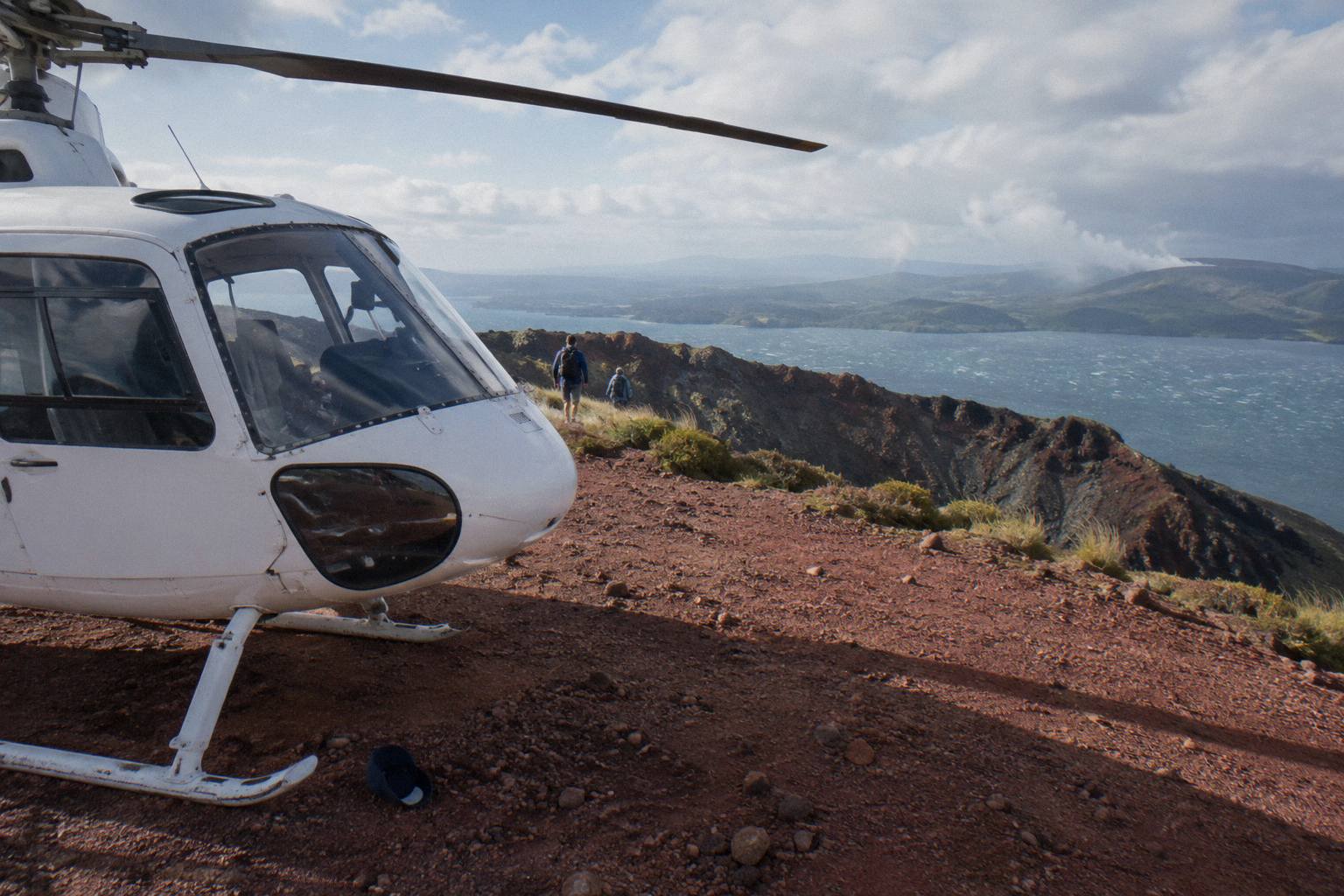
The Tarawera landing deserves its reputation as the decision-maker. Independent summit access is not permitted; the mountain is governed by the Ruawahia 2B Trust, which reinvests most tourism concession revenue in conservation, and access runs through authorised guided tours or approved helicopter landings. Volcanic Air's landing wording is explicit that a landing is at the pilot's sole discretion and subject to weather and volcanic activity, so no flight can promise the touchdown in advance. What the helicopter trips offer is the possibility, and the "Mt Tarawera Helicopter Tour with Volcano Landing" carries a 4.9 rating from 43 reviews, the deepest review pool of any trip in the line-up.
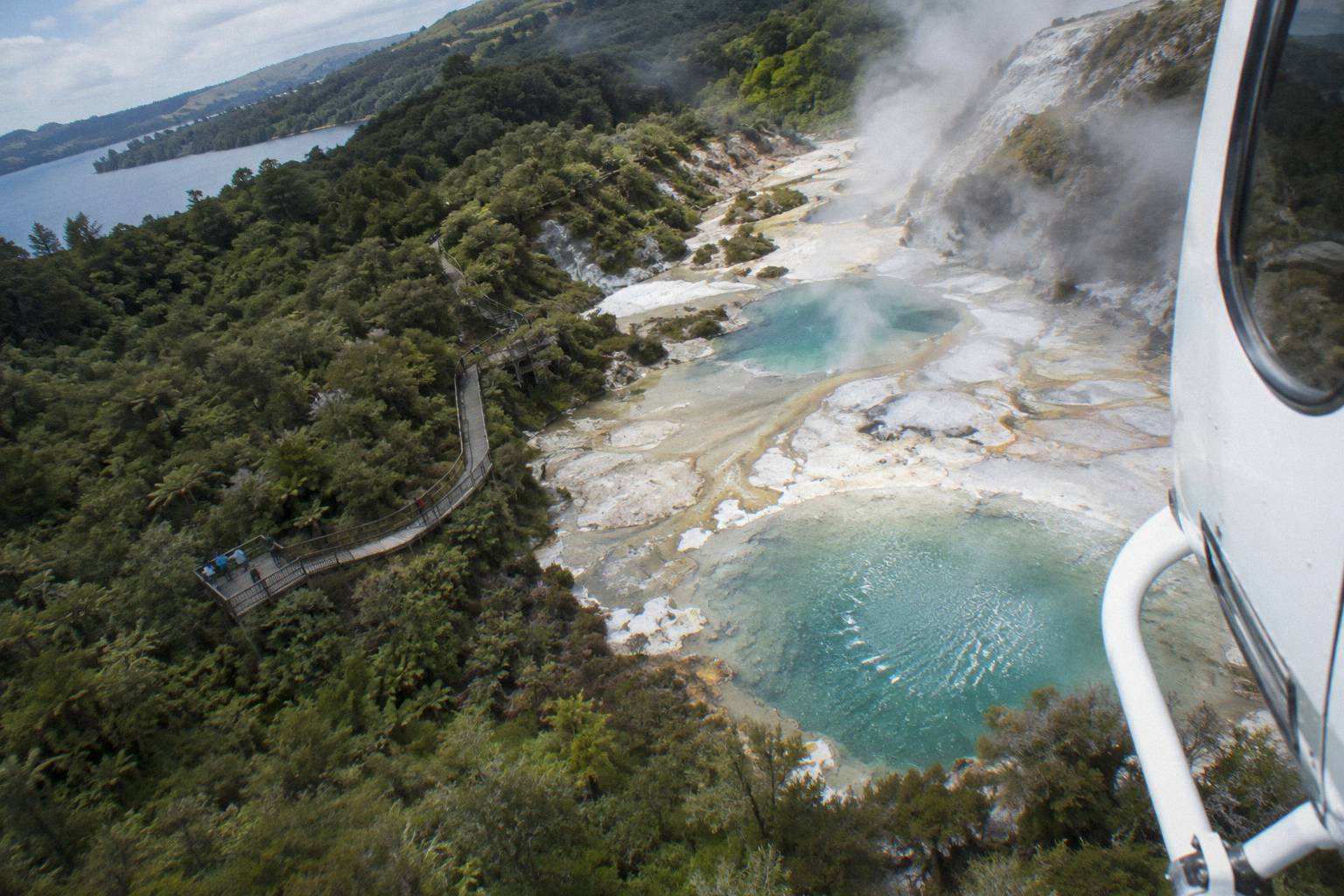
The floatplane answer to that is Orakei Korako. The "Floatplane, Orakei Korako Landing" trip, from NZ$845 per person for a total of 2 hours, has the pilot touch down on the winding Waikato River beside the geothermal field. The park itself is only accessible by boat from its Visitor Centre, a short ferry ride across Lake Ohakuri, with boats leaving on request rather than a timetable, so arriving by floatplane replaces the ferry entirely. The park describes its field as holding up to 23 active geysers and Ruatapu Cave, over 36 m deep, though those are the park's own claims.
A middle path exists for people who want both worlds: the "Geothermal Park Landing, 3 Hours" helicopter trip, from NZ$1,490 per person, lands on the Mt Tarawera summit and at Orakei Korako in one day, and the "Dual Landing Thermal Explorer" pairs the same two stops. Those are the line-up's longest and most expensive helicopter trips, and they exist precisely because the two landing types complement each other.
For pure flyovers the aircraft choice is closer to a coin flip. The "Scenic Floatplane, Tarawera And Waimangu", a 30 minute flight, from NZ$395 per person, rated 4.9 from 28 reviews, crosses the same Tarawera terrain the helicopter flyovers cross, at a from-price below any helicopter trip in the line-up. If a mountain landing is not on your list, the floatplane flyover is the value pick, and it is covered in more depth in whether it is worth flying over Lake Tarawera and the Blue Lake.
How Do Flight Times And Prices Compare?
Floatplane flyovers start lower, helicopter landings cost more, and the from-prices overlap in the middle. The shortest floatplane flyover, "Scenic Floatplane, Tarawera And Waimangu", is from NZ$395 per person for a 30 minute flight, while the entry Tarawera landing by helicopter, "Helicopter Landing, Guided Summit Walk", is from NZ$675 per person for 40 minutes total. All amounts are New Zealand dollars, and every trip in the line-up carries free cancellation up to 24 hours before departure.
| Trip | Aircraft | Landing | Time | From-price | Rating |
|---|---|---|---|---|---|
| Scenic Floatplane, Tarawera And Waimangu | Floatplane | No landing, flyover | 30 min flight | NZ$395 | 4.9 from 28 reviews |
| Helicopter Landing, Guided Summit Walk | Helicopter | Mt Tarawera summit | 40 min total | NZ$675 | No rating yet |
| Helicopter Volcano Landing | Helicopter | Mt Tarawera summit | Landing trip | Price on the booking page | 4.9 from 43 reviews |
| Floatplane, Orakei Korako Landing | Floatplane | Orakei Korako, Waikato River | 2 hrs total | NZ$845 | No rating yet |
| Floatplane, Waimangu Included | Floatplane | No landing, flyover | 2 hrs total | NZ$1,230 | No rating yet |
| Geothermal Park Landing, 3 Hours | Helicopter | Tarawera and Orakei Korako | 3 hrs total | NZ$1,490 | No rating yet |
Read the price column against the landing column and the pattern is clear: you are paying for the touchdown, not the aircraft. A floatplane flyover is the cheapest way into the air over Tarawera; a helicopter summit landing costs roughly the same as the floatplane's own landing trip at Orakei Korako; and the two-stop helicopter day sits at the top. If you are budget-driven, the full pricing picture across every flight is in the guide to helicopter ride prices in Rotorua.
Trip length is worth checking carefully before booking, because "time" means different things on different rows. Some trips quote total duration including ground time, others quote flight time: the "Scenic Floatplane, Tarawera And Waimangu" is a 30 minute flight within a 40 minute total, while the Orakei Korako trip's 2 hours includes the park visit. The Tarawera landing's 40 minutes total includes the 15 minute guided summit walk, per the operator's own trip wording.
| Trip | Flight Time | Total Duration | What The Difference Is |
|---|---|---|---|
| Helicopter Landing, Guided Summit Walk | Flight plus landing | 40 minutes | Includes a 15 minute guided summit walk |
| Scenic Floatplane, Tarawera And Waimangu | 30 minutes | 40 minutes | Flyover only, no ground time |
| Floatplane, Orakei Korako Landing | Flight each way | 2 hours | Includes the geothermal park visit |
| Geothermal Park Landing, 3 Hours | Flight each way | 3 hours | Includes Tarawera walk and Orakei Korako |
| Volcanic Extremes, 1h45m Helicopter | Flight each way | 1 hour 45 minutes | Whakaari flyover plus Tarawera landing |
Ratings are thin on most of these trips, so treat them cautiously. Only two trips in the line-up have a rating worth printing with its count: the "Helicopter Volcano Landing" at 4.9 from 43 reviews and the "Scenic Floatplane, Tarawera And Waimangu" at 4.9 from 28 reviews. The rest have review pools too small to support a rating claim, and several have none at all. That is normal for a specialist operator with 13 niche products, but it means the score alone should not decide between aircraft.
What Does Each Flight Actually Fly Over?
Both aircraft cross the same volcanic landscape, but their typical routes differ. Helicopter landing flights cross lakes Okareka, Okataina and Tarawera on the way to the mountain; floatplane trips climb around Mokoia Island, described by the operator as a native bird sanctuary, before heading south. The crater lakes flights overfly Rotoiti, Okataina, Tarawera, Okareka, Rotomahana, Rotokakahi and Tikitapu, and the operator's page describes views of 12 distinct crater lakes.
| Trip | Key Sights Crossed |
|---|---|
| Helicopter landing trips to Tarawera | Lakes Okareka, Okataina and Tarawera, the summit craters |
| Crater lakes flights, both aircraft | Rotoiti, Okataina, Tarawera, Okareka, Rotomahana, Rotokakahi, Tikitapu |
| Floatplane departures | Mokoia Island, Sulphur Bay, Rotorua city from the lake |
| Scenic Floatplane, Tarawera And Waimangu | Mt Tarawera, Lake Rotomahana, Waimangu Volcanic Valley |
| Whakaari trips | Whakaari flyover, about 48 km off the Whakatane coast, plus Tarawera |
The shared geography is the reason both aircraft work here. Everything funnels south from the lakefront: the crater lakes belt, the 1886 eruption scar of Tarawera, the Waimangu Volcanic Valley that formed along the rift, and, further out, Whakaari, about 48 km off the coast of Whakatane. The map of Rotorua scenic flight routes lays out which trips cross which terrain.
Whakaari is where the two fleets divide again. Landings on the island are suspended, there are currently no boat tours or helicopter flights that land on it, so every Whakaari trip is a flyover. Volcanic Air sells it as a floatplane flyover, pairing it with Tarawera on the "Floatplane, White Island And Tarawera" and the "Floatplane, Waimangu Included" trips, and by helicopter on the 1 hour 45 minute "Volcanic Extremes", which combines the Whakaari overflight with a Tarawera landing. The status of the volcano changes; live monitoring is on GeoNet's Whakaari page.
The Tarawera overflight is the one segment where the flight wording differs by aircraft. Volcanic Air's Tarawera landing page describes flying over the mountain's "8km rift and craters", the operator's description of the span over the mountain itself. GNS Science describes the full 1886 rift as 17 km long, running across the mountain top, through Lake Rotomahana and into the Waimangu Valley area; the two figures describe different spans, not a disagreement. The backstory of that night, 10 June 1886, more than 100 lives lost, is covered in the guide to the 1886 Tarawera eruption seen from above.
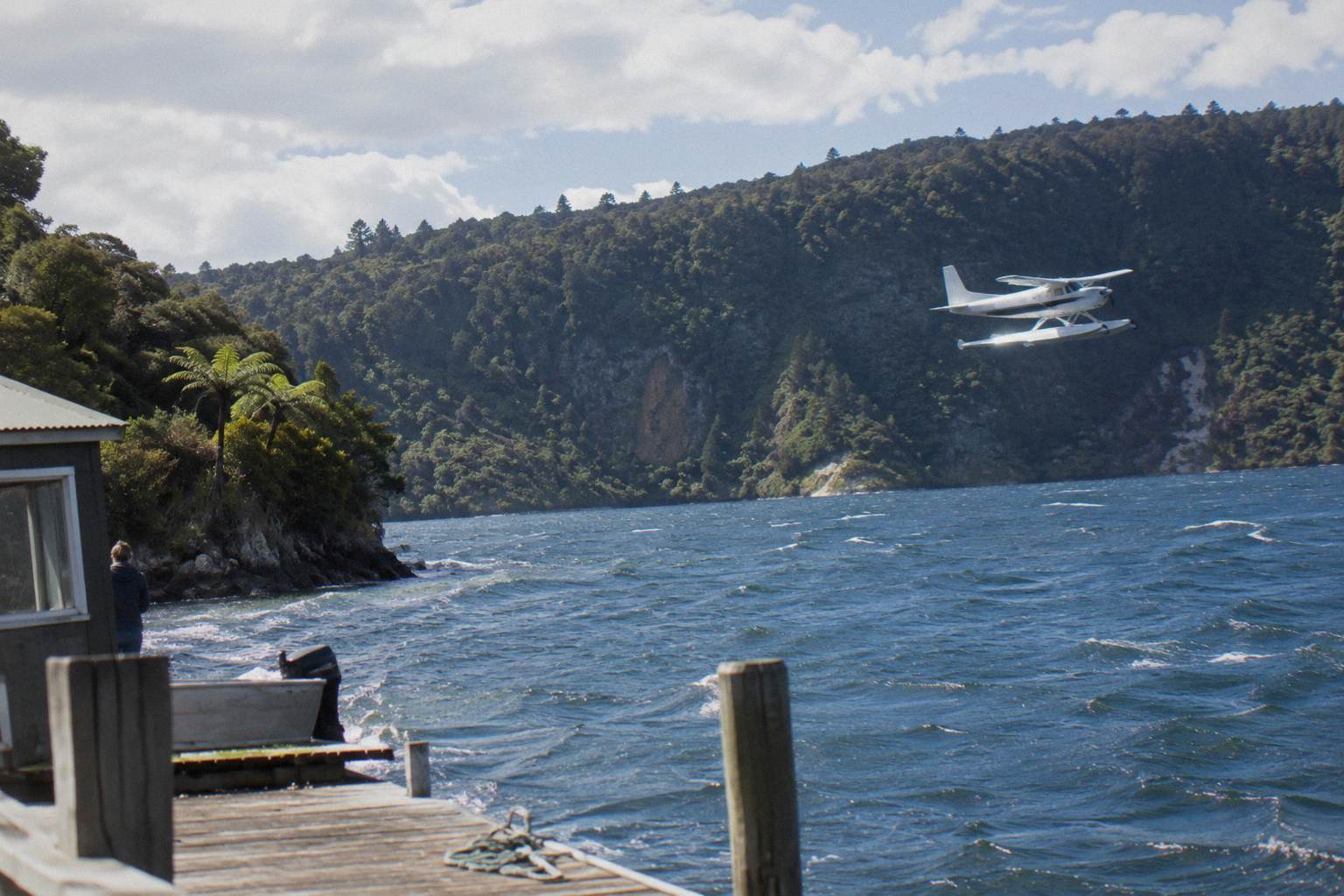
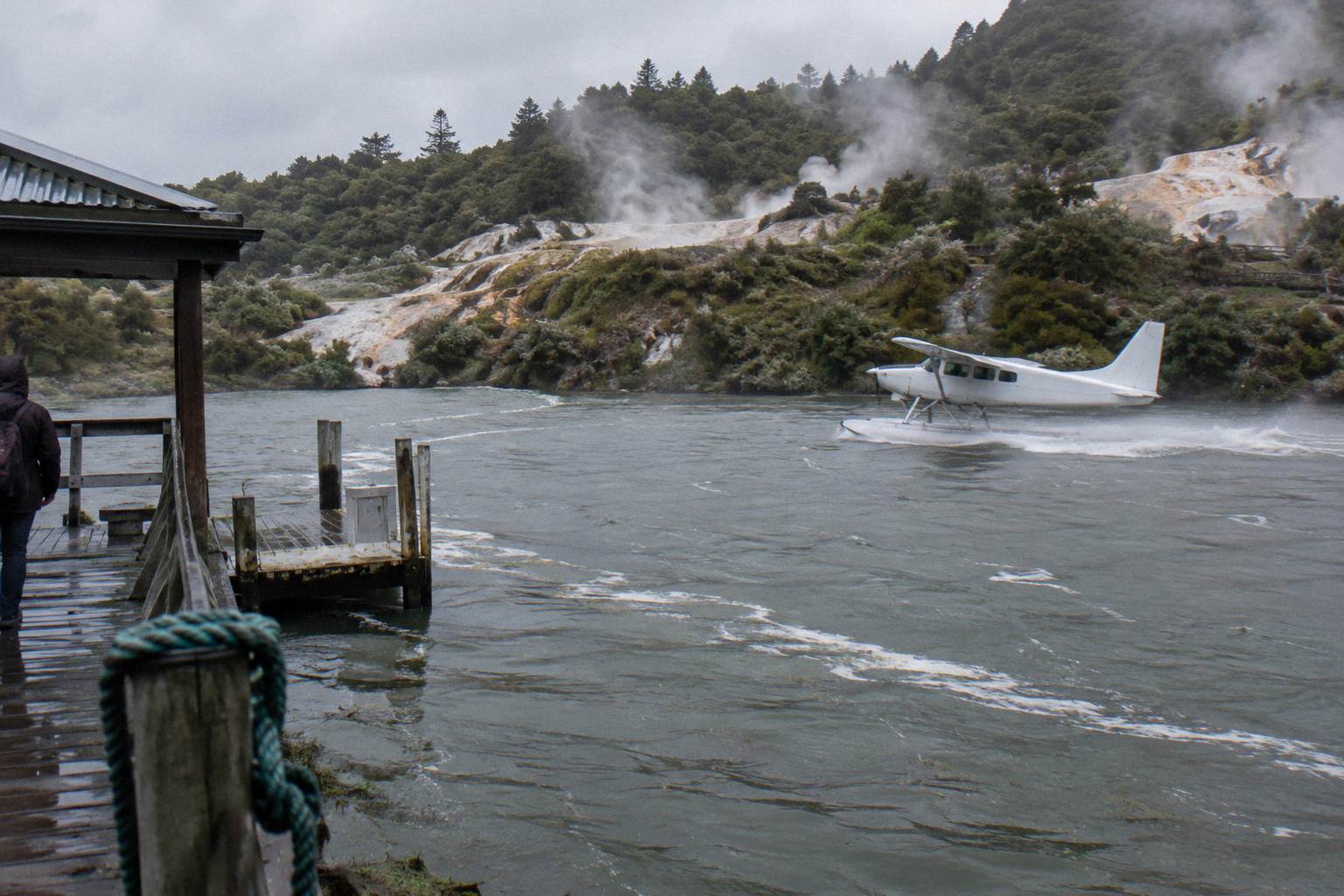
The floatplane's signature view is its own take-off. Departing from the lakefront pier, the aircraft runs across Lake Rotorua before rotating, giving a low pass over the water with Mokoia Island ahead and the city behind. Helicopter passengers instead get a vertical or near-vertical lift from the pad. Neither view is guaranteed in specific conditions, the operator's own weather wording says a flight will not go ahead if it is not safe or the views cannot be seen, but both departures are part of what each aircraft type sells.
Who Should Choose The Helicopter?
Choose the helicopter if standing on Tarawera is the goal, if you want the shortest possible airborne time, or if your party wants a summit experience without a hike. The entry landing trip is 40 minutes total from NZ$675 per person, and the 15 minute crater lakes helicopter flight is the quickest air-only option in the line-up. The trade-offs are a longer check-in, 30 minutes, and from-prices that start well above the floatplane floor.
The "Helicopter Volcano Landing" is the line-up's most-reviewed trip, 4.9 from 43 reviews, and the natural pick if the landing is the whole point. The pricier route is the "Geothermal Park Landing, 3 Hours", which stacks the Tarawera summit and Orakei Korako into one day for from NZ$1,490 per person; it suits a visitor making one big day of Rotorua rather than several smaller ones. At the other end of the scale, the "Crater Lakes By Helicopter, 15 Minutes" is a pure taster, 15 minutes of flight with no landing, for travelers who mainly want to say they flew.
Families should note the child structure. All ages are welcome, under 2s sit on a lap, child rates apply from 2 to 11, and on the Tarawera landing trips the operator's page sets a minimum of 2 adult fares with children aged 2 to 11 paying 75% of the adult fare. The family angle, including the weight and seating mechanics, is expanded in the guide to helicopter flights for families.
One practical warning applies to helicopter bookings specifically: weight. Every passenger declares an individual weight at booking and is weighed on arrival, and a declared weight over 110 kg may attract a surcharge at the operator's sole discretion, with over 135 kg requiring two adult fares. That is the operator's published terms, and it bites hardest on small helicopters. The full mechanics are in the weight limits guide.
Who Should Choose The Floatplane?
Choose the floatplane if the water take-off appeals, if your budget starts at the NZ$395 flyover, or if Orakei Korako rather than Tarawera is the destination you care about. The "Floatplane, Orakei Korako Landing" from NZ$845 per person delivers a river landing the helicopter fleet does not offer, and check-in is 10 minutes shorter. The flyover-only trips are the cheapest way over Tarawera from Rotorua.
The flagship value pick is the "Scenic Floatplane, Tarawera And Waimangu", from NZ$395 per person for a 30 minute flight, rated 4.9 from 28 reviews. It crosses Tarawera and the Waimangu Valley, the two headline sights south of the city, without a landing, and its from-price is the lowest in the line-up. For travelers weighing whether a flyover is enough versus a landing, the Tarawera crater landing worth-it question works through the trade-off.
The Orakei Korako trip is the floatplane's showcase. Landing on the Waikato River, visiting the geothermal field, then returning over farmland and the Paeroa Range, it is a 2 hour total experience from NZ$845 per person, and the water landing is genuinely different in kind from a mountain touchdown. The park's own visitor access page describes the boat-only access that the flight replaces.
For Whakaari, the floatplane is the default. The "Floatplane, White Island And Tarawera" and the "Floatplane, Waimangu Included" trips both overfly the island with no landing, consistent with the standing suspension of island landings. If Whakaari is the draw, start with the guide to White Island helicopter flights, which covers the status question in full.
What About Weather, Cancellation And Refunds?
Both aircraft operate under the same rules: all flights depend on suitable weather and safe flying conditions, and if the operator cancels for weather or volcanic activity you get a full refund or a reschedule. Every trip in the line-up carries free cancellation up to 24 hours before departure on its booking terms. The practical difference is minimal, since both fleets fly from the same Lakefront base and face the same Rotorua weather.
The operator's FAQ is blunt about flexibility: if a flight cannot go ahead due to weather, the team works with you to reschedule or provide a full refund, and the terms extend the same to volcanic activity. Mornings often give the calmest conditions and smoothest flying, afternoons can bring warmer temperatures and late colour, and there is no fixed best time; the day's weather decides. The rotorua helicopter weather guide covers the seasonal pattern, including the wettest months, June and July.
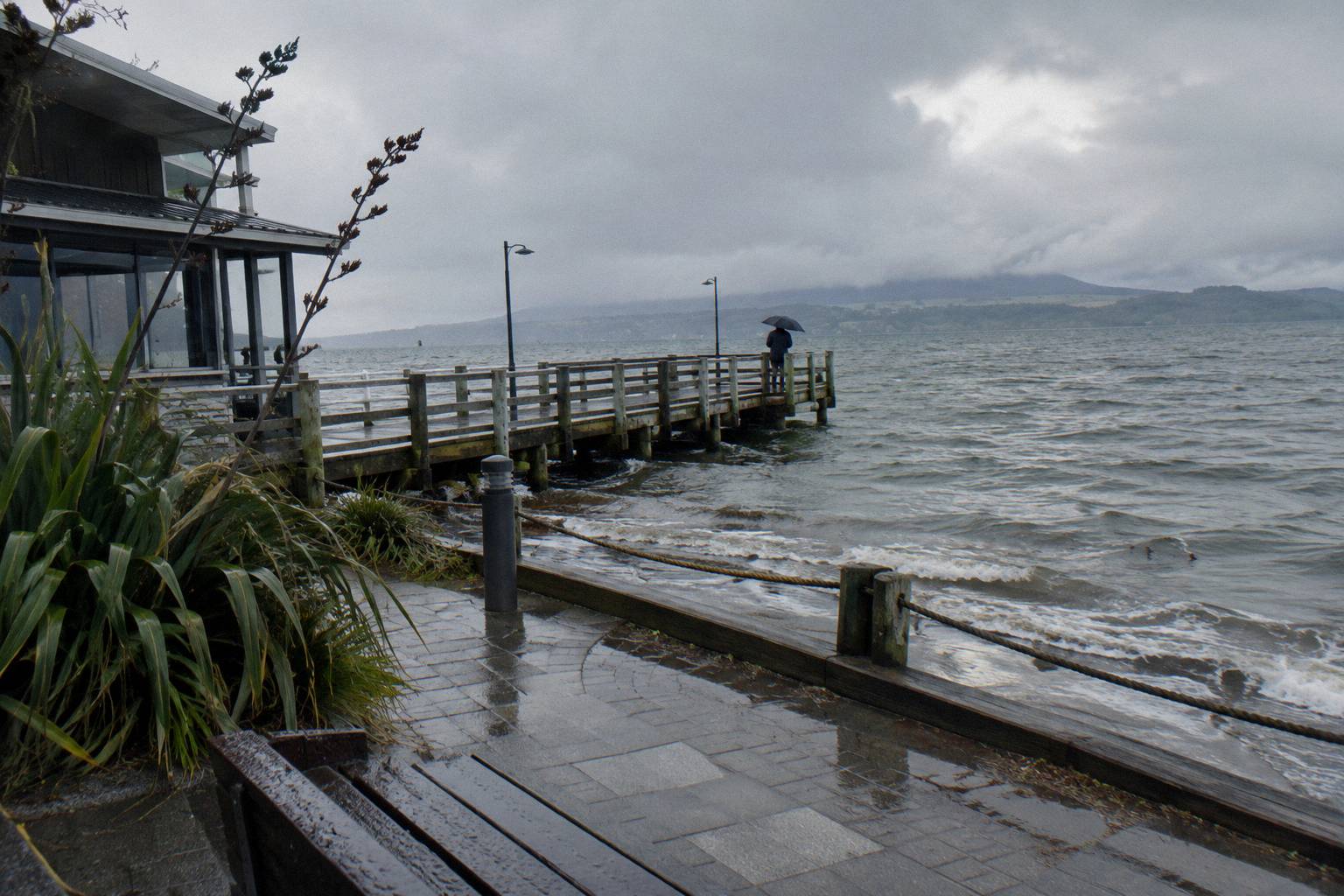
Season matters less than you might fear. The operation runs all months of the year during daylight hours, and the driest, warmest stretch in Rotorua runs from late spring in October to early autumn in April. The booking terms across the line-up allow cancellation up to 24 hours in advance for a full refund, which is the figure that matters to a traveler holding a booking; the operator's own direct-booking fee ladder is a separate structure that does not apply to these flights.
| Condition | Helicopter Trips | Floatplane Trips |
|---|---|---|
| Weather cancellation | Full refund or reschedule | Full refund or reschedule |
| Volcanic activity cancellation | Full refund | Full refund |
| Guest free-cancellation window | Up to 24 hours before departure | Up to 24 hours before departure |
| Months of operation | All year, daylight hours | All year, daylight hours |
What to bring is identical for both aircraft: camera, sunglasses and a jacket, with closed-toe comfortable footwear recommended for trips that include a landing. The full packing angle, layers, footwear and photography gear, is in the what to wear guide.
What Mistakes Do People Make Choosing Between The Two?
The most common mistake is assuming the floatplane can land on Tarawera because its landing trips exist, when every floatplane landing touches water, the river at Orakei Korako or the lake itself. The second is buying a flyover when the landing was the reason for flying. Third is underestimating check-in, 30 minutes for helicopters and 20 for floatplanes, and fourth is declaring an inaccurate weight, which can reschedule or cancel the flight.
A subtler error is comparing total durations as if they were flight times. The Orakei Korako floatplane is 2 hours total, but most of that is on the ground in the park; the 40 minute Tarawera helicopter trip spends far less of your day but puts only 15 minutes on the mountain. Decide whether you are buying air time, ground time on a volcano, or a geothermal park visit, and the duration figures start meaning something.
The last mistake is treating the review scores as a verdict on the aircraft. The two strongest ratings in the line-up, 4.9 from 43 reviews on a helicopter landing and 4.9 from 28 reviews on a floatplane flyover, describe two completely different products. A high score on the trip you do not want is not a reason to book it. Decide the landing question first, then let price, duration and schedule settle the rest.
Both aircraft fly daily year-round from the same pier, so a mixed itinerary is entirely possible: a short floatplane flyover on arrival day to read the landscape, then a Tarawera landing helicopter trip later in the stay when the forecast is right. Travelers fitting a flight into a single day can pair one with the one day Rotorua itinerary with a helicopter flight.
Common Questions About Choosing Between A Helicopter And A Floatplane
Is A Floatplane Cheaper Than A Helicopter In Rotorua?
On flyovers, yes: the "Scenic Floatplane, Tarawera And Waimangu" starts at NZ$395 per person for a 30 minute flight, below every helicopter from-price in the line-up. On landing trips the gap closes, the Tarawera helicopter landing starts at NZ$675 per person and the Orakei Korako floatplane landing at NZ$845. All amounts are New Zealand dollars.
Can A Floatplane Land On Mt Tarawera?
No. Floatplanes land on water, and every floatplane landing trip in the line-up touches down on Lake Rotorua or the Waikato River at Orakei Korako. The Mt Tarawera summit landing is a helicopter-only trip.
Which Has The Better View, A Helicopter Or A Floatplane?
Helicopters fly lower and slower on scenic segments and can orbit a feature; floatplanes fly a steadier line at cruising speed. Both cross the same crater lakes and Tarawera terrain, and the operator's crater lakes flights describe views of 12 distinct crater lakes from either aircraft. Views depend on the day's weather in both cases.
Do Both Aircraft Leave From The Same Place In Rotorua?
Yes. Volcanic Air's base is at 1 Lakefront Drive on the Rotorua lakefront, under 1 km from the city centre. Helicopters lift off from a pad there and floatplanes take off from Lake Rotorua via the lakefront pier.
What Is The Check-In Time For Each Aircraft?
Helicopter passengers check in 30 minutes before the flight and floatplane passengers 20 minutes before, both at the Lakefront office, for a full safety briefing.
Can I Cancel Either Flight For Free?
Yes. Every trip in the line-up carries free cancellation up to 24 hours before departure on its booking terms, and if the operator cancels for weather or volcanic activity you receive a full refund or a reschedule.