Can Children Fly On A Helicopter Tour In Rotorua?
Age limits, lap seating, child fares and family-friendly flight choices for Rotorua helicopter and floatplane tours, with check-in and safety details parents ask about.
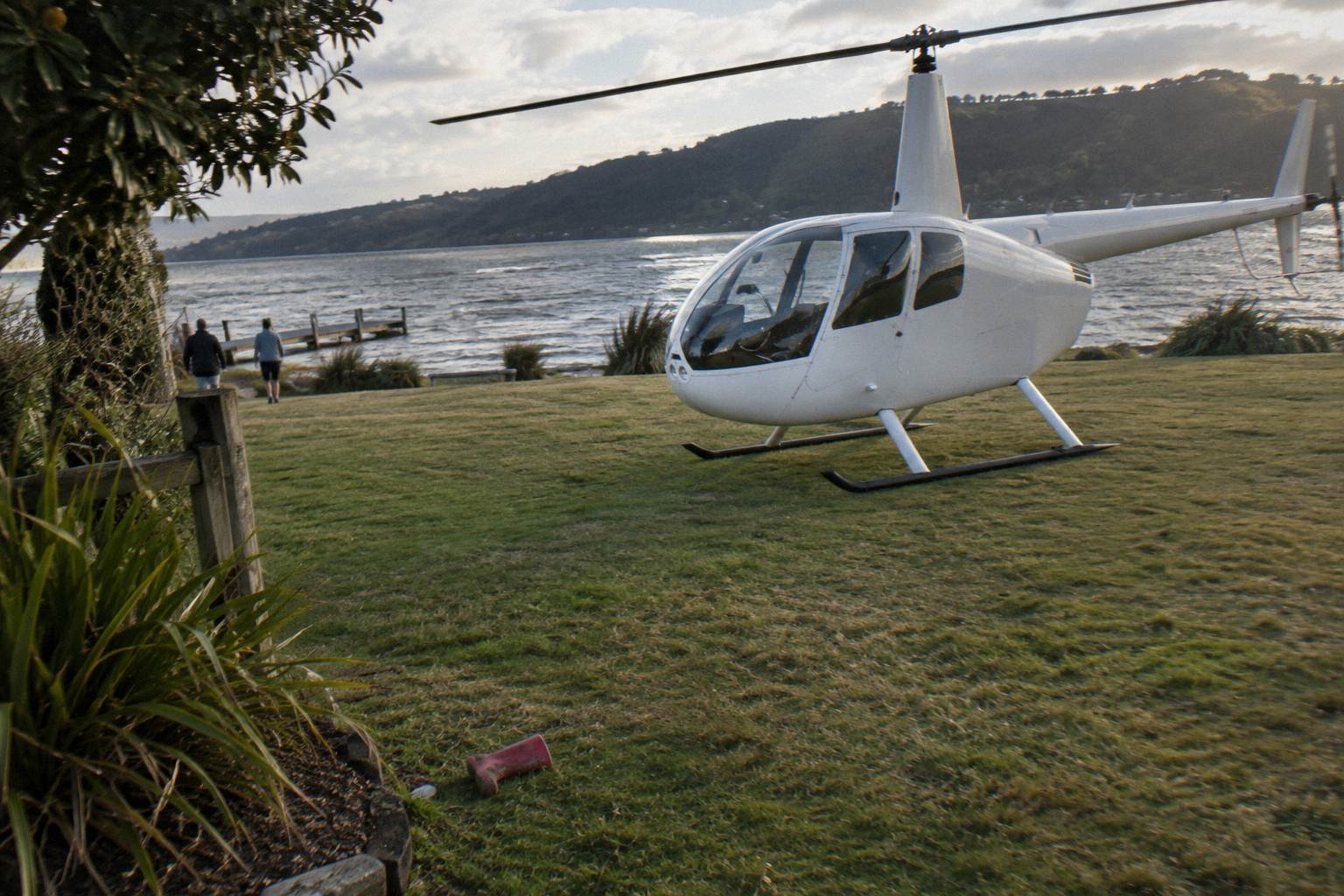
Rotorua's scenic flight operator states plainly that children of all ages are welcome on its flights. Infants under 2 travel on a parent's or guardian's lap, and reduced child rates apply for ages 2 to 11. There is no minimum age for a scenic helicopter or floatplane flight over the lakes and volcanoes, so the question for families is less about permission and more about which flight suits the age, attention span and comfort of the children on board.
The details sit in three places: the operator's family policies, the per-flight conditions attached to specific routes, and the practical realities of check-in, weighing and weather. This article pulls those together, using the operator's published FAQ and terms alongside the current flight lineup from the Rotorua Helicopter Tours roster.
Rotorua has an unusual concentration of family-relevant flying in one small place. The operator, Volcanic Air, has been flying in the region since 1992, describes itself as a Civil Aviation Authority certified NZ air operator, and runs everything from a single Lakefront base beside the city centre. That matters for parents, because the difference between a 15-minute lake circuit and a volcano landing trip is not a difference of location or logistics, it is only a difference of which aircraft you walk to from the same office.
Yes, children of every age can fly on a Rotorua helicopter tour. The operator's FAQ welcomes all ages, with infants under 2 seated on a parent or guardian's lap and child rates applying from ages 2 to 11. No flight in the current lineup carries a minimum age for scenic flying, though the Tarawera landing trips attach their own fare and booking conditions for families with young children.
The age framework comes from the operator's own frequently asked questions page, which addresses children directly alongside questions about weather, weight and check-in. Under 2 means lap seating, which also means no separate seat and no separate fare category to juggle. From 2 to 11, a child rate replaces the adult price on flights where one is offered.
One flight-specific rule matters more than the rest for families eyeing the volcano. The Mt Tarawera landing trips carry a condition of a minimum of two adult fares per booking, with children aged 2 to 11 paying 75 percent of the adult fare. In practice a family of two adults and two children books two full fares and two reduced ones, and the walk on the summit is short enough that younger legs can manage it with the guide's pacing.
Everything else, from the briefing to the aircraft itself, is built around mixed groups. Flights depart from the Lakefront base at 1 Lakefront Drive, and the operator runs helicopters and floatplanes side by side from the same pier and pad area, which makes the choice between aircraft types a preference call rather than a logistics problem.
It also helps that the region's flying story is genuinely engaging for children, not just for adults. The landscape below the flight paths was reshaped in a single night in 1886, when Mt Tarawera erupted and buried the village of Te Wairoa, an event recorded by GNS Science and NZ History. Children old enough to grasp that the craters they are looking at opened in one night tend to be the ones leaning hardest toward the window.
How Old Do Children Have To Be To Sit On A Lap Or In A Seat?
The dividing line is the second birthday. Before it, an infant sits on a parent or guardian's lap for the whole flight and is not counted for a seat. From age 2 to 11, a child has a seat and pays the child rate where one applies, and from 12 the adult fare takes over. The operator applies these bands consistently across its helicopter and floatplane flights.
For parents of toddlers, the lap rule shapes the aircraft choice more than the route does. A 15-minute crater lakes circuit is a very different proposition with a wriggly 18-month-old than a 3-hour dual landing trip, and nothing in the fare structure pushes a family either way. The pricing simply follows the age bands.
The child rate on the Tarawera landing flights, 75 percent of the adult fare for ages 2 to 11, is attached to the two-adult-fare minimum. That minimum exists on the landing trips specifically, and it does not appear as a barrier on the shorter scenic flights, which sell per seat.
| Age | Seating | Fare | Notes |
|---|---|---|---|
| Under 2 | On a parent or guardian's lap | Lap arrangement, no child seat | Applies across all flights |
| 2 to 11 | Own seat | Child rate; 75 percent of adult fare on Tarawera landing trips | Tarawera landings need two adult fares minimum |
| 12 and over | Own seat | Adult fare | Standard booking terms |
A practical note on the lap years: an infant on a lap still counts toward the aircraft's total load, so the child's weight is declared and verified like everyone else's. There is no separate restraint system published for lap infants, which means the parent's hold and the standard briefing guidance are what apply, and any parent unsure about that arrangement can raise it with the operator when booking, the same channel the FAQ recommends for mobility and pregnancy questions.
Worth reading alongside: the guide to helicopter flights for families covers planning a full day around a flight, and what to wear on a helicopter flight handles the clothing side, including closed-toe footwear for landing trips.
Which Rotorua Flights Suit Families With Young Children Best?
Short flights suit young children best, and the 15-minute crater lakes options in both a helicopter and a floatplane are the natural starting point. They deliver lakes, crater views and the takeoff experience inside a quarter of an hour, which matches the attention span of most preschoolers. Longer volcano landing trips reward school-age children who can absorb a safety briefing and a guided summit walk.
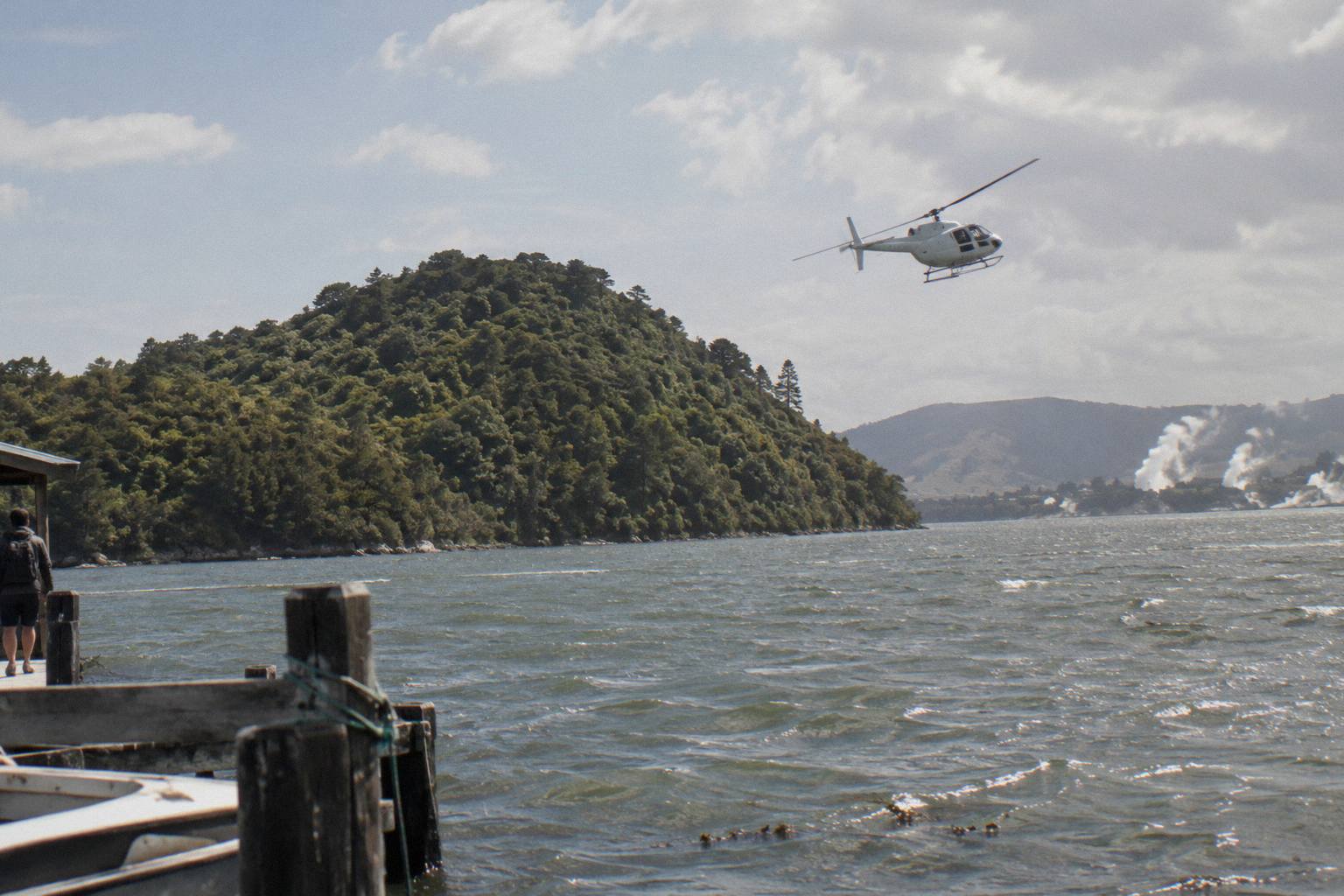
The 15-Minute Crater Lakes Flight by Helicopter from Rotorua crosses the lake country directly above the city, and the 15-Minute Crater Lakes Flight by Floatplane from Rotorua covers similar territory from the water upward, lifting off from Lake Rotorua itself at the lakefront pier. Neither carries a landing, so there is no terrain walk and no extra footwear requirement, and both return to the same base they left.
For children old enough to want the story rather than just the sensation, the Mt Tarawera Helicopter Tour with Volcano Landing is the trip that connects the flight to something they can stand on. The operator's wording for the trip promises a flight over the mountain's rift and craters, and where conditions allow, a landing on the summit. A landing is at the pilot's sole discretion and is never guaranteed, which is worth explaining to an excited eight-year-old in advance.
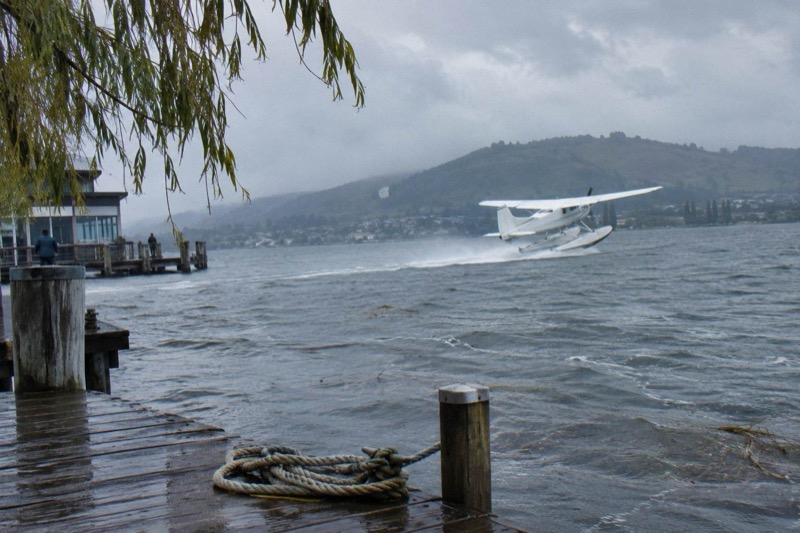
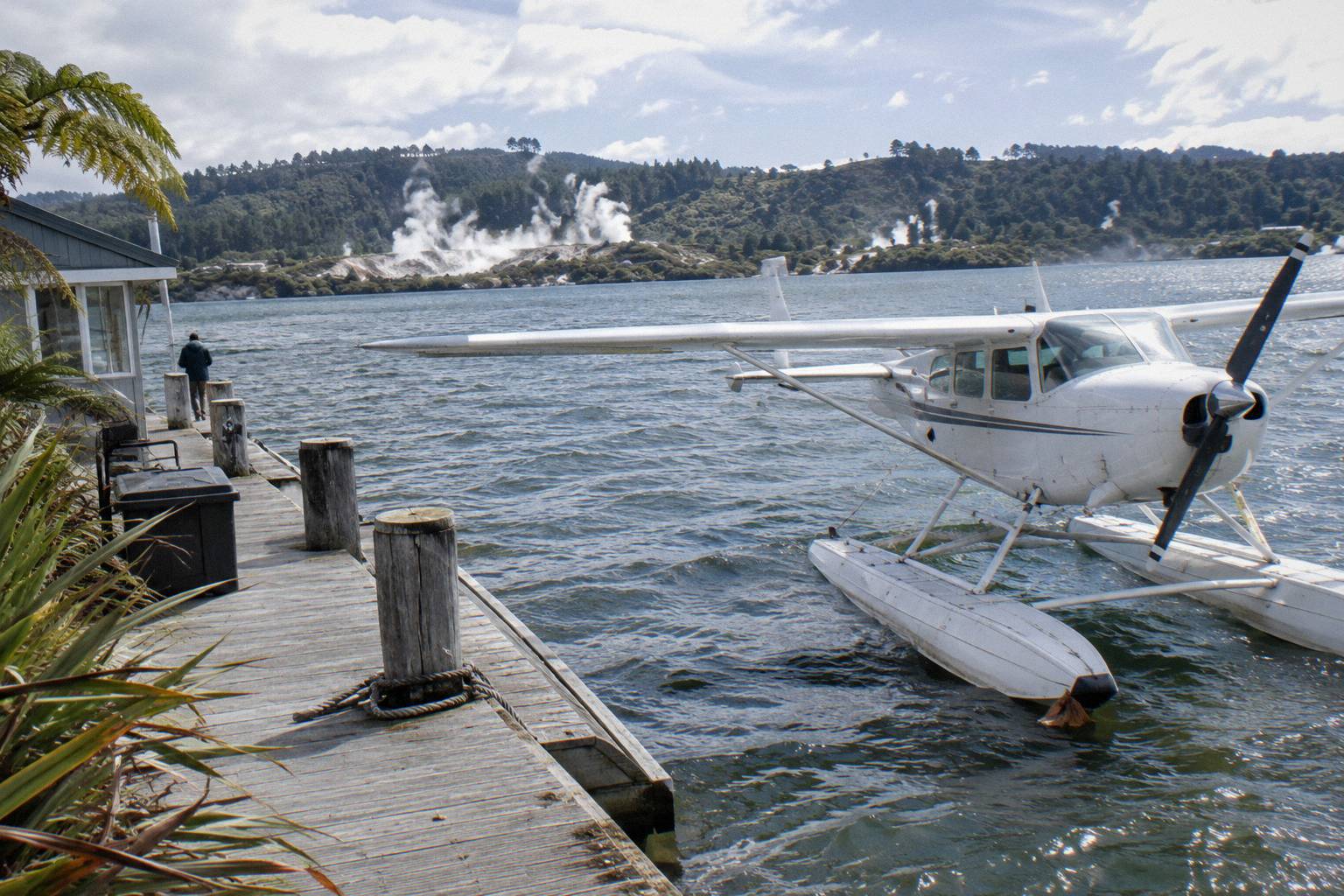
The floatplane version has its own appeal for families: the water takeoff. Departing from the pier means the aircraft accelerates across Lake Rotorua before lifting away, a sequence children tend to talk about for the rest of the day. Mokoia Island, described by the operator as a native bird sanctuary, sits in the climb-out path on the lake circuits.
Between the short circuits and the volcano landing sit the mid-length options. The Scenic Floatplane over Mt Tarawera and Waimangu Valley runs a 30-minute flight at from NZ$395 per person and carries a 4.9 rating from 28 reviews, which makes it a measured step up for children who have outgrown the 15-minute flights but are not ready for a landing walk. All amounts on the flight pages are in New Zealand dollars.
| Flight | Aircraft | Flight time | Landing | Family fit |
|---|---|---|---|---|
| Crater Lakes by Helicopter | Helicopter | 15 minutes | None | First flight, youngest children |
| Crater Lakes by Floatplane | Floatplane | 15 minutes | None | Water takeoff novelty |
| Scenic Floatplane, Tarawera and Waimangu | Floatplane | 30 minutes | None | Longer views, no walk |
| Mt Tarawera Volcano Landing | Helicopter | Landing trip | Mt Tarawera summit, pilot's discretion | School-age children |
The length question is worth being honest about. A 15-minute flight sounds short next to a full-day theme park outing, but scenic flying is intense: headset voices, a moving horizon, lakes and craters arriving in quick succession. Many families find 15 to 30 minutes is exactly right for a first flight, with the landing trips saved for a return visit when the children are older and can hold the memory.
The Rotorua helicopter versus floatplane comparison works through the aircraft choice in more depth for families weighing one against the other.
What Do Parents Need To Know About Weighing And Seating?
Every passenger is weighed at check-in, children included, because the aircraft must stay within balance limits. Weight is declared at booking and verified on arrival, and the operator's terms state that a deviation from the declared weight can mean rescheduling, a surcharge or cancellation. There is nothing unusual about weighing a child; it is the same routine every passenger goes through.
The policy exists for a simple physical reason. A helicopter or floatplane with several seats must distribute load correctly, and a declared weight that is materially off changes the maths. The operator's terms and conditions set out the weighing clauses, and the FAQ frames the same practice as ordinary seat planning rather than a judgment about anyone.
For adults, the published thresholds are a possible surcharge over 110 kg and a two-adult-fare requirement over 135 kg as weighed. Children's weights simply form part of the load sheet. Parents should declare each child's accurate weight at booking, including infants on laps, since even a lap infant affects total load.
The weighing is quick and discreet in practice, happening at the office during the check-in window rather than on the pad in front of other passengers. Framing it for children ahead of time as part of the routine, like a height check at a theme park ride, removes most of the awkwardness. Children who know the sequence, weigh in, briefing, board, tend to move through it faster and calmer.
Seating itself follows the pilot's arrangement. The safety briefing before every flight covers belts, headsets and boarding, and children must follow it like anyone else. The blog post on whether children can sit up front covers the cockpit-adjacent seats question in detail.
How Does Check-in Work With Kids In Tow?
Helicopter flights check in 30 minutes before departure and floatplanes 20 minutes, both at the Lakefront office at 1 Lakefront Drive, where a full safety briefing happens before anyone boards. There is no hotel pickup on standard flights, so families make their own way to the lakefront, which sits under a kilometre from the city centre. Arrive with margin; the briefing is not optional and it starts on schedule.
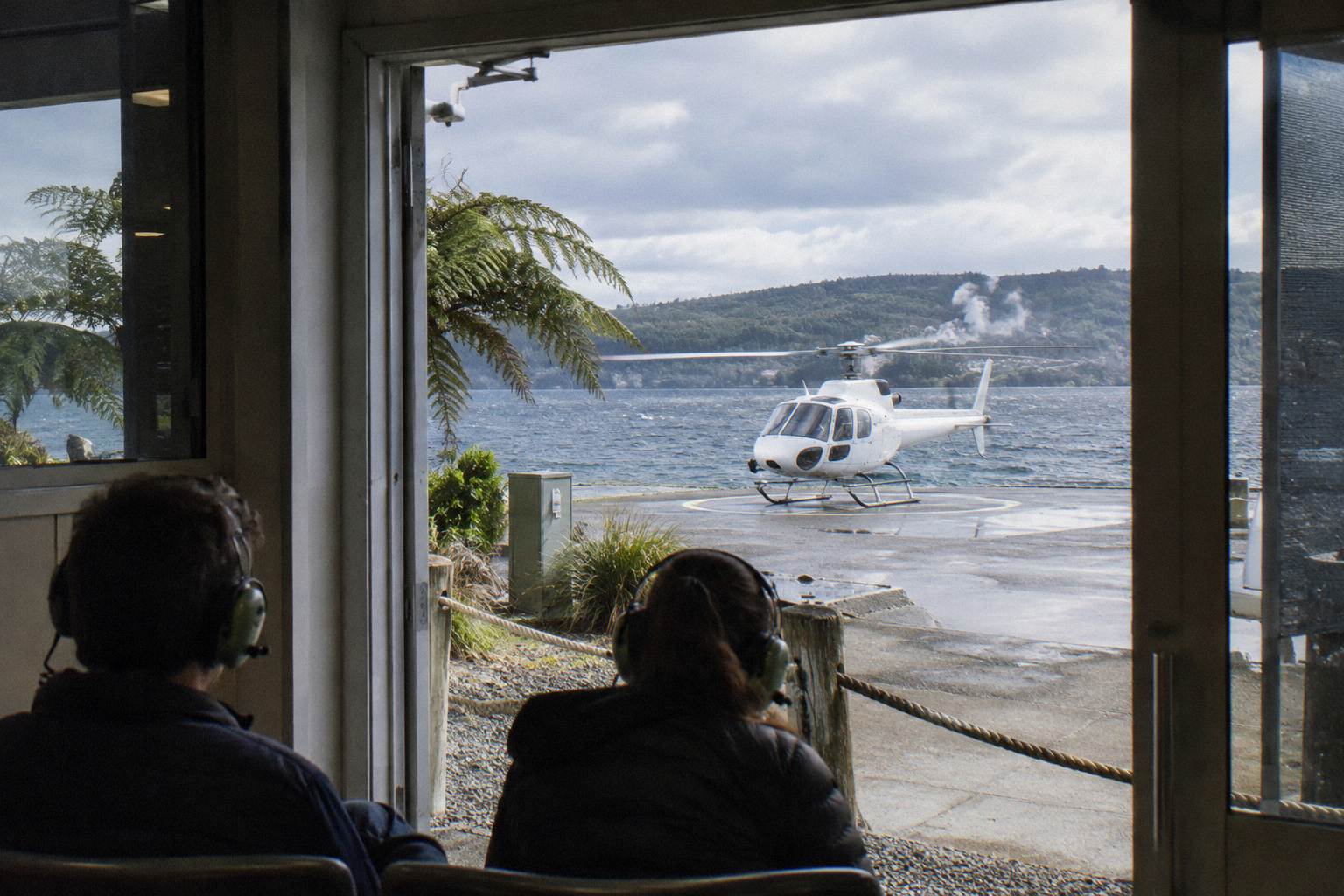
The check-in window is the part families most often underestimate. Thirty minutes sounds generous until it contains parking, a walk from a distant car space, a last bathroom stop and the weighing of four people. The briefing covers the essentials children need to hear too: staying seated, headset use, and how boarding works on the pad.
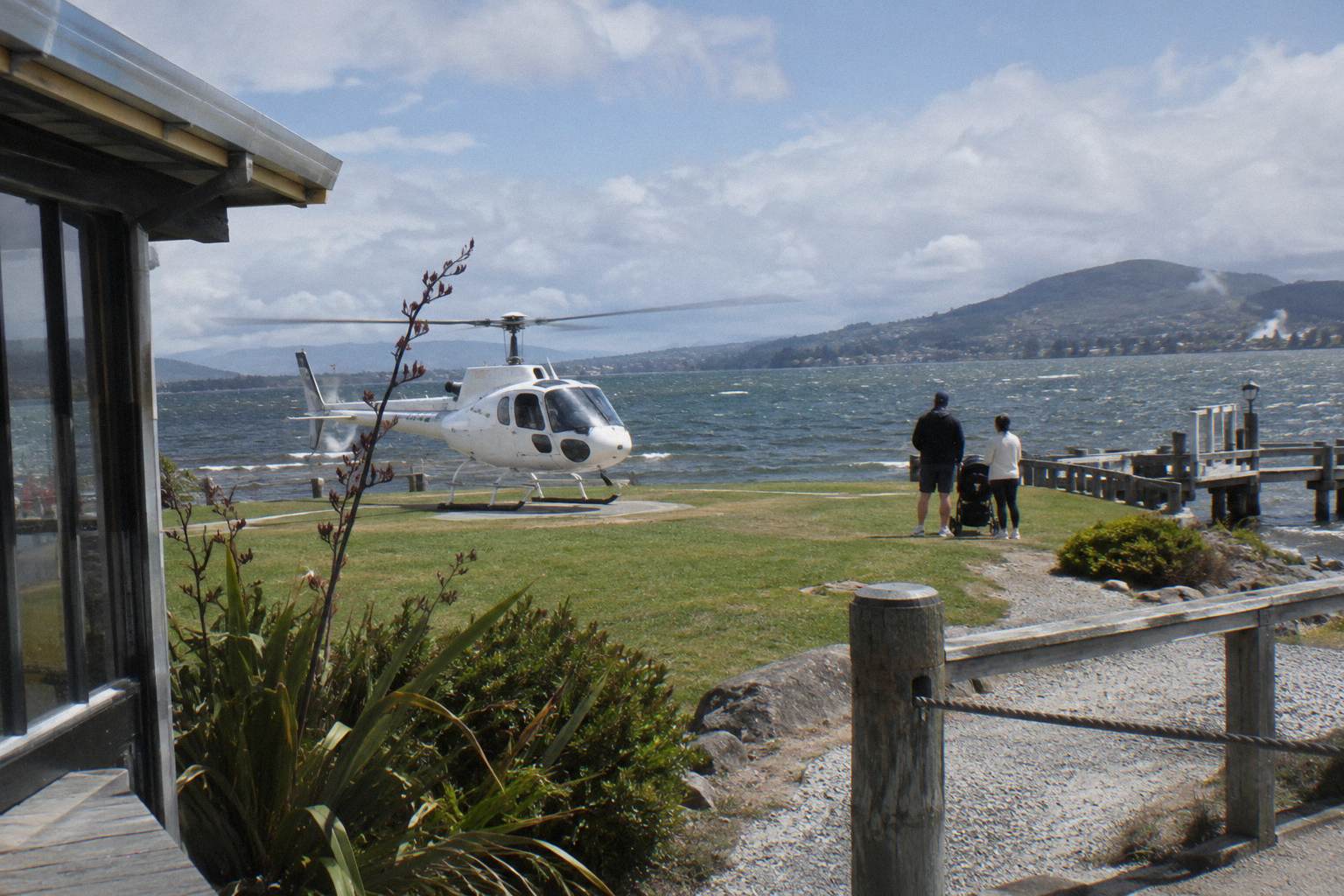
The packing list from the operator's FAQ is short: camera, sunglasses and a jacket, with closed-toe comfortable footwear for flights that include landings. A jacket matters more than visitors expect; the lakefront can be breezy and the aircraft cabin is not heated like a car.
| Practical item | Helicopter flights | Floatplane flights |
|---|---|---|
| Check-in before departure | 30 minutes | 20 minutes |
| Where | Lakefront office, 1 Lakefront Drive | Same Lakefront office |
| Takeoff from | Lakefront helipad | Lake Rotorua, from the pier |
| Hotel pickup | Not on standard flights | Not on standard flights |
| Footwear advice | Closed-toe for landing trips | Closed-toe for landing trips |
Because the base is under a kilometre from the city centre, most families staying centrally can walk to check-in, which removes the parking variable entirely. Those staying further out should treat the drive plus the walk from any car space as part of the 30-minute window, not extra time on top of it. The lakefront itself has room to wait with children, and watching floatplanes and helicopters come and go is a genuine warm-up act for a nervous first-timer.
What Happens If Weather Cancels A Family Flight?
If weather stops a flight, the operator works with the booking to reschedule or provide a full refund, and flights operate only in suitable weather and safe flying conditions. The same applies when volcanic activity or other circumstances beyond the operator's control force a cancellation before the trip starts. Families booking through the flight pages also see 24-hour free-cancellation terms on those bookings.
That refund position matters for families because children's tolerance for waiting out a weather hold is limited, and Rotorua weather shifts fast. The operator's terms name fast changing weather among the natural hazards of the region, and every flight description carries weather-dependent wording. A morning that looks grey at breakfast can be flyable by 11.
Seasonally, Rotorua's driest and warmest stretch runs from late spring in October through to early autumn in April, per Rotorua's official tourism guidance. Winter flights absolutely happen, and the operator runs all year during daylight hours, but families booking a July trip should build more schedule slack than families booking in February. The deeper guide to Rotorua helicopter weather covers the cancellation mechanics in full.
For planning, mornings often give the calmest conditions and smoothest flying with softer light, while afternoons can bring warmer air and late colour, especially in winter. With children, the smoother-air argument usually wins. A child's first flight is a poor place to test anyone's tolerance for turbulence, and morning slots also tend to fit nap schedules better for the lap-age group.
| Situation | What happens |
|---|---|
| Weather stops the flight | Operator reschedules or fully refunds |
| Operator cancels for circumstances beyond its control, including volcanic activity | Full refund before commencement |
| Family cancels via a flight page booking | Free cancellation up to 24 hours in advance |
| Conditions change mid-day | Flights stand down until safe, then resume where the schedule allows |
The one piece of advice that consistently saves family trips: book the flight early in the stay, not on the last day. If weather moves the flight, an early booking leaves room in the itinerary to take the reschedule instead of losing the experience to the homeward drive.
Common Mistakes Families Make When Booking A Child's Flight
The recurring mistakes are booking a landing trip without reading the two-adult-fare minimum, declaring a child's weight inaccurately, arriving without the 30-minute helicopter check-in margin, and promising a child the summit landing as a certainty. Each is avoidable with one reading of the flight's conditions before payment, and none of them is obvious from the booking screen alone.
The fare minimum catches families planning one adult plus two children on a Tarawera landing trip. The condition requires two adult fares before child rates apply at 75 percent, so a single-parent booking needs to check how that applies before committing. The Mt Tarawera landing guide lays out the landing trip conditions in detail.
The second mistake, rounding a child's weight down or guessing, has consequences spelled out in the terms: rescheduling, a surcharge, or cancellation at the operator's discretion. Weigh the child close to the booking date and declare what the scales say.
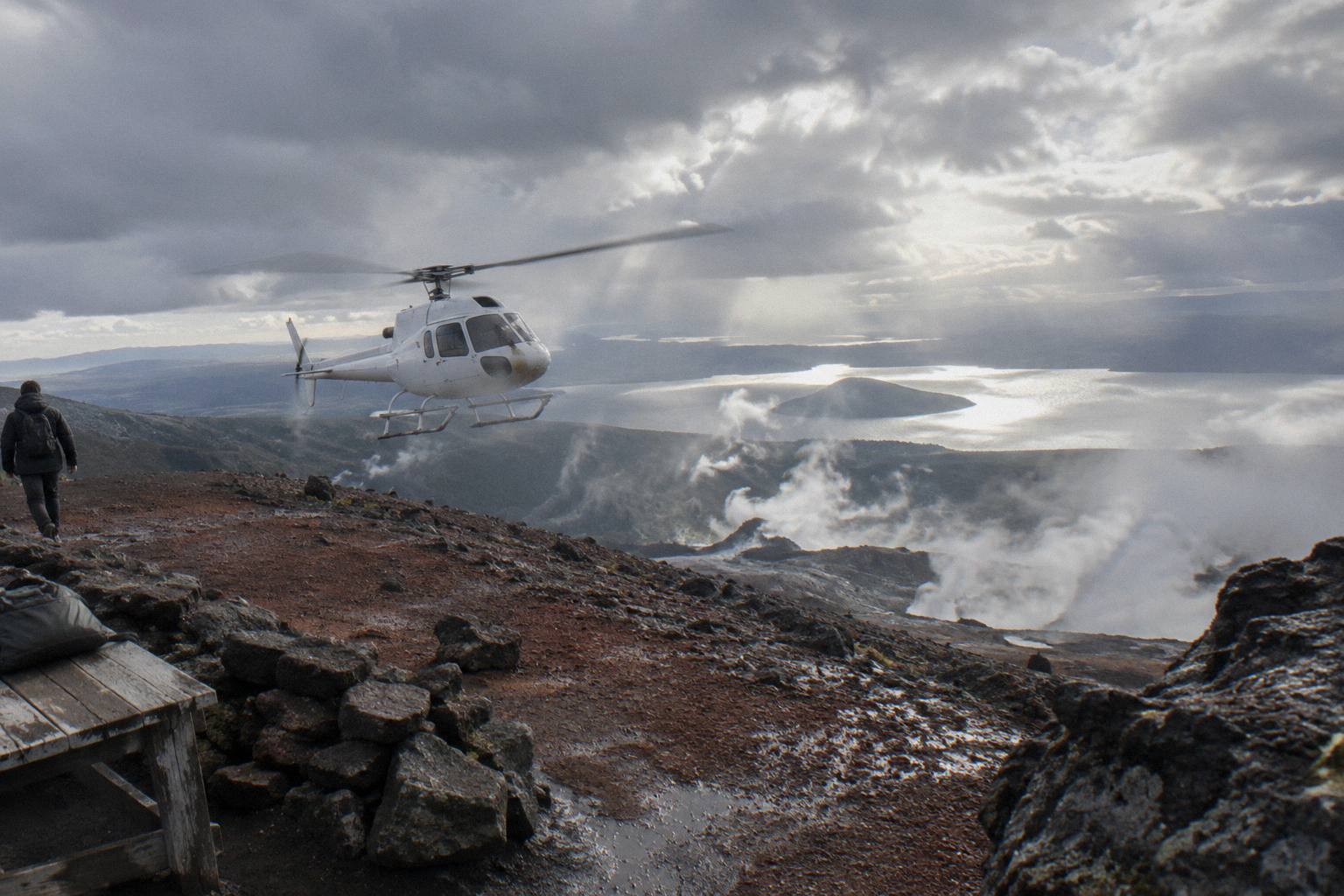
The third is timing. A 30-minute check-in for helicopters, 20 for floatplanes, is the window in which weighing and briefing happen. A family that arrives at departure time has not missed a little admin, it has missed the flight's safety foundation.
The fourth is narrative. Landing on Tarawera happens at the pilot's sole discretion, and the operator's own wording says excursion landings are undertaken at your own risk and depend on weather, volcanic activity and passenger loadings. Frame the trip to a child as a flight over a volcano that might land on it, and the day delivers either way.
A fifth, quieter mistake is overbooking the day around the flight. A family that slots a helicopter flight between three other attractions leaves no room for a weather hold or a reschedule, and arrives at check-in rushed. The flight is short; the morning it sits in deserves some air.
Common Questions About Children On Scenic Flights
Can Children Fly On A Helicopter Tour In Rotorua?
Yes. Children of all ages are welcome, with infants under 2 on a lap and child rates from 2 to 11. No scenic flight in the current lineup carries a minimum age.
Do Children Pay Full Price On Rotorua Helicopter Flights?
Ages 2 to 11 pay a child rate where one applies. On the Tarawera landing trips that rate is 75 percent of the adult fare, attached to a minimum of two adult fares per booking. From age 12 the adult fare applies.
Can A Toddler Fly Without A Seat?
Under 2, a child sits on a parent or guardian's lap for the flight. The child is still weighed and counted toward the aircraft's load calculations.
Are Infants And Children Weighed Before The Flight?
Yes. Every passenger is weighed on arrival, with weights declared at booking, so the aircraft stays within balance limits. An inaccurate declared weight can lead to rescheduling, a surcharge or cancellation under the operator's terms.
Which Flight Is Best For A Young Child's First Helicopter Ride?
The 15-minute crater lakes flights, in either the helicopter or the floatplane, match a young attention span and include no landing walk. Longer trips suit school-age children who can manage a briefing and a guided summit walk.
What If The Weather Cancels A Flight We Booked With Kids?
The operator reschedules or fully refunds flights that cannot run due to weather, and bookings made through the flight pages carry 24-hour free-cancellation terms. Build schedule slack into family travel dates so a reschedule is possible.