Helicopter Flights For Families: Age Rules And Child Seats
Children of all ages are welcome on Volcanic Air flights from the Rotorua Lakefront, with under 2s on a lap and child rates for ages 2 to 11, so the decisions that matter for families are fares, seating and which flight length suits.
Short answer
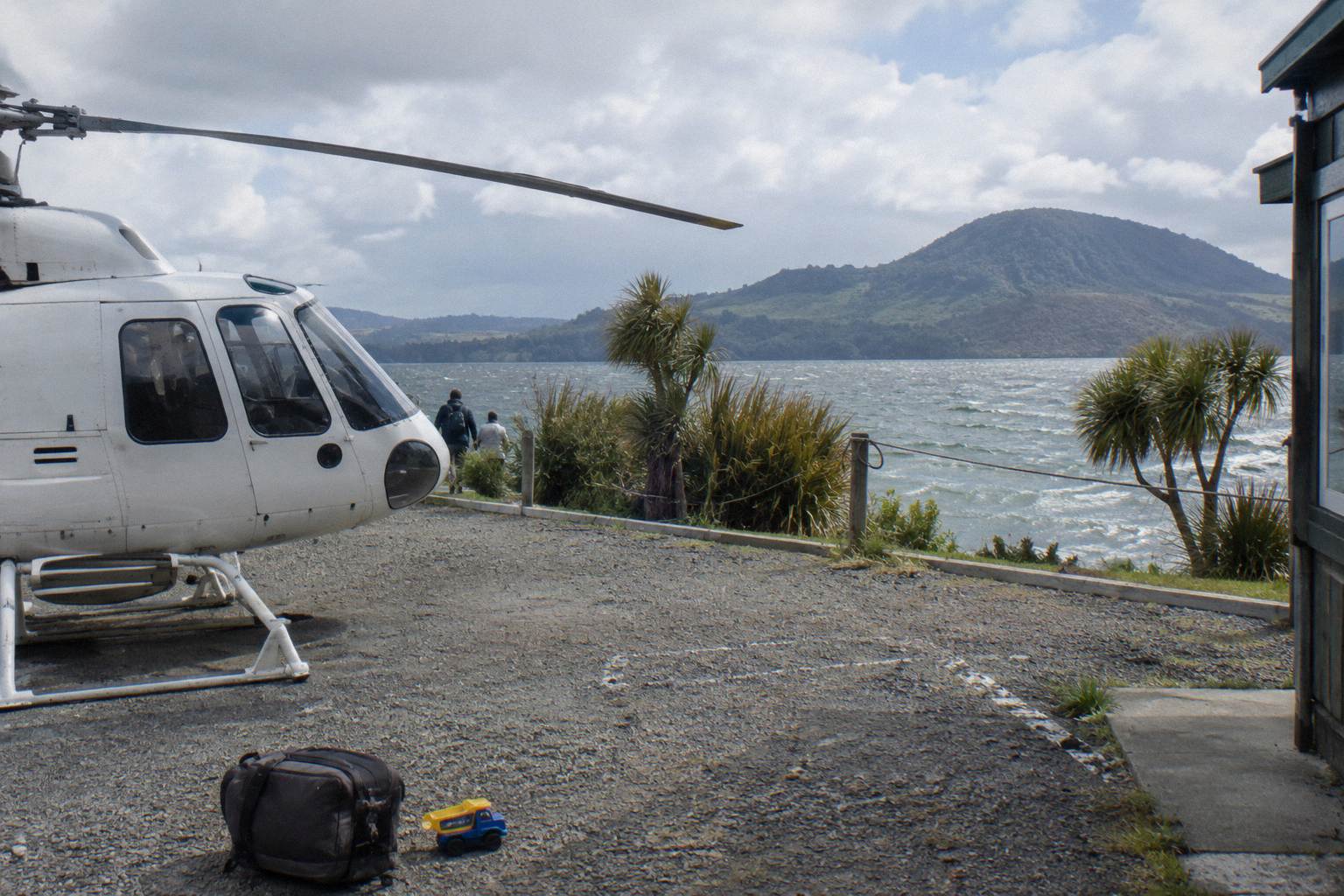
Children of all ages can fly, and the operator's FAQ says under 2s sit on a parent or guardian's lap while ages 2 to 11 pay child rates. On the Mt Tarawera landing flight the booking runs on a minimum of two adult fares, with children aged 2 to 11 paying 75 percent of the adult fare. Weight rules apply to every passenger.
Children of all ages are welcome on Volcanic Air's flights from the Rotorua City Lakefront, which removes the first question most parents ask. The ones that remain are practical: how much a child pays, where a toddler sits, and which of the thirteen trips in the line-up suits a family with young kids versus one with teenagers. This guide works through the age rules, the fare structures, the seating and weighing rules that apply to children as much as adults, and the preparation that makes the day run smoothly.
What Age Can Children Fly From Rotorua?
There is no minimum age on the operator's standard flights, and the FAQ states plainly that all ages are welcome, that children under 2 sit on a parent or guardian's lap, and that child rates apply for ages 2 to 11. That wording covers both the helicopters and the floatplanes that depart from the Lakefront pier. The operator, which has been flying in the region since 1992, applies one family policy across its scenic flights rather than setting an age cutoff per route, so a family with a baby, a six year old and a twelve year old can book a single departure.
The practical minimum is set less by age than by the flight itself. A 15-minute Crater Lakes flight is a short, enclosed experience with no landing, which suits younger children whose attention runs in quarter-hour bursts. A three-hour trip with a volcano landing and a geothermal park stop is a bigger ask of a five year old, both for the duration and for the walking involved at each stop. Nothing in the rules stops a young child taking the longer trips, and plenty of families do, but matching flight length to the youngest traveller's stamina is the single biggest lever on how the day goes.
Teenagers are treated as adults for fare purposes once past age 11. For families with mixed ages, that means the child rate applies only to the 2 to 11 group; the 13 year old sibling pays the adult fare and counts toward the adult fare minimums on flights that carry them. The full policy wording, including the lap-child rule, sits on the operator's frequently asked questions page.
For context on how a first flight feels for younger passengers, the general introduction at helicopter rides over Rotorua covers what happens from check-in to lift-off.
How Do Child Fares Work On Each Flight?
The standard child rate applies to ages 2 to 11 across the fleet, and the Mt Tarawera landing flight runs on a minimum of two adult fares with children aged 2 to 11 paying 75 percent of the adult fare, per the operator's Tarawera landing page. Those are the two numbers that matter most. A family of two adults and two children aged 5 and 8 books two adult fares plus two child fares on that trip; a solo parent with one child cannot meet the two-adult minimum alone and would need a second adult fare or a different flight.
The fare structure rewards families who think about flight length. The shorter scenic trips carry the same child-rate logic at a lower overall cost, which matters when booking for three or four seats. The "Helicopter Volcano Landing" trip, formally Mt Tarawera Helicopter Tour with Volcano Landing, carries a 4.9 rating from 43 reviews and the same free-cancellation terms as the rest of the line-up. Prices on individual trips vary, so compare the live figures when booking.
Families weighing a Tarawera landing against a shorter hop can compare the two directly: the landing trips run longer and carry the two-adult minimum, while the 15-minute options have no landing and no such minimum shown. The pricing logic across the whole line-up, including which trips print from-prices, is laid out in what a Rotorua helicopter ride costs.
| Child age at flight date | Seating | Fare treatment |
|---|---|---|
| Under 2 | On a parent or guardian's lap | Lap infant, no child rate shown |
| 2 to 11 | Own seat | Child rate; 75 percent of adult fare on the Tarawera landing flight |
| 12 and over | Own seat | Adult fare |
Which Flights Suit Families Best?
For children under about 8, the 15-minute Crater Lakes flights by helicopter or floatplane are the natural fit: short, no landing, and priced for a family's first flight; for older children, the Mt Tarawera landing trips add a summit walk that justifies the longer duration. The line-up splits cleanly into no-landing scenic flights and landing trips, and age is the best guide to which side of that line a family should book on.
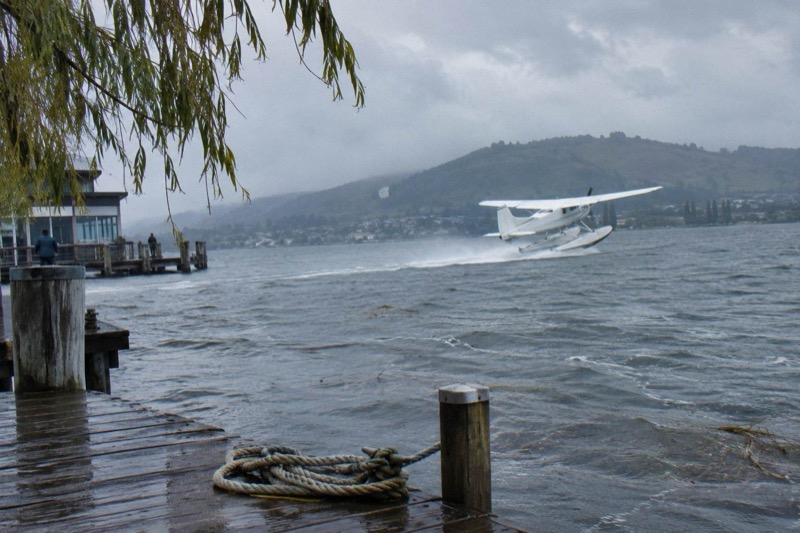
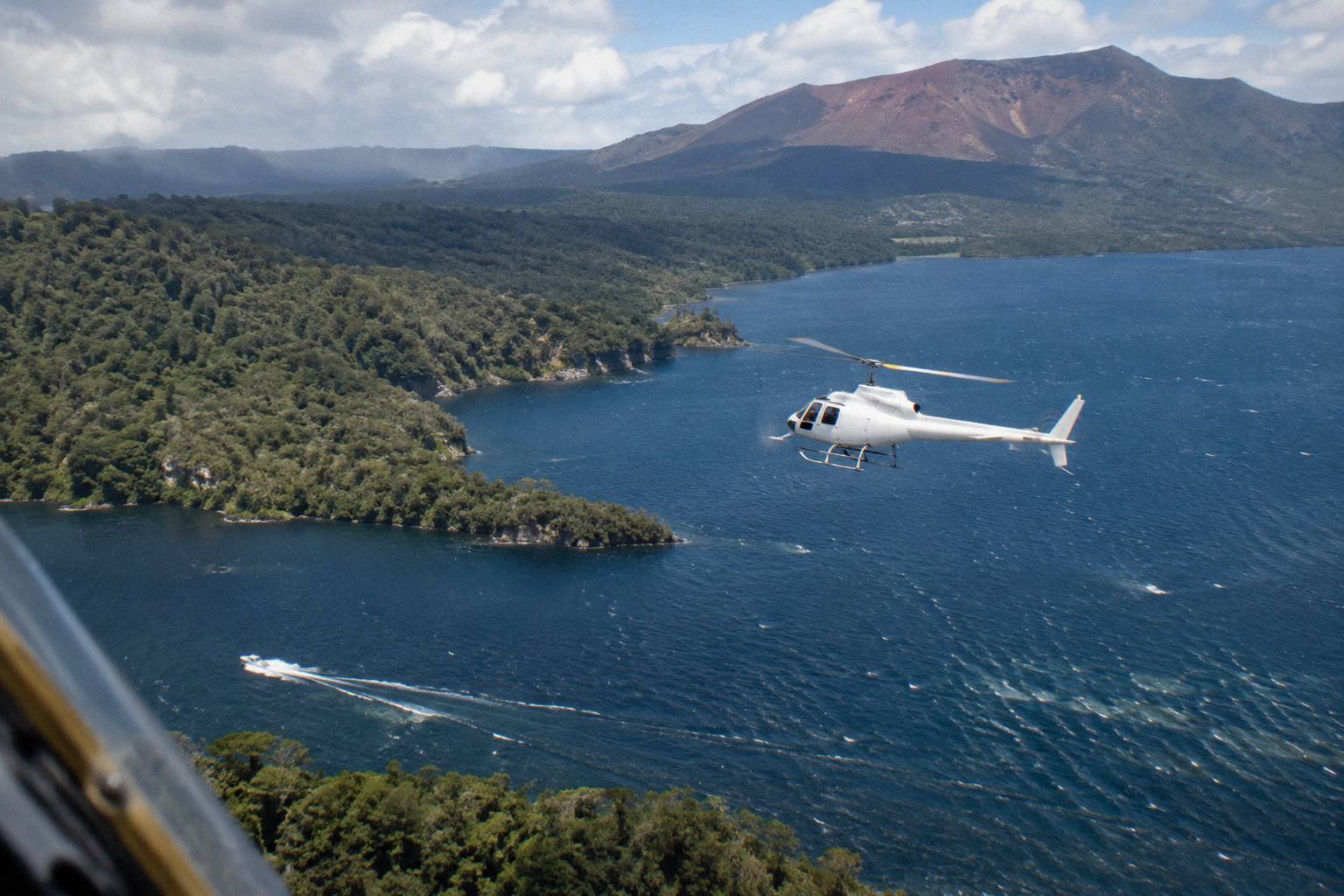
The "Crater Lakes By Helicopter, 15 Minutes" flight overflies a chain of lakes that includes Tarawera, Okataina and Tikitapu, the Blue Lake, in a quarter hour. Its floatplane twin, "Crater Lakes By Floatplane, 15 Minutes", takes off from Lake Rotorua itself, which for many children is half the attraction. Neither carries a landing, so there is no terrain walking and no minimum fitness ask, and the whole experience wraps inside an hour including check-in.
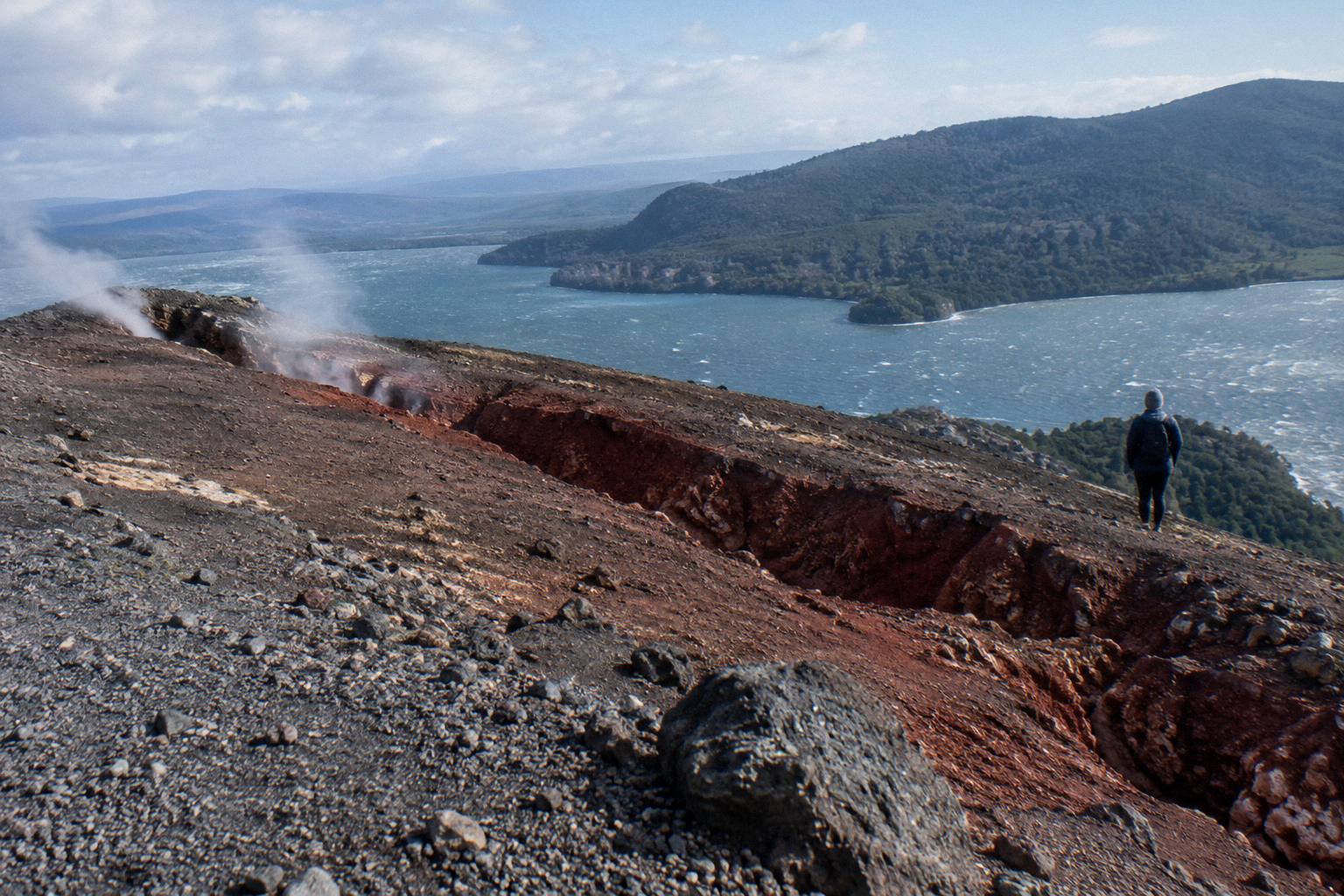
For families with children old enough to enjoy a walk, the landing trips change character. The "Helicopter Landing, Guided Summit Walk" trip, from NZ$675 per person, totals 40 minutes and includes a landing on the Mt Tarawera summit, where the operator's wording describes a 15 minute guided walk. Landings sit at the pilot's sole discretion and depend on weather and volcanic activity, a condition worth explaining to an excited eight year old before departure. The wider question of whether that landing earns its cost is worked through in whether Tarawera crater landings are worth it.
Where Do Babies And Toddlers Sit?
Under 2s sit on a parent or guardian's lap, per the operator's FAQ, and from age 2 every child occupies a seat with child rates applying through age 11; the operator does not publish a car-seat or child harness policy, so families needing one should raise it directly when booking. The lap rule is standard practice for scenic helicopter operations, where cabin space and harness design assume one passenger per seat from toddler age upward.
What this means practically: a parent flying with a 18-month-old holds the child securely across the lap for the full flight, including take-off and landing. Helicopter cabins are compact, so a lap infant sits within arm's reach of the parent's harness at all times, and the pre-flight safety briefing covers the expectation that all passengers remain seated and secured throughout. The briefing requirement comes from the operator's FAQ on mobility and safety, and it applies to every age.
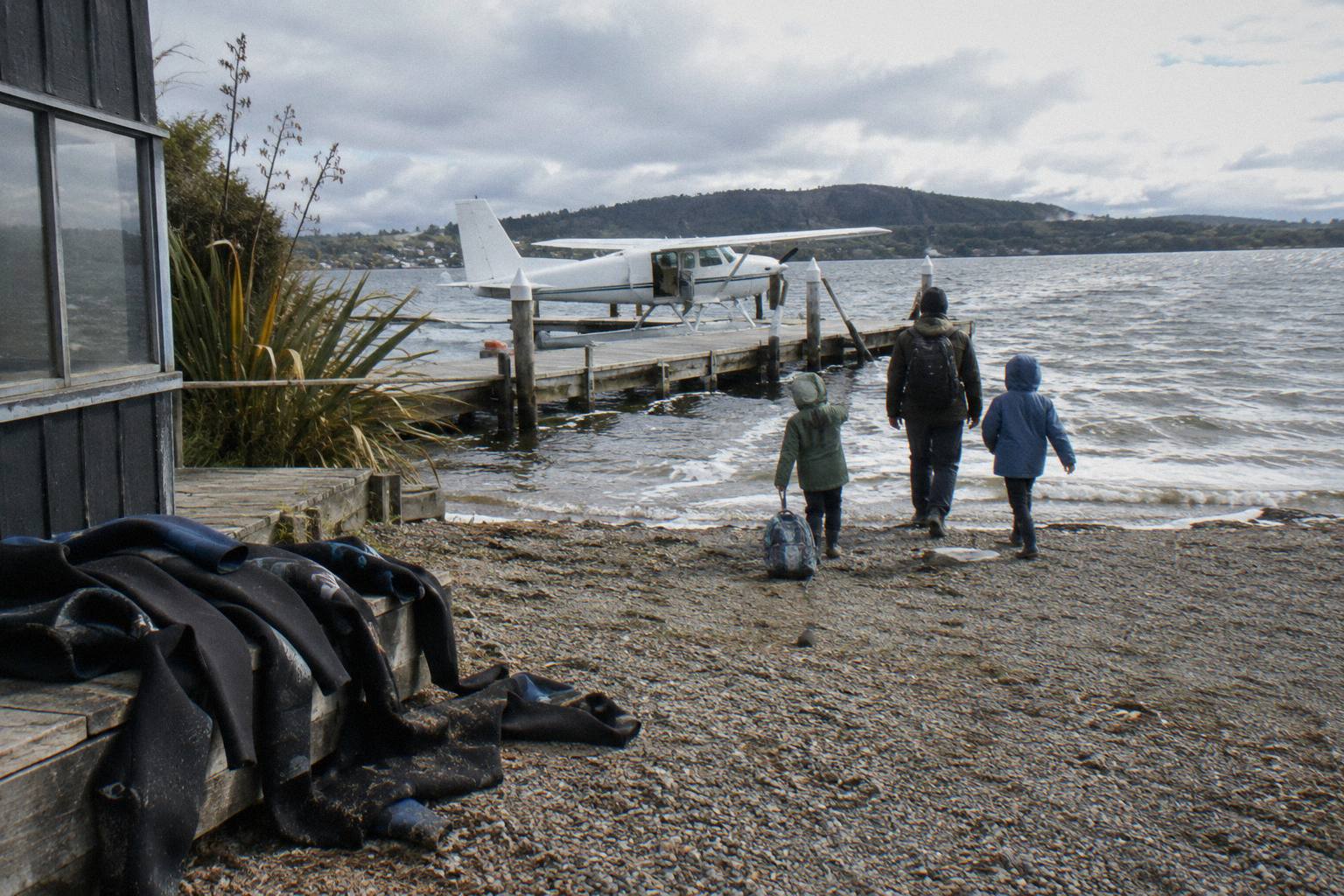
Families with a child approaching age 2 should book with the child's age at flight time in mind, not age at booking time. A child who turns 2 before the flight date moves from lap status to a paid child seat. That single date can change a family's arithmetic, and it is easier to sort at booking than at check-in on the Lakefront. The weighing that happens on arrival applies to seated passengers; the operator's terms require declared weights at booking for safe and balanced seating.
Do Weight Rules Apply To Children?
Yes, weight rules apply to children without exception. Every passenger, regardless of age, must have their weight declared at the time of booking, and all travellers, including kids, are weighed again on arrival. This is because the aircraft must stay within its balance limits, so operators cannot make allowances for younger passengers. Children are not exempt from any of it, because the rules exist for aircraft balance rather than for fare fairness. A family of four declares four weights, and the pilot uses those numbers to work out seating positions inside the cabin.
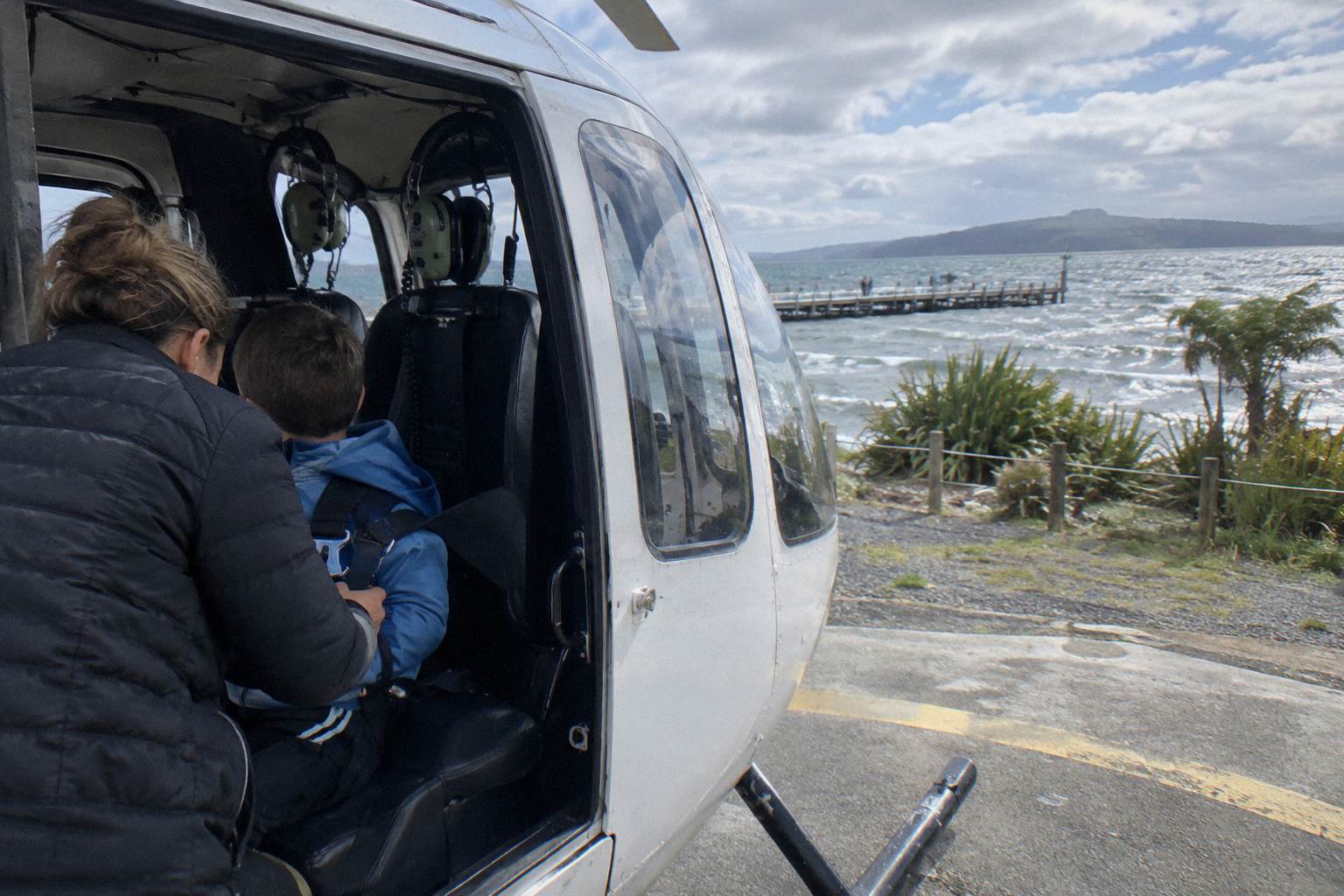
The two thresholds that matter: over 110 kg a surcharge may apply at the operator's sole discretion, and over 135 kg as weighed requires two adult fares. Neither is likely to involve young children, but the declaration itself does, and the terms state that any deviation from a declared weight may result in a flight being rescheduled, a surcharge, or a booking cancelled. Declaring accurately at booking, children included, avoids all three. One trip in the line-up, the "One-Hour Volcanic Adventure", prints a maximum of six travelers and a 110 kg total weight per passenger figure.
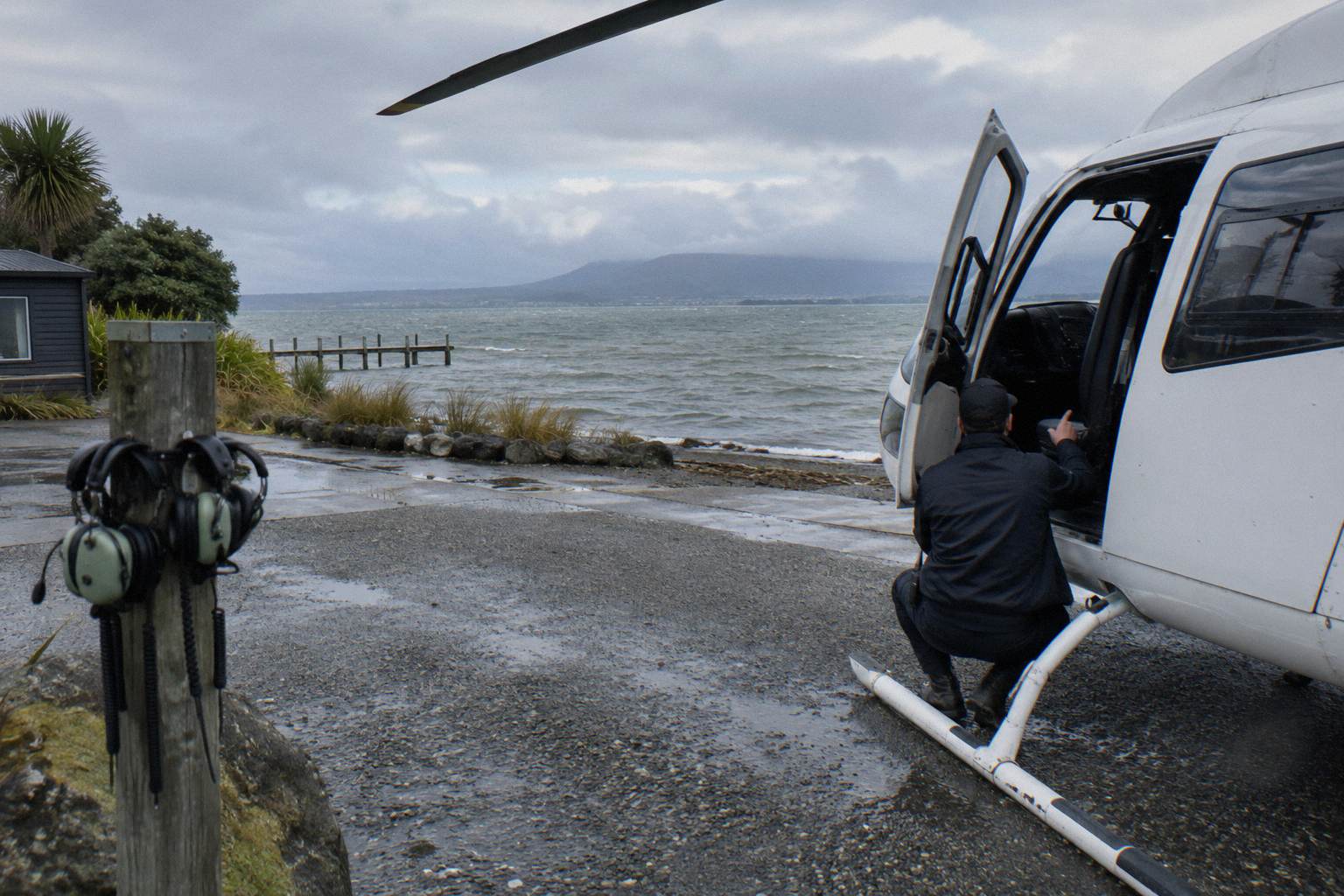
Seating position is the pilot's call, not the family's. Helicopter balance depends on where mass sits in the cabin, so a parent and child may be seated apart, or a child may be placed in a front seat if the numbers work out that way. Families for whom sitting together is important should say so at booking and accept that the final plan follows from the weigh-in. The deeper mechanics are covered in Rotorua helicopter flight weight limits, and the weighing question itself is answered at whether passengers are weighed before a flight.
What Does Check-In Ask Of A Family?
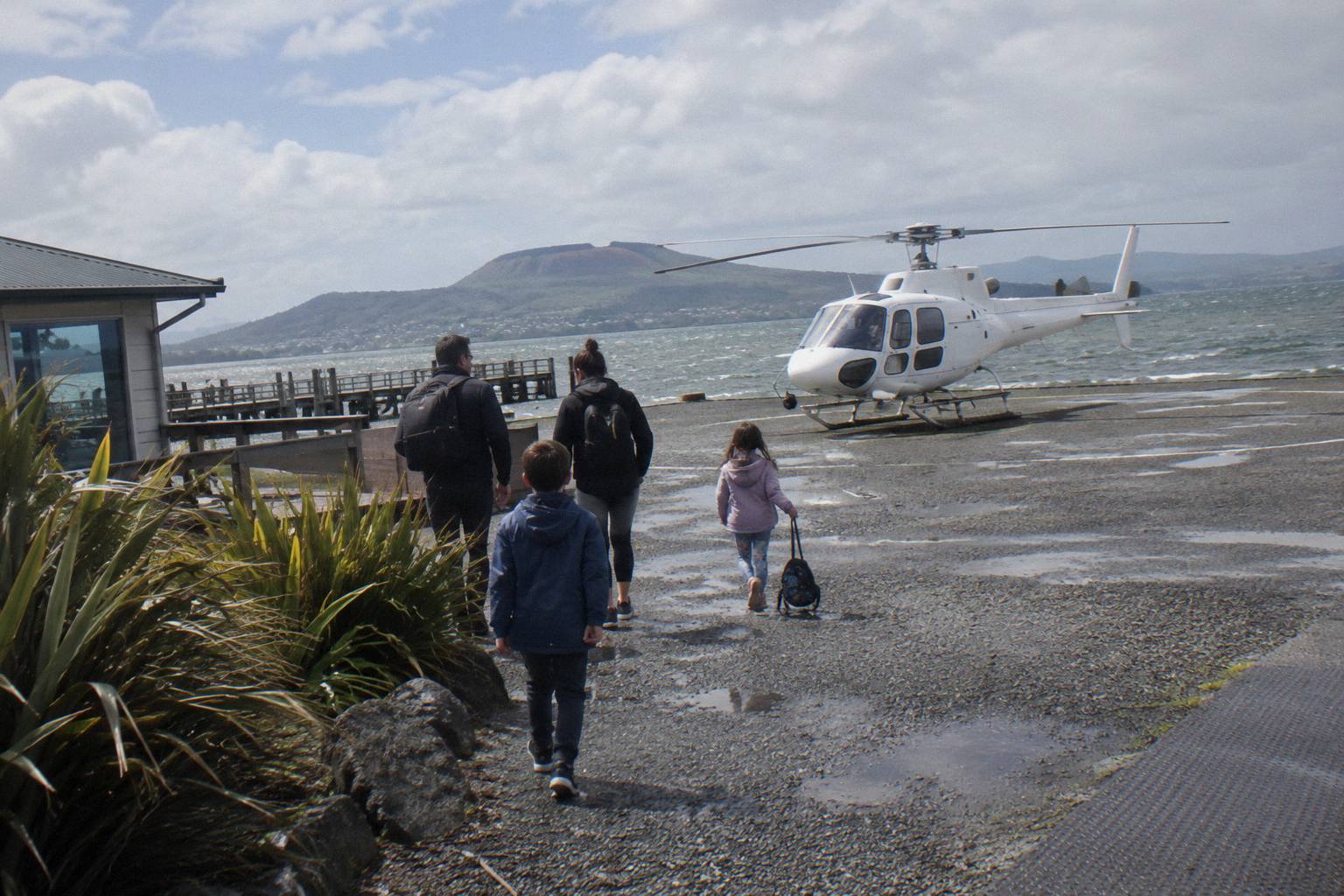
Helicopter passengers check in 30 minutes before departure and floatplane passengers 20 minutes, both at the Lakefront office at 1 Lakefront Drive, and the check-in window includes the full safety briefing that every passenger, children very much included, must follow throughout. The base sits under a kilometre from the Rotorua city centre, so most families staying in town can walk it, and hotel pickup is not part of standard flights; direct pick-ups exist only for bespoke charters.
Arriving with the full window matters more with children than without. The check-in covers weighing, briefing, and boarding, and a family that arrives at the cut-off compresses all three into minutes while managing coats, cameras and excitement. The FAQ's recommended kit list is short: camera, sunglasses, a jacket, and closed-toe comfortable footwear for flights with landings. The footwear point catches families out on the Tarawera trips, where the summit walk happens on volcanic terrain, so trainers rather than sandals.
| Check-in item | Helicopter flights | Floatplane flights |
|---|---|---|
| Check-in time | 30 minutes prior | 20 minutes prior |
| Location | Lakefront office, 1 Lakefront Drive | Lakefront office, 1 Lakefront Drive |
| Take-off point | Lakefront pad | Lake Rotorua, from the pier |
| Hotel pickup | Not on standard flights | Not on standard flights |
| Safety briefing | Required for all passengers | Required for all passengers |
The operator describes itself as a CAA-certified NZ air operator with Qualmark Gold assurance, wording worth knowing though it changes nothing about what a family does on the day. What changes the day is footwear, arrival time, and a child who has been told what the briefing will ask of them: stay seated, stay secured, follow the pilot's instructions.
How Should You Prepare Children For The Flight?
Explain the noise, the headsets and the seatbelt rule before arrival, dress every child in closed-toe shoes, and frame any landing as a possibility rather than a promise, since landings sit at the pilot's sole discretion and can change on the day. The families whose flights go smoothly are generally the ones whose children arrived knowing what a helicopter sounds like from the inside and why they cannot swap seats mid-flight.
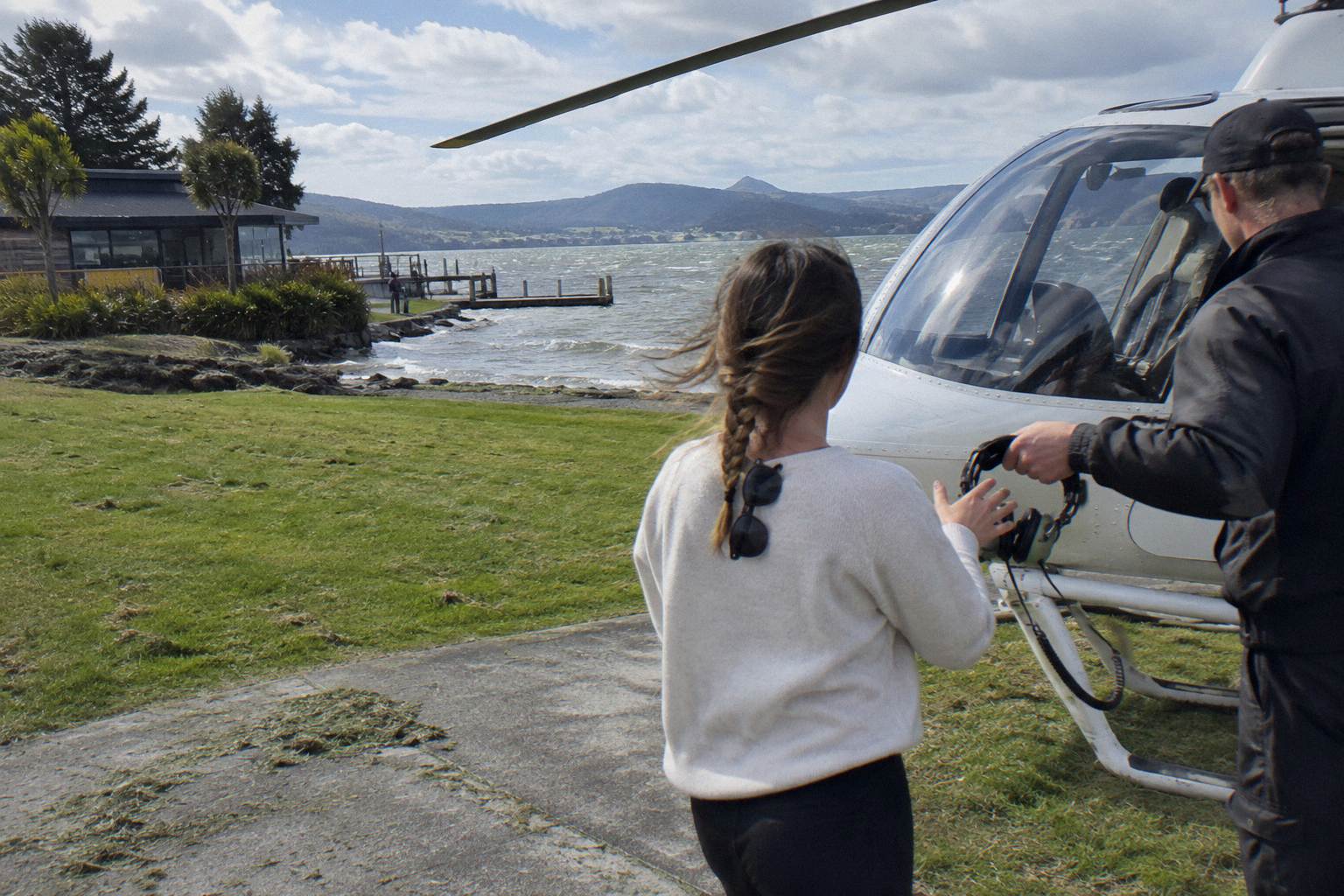
Three preparations carry most of the value. First, the headset habit: cabin conversation happens through headsets, and a child who has worn headphones before adapts faster than one meeting them for the first time at volume. Second, the window question: helicopter seating follows the weigh-in, so a child fixated on "the front seat" should hear in advance that seats are assigned for balance. Whether front seats even come into play is covered at sitting in the front seat of a Rotorua helicopter. Third, the landing caveat: on Tarawera trips, the operator's own terms say excursion landings are undertaken at your own risk and at the pilot's sole discretion, and durations may vary with weather, volcanic activity and passenger loadings.
Motion sickness worries some parents. It happens on helicopters, it is not universal, and the short Rotorua flights give it little time to build; the specifics are discussed at motion sickness on helicopter flights. A light meal beforehand, a window to look out of, and a child facing forward rather than reading covers most of the practical advice.
Weather is the other conversation worth having early. The operator's FAQ is plain that all flights run subject to suitable weather, and if a flight cannot proceed they will work to reschedule or provide a full refund. A child told the night before that "we fly today if the sky allows it" handles a reschedule better than one promised a flight outright. The seasonal patterns behind that are set out in the best time for a Rotorua helicopter flight.
Helicopter Or Floatplane For A Family?
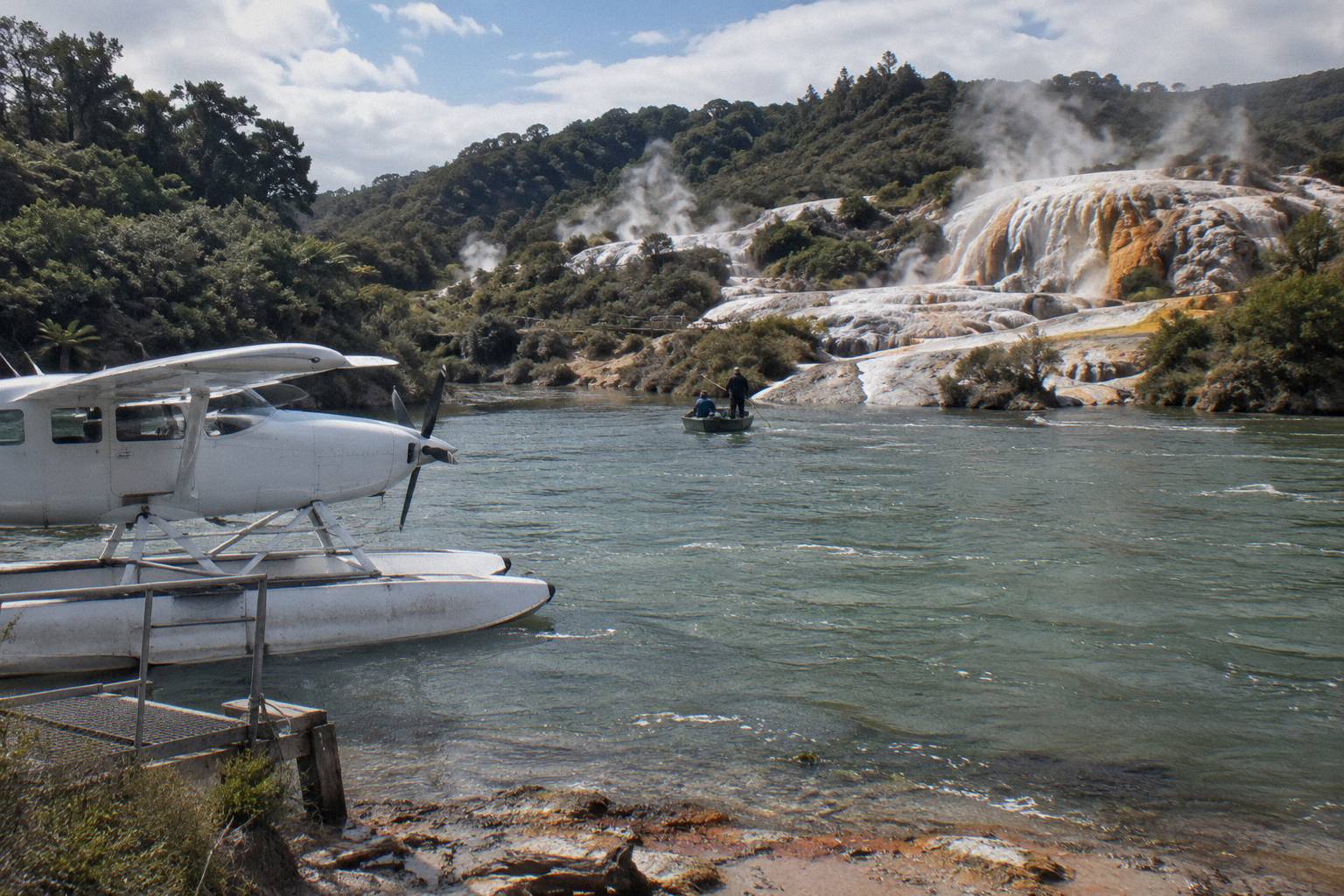
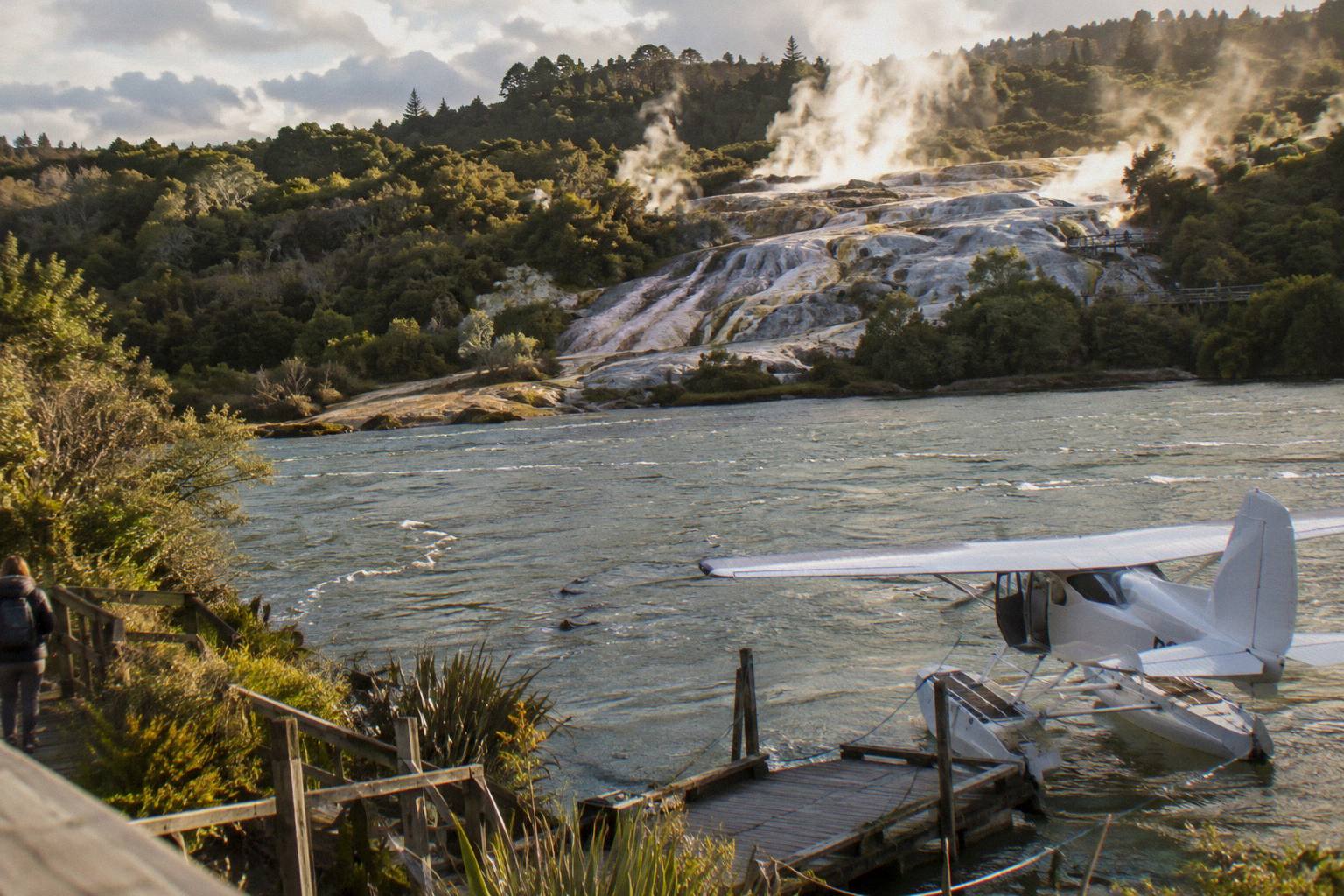
Both depart from the Lakefront, both welcome all ages, and both apply the same child-rate structure, so the choice comes down to whether a family wants the hover-and-land agility of a helicopter or the lake take-off of a floatplane, which the operator describes as departing from the city-centre lakefront pier on to Lake Rotorua. For many children the floatplane's water take-off is the more novel experience; helicopters offer the landing options on volcanoes and rivers.
The rotorcraft side of the line-up carries the Tarawera summit landings and the dual-landing trips, including the "Geothermal Park Landing, 3 Hours" from NZ$1,490 per person and the "Dual Landing Thermal Explorer". The floatplane side carries the Orakei Korako landing, from NZ$845 per person, where the operator's wording describes touching down on the Waikato River, plus the scenic flyovers. A family choosing purely on child-friendly novelty has a clean split: water take-off and river landing on floats, summit landing on rotors.
| Family priority | Better fit | Why |
|---|---|---|
| Shortest first flight | Crater Lakes, 15 minutes, either aircraft | No landing, no walking, low cost per seat |
| Water take-off novelty | Crater Lakes By Floatplane | Departs from Lake Rotorua at the pier |
| Volcano summit landing | Helicopter Volcano Landing | Tarawera summit, 15 minute guided walk |
| Two stops, older kids | Dual Landing Thermal Explorer | Tarawera plus Orakei Korako in one trip |
| Teenager's first long flight | One-Hour Volcanic Adventure | Full hour airborne over the volcanic zone |
The head-to-head comparison across the whole line-up, including aircraft differences that matter less to children, runs at Rotorua helicopter versus floatplane.
What Trips Families Up When Booking With Children?
The recurring mistakes are booking before checking the child's age at flight date, skipping the weight declaration for children, assuming the family will sit together in the cabin, and promising a child a Tarawera landing that weather or the pilot's discretion can cancel. Each one is avoidable at booking time, and each one is harder to fix at the Lakefront desk twenty minutes before departure.
The age-at-flight-date slip is the quietest of the four. A child who is 1 at booking and 2 at departure crosses from lap status to a paid seat, which changes both the fare and the cabin plan. The weight omission is more common: families declare adult weights and guess at children's, but the operator weighs passengers on arrival, and the terms are explicit that deviations can mean rescheduling, surcharges or cancellation. Declaring four accurate weights takes a minute at booking.
Seating assumptions cause friction because balance dictates positions. A parent who has told a nervous six year old "you'll sit next to me" has made a promise that belongs to the pilot. The landing promise is the biggest one: the operator's terms put excursion landings at the pilot's sole discretion and note that durations and inclusions vary with weather, volcanic activity and passenger loadings. A child briefed that the landing is "what we're hoping for" handles a flyover-only outcome far better than one promised the summit.
| Mistake | What goes wrong | Fix at booking |
|---|---|---|
| Child's age checked at booking date, not flight date | Lap infant becomes a paid seat unannounced | Use the age on departure day |
| Weights declared for adults only | Weigh-in deviation can reschedule or cancel the flight | Declare every child's weight |
| Family seated together assumed | Pilot assigns seats for balance | Note the request, accept the plan |
| Landing promised to a child | Pilot discretion or weather can cancel it | Frame landings as hoped for |
One booking-side reassurance is worth having: every trip in the line-up carries free cancellation up to 24 hours in advance on its booking terms, which covers the family-level surprises, illness and itinerary shifts, if not the weather calls on the day. The details of what happens when weather cancels a flight are laid out at weather cancellations on Rotorua helicopter flights.
A Family Itinerary That Works
Book a morning slot, walk to the Lakefront from central Rotorua in under fifteen minutes, fly the 15-minute Crater Lakes trip or a Tarawera landing, and pair the flight with a ground activity the children already know how to do, such as the lakefront promenade itself. Mornings often give the calmest weather and smoothest flying, per the operator's FAQ, and calm air is the single best condition for a child's first flight.
A sample shape for a family day: check in at the Lakefront office half an hour before a morning helicopter departure, fly the lakes or Tarawera, and be back on the ground before the children's attention fully drains. The base's position under a kilometre from the centre means lunch, playgrounds and the lakefront promenade are all walkable afterward, and a full day plan around a flight is sketched in a one-day Rotorua itinerary with a helicopter flight.
Season matters less than parents might fear: the operator flies all months of the year, in daylight hours. The driest and warmest stretch runs from late spring in October until early autumn in April, per Rotorua's official tourism guidance, but a winter morning flight with a jacket is a perfectly ordinary booking, and the FAQ notes afternoon flights can bring warmer temperatures and late-day colour in winter.
Common Questions About Family Helicopter Flights
What Age Can Children Fly On A Rotorua Helicopter Flight?
All ages are welcome. The operator's FAQ states children under 2 sit on a parent or guardian's lap, and child rates apply for ages 2 to 11. There is no minimum age on the standard scenic flights.
Do Children Pay Full Fare On Helicopter Flights?
Children aged 2 to 11 pay child rates. On the Mt Tarawera landing flight, the operator's page gives a 75 percent child fare for ages 2 to 11 on a minimum of two adult fares. From age 12, the adult fare applies.
Do Babies Need Their Own Seat?
Under 2s sit on a parent or guardian's lap for the flight, per the operator's FAQ. From age 2, a child occupies a seat and pays the child rate.
Do Children Get Weighed Before The Flight?
Yes. The operator asks for individual weights at booking for every passenger and weighs passengers on arrival, so the aircraft stays within balance limits. Weight rules apply to children as they do to adults.
Can Our Family Sit Together In The Helicopter?
Seating follows aircraft balance, decided by the pilot after the weigh-in, so a family may be split across the cabin. Note the request when booking, but treat the final seating plan as the pilot's call.
Is A Mt Tarawera Landing Guaranteed For Our Family?
No. The operator's terms state that excursion landings are undertaken at your own risk and at the pilot's sole discretion, and that durations and inclusions can vary with weather, volcanic activity and passenger loadings.