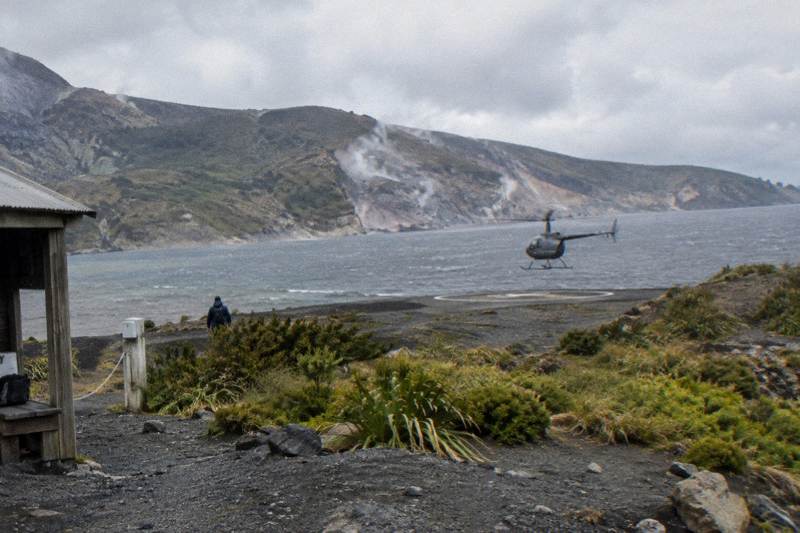
Is The Tarawera Crater Landing Worth It?
A decision guide to the Mount Tarawera helicopter landing: what the flight includes, what it costs, when a flyover is the better call, and who should skip it.
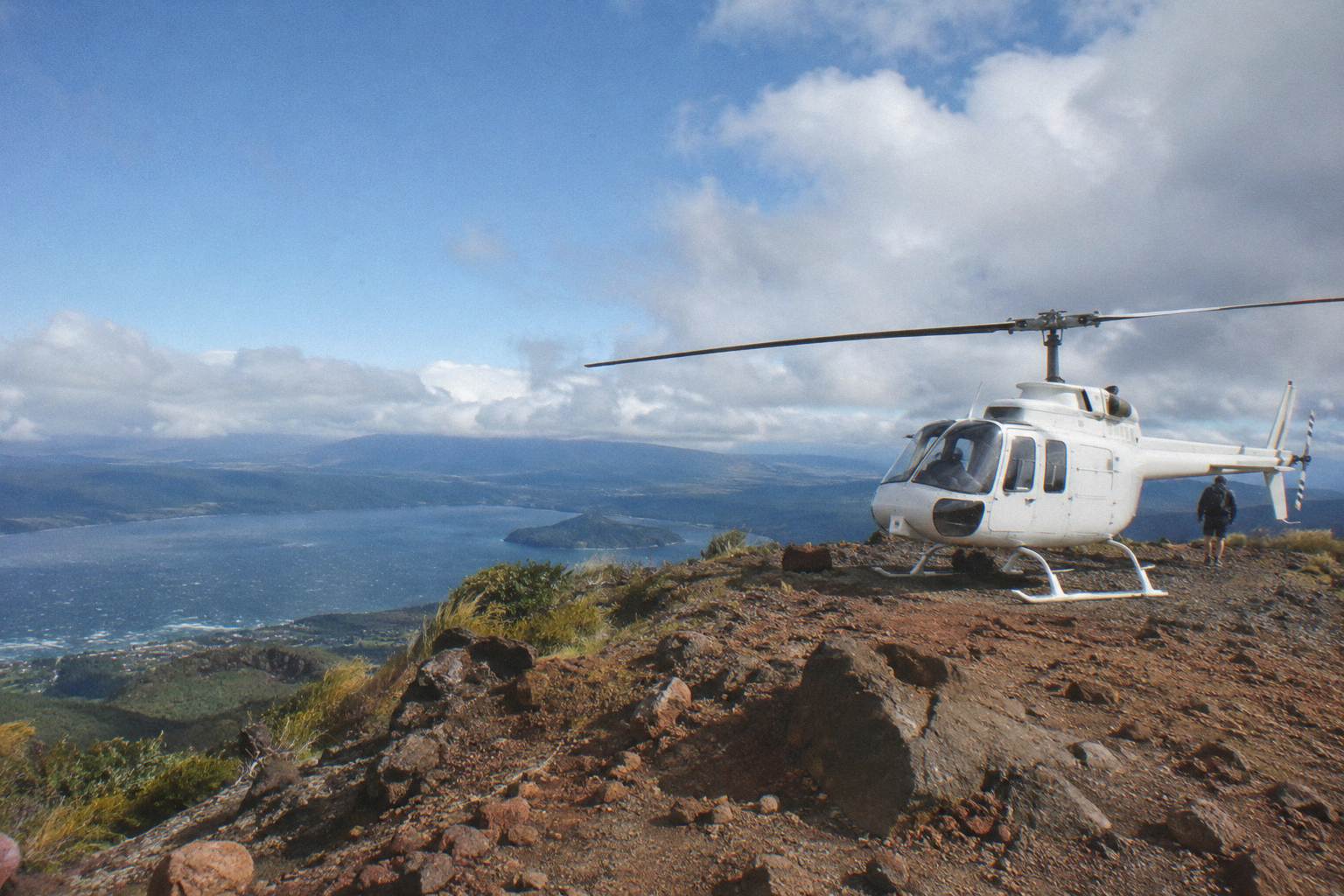
Mount Tarawera is the volcano that rewrote the Rotorua landscape in a single night, and its summit is not open to independent hikers. Access runs through authorised guided trips or approved helicopter landings, which makes a landing flight one of the few legitimate ways to stand on the mountain at all. That scarcity is the real question behind the price: you are not just buying a scenic flight, you are buying ground on a maunga that is otherwise closed.
The decision usually comes down to three options: a helicopter landing tour, a floatplane flyover, or a short crater lakes hop. Each has a from-price where the booking page publishes one, and each suits a different kind of traveller.
Yes, if you specifically want to set foot on a volcano, because the crater cannot be reached any other way on short notice, and the landing pairs the scenic flight with a guided walk across terrain no flyover sees. Skip it if you mainly want aerial photos of the lakes, are on a tight budget, or need a fixed schedule, since weather and the pilot's call can cancel the landing on any given day.
The core value proposition is access. Independent summit access is not permitted; the mountain is governed by the Ruawahia 2B Trust, and Volcanic Air operates its landings as a concessionaire working alongside Ngati Rangitihi, the iwi who hold kaitiakitanga of the maunga. Concession revenue is reinvested, so the fee you pay also carries a conservation component that a flyover does not.
The second part of the value is the walk. The operator's own tour wording is specific: land on the summit of Mt Tarawera for a 15 minute guided walk. Fifteen minutes sounds short until you consider what you are walking on. The summit plateau is the roof of the 1886 eruption's rift, raw volcanic rock split open in one night, and there is no walking track, no signage and no independent route onto it. A guided quarter hour on that surface is a different product from a 40 minute forest stroll.
Against that stands the caveat printed on the operator's page: tour duration, flight times and inclusions may vary due to weather conditions, volcanic activity and passenger loadings, and excursion landings are undertaken at your own risk, at the pilot's sole discretion. In plain terms, the flight can run and the landing still not happen. That risk is priced in, and it should be weighed in too. For a fuller treatment of the access rules, the Mount Tarawera landing guide covers the concession system in detail.
What The Landing Flight Actually Includes
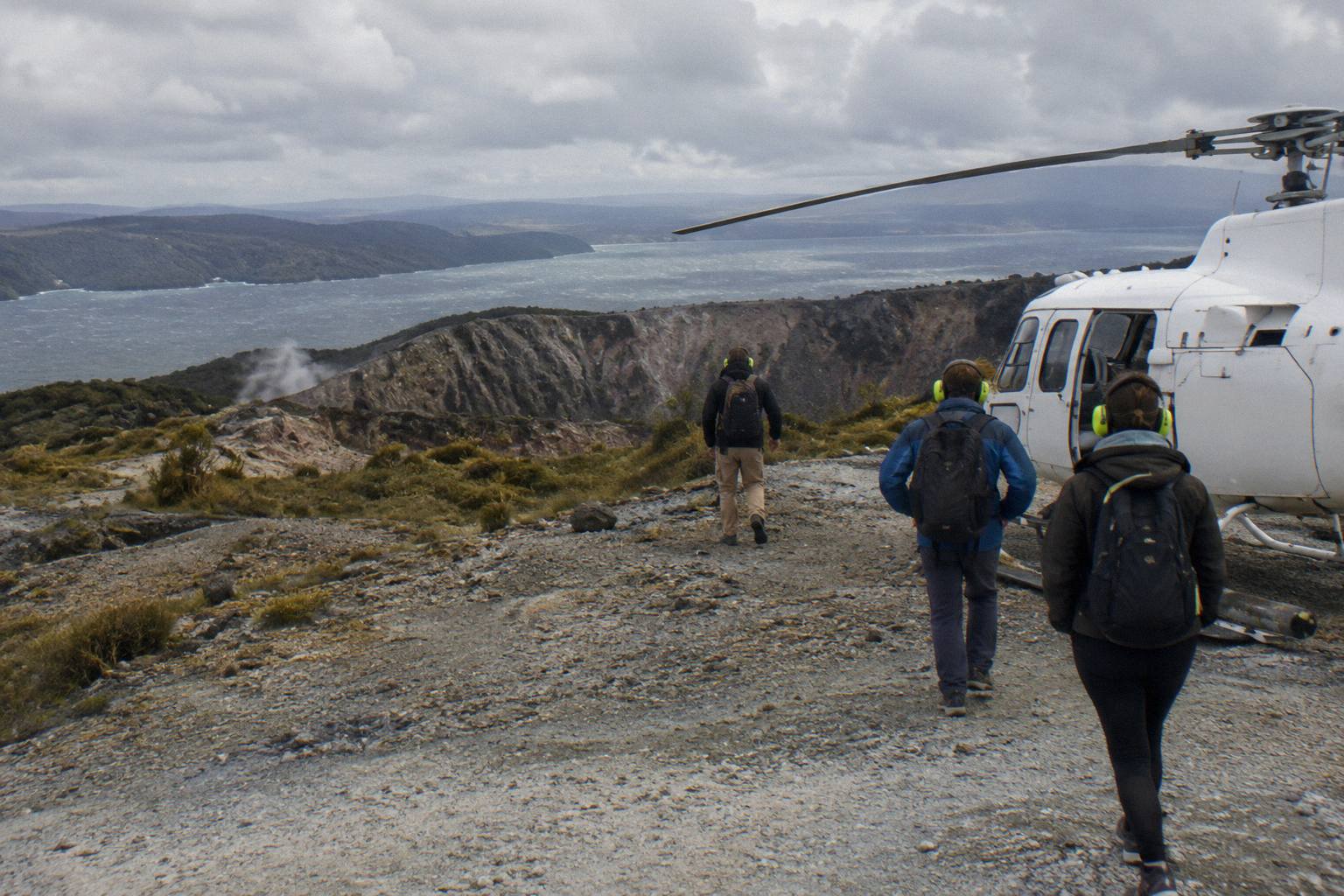
Every Tarawera landing trip includes the lakefront check in, a full safety briefing, a scenic flight across the crater lakes to the mountain, a landing on the summit when conditions allow, and a guided walk on the summit rock before the return flight. The differences between the landing products are duration and depth: the basic landing, the version with a longer guided summit walk, and the long volcano adventure that spends more time over the rift.
All flights start at the same place. The Volcanic Air base is at the Rotorua City Lakefront, 1 Lakefront Drive, under a kilometre from the town centre. Helicopter passengers check in 30 minutes before departure, floatplane passengers 20 minutes, and there is no hotel pickup on standard flights. The briefing covers seating, harnesses and the landing procedure.
The route out crosses lakes Okareka, Okataina and Tarawera, so even before the mountain appears you get the lake district from above. The operator's flight wording describes flying over Mt Tarawera's 8 km of rift and craters across the mountain top; GNS Science describes the full 1886 rift as 17 km long, running across the mountain, through Lake Rotomahana and into the Waimangu Valley area. Two different spans of the same event, and both are useful: the flight sees the mountain section, the geology runs further south.
The landing itself is the operator's headline: "Land on the summit of Mt Tarawera for a 15 minute guided walk." The Mt Tarawera Helicopter Tour with Volcano Landing is the direct version of that promise, rated 4.9 from 43 reviews (Check availability). The Rotorua: Helicopter Flight and Guided Walk on Mt Tarawera packs the landing and guided walk into about 40 minutes, from NZ$675 per person. The Mount Tarawera Volcanic Adventure by Helicopter is the long version, roughly an hour in the air.
One figure worth fixing in mind: the landing tours all operate on the same concession and the same summit area. Paying more does not buy a better crater; it buys more time, more narrative and a longer walk. That is a genuine difference, but it is a duration decision, not a destination decision.
Landing Flight Or Floatplane Flyover
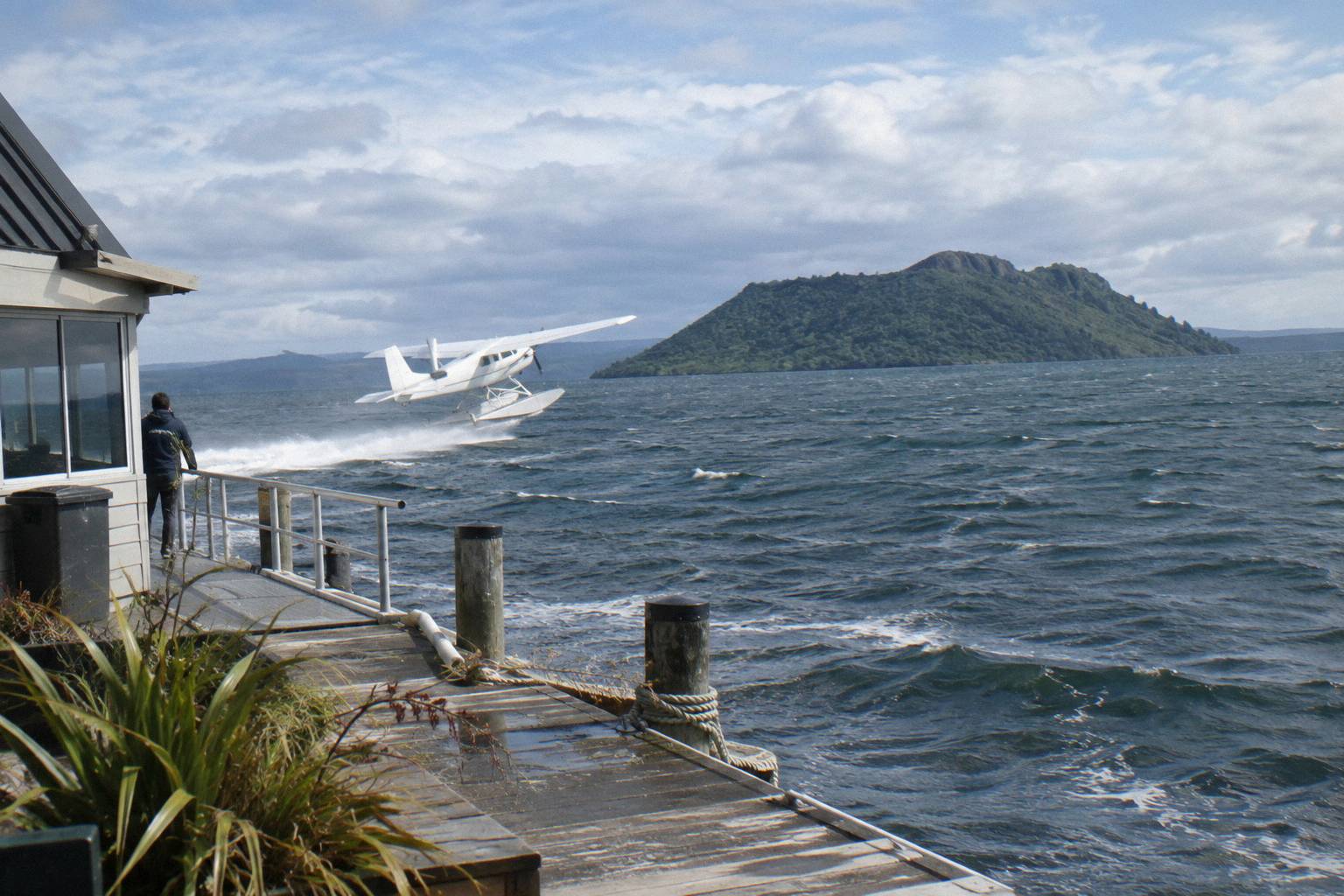
Pick the landing flight if standing on the volcano is the point of the day; pick the flyover if the point is seeing the whole volcanic arc, lakes, mountain and the Waimangu Valley in one sweep, at a lower from-price. The flyover cannot touch the mountain, but it covers more ground per dollar and takes off from Lake Rotorua itself, which is part of the experience.
The cheapest published route to see Tarawera from the air is the Rotorua: Scenic Flight over Mt Tarawera & Waimangu Valley, a 30 minute floatplane flight, total about 40 minutes with check in, from NZ$395 per person, rating 4.9 from 28 reviews on the live listing. It is a flyover with no landing, and the booking page says plainly that the tour is weather dependent and will not go ahead if the views cannot be seen. What it does give you is the wider story: the mountain and the valley that the eruption created, connected from above, in less than an hour of your day.
The landing trips concentrate on the mountain. The Mt Tarawera Helicopter Tour with Volcano Landing goes to the summit when the pilot allows it. The two products are not really competitors; they answer different questions. One says "what happened here, at scale?" The other says "what does the wound feel like underfoot?" Only one of them can legally answer the second.
The Mt. Tarawera Volcano Scenic Floatplane Tour from Rotorua is a second floatplane option, also a 30 minute flight with no landing, and the White Island, Mount Tarawera & Waimangu floatplane products push further afield toward Whakaari. If your curiosity is broad, geothermal Rotorua to offshore volcano in one flight, the flyover family earns its keep. If it is narrow and specific, the summit, the landing wins.
| Flight | Type | Landing | Published price | Rating on the live listing |
|---|---|---|---|---|
| Helicopter Volcano Landing (52223B) | Helicopter | Mt Tarawera summit, pilot's discretion | Price on the live listing | 4.9 from 43 reviews |
| Helicopter Landing, Guided Summit Walk (t487470) | Helicopter | Mt Tarawera summit, pilot's discretion | From NZ$675 per person | 12 reviews, no star rating printed |
| One-Hour Volcanic Adventure (5222P9) | Helicopter | Mt Tarawera summit, pilot's discretion | Price on the live listing | 11 reviews, no star rating printed |
| Scenic Floatplane, Tarawera And Waimangu (t480675) | Floatplane | None, flyover only | From NZ$395 per person | 4.9 from 28 reviews |
| Tarawera Volcano Floatplane (52223A) | Floatplane | None, flyover only | Price on the live listing | No rating or review count printed |
Every amount in that table is in New Zealand dollars. The pattern is clear: flyover from-prices start lower, and the landing from-prices begin at NZ$675 where published. The comparison between the two formats is covered more broadly in the Rotorua helicopter versus floatplane guide.
Why The Mountain Itself Earns The Fee
Tarawera is not a generic viewpoint. It is the site of New Zealand's deadliest historical volcanic eruption, the night of 10 June 1886, which tore a rift across the mountain, buried the Pink and White Terraces and killed more than 100 people in the villages below. Standing on the summit rock puts you on the fracture line of that event, which no viewing platform or drive-up lookout reproduces.
The eruption story is what the guides narrate on the summit walk, and it is a genuinely extraordinary one. On the night of 10 June 1886 the mountain split along a rift GNS Science measures at 17 km, running across the summit, through Lake Rotomahana and into the area that became the Waimangu Valley. The famous silica hot springs known as the Pink and White Terraces were buried. GNS notes the White Terraces were largely destroyed and remnants of the Pink Terraces may lie at the bottom of Lake Rotomahana. Te Wairoa village was razed and all but covered with ash and mud.
What you stand on at the summit is the top of that fracture. The rock is raw, unstable-looking scoria and rhyolite, and the three domes, Ruawahia, Tarawera and Wahanga, sit along the line like beads. The visual is not "pretty". It is lunar, broken and visibly recent in a geological sense, which is exactly why the access rules exist: foot traffic across that surface needs a guide and a mandate.
| Feature | Detail | Source basis |
|---|---|---|
| Summit height | 1,111 m, Ruawahia the highest of three domes | GNS Science fact sheet |
| Rift length | 17 km full line, GNS; 8 km over the mountain top in the operator's flight wording | GNS and operator page |
| Eruption date | The night of 10 June 1886 | NZ History, Te Ara, GNS |
| Deaths | More than 100 people in villages near the mountain | GNS fact sheet |
| Pink and White Terraces | Buried; Pink remnants may lie at the bottom of Lake Rotomahana | NZ History, GNS |
| Lake Rotomahana | Grew after the eruption; sources disagree on the multiple, none printed | DOC and GNS |
| Access | Independent summit access not permitted; guided or approved landings only | Concession arrangement |
The long version of that history is laid out in the Mount Tarawera 1886 eruption from above guide, with the source detail. The short version, for the value question, is this: the fee buys proximity to the single most consequential geological event in New Zealand's recorded history, and proximity here means feet on the rock, not a window view. Whether that matters to you personally is the honest dividing line between "worth it" and "not worth it."
What The Longer Landing Trips Add
Beyond the basic landing, two products extend the day: the guided summit walk version, which spends more of its 40 total minutes on the mountain with a guide, and the volcano adventure, which adds air time over the wider volcanic landscape. A separate dual-landing trip combines the Tarawera summit with Orakei Korako, a geothermal park reachable only by boat, for a full morning or afternoon.
The Rotorua: Helicopter Flight and Guided Walk on Mt Tarawera is the middle option, from NZ$675 per person, about 40 minutes total. The Mount Tarawera Volcanic Adventure by Helicopter is the sprawling one, roughly an hour in the air with the summit landing included, a maximum of 6 travellers per booking and a total weight per passenger limit of 110 kg printed on its booking page.
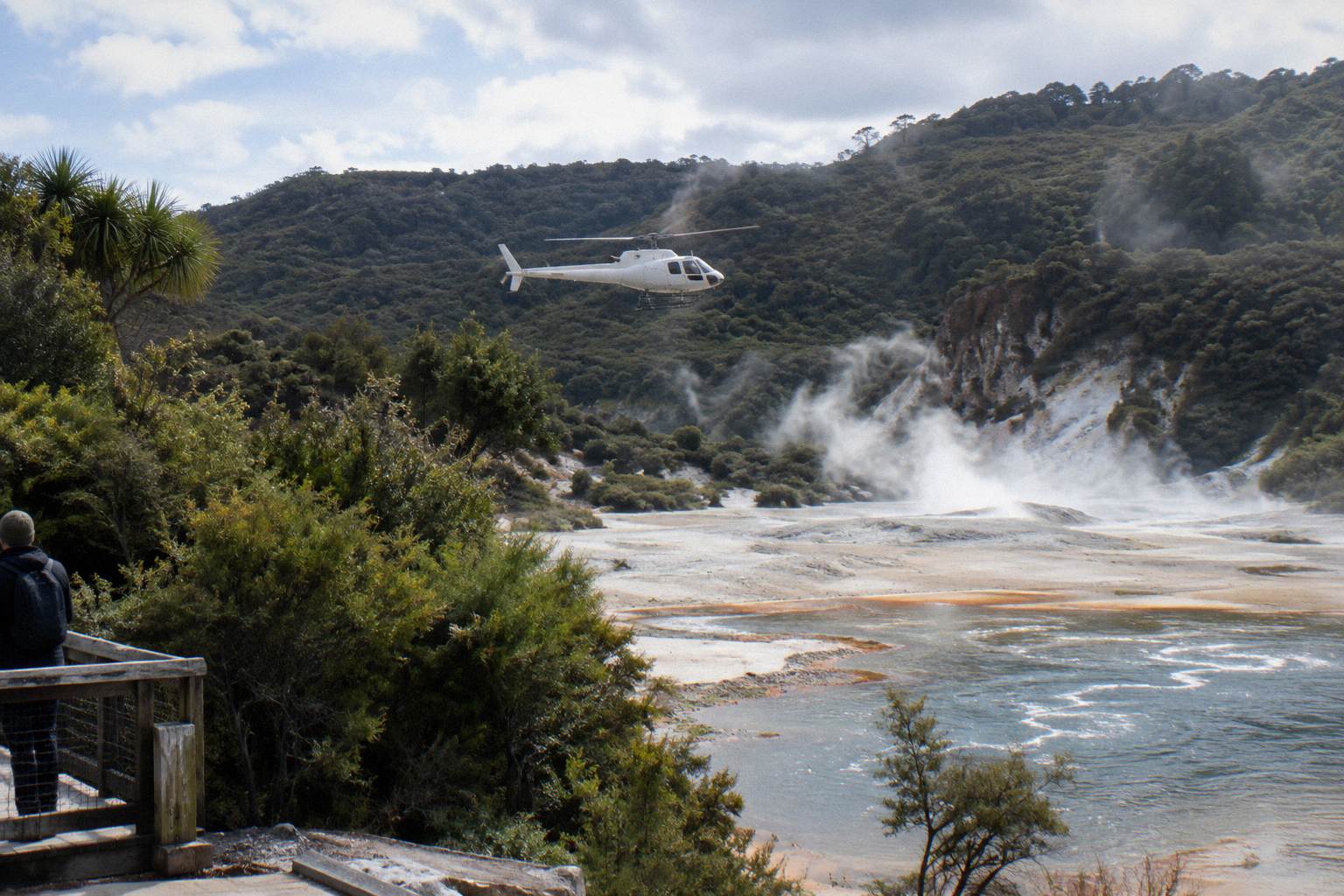
The Rotorua: Volcano Landing and Geothermal Park Helicopter Tour is the maximalist take: 3 hours total, landing on the Tarawera summit and at Orakei Korako, from NZ$1,490 per person. Orakei Korako sits on the Waikato River at Lake Ohakuri, and the park's own access note is that the geothermal field is only reachable by a short ferry ride across the lake from the visitor centre, with boats leaving on request rather than a timetable. The park claims up to 23 active geysers and Ruatapu Cave, over 36 m deep, to the "Pool of Mirrors". Those are park figures, quoted as park wording.
Is the jump worth it? If Tarawera alone is the goal, no. If the goal is the fullest single-day volcanic story Rotorua can tell from the air and on foot, the combination is coherent, and Rotorua Helicopter Tours exists to make exactly that kind of comparison legible.
Who Should Skip The Landing
Skip the landing flight if you are on a strict budget and only want the view, if your party includes someone the weight or mobility rules would complicate, or if your itinerary leaves no slack for a weather reschedule, because the landing is the part most likely to be trimmed. Travellers who simply want the lakes and a short flight are better served by the 15 minute crater lakes hops, which cost less and ask less of your morning.
The 15-Minute Crater Lakes Flight runs in both helicopter and floatplane versions, no landing, total 15 minutes, prices on their respective live listings. They overfly a lake district that includes Rotoiti, Okataina, Tarawera, Okareka, Rotomahana, Rotokakahi and Tikitapu. As a first flight, or a flight with young children, or a flight squeezed between a morning booking and lunch, they are the right tool.
The landing trips demand more administratively. Weight must be declared at booking and passengers are weighed on arrival; the operator's terms state that any deviation from the declared weight may result in a reschedule, a surcharge or a cancelled booking. Over 110 kg a surcharge may apply, over 135 kg as weighed requires two adult fares. Flights with landings ask for closed-toe comfortable footwear. None of this is onerous, but it is friction, and the flyovers carry less of it.
There is also the honest case of the disappointed flyer: someone who books the landing, gets the flight, and gets a landing that does not happen because of wind or volcanic activity. The operator's terms handle that cleanly, weather cancellations by the operator come with a full refund or a reschedule, but a flown flight with a skipped landing is a thinner day than the brochure moment. If that risk would sour the whole trip, buy the flyover and keep the money.
Mistakes To Avoid When Booking The Landing
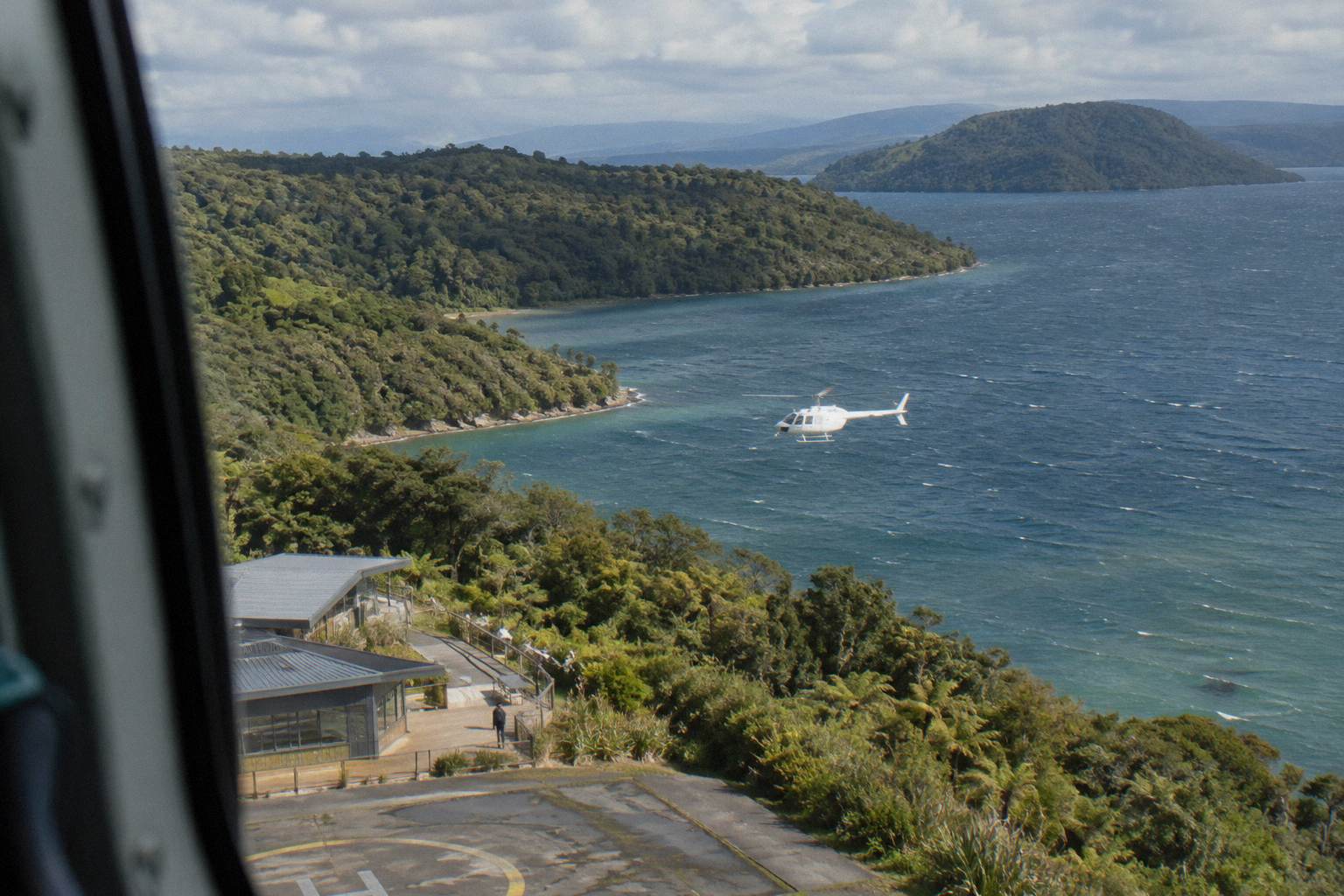
The common errors are booking the landing flight for a tight same-day schedule, understating weights to dodge the conversation, skipping the 30 minute check in window, assuming a specific landing spot, and comparing the landing tour's price against a 15 minute hop as if they were the same product. Each mistake is avoidable with one decision made before payment: decide what you are buying, then read the terms that govern it.
Schedule slack matters most. Weather in Rotorua is changeable year round, and the operator says flights run in daylight hours, all months of the year, with mornings often giving the calmest conditions and smoothest flying. If the flight cannot go ahead due to weather, the operator works with you to reschedule or provide a full refund, but a reschedule needs a spare slot in your itinerary. Book the landing early in your stay, not on departure day.
Weight honesty is second. The operator asks for individual weights at booking for safe, balanced seating, and the terms clause on deviation is quoted above. Declaring accurately costs nothing; a surprise at the scales can cost the flight.
Third, the landing spot is approximate. The operator does not publish an exact touchdown point, and the walk is 15 minutes of guided time on summit terrain, not a scheduled crater tour. Arrive with that framing and the product matches its description.
Fourth, cancellation terms. Booked through the booking pages, the listings carry free cancellation up to 24 hours in advance for a full refund. The operator's own guest-cancellation fee ladder is a separate structure for direct bookings; the printed terms on your booking page are the ones that apply to you. The general policy picture is in the weather cancellation explainer.
| Mistake | Why it costs you | The fix |
|---|---|---|
| Booking on departure day | No slot to reschedule into if weather turns | Fly early in the stay |
| Understating weight at booking | Reschedule, surcharge or cancellation at check in | Declare accurate individual weights |
| Arriving at departure time, not check in | The 30 minute briefing window is part of the flight | Helicopters 30 minutes early, floatplanes 20 |
| Expecting a guaranteed summit touchdown | Landings are at the pilot's sole discretion | Accept the flyover value as the floor |
| Comparing against the 15 minute hop | Different product, different flight time and purpose | Compare like with like: landing trips together |
How To Decide In One Minute
Ask one question: is the point of the day to see Rotorua's volcanoes, or to be on one? If seeing is enough, the floatplane flyover from NZ$395 per person delivers the mountain and the Waimangu Valley in 30 minutes of flight. If being on the summit is the point, the landing trips are the only route, starting from NZ$675 per person where published, and the concession, the guided walk and the access all ride on that price.
Time in the day is the tiebreaker. The flyover with check in totals about 40 minutes. The landing trips run from about 40 minutes to 3 hours depending on the product. Money is the second tiebreaker, and party composition the third: children aged 2 to 11 are welcome on all flights, under 2s sit on a lap, and the landing trips' minimum of 2 adult fares matters for solo travellers, who effectively pay for two seats.
Then book with the weather in mind. The driest, warmest stretch in Rotorua runs from late spring in October to early autumn in April, but the operator flies all year and mornings are often the calmest window. Free cancellation up to 24 hours ahead on the booking pages means an early reservation carries little risk, and shifting a flight a day earlier is usually easier than wishing for better weather on the day.
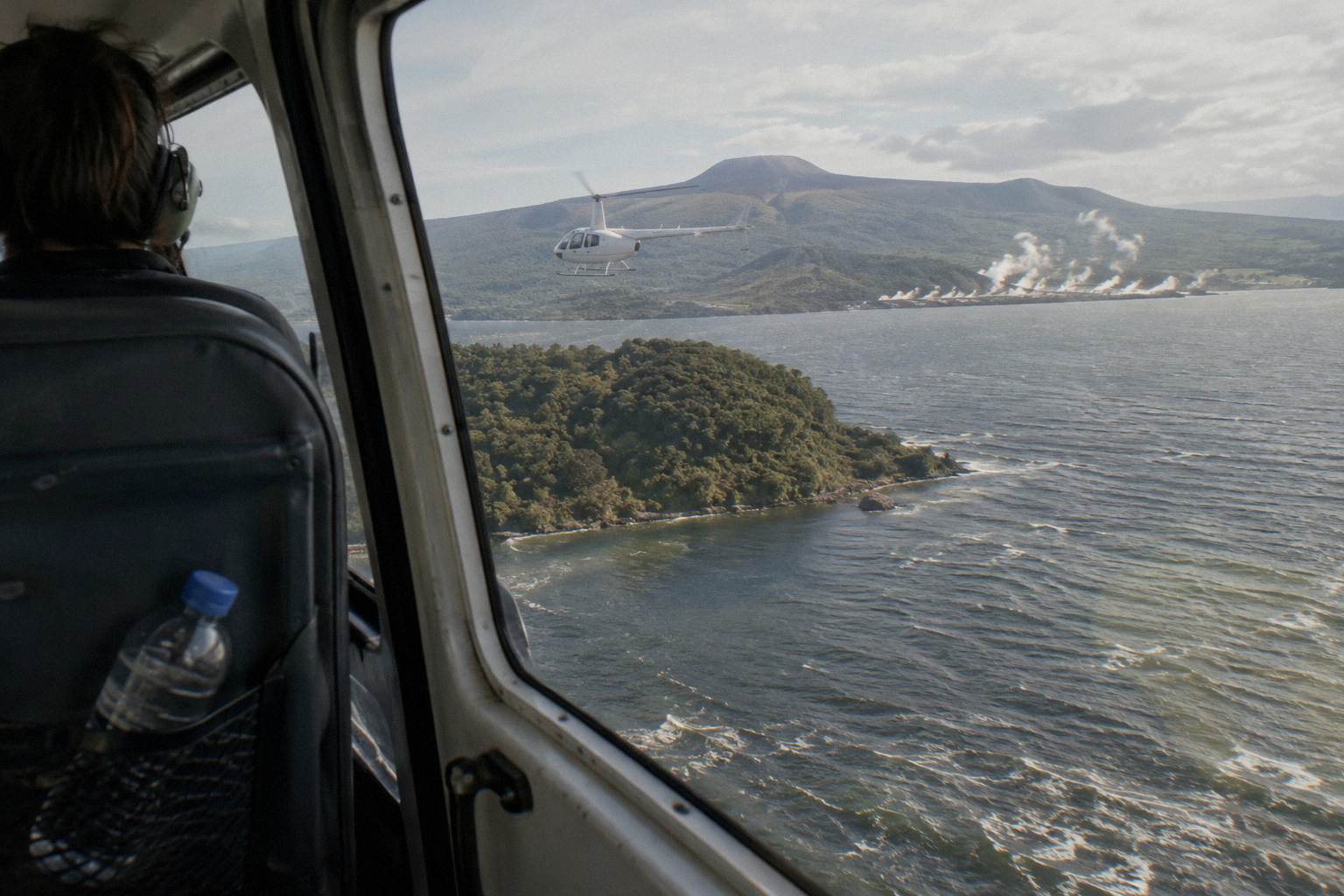
The summit, in the end, is a closed door with two keys: a guided walk up, or a helicopter down onto it. If that door matters to you, the landing is worth it. If it does not, the flyover is a very good flight and a smaller bill.
Common Questions About The Tarawera Landing
Is The Tarawera Crater Landing Worth It?
For travellers who want to stand on a volcano, yes: the summit is closed to independent access, so a landing flight is one of the few ways onto it, and the guided walk covers terrain no flyover reaches. For travellers mainly after aerial views of the lakes, the floatplane flyover from NZ$395 per person delivers those at a lower cost.
Can The Landing Be Cancelled Even If The Flight Goes Ahead?
Yes. The operator's terms state that excursion landings are undertaken at your own risk and at the pilot's sole discretion, and that durations and inclusions may vary with weather, volcanic activity and passenger loadings. The flight can run with the landing trimmed if conditions on the summit are unsuitable.
How Long Do You Spend On The Summit?
The operator's tour wording is a 15 minute guided walk on the summit after landing. The longer landing products spend more of the day in the air and on the mountain narrative, but the summit walk segment on the standard landing tour is 15 minutes of guided time.
What Is The Cheapest Way To See Tarawera From The Air?
The published from-price among the Tarawera flights belongs to the scenic floatplane over Mt Tarawera and Waimangu Valley, from NZ$395 per person for a 30 minute flight with no landing. It rates 4.9 from 28 reviews on the live listing and covers the mountain and the valley in one sweep.
Do Children Pay Full Fare On The Landing Flight?
On the Tarawera landing trips, children aged 2 to 11 pay 75 percent of the adult fare, under 2s sit on a parent or guardian's lap, and the flight requires a minimum of 2 adult fares. All ages are welcome on the operator's flights generally.
Why Can You Not Just Hike To The Summit?
Independent summit access is not permitted. The mountain is governed by the Ruawahia 2B Trust, and Ngati Rangitihi hold kaitiakitanga of the maunga; access runs through authorised guided tours or approved helicopter landings, with most concession revenue reinvested in conservation.