Helicopter Lake Landings Near Rotorua: Where Flights Touch Down
Rotorua's sightseeing flights land in three very different places: on the water of Lake Rotorua, on the Waikato River at Orakei Korako, and on the summit of Mt Tarawera. Here is which trip touches down where, and what each landing actually involves.
Short answer
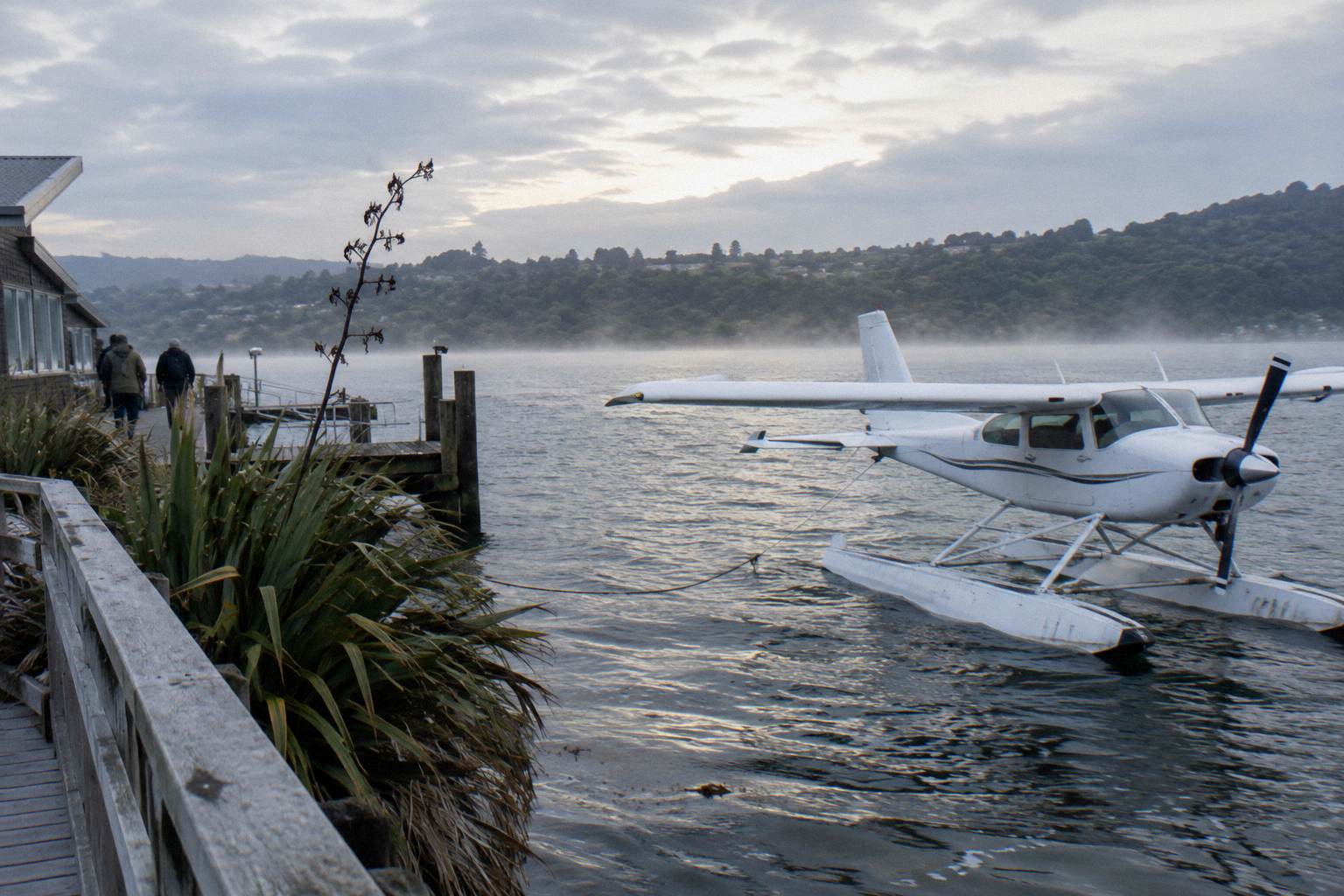
Floatplanes in Rotorua take off from and land on Lake Rotorua at the Lakefront pier, from NZ$395 per person for a 30 minute scenic flight. The only water landing away from the base is the Waikato River at Orakei Korako, on a 2 hour trip from NZ$845 per person. Helicopters land on the Mt Tarawera summit, from NZ$675 per person.
Rotorua sightseeing flights land in three distinct places, and the differences between them shape the whole experience. A floatplane in Rotorua departs from and returns to Lake Rotorua, taking off from the water beside the Lakefront pier at 1 Lakefront Drive. One trip in the line-up goes further and touches down on the Waikato River at Orakei Korako. Helicopters, by contrast, land on hard ground, and the headline landing among them is the summit of Mt Tarawera, a volcano that erupted in 1886.
For the wider picture on both aircraft types, see how Rotorua helicopters and floatplanes compare.
| Quick Fact | Detail |
|---|---|
| Water take-off point | Lake Rotorua, from the Lakefront pier at 1 Lakefront Drive |
| Check-in | Helicopters 30 minutes prior, floatplanes 20 minutes prior |
| River landing available | Waikato River at Orakei Korako, from NZ$845 per person |
| Helicopter landing | Mt Tarawera summit, from NZ$675 per person |
| Operator | Volcanic Air, flying in the region since 1992 |
| Cancellation on bookings | Free cancellation up to 24 hours in advance on the trips reviewed here |
Where Do Rotorua Flights Actually Land?
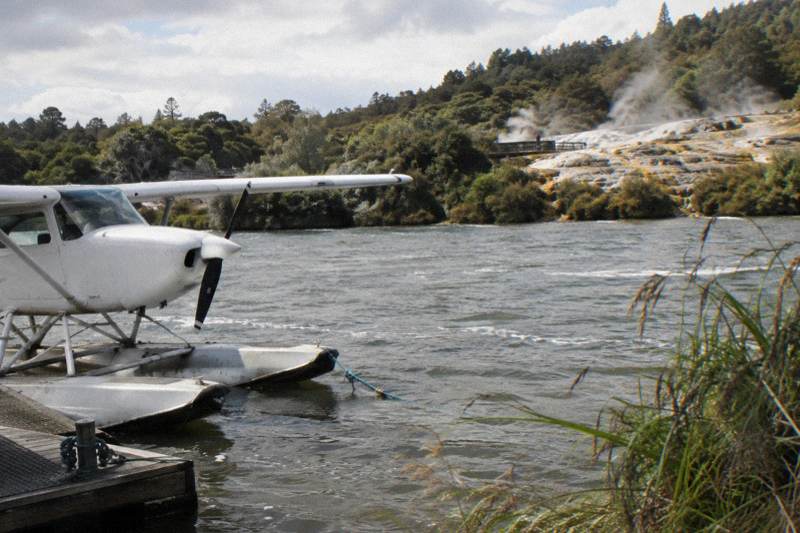
Every floatplane flight starts and finishes on Lake Rotorua itself, taking off from the lakefront pier and splashing back down on return, while only one trip lands on water away from the base, the Orakei Korako floatplane, which touches down on the Waikato River. Helicopters operate from dry land and their landing product is the Mt Tarawera summit. No helicopter trip in this line-up lands on a lake.
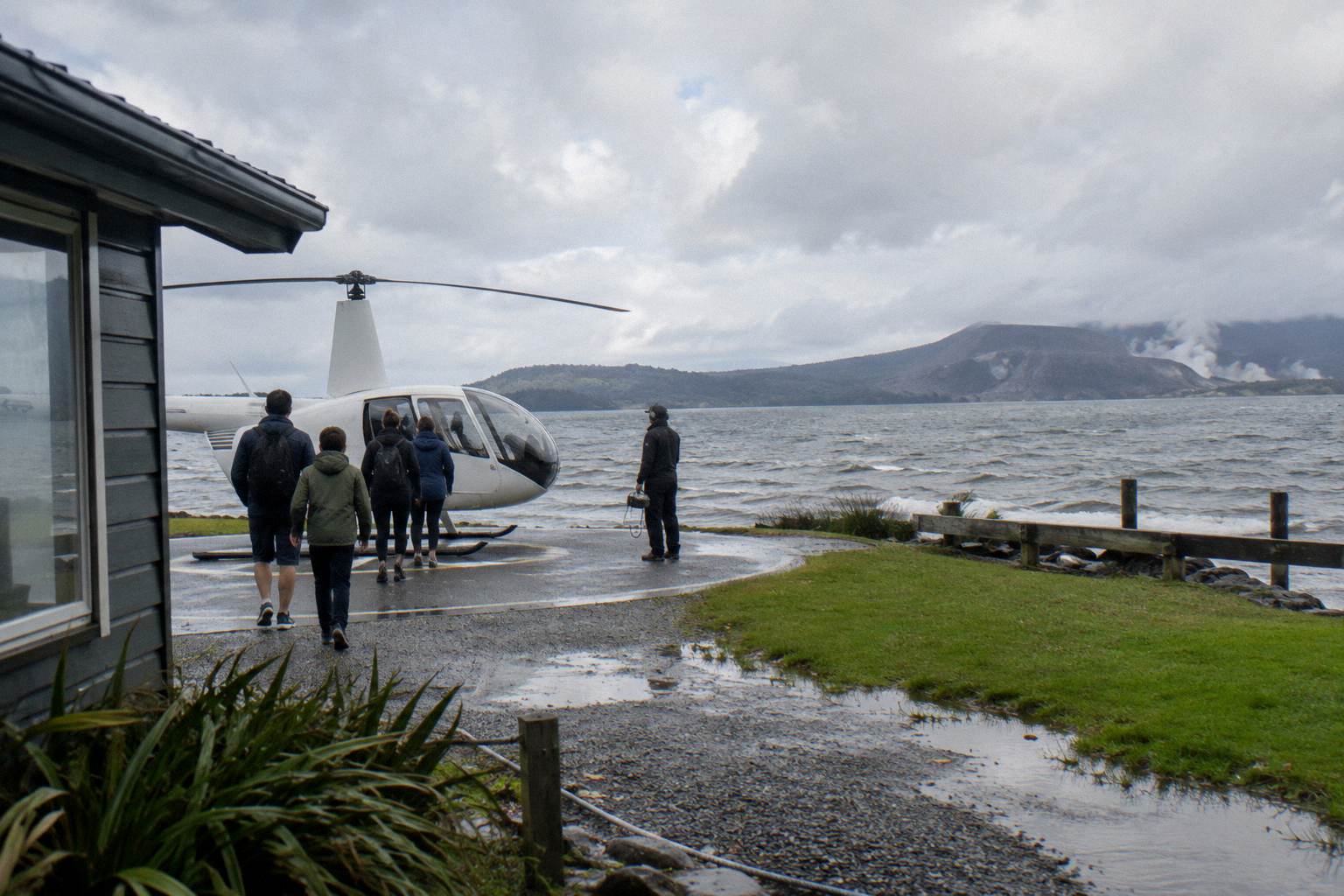
The operator's own crater lakes flight page describes the departure plainly: "departing from our city-center lakefront pier, your floatplane will take off from Lake Rotorua." That single sentence covers most of what people mean when they ask about a lake landing near Rotorua. The aircraft is a floatplane, it sits on the water, and boarding happens at a pier rather than a runway. The sensation is closer to stepping onto a boat than walking out to a plane at an airport.
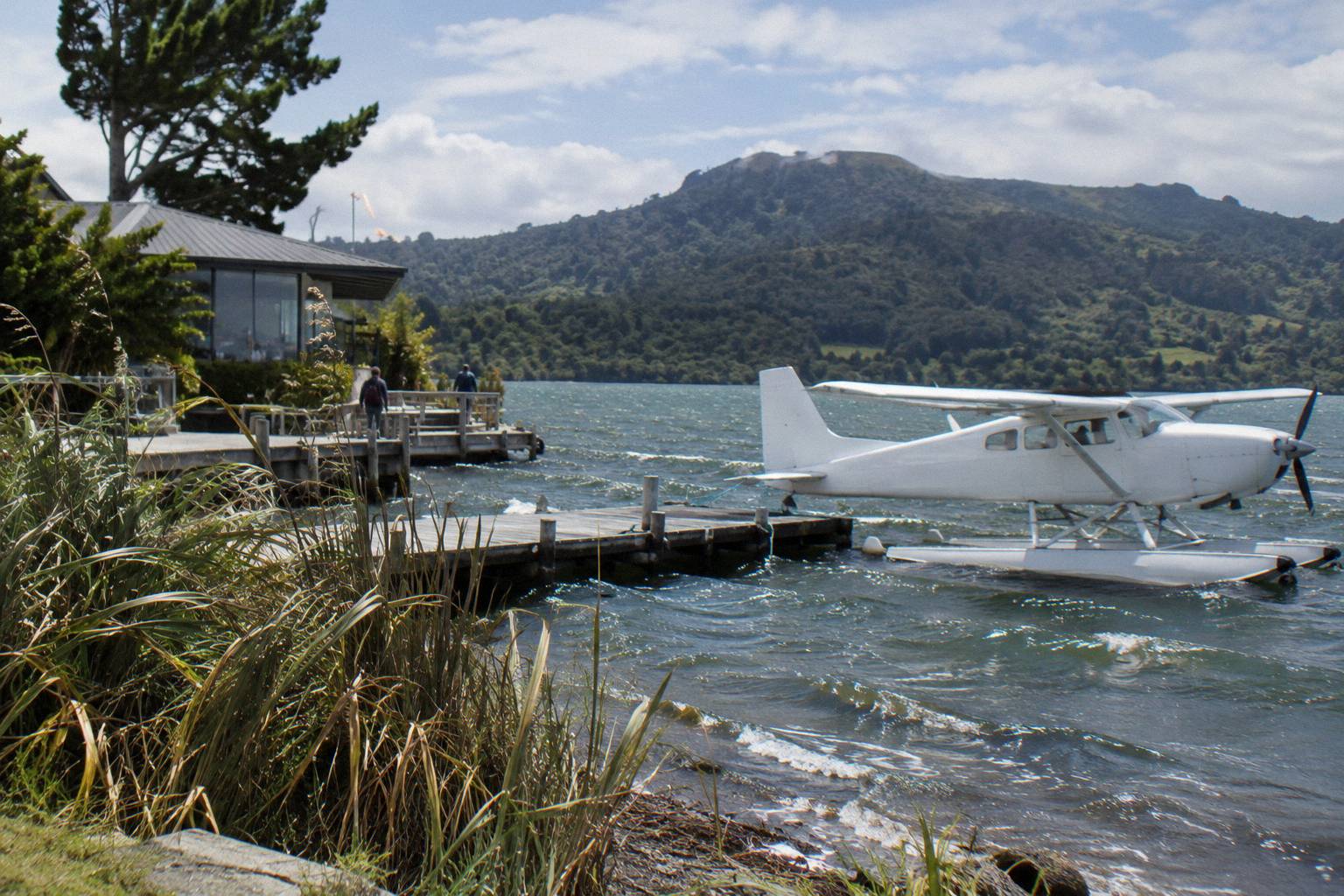
It is worth being precise about the word "landing," because it means two different things here. The take-off and splash-down on Lake Rotorua happen on every floatplane trip, including a 15 minute scenic loop. The Orakei Korako landing is different: the aircraft flies some distance, descends onto a river, and lets you out at a destination. When a trip description says "landing," check whether it means the routine return to base or an actual stop somewhere.
That distinction matters most at Mt Tarawera. The mountain is privately governed land, and independent summit access is not permitted; access comes through authorised guided tours or approved helicopter landings. So a Tarawera landing is not a casual stop, it is a concessioned activity operated alongside Ngati Rangitihi, the iwi who hold kaitiakitanga of the maunga. The Ruawahia 2B Trust governs the mountain and reinvests most tourism concession revenue in conservation.
What A Water Take-Off From Lake Rotorua Is Like
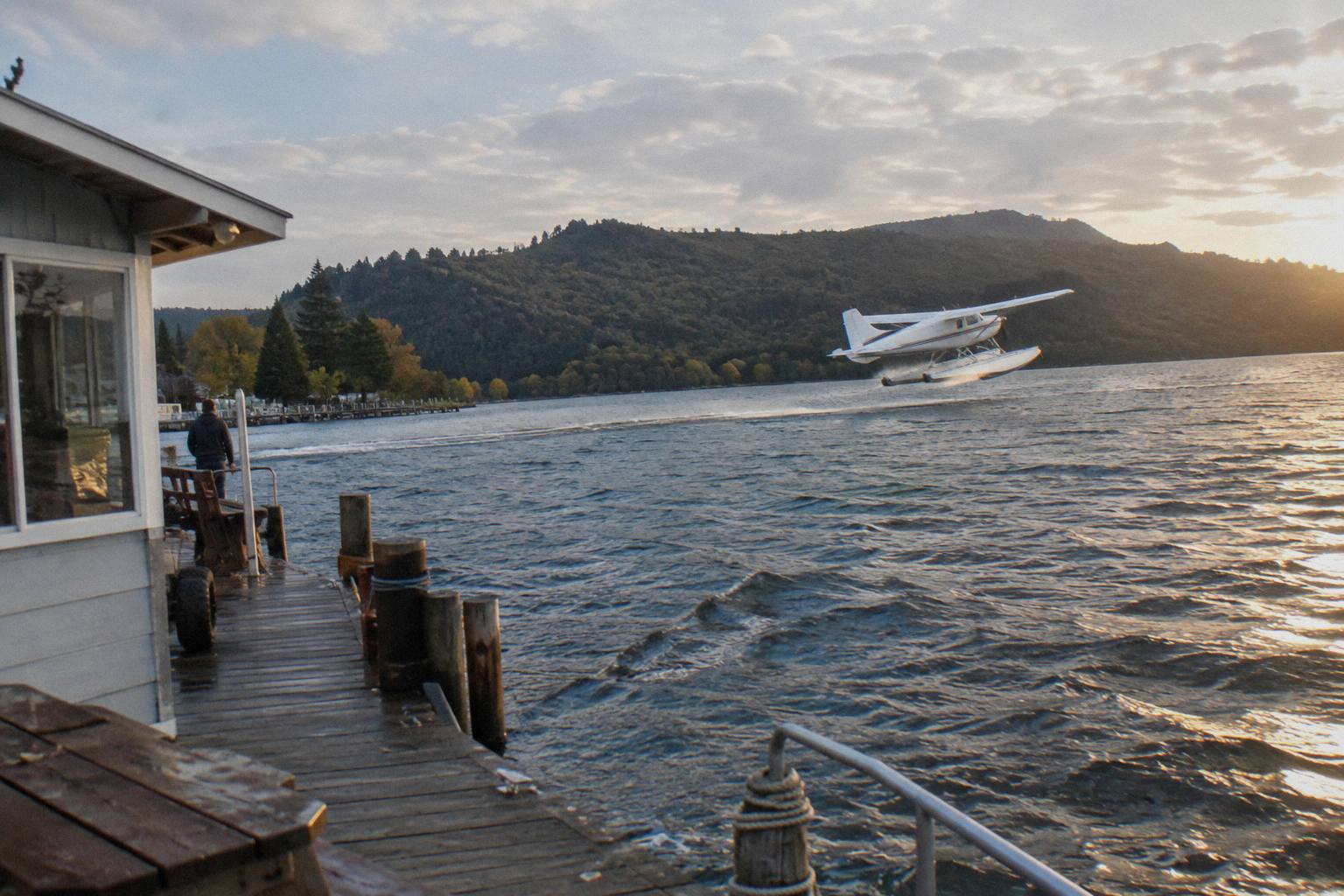
Floatplane passengers board at the Lakefront pier, settle into a cabin that is essentially a small boat with wings, and the pilot accelerates across the surface of Lake Rotorua until the hull lifts clear of the water. The departure and return are both on the lake, so every floatplane trip includes two water events without any extra cost or separate booking.
The base is close to the centre of town, under a kilometre from the Rotorua city centre point, which makes the logistics unusually simple. There is no airport transfer, no terminal and no security queue. You walk to the lakefront, check in at the office for a safety briefing, helicopters 30 minutes before departure and floatplanes 20 minutes before, and then board from the pier. Hotel pickup is not part of standard flights; the operator offers direct pick-ups only for bespoke charters.
Once airborne, the floatplane typically climbs around Mokoia Island, which the operator describes as "a native bird sanctuary," with views over Sulphur Bay and the city before heading toward the lakes country. The crater lakes flight page lists Rotoiti, Okataina, Tarawera, Okareka, Rotomahana, Rotokakahi (Green Lake) and Tikitapu (Blue Lake) among the water bodies overflown, and mentions "stunning views of 12 distinct Crater Lakes" across the wider network.
The shortest way to experience the water departure is a 15 minute loop. The Crater Lakes By Floatplane, 15 Minutes flight does exactly that: lake take-off, a circuit over the crater lake district, and a splash landing back on Lake Rotorua. The same loop exists in helicopter form for those who prefer wheels to floats, though the helicopter version takes off from land rather than water. Deeper background on both aircraft sits in the Rotorua scenic flights guide.
The Orakei Korako Landing: The Only River Touchdown
One flight in the line-up lands on water away from Lake Rotorua: the Orakei Korako floatplane, a 2 hour trip from NZ$845 per person that the operator says touches down on "the winding Waikato River." From the riverbank you cross to a geothermal field by boat, then fly home over farmland and the Paeroa Range.
Orakei Korako sits in the Taupo Volcanic Zone, on the Waikato River at Lake Ohakuri, roughly a 45 minute drive from Rotorua by road. The park's own visitor page explains the reason a flight gives you an edge: "The geothermal field at Orakei Korako is only accessible by boat, a short ferry ride across the lake from the Visitor Centre to the geothermal field," and the boats "do not run on a timetable but leave on request." Arriving by floatplane collapses the drive entirely and delivers you to the water the field depends on.
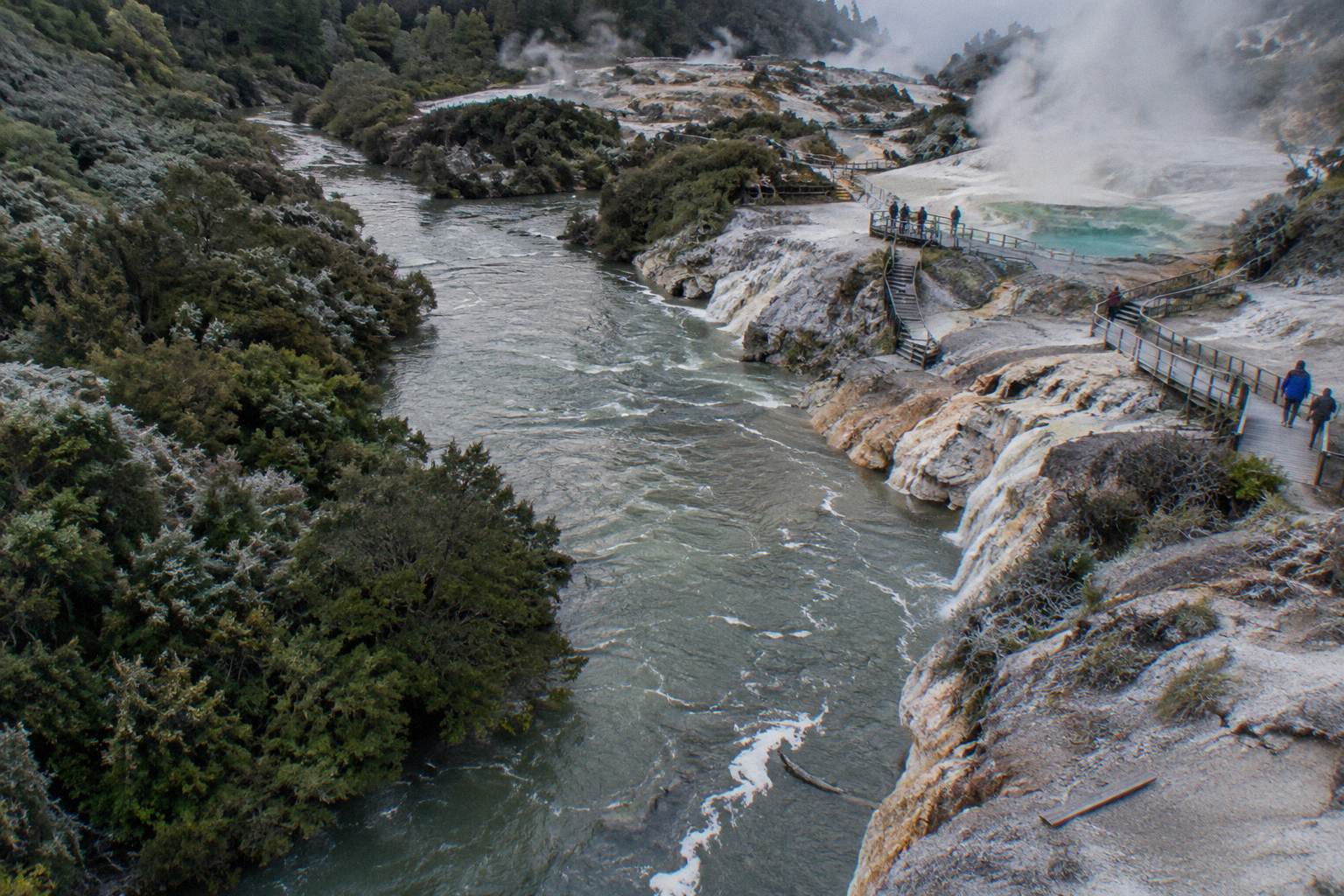
The operator's flight description covers the sequence: "Your pilot will touch down on the winding Waikato River" at the park it calls the "Hidden Valley," with take-off and landing on Lake Rotorua and the Waikato River, and the return leg flown over farmland and the Paeroa Range. On the ground, the park describes up to 23 active geysers and Ruatapu Cave, over 36 m deep, reaching a formation called the "Pool of Mirrors." Those are park figures and are best treated as park wording rather than independent measurement.
The trip that carries this landing is the "Rotorua: Floatplane Flight with Orakei Korako Landing," called the Floatplane, Orakei Korako Landing flight here. It runs 2 hours in total, costs from NZ$845 per person, and carries free cancellation up to 24 hours in advance. Two helicopter trips also call at Orakei Korako, the Geothermal Park Landing, 3 Hours trip from NZ$1,490 per person and the Dual Landing Thermal Explorer, but those land aircraft on ground, not water, and are covered below. More pairings of flight and geothermal park are laid out in the helicopter and Orakei Korako guide.
Mount Tarawera: The Helicopter Landing On A Volcano
Helicopters landing near Rotorua land on Mt Tarawera's summit, reached after a flight across lakes Okareka, Okataina and Tarawera. The operator's wording is "Land on the summit of Mt Tarawera for a 15 minute guided walk," and the same terms state that excursion landings are at the pilot's sole discretion, so the landing is intended but never promised.
Tarawera is a mountain with a violent recent history. On the night of 10 June 1886 it erupted, opening a rift that GNS Science measures at 17 km long, running across the mountain top, through Lake Rotomahana and into the Waimangu Valley area. More than 100 people were killed in villages near the mountain, and the famous silica hot springs known as the Pink and White Terraces were buried. The eruption is the reason the landscape the flight crosses looks the way it does. GNS attributes the 17 km figure; the operator's own flight wording describes "8 km of rift over the mountain," a different span covering the section across the summit, and the two should not be merged.
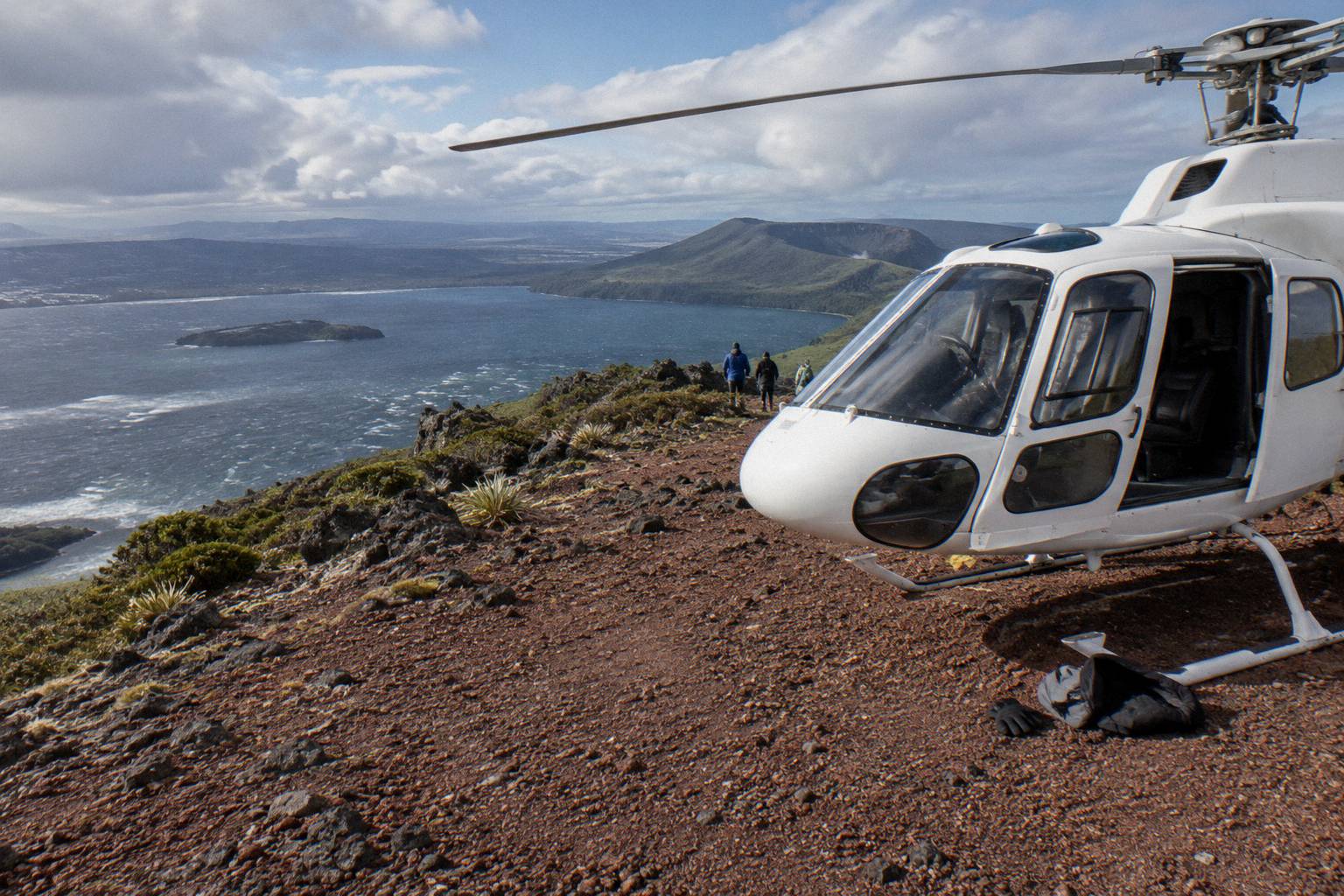
The full landing terms on the operator's Tarawera page read: "Tour duration, flight times and inclusions may vary due to weather conditions, volcanic activity and passenger loadings. Excursion landings are undertaken at your own risk and such landings are at your pilot's sole discretion." In practice that means weather, volcanic activity and the pilot's judgement decide on the day, and the booking terms provide a full refund or reschedule if the operator cancels for circumstances beyond its control. The summit stands 1,111 m high, with Ruawahia the tallest of the mountain's three domes.
Several helicopter trips include this landing. The "Rotorua: Helicopter Flight and Guided Walk on Mt Tarawera" trip, the Helicopter Landing, Guided Summit Walk flight, runs about 40 minutes total and costs from NZ$675 per person. The Mt Tarawera Helicopter Tour with Volcano Landing, shortened here to the Helicopter Volcano Landing flight, carries a 4.9 rating from 43 reviews, and the One-Hour Volcanic Adventure and the 1 hour 45 minute Volcanic Extremes flight both land on the summit as well. The fuller decision between them is worked through in the Mt Tarawera helicopter landing guide.
Which Rotorua Flights Land, And Where
Of the flights covered here, four helicopters land on the Mt Tarawera summit, two helicopters land at both Tarawera and Orakei Korako, one floatplane lands at Orakei Korako on the Waikato River, and the remaining trips are flyovers only, though every floatplane still takes off from and lands on Lake Rotorua as part of the flight itself.
The table below lists each trip with its landing point. Treat "no landing" as meaning no landing away from the base: floatplane trips without a destination landing still begin and end on the water of Lake Rotorua.
| Trip | Aircraft | Landing away from base |
|---|---|---|
| Helicopter Landing, Guided Summit Walk | Helicopter | Mt Tarawera summit |
| Helicopter Volcano Landing | Helicopter | Mt Tarawera summit |
| One-Hour Volcanic Adventure | Helicopter | Mt Tarawera summit |
| Geothermal Park Landing, 3 Hours | Helicopter | Mt Tarawera summit and Orakei Korako |
| Dual Landing Thermal Explorer | Helicopter | Mt Tarawera and Orakei Korako |
| Volcanic Extremes, 1h45m Helicopter | Helicopter | Mt Tarawera summit |
| Floatplane, Orakei Korako Landing | Floatplane | Orakei Korako, on the Waikato River |
| Floatplane, Waimangu Included | Floatplane | No landing, water take-off and landing only |
| Floatplane, White Island And Tarawera | Floatplane | No landing (flyover) |
| Scenic Floatplane, Tarawera And Waimangu | Floatplane | No landing (flyover) |
| Tarawera Volcano Floatplane | Floatplane | No landing (flyover) |
| Crater Lakes By Helicopter, 15 Minutes | Helicopter | No landing (flyover) |
| Crater Lakes By Floatplane, 15 Minutes | Floatplane | No landing (flyover) |
A note on Whakaari / White Island, because it comes up in every landing conversation. Landings there are suspended: official New Zealand tourism information states that "there are currently no boat tours to, or helicopter flights that land on the island." Flights over the island operate from Rotorua as flyovers, and its volcanic status is monitored continuously by GeoNet, whose Whakaari page carries the current alert bulletin. Anyone weighing a flyover can start with whether you can fly over Whakaari in a helicopter.
For the trips that do land, price scales with aircraft and landing count. The pattern across the line-up is consistent: summit landing by helicopter sits in the high hundreds, the river landing by floatplane sits just under a thousand, and the dual-landing helicopter trips sit well above it.
| Trip | From price per person | Landing |
|---|---|---|
| Helicopter Landing, Guided Summit Walk | NZ$675 | Tarawera summit |
| Floatplane, Orakei Korako Landing | NZ$845 | Waikato River at Orakei Korako |
| Floatplane, Waimangu Included | NZ$1,230 | No landing, flyover only |
| Geothermal Park Landing, 3 Hours | NZ$1,490 | Tarawera summit and Orakei Korako |
Booking Terms, Weights And Weather For Landing Flights
Landing flights are weighed flights: individual weights are declared at booking and passengers are weighed on arrival so the aircraft stays within balance limits, with a surcharge possible above 110 kg and two adult fares required above 135 kg as weighed. All flights operate subject to suitable weather, and operator cancellations for weather or volcanic activity carry a full refund.
The weighing is not a formality. The operator's terms state that any deviation from a declared weight may result in a flight being rescheduled, a surcharge being applied, or a booking being cancelled, at the operator's sole discretion. The FAQ gives the reason in plain terms: individual weights are requested at booking so the aircraft can be seated safely and within balance limits. For families, all ages are welcome, children under 2 sit on a parent or guardian's lap, and child rates apply for ages 2 to 11; the Tarawera landing flight specifically needs a minimum of 2 adult fares, with ages 2 to 11 paying 75% of the adult fare. The full weight picture is in the weight limits guide.
On cancellation, the bookings reviewed here all state free cancellation up to 24 hours in advance for a full refund, and that is the term that applies to a standard booking. If the operator cancels before the flight for circumstances beyond its control, weather or volcanic activity among them, the terms provide a full refund, and the FAQ adds that the team "will work with you to reschedule or provide a full refund." The operator's own fee ladder for guest cancellations does not apply to these bookings and can be ignored. The detail sits in the operator's terms and conditions and FAQ page.
What to bring is simple: camera, sunglasses and a jacket, and closed-toe comfortable footwear for flights with landings, since a volcano summit is uneven ground. Pregnancy and mobility needs are not automatic barriers; the operator asks that you make contact when booking so assistance can be agreed in advance, and expectant passengers are advised to talk to a maternity carer, especially from 28 weeks.
When To Book A Landing Flight
Flights operate all year in daylight hours, and the driest, warmest window in Rotorua runs from late spring in October until early autumn in April, while mornings tend to give the calmest conditions and smoothest flying. No month is closed, so the decision is really about weather odds and how far ahead to commit.
Rotorua's rainfall is fairly even but not identical month to month. November is the driest month on the 1991 to 2020 normals at 86.8 mm, October follows at 92.9 mm and January at 93.8 mm, while July is the wettest at 137.4 mm. Those are averages, not forecasts, and the operator's FAQ is clear that there is no hard and fast answer to the best time of day: it depends on the weather that day, and if conditions are unsuitable they try to reschedule. Rotorua's official tourism information confirms the October to April window as the driest and warmest.
| Month | Average rainfall, mm |
|---|---|
| January | 93.8 |
| February | 100.4 |
| March | 100.3 |
| April | 133.0 |
| May | 130.2 |
| June | 131.9 |
| July | 137.4 |
| August | 125.2 |
| September | 106.6 |
| October | 92.9 |
| November | 86.8 |
| December | 117.1 |
Because every landing on the line-up is discretionary on the day, build slack into the itinerary. A morning slot on the first day of a stay leaves room to refly or reschedule if cloud sits on the Tarawera summit, which is a real possibility in any season. The fuller timing logic is in the best time for a Rotorua helicopter flight guide.
For a quick, cheap taste of the floatplane water experience before committing to a landing trip, the 15 minute Crater Lakes By Floatplane, 15 Minutes loop keeps the lake take-off and the lake splash-down and skips the destination. It is the least expensive way to answer the question of whether the floatplane cabin suits you, and a sensible warm-up for the Orakei Korako river landing described above.
Mistakes People Make With Landing Flights
The most common mistakes are assuming a Tarawera landing is guaranteed, confusing a lake take-off with a destination landing, turning up with undeclared weight changes, and cutting the itinerary so tight that a weather reschedule is impossible. Each one is avoidable with a single decision at booking time, and none of them costs anything to fix in advance.
Assuming the landing is guaranteed is the big one. The operator's own terms put excursion landings at the pilot's sole discretion, subject to weather and volcanic activity, so the expectation is a flight that intends to land and a pilot who decides on the day. Book with a spare morning, and treat the refund-or-reschedule terms as the safety net rather than the plan.
Confusing landing types wastes money in both directions. A traveller who wants to step out at a geothermal field but books a scenic flyover gets a fine flight and no stop; a traveller who only wants the water take-off pays for an Orakei Korako landing they may not need. The table in the section above settles it in one glance: one river landing, four summit landings by helicopter plus two dual-landing trips, and everything else flies over.
Weight and timing errors are quieter but real. Declare accurate individual weights at booking, expect a check on arrival, and bring closed-toe shoes for any landing trip. Arrive at the Lakefront office 30 minutes early for helicopters and 20 for floatplanes. And when the forecast is doubtful, remember that the bookings here carry free cancellation up to 24 hours in advance, so an early call beats a morning at the pier in the rain. For that scenario specifically, read what happens when a Rotorua flight is cancelled for weather.
Rotorua's landing flights are unusual in how close the decision sits to town: the water starts at a pier under a kilometre from the city centre, the river landing at Orakei Korako is one flight away, and the volcano summit is a 15 minute guided walk after touchdown. The team behind Rotorua Helicopter Tours keeps the whole line-up, prices and landing details side by side so the comparison above stays current.
Common Questions About Landing Spots
Can A Helicopter Land On A Lake In Rotorua?
No helicopter trip in the Rotorua line-up lands on a lake. Helicopters here land on hard ground, chiefly the Mt Tarawera summit. Water landings belong to floatplanes, which take off from and return to Lake Rotorua on every trip, with one flight also landing on the Waikato River at Orakei Korako.
Where Does The Floatplane Take Off From?
From Lake Rotorua, at the lakefront pier at 1 Lakefront Drive, under a kilometre from the city centre. Check-in happens at the Lakefront office 20 minutes before a floatplane departure for a full safety briefing.
Is The Mt Tarawera Landing Guaranteed?
No. The operator's terms state that excursion landings are undertaken at your own risk and at the pilot's sole discretion, and that tour duration and inclusions may vary with weather, volcanic activity and passenger loadings. If the operator cancels for reasons beyond its control, a full refund or reschedule applies.
Which Flight Lands On A River?
The Rotorua: Floatplane Flight with Orakei Korako Landing, a 2 hour trip from NZ$845 per person. The operator describes the pilot touching down on the winding Waikato River, followed by a boat crossing to the geothermal field and a return flight over farmland and the Paeroa Range.
Can You Land On White Island?
No. Landings on Whakaari / White Island are suspended, with official tourism information stating there are currently no boat tours or helicopter flights landing on the island. Flights from Rotorua overfly the island, which lies about 48 km off the coast of Whakatane.
What Does A Landing Flight Cost?
Summit landing flights by helicopter start from NZ$675 per person for the guided summit walk trip, the Orakei Korako river landing by floatplane starts from NZ$845 per person, and the 3 hour dual-landing helicopter trip starts from NZ$1,490 per person. All figures are New Zealand dollars.