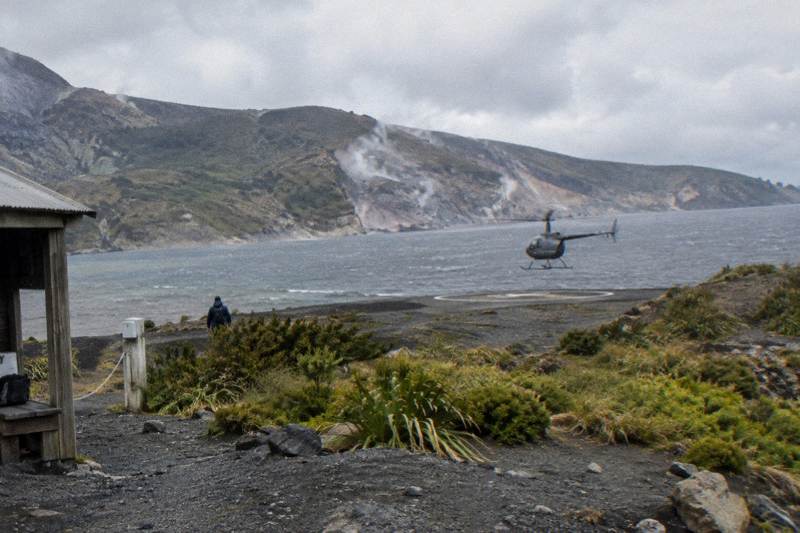
Which Helicopter Ride Is Best In Rotorua? A Decision Guide
There is no single best helicopter ride in Rotorua, because the flights answer different questions: some land on a volcano, some only circle the lakes, and one swaps rotor blades for floats. A four-part decision rule, minutes, landing, budget and vehicle, narrows thirteen flights to one.
Short answer
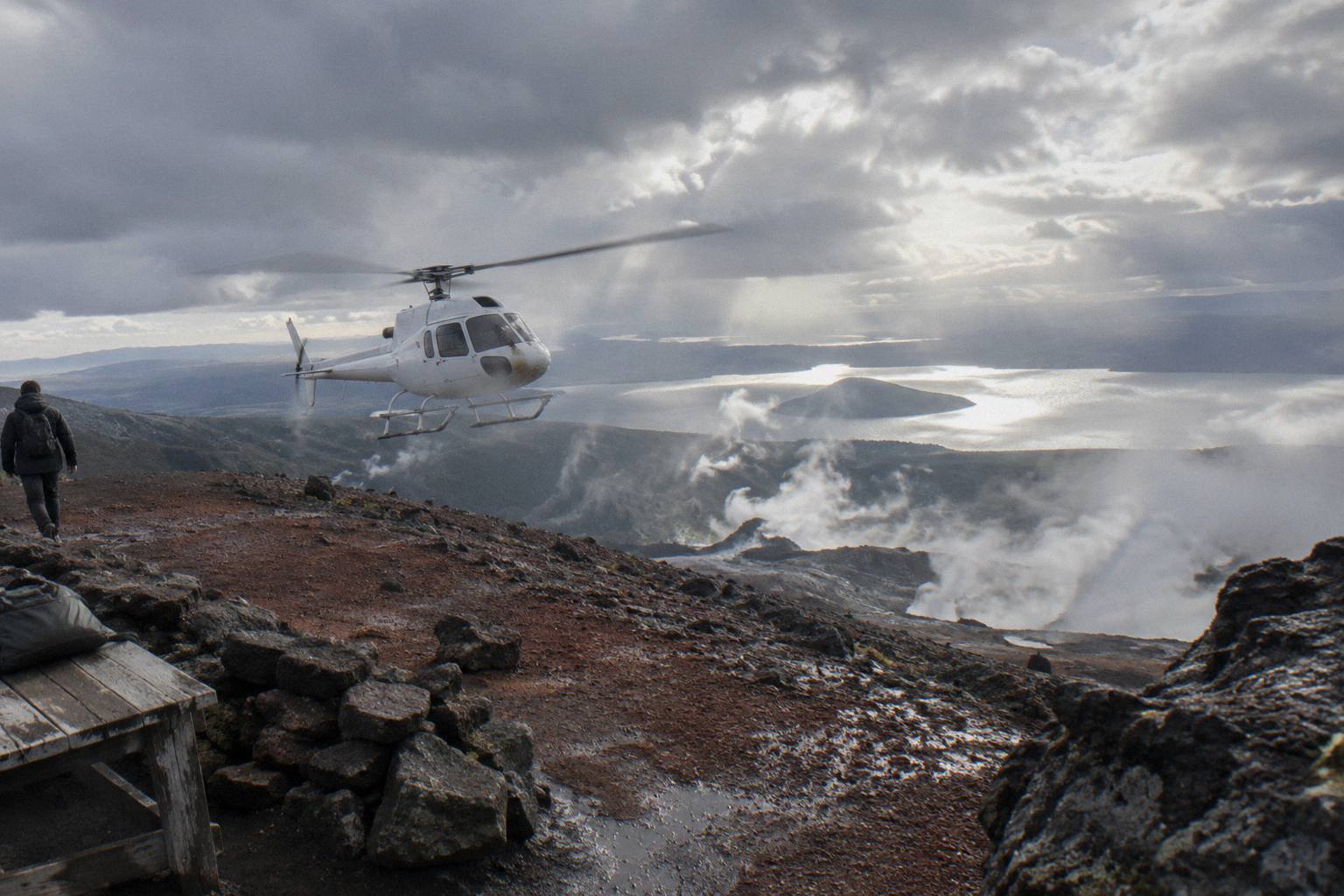
Pick by decision, not ranking. For a volcano landing, the Mt Tarawera Helicopter Tour with Volcano Landing, rated 4.9 from 43 reviews, is the core choice. For the lowest entry price, the Scenic Floatplane over Tarawera and Waimangu starts from NZ$395 per person. Longer dual-landing trips run from NZ$1,490 per person.
Every flight on this page departs from the Lakefront at 1 Lakefront Drive, Rotorua, so base location never decides the choice. See the wider rotorua scenic flights overview for how the shorter sightseeing loops compare.
How Do You Choose The Best Helicopter Ride In Rotorua?
You choose by working four filters in order: minutes first, landing second, budget third, vehicle fourth. Minutes matter more than they sound, because a fifteen-minute crater lakes circuit and a three-hour geothermal expedition are different days, not different versions of the same day. Landing decides price band more than flight time does. Budget then cuts what remains, and the vehicle question usually resolves itself once the first three are answered.
Start with time. The shortest trips on the line-up, the Crater Lakes flights by helicopter and by floatplane, run fifteen minutes total, wheels-off to wheels-down. Mid-length flyovers such as the Scenic Floatplane over Mt Tarawera and Waimangu Valley give a thirty-minute flight inside a forty-minute outing. The Tarawera landing trips add ground time on the summit, and the longest options, the Geothermal Park Landing at three hours and the Volcanic Extremes helicopter trip at one hour forty-five minutes, are half-day commitments once check-in is included.
Then ask whether you need to touch down. A landing on Mt Tarawera changes the shape of the day: you stand on the rift of the volcano that erupted on the night of 10 June 1886, an event GNS Science records as opening a 17 km rift across the mountain top, through Lake Rotomahana and into the Waimangu Valley area. Flyover-only trips see the same landscape from above at a fraction of the price. Some visitors find the overhead view entirely sufficient; others only feel the trip counted once boots met the crater floor. Neither instinct is wrong, but knowing yours removes roughly half the line-up in one cut.
Third, budget. Published from-prices on the booking pages run from NZ$395 per person for the scenic floatplane to NZ$1,490 per person for the three-hour Geothermal Park Landing, so the spread is wide. All amounts are New Zealand dollars.
| Question | If yes | If no |
|---|---|---|
| Do you want 30+ minutes in the air? | Tarawera and dual-landing trips | Crater Lakes 15-minute flights |
| Does a landing matter? | Tarawera summit or Orakei Korako landings | Flyover floatplane and lake circuits |
| Is the lowest price the priority? | Scenic floatplane, guided summit walk | Geothermal Park, Volcanic Extremes |
| Helicopter or floatplane? | Both fly the same skies from the same pier | Floatplane adds a lake take-off |
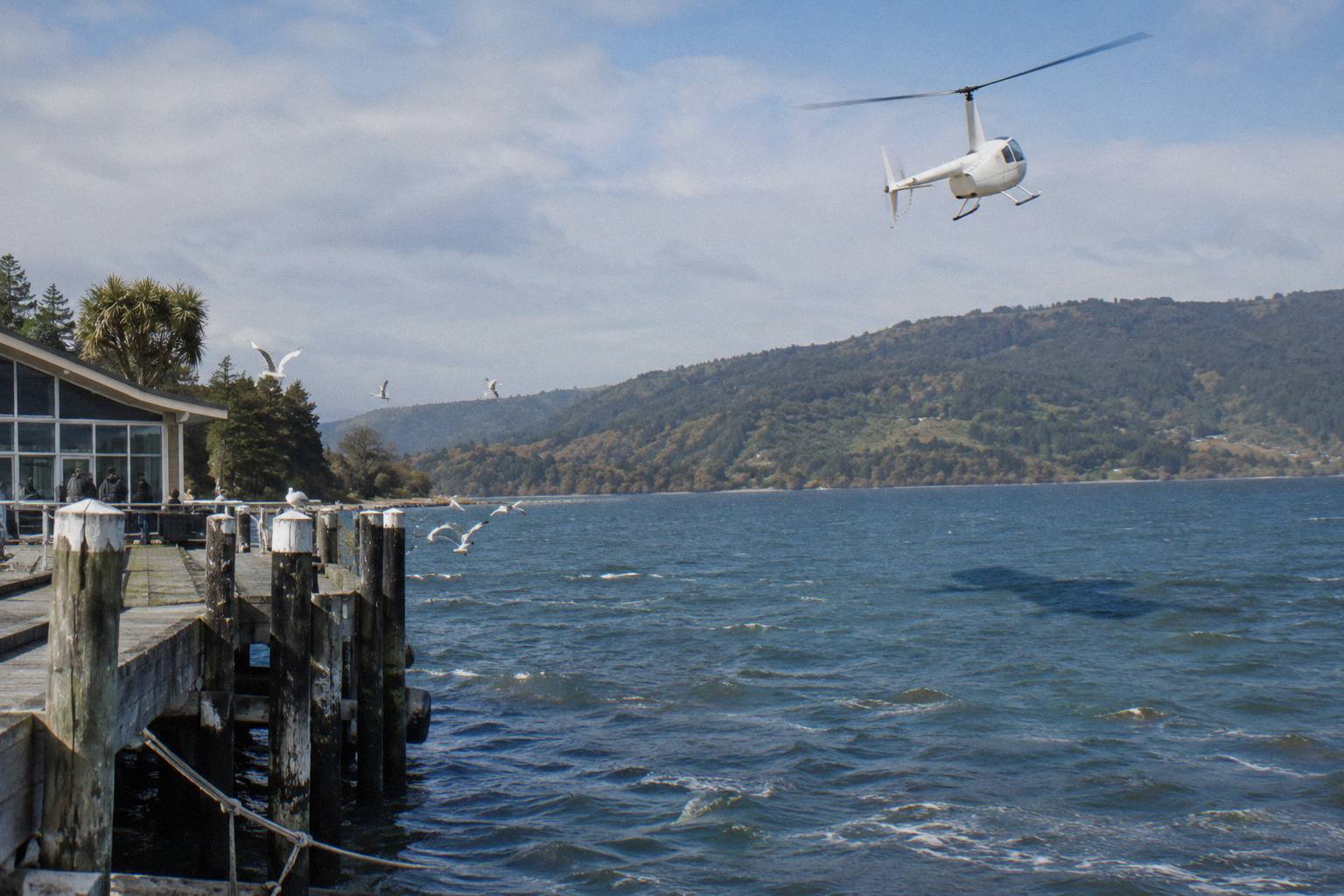
Fourth, vehicle. Helicopters and floatplanes depart from the same Lakefront pier area, with floatplanes taking off from Lake Rotorua itself. The flying experience differs: a floatplane take-off is a long smooth run across the water, a helicopter lift is vertical. For the helicopter versus floatplane comparison, the airborne views over the crater lakes are largely a matter of aircraft character rather than scenery.
One structural fact simplifies everything: check-in happens at the same office for every flight, helicopters thirty minutes before departure, floatplanes twenty minutes, as set out on the operator's frequently asked questions page. Hotel pickup is not part of standard flights, so plan to reach the Lakefront yourself.
Which Rotorua Flight Fits Your Budget?
Budget splits the Rotorua options into clear bands. At the low end, the Scenic Floatplane over Tarawera and Waimangu starts at NZ$395 per person, with the Helicopter Landing and Guided Summit Walk at NZ$675. Mid-range covers the Orakei Korako landing floatplane from NZ$845 and the Waimangu-inclusive floatplane from NZ$1,230, while the three-hour Geothermal Park Landing tops out from NZ$1,490 per person.
The important nuance is what price tracks. It tracks landings and ground time far more than air time. The guided summit walk trip at NZ$675 buys forty minutes total including a landing and a fifteen-minute guided walk on the summit. The scenic floatplane at NZ$395 buys thirty minutes of flying and no landing. Which is better value depends entirely on whether standing on the mountain is the point of the day; if it is, the modest step up to a landing trip buys the thing itself, and the budget band that matters is the landing one.
At the upper end, the Geothermal Park Landing helicopter tour combines a Tarawera summit landing with time at Orakei Korako, the geothermal field the park says is reachable only by a short ferry ride across Lake Ohakuri from its visitor centre. That combination, two landings plus connective flying, is what pushes it to NZ$1,490 per person. Travelers comparing it against two separate shorter trips should also weigh a whole day of convenience against two separate check-ins.
For anyone whose budget question is really an entry question, whether flying over this landscape is worth any money at all, the fifteen-minute crater lake circuits answer it cheaply, and the scenic floatplane answers it better for a little more. The trio below spans all three instincts: the classic landing choice, the low-commitment flyover, and the guided-walk middle path.
A note on reading any price here: each figure is a from-price per person on the booking page for that specific trip, and a trip with no from-price on its booking page simply carries none in this comparison. Review counts deserve the same discipline. A rating drawn from fewer than a dozen reviews, or from a handful, describes a thin pool rather than a settled verdict, so those trips appear here with their review counts and no star figure at all.
Landing Or Flyover: Which Rotorua Trip Suits You?
Choose a landing if the volcano itself, not the view of it, is the memory you want, because a summit landing puts you on foot inside the Tarawera crater landscape. Choose a flyover if you want the whole volcanic district in one sweep without ground time. The landing trips cost and commit more; the flyovers move faster and see more geography per minute. Two cautions apply: a Tarawera landing is never guaranteed, and there are no Whakaari landings at all.
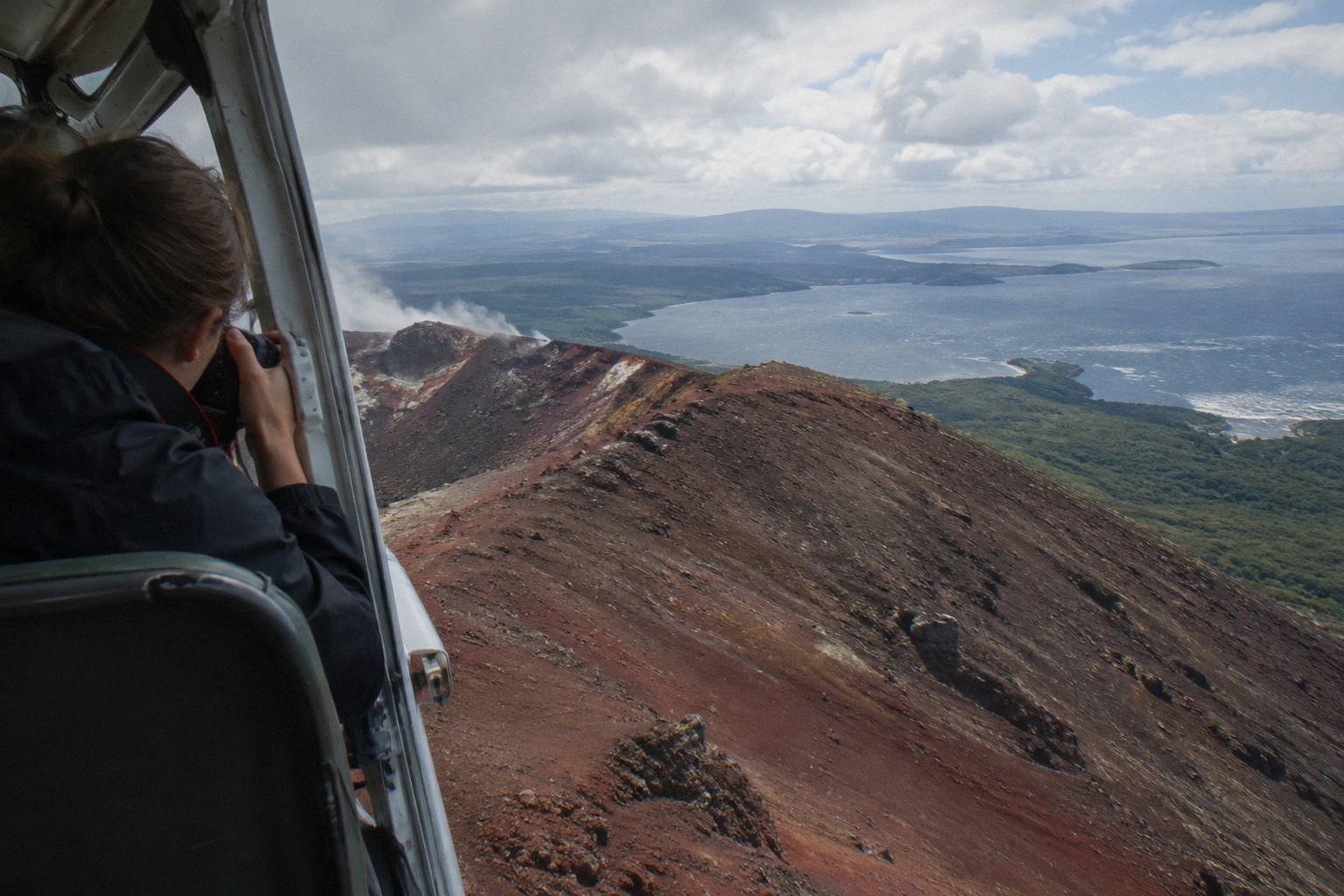
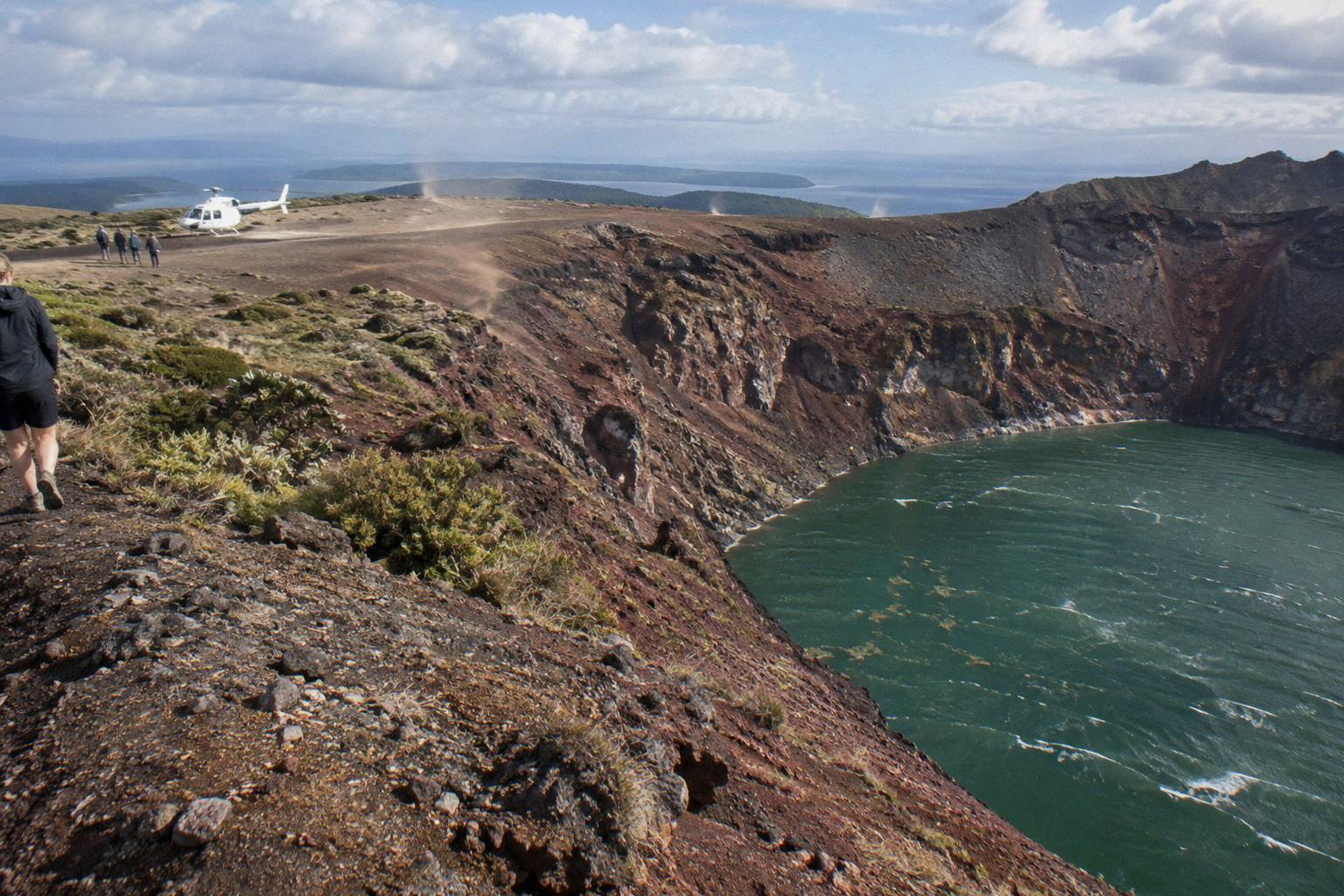
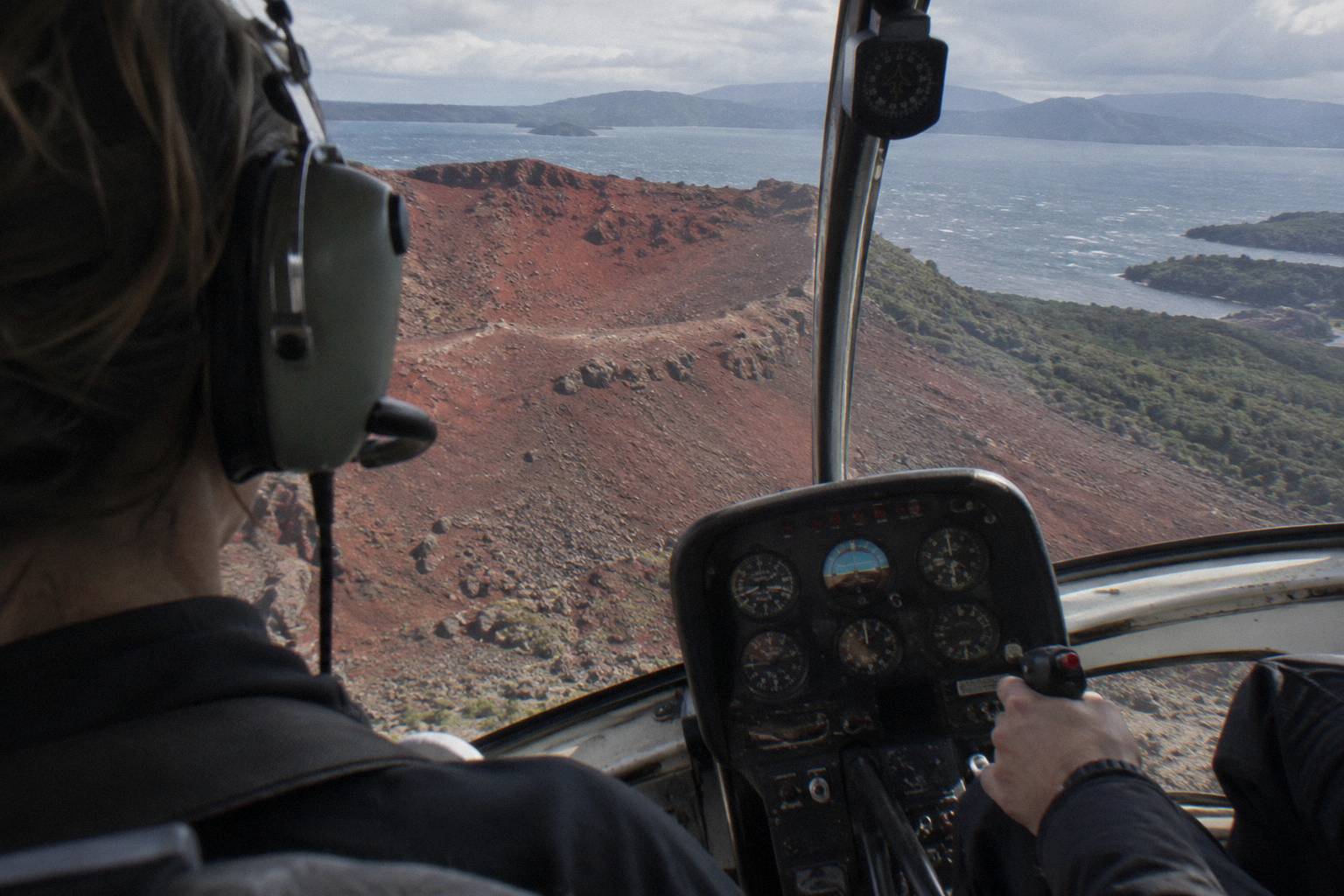
The landing case rests on a place most people cannot reach any other way. Independent summit access to Mt Tarawera is not permitted; the mountain is governed by the Ruawahia 2B Trust, with Ngati Rangitihi holding kaitiakitanga of the maunga, and access runs through authorised guided tours or approved helicopter landings. Volcanic Air is one of those concessionaires, and its landing flights put passengers on the summit for a guided walk. That exclusivity of access, rather than any view difference, is what a landing buys.
The guarantee caveat is not fine print, it is the operator's own wording: tour duration, flight times and inclusions may vary due to weather conditions, volcanic activity and passenger loadings, and excursion landings are undertaken at your own risk, at the pilot's sole discretion, as the Tarawera landing flight page states. In practice this means the flight can convert to a flyover on the day. Book a landing with that possibility priced in emotionally.
The flyover case is geography. From the air in half an hour you can trace the line from the Tarawera rift, over Lake Rotomahana where remnants of the Pink Terraces may lie at the bottom of the lake, down the Waimangu Valley that the 1886 eruption created. The scenic floatplane covers exactly that arc in a thirty-minute flight from NZ$395 per person, rated 4.9 from 28 reviews, and it never depends on a landing decision. For more on that specific trade, see whether the Tarawera crater landing is worth it.
Between the pure positions sit the hybrids. The Mount Tarawera/Orakei Korako Dual Landing Thermal Explorer touches two different worlds, a volcano summit and a geothermal valley, in one outing. The Helicopter Landing with Guided Summit Walk, from NZ$675 per person, is the shortest route onto the mountain itself, forty minutes total with the walk included. And for questions specific to the landing decision, the Mt Tarawera helicopter landing guide works through access, landing terms and the summit experience in depth.
Helicopter Or Floatplane: Does The Vehicle Change The Choice?
Yes, the vehicle matters, but mostly for how it feels and where it lands, not where it flies. Both leave from the same Lakefront base, follow overlapping routes over the same lakes and volcanoes, and land where the itinerary says. The real difference is structural: a floatplane takes off from and lands on water, while a helicopter lifts vertically and can set down on a crater rim. Pick by touchdown point, not by thrill.
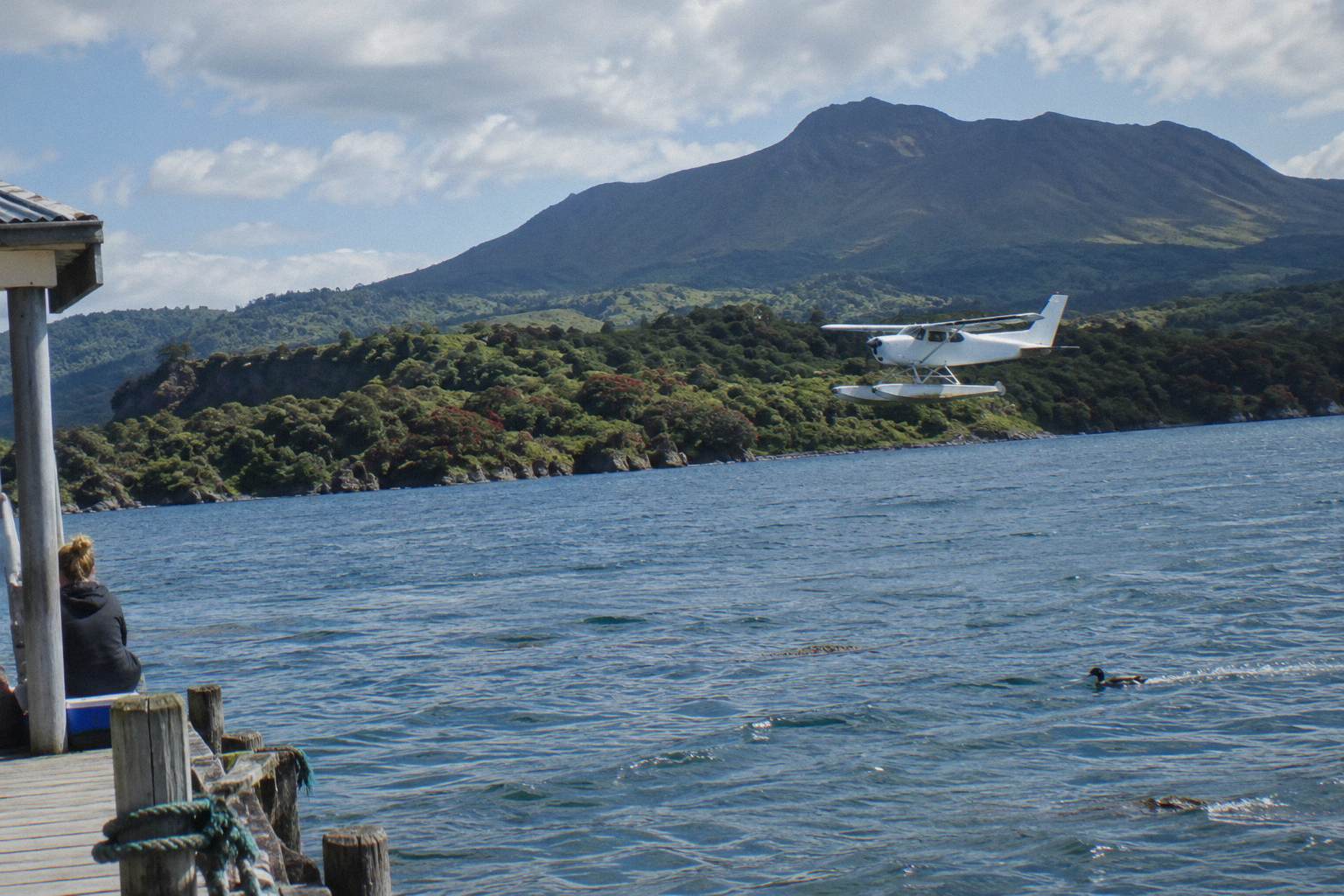
The take-off is the differentiator. Floatplane departures begin with a run across Lake Rotorua from the lakefront pier, and the Orakei Korako landing flight ends with the pilot touching down on the winding Waikato River, as the operator describes. Helicopter flights lift from a pad and can stop dead in the air. If the water-borne take-off itself is part of the appeal, the floatplane trips deliver it twice, at both ends of the flight.
Landing destinations divide cleanly along vehicle lines on this line-up. Every Mt Tarawera summit landing is a helicopter trip; no floatplane lands on the mountain. Orakei Korako landings, by contrast, run on both types, the floatplane alighting on the river and the dual-landing helicopter trip including the park in its itinerary. If your heart is set on the volcano summit, the vehicle question has already been answered for you.
Cost runs slightly in the floatplane's favour at the short end. The fifteen-minute crater lakes flights exist in both versions, and the scenic floatplane's NZ$395 from-price undercuts every helicopter trip on the line-up. At the long end the pattern flattens, since the premium trips are priced on their landings and duration rather than their wings.
| Factor | Helicopter | Floatplane |
|---|---|---|
| Take-off | Vertical lift from the Lakefront | Water run from Lake Rotorua |
| Tarawera summit landing | Available on landing trips | Not available, flyover only |
| Orakei Korako landing | Via dual-landing trips | River touchdown on landing flight |
| Entry from-price | NZ$675 (guided summit walk) | NZ$395 (Tarawera and Waimangu scenic) |
| Check-in | 30 minutes prior | 20 minutes prior |
Weather treats both the same: all flights operate subject to suitable conditions, and if weather prevents a flight the operator works with passengers to reschedule or refund. The deeper dive lives in the rotorua helicopter versus floatplane guide, but the short version for a chooser is this: let the destination pick the vehicle.
Still torn between the volcano landing and a lake take-off? Every trip compared here can be held with free cancellation up to 24 hours in advance, so the decision does not have to be final today.
What Can You See From Each Rotorua Flight?
Every flight over the crater district shares a common visual spine: the lakes, then the Tarawera massif, then whatever the itinerary adds. The crater lake circuits sweep Rotoiti, Okataina, Tarawera, Okareka, Rotomahana, Rotokakahi and Tikitapu, which the operator counts among twelve distinct crater lakes visible on its lakes flight. Tarawera flights add the 1886 rift and crater amphitheatre. The longest trips reach Orakei Korako's geothermal field or, on the Whakaari itineraries, the offshore volcano itself.
The lake country alone justifies the short flights. Tikitapu, the Blue Lake, and Rotokakahi, the Green Lake, sit close enough together that a fifteen-minute circuit takes in both plus the Tarawera skyline, and floatplane versions climb around Mokoia Island, a native bird sanctuary, on the way out. For travelers unsure whether an aerial tour is their thing, the fifteen-minute Crater Lakes flight by helicopter is the cheapest way to find out.
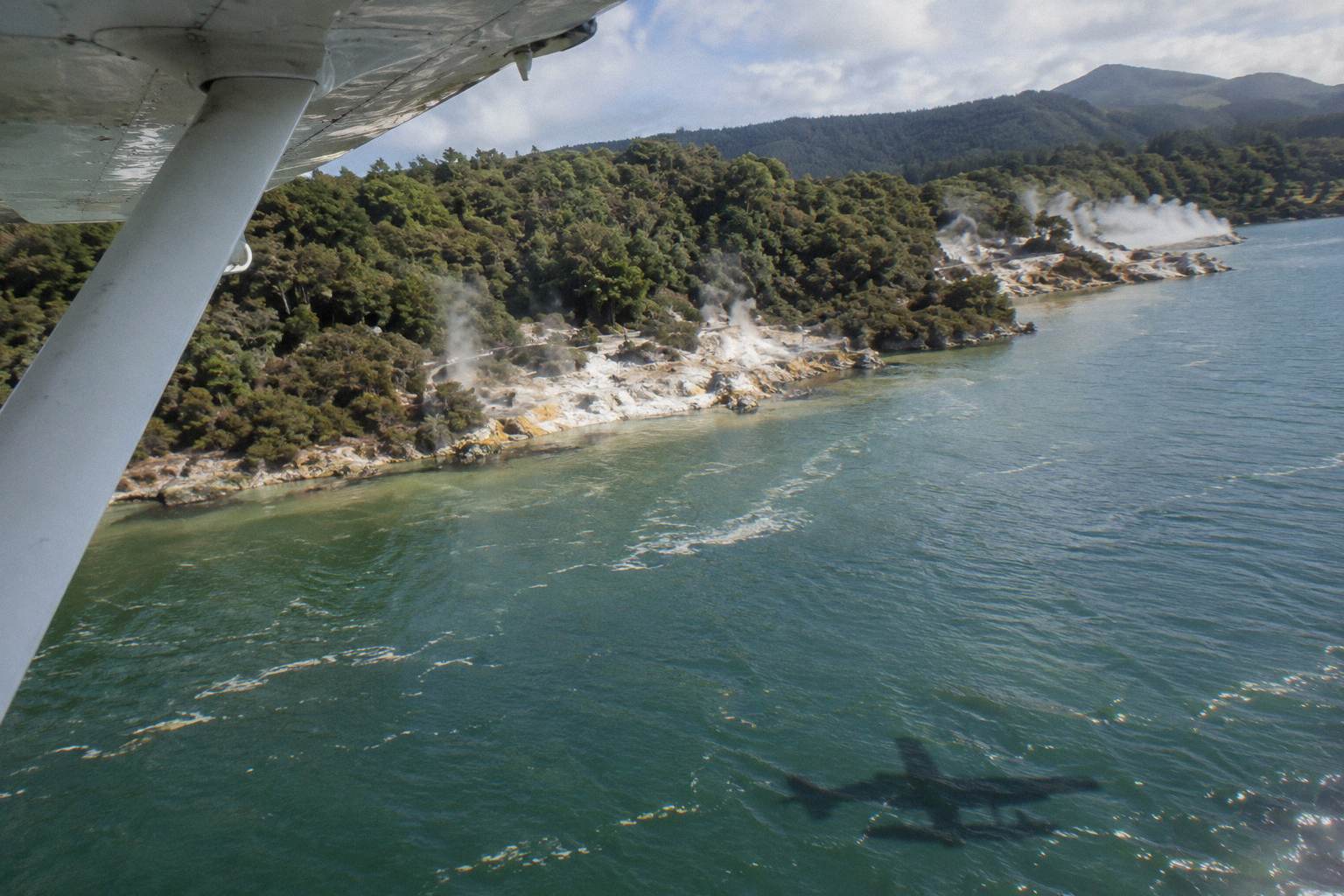
The Tarawera flights deliver the geology. The summit stands 1,111 m, the highest point of the three domes Ruawahia, Tarawera and Wahanga, and the 1886 eruption that GNS Science documents split those domes along the rift. Below the mountain lies Lake Rotomahana, filling the basin the eruption remade, and beyond it the Waimangu Valley, whose geothermal system the valley's own pages attribute directly to the 10 June 1886 eruption. Te Wairoa, the village razed that night, now the Buried Village, sits near the lake shore; the full history is traced in the Mount Tarawera 1886 eruption from above guide.
Whakaari is the far horizon option. The island lies about 48 km off the coast of Whakatane, and the operator describes it as New Zealand's only permanently active offshore volcano. Current rules allow flyovers only: landings have been suspended since the 9 December 2019 eruption, and official guidance confirms no helicopter flights land on the island. Live volcanic status changes day to day, and GeoNet's Whakaari monitoring page is the standing reference. The Whakaari itineraries, floatplane flyovers and the Volcanic Extremes helicopter trip, pair the island with Tarawera in one outing.
| Flight family | Signature sights | Landing |
|---|---|---|
| Crater Lakes circuits (15 min) | Up to 12 crater lakes, Mokoia Island, city lakefront | No landing (flyover) |
| Tarawera scenic flyovers | Tarawera domes and rift, Rotomahana, Waimangu | No landing (flyover) |
| Tarawera landing trips | Rift and craters, plus summit walk | Mt Tarawera summit |
| Orakei Korako trips | Geothermal field, Waikato River, Lake Ohakuri | Orakei Korako |
| Whakaari combos | Offshore volcano, Tarawera, Waimangu | Tarawera only, on the Volcanic Extremes flight |
One expectation to calibrate: visibility is a weather outcome, and the operator's own trip wording says a flight will not go ahead if it is not safe or if the views cannot be seen. The lakes and ridgelines are reliable in clear conditions, but no flight promises them.
How Do The Trips Compare Side By Side?
Line the main contenders up and the structure of the line-up becomes obvious: one trip, the Mt Tarawera Helicopter Tour with Volcano Landing, carries both a 4.9 rating and a real review pool of 43, making it the only choice where guest feedback is statistically meaningful. Everything else either has a thin review base or none shown, so the comparison below leans on itinerary facts, from-prices and the few defensible ratings rather than on popularity language.
The table keeps every figure tied to its own trip. Review counts appear beside the ratings that have earned them; trips whose review pools are too small to support a star figure show their count only, per standard practice on these pages.
| Trip | Vehicle | Time | Landing | From-price | Rating |
|---|---|---|---|---|---|
| Helicopter Volcano Landing | Helicopter | Landing itinerary | Mt Tarawera summit | No from-price | 4.9 from 43 reviews |
| Helicopter Landing, Guided Summit Walk | Helicopter | 40 min total | Mt Tarawera summit | NZ$675 pp | 5.0 from 12 reviews |
| One-Hour Volcanic Adventure | Helicopter | 1 hour | Mt Tarawera summit | No from-price | 11 reviews |
| Geothermal Park Landing, 3 Hours | Helicopter | 3 hours | Tarawera and Orakei Korako | NZ$1,490 pp | No rating yet |
| Dual Landing Thermal Explorer | Helicopter | Dual itinerary | Tarawera and Orakei Korako | No from-price | 10 reviews |
| Floatplane, Orakei Korako Landing | Floatplane | 2 hours | Orakei Korako | NZ$845 pp | 8 reviews |
| Floatplane, Waimangu Included | Floatplane | 2 hours | No landing (flyover) | NZ$1,230 pp | 7 reviews |
| Scenic Floatplane, Tarawera And Waimangu | Floatplane | 40 min total | No landing (flyover) | NZ$395 pp | 4.9 from 28 reviews |
| Volcanic Extremes | Helicopter | 1 h 45 m | Mt Tarawera summit | No from-price | 2 reviews |
Read the two 4.9 ratings carefully, because they measure different products. The helicopter landing tour's 43 reviews describe the volcano-landing experience; the scenic floatplane's 28 reviews describe a no-landing flyover. Both are strong signals within their own category, and neither transfers to the other's question.
For pure decision logic, three patterns stand out. First, if a Tarawera summit landing is the goal, the Volcano Landing tour is the line-up's anchor and its only well-reviewed landing trip. Second, if budget leads, the scenic floatplane is the cheapest full Tarawera-and-Waimangu experience at NZ$395. Third, if ground time at a geothermal park is the draw, the choice is between the NZ$845 floatplane landing at Orakei Korako and the NZ$1,490 three-hour helicopter expedition that adds Tarawera.
The guided summit walk deserves its own word, because it occupies a slot no other trip fills: the shortest total commitment, forty minutes, that still puts you on the mountain. At NZ$675 from-price it undercuts every other Tarawera landing itinerary, at the cost of the longer crater explorations. Families weighing it can cross-check the helicopter flights for families guide, since child fares, ages 2 to 11, and lap-seated under-2s apply across the operator's flights.
How Do Prices, Ratings And Flight Times Stack Up?
Flight time roughly doubles from the lake circuits to the Tarawera flyovers and roughly doubles again to the landing expeditions, while price climbs faster than time because landings carry the premium. The infographic groups the from-prices by itinerary family and shows where each trip's review pool sits. The pattern worth internalising: minutes are cheap, landings are dear, and the two well-reviewed trips anchor opposite ends of the market.
| Itinerary family | Flight time | Total time | From-price span |
|---|---|---|---|
| Crater Lakes circuits | 15 min | 15 min | No from-prices |
| Tarawera/Waimangu flyover | 30 min | 40 min | NZ$395 pp |
| Tarawera landing trips | Landing dependent | 40 min to 1 h 45 m | NZ$675 pp upward |
| Orakei Korako landing | Flight plus ground time | 2 hours | NZ$845 pp |
| Dual-landing expedition | Flight plus two ground stops | 3 hours | NZ$1,490 pp |
Season shapes both price availability and experience. Rotorua's driest, warmest weather runs from late spring in October to early autumn in April, per Rotorua's official tourism guidance, though the operator flies all twelve months during daylight hours. Mornings more often give the calmest air and softest light, afternoons warmer temperatures and late colour, and neither is a rule. The best time for a Rotorua helicopter flight guide unpacks the seasonality, and the Rotorua helicopter weather guide covers what happens when the forecast turns.
What Are The Booking, Weight And Cancellation Terms?
Book knowing three things: weights are declared at booking and verified on arrival, with surcharges possible above 110 kg; every trip listed here carries free cancellation up to 24 hours in advance for a full refund; and if the operator cancels for weather or volcanic activity, you get a full refund. Check-in is at the Lakefront office, thirty minutes early for helicopters and twenty for floatplanes, and there is no hotel pickup on standard flights.
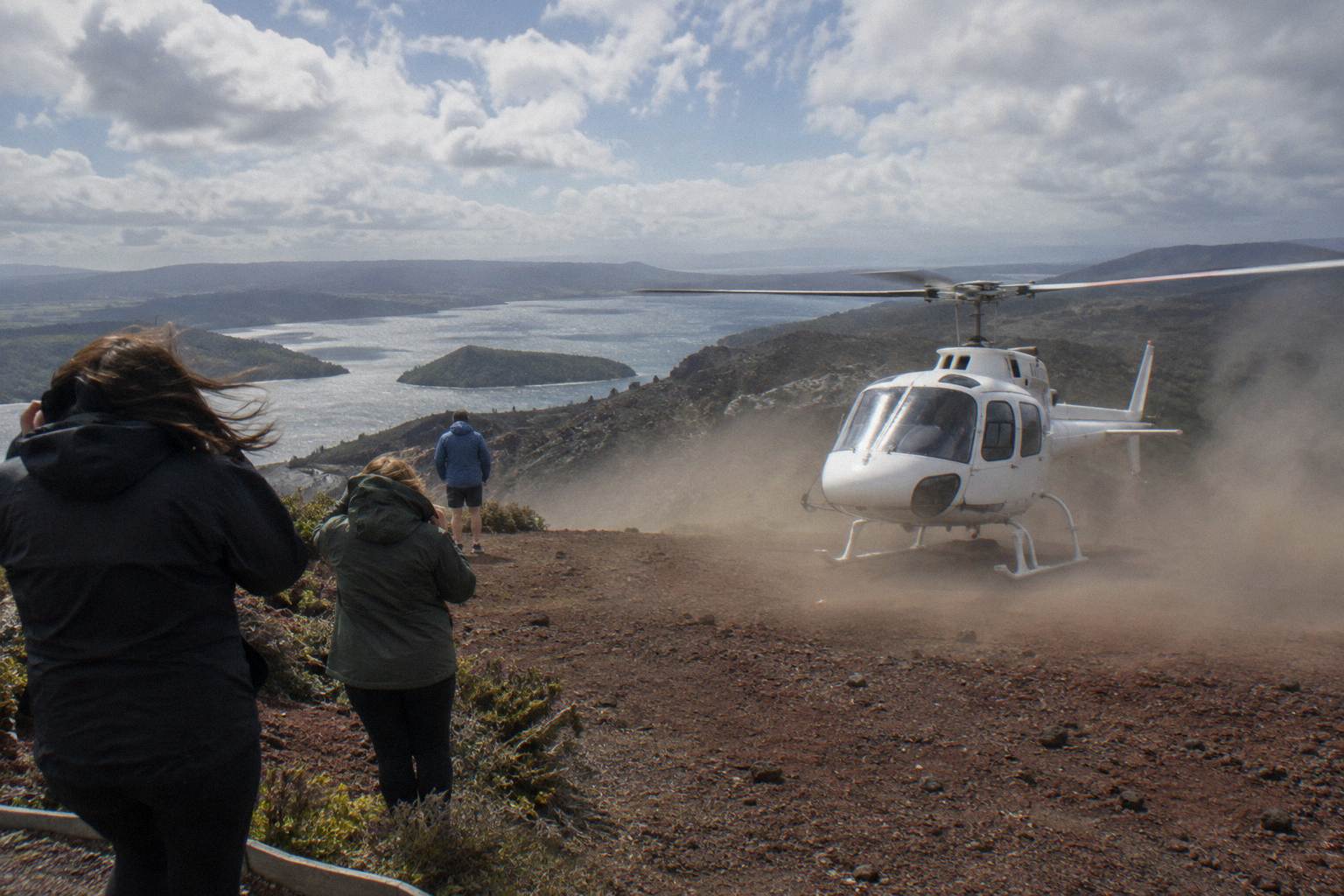
The weight rules are the ones that surprise people. The operator asks for individual weights at booking to plan safe, balanced seating, and passengers are weighed on arrival; a deviation from the declared weight can mean rescheduling, a surcharge, or cancellation at the operator's sole discretion. Above 110 kg a surcharge may apply, and above 135 kg as weighed, a passenger requires two adult fares. One flight on the line-up caps total weight per passenger at 110 kg and the group at six travellers. The Rotorua helicopter flight weight limits guide covers this in full.
Cancellation splits into two directions. If you cancel, the terms on the booking pages for these trips allow free cancellation up to 24 hours in advance for a full refund. If the operator cancels before the flight for circumstances beyond its control, weather or volcanic activity, the refund is full. What to bring is simple: camera, sunglasses, a jacket, and closed-toe comfortable footwear on any flight with a landing. Pregnancy and mobility needs are not automatic barriers; the operator asks to be told at booking so assistance can be arranged.
| Term | Applies to | Detail |
|---|---|---|
| Check-in | All flights | Lakefront office, 30 min (helicopter) or 20 min (floatplane) prior |
| Weights | All flights | Declared at booking, verified on arrival |
| Surcharges | Over 110 kg | May apply at operator's discretion |
| Free cancellation | All listed trips | Up to 24 hours in advance, full refund |
| Operator weather cancellation | All flights | Full refund or reschedule |
For timing the booking itself, the short flights are usually forgiving and the landing expeditions less so, since aircraft seats per departure are few; the how far in advance to book a Rotorua helicopter flight post works through the lead-time question. And if the weather clause concerns you, what happens when a Rotorua flight is cancelled for weather explains the reschedule-and-refund mechanics in practice.
What Mistakes Should You Avoid When Choosing A Rotorua Flight?
The recurring mistakes are assuming a landing is guaranteed, expecting a Whakaari touchdown, comparing trips on minutes alone, and arriving with undeclared weights or tight onward plans. A Tarawera landing sits at the pilot's sole discretion and can become a flyover; Whakaari landings remain suspended; and a fifteen-minute circuit versus a three-hour expedition are different products, not a cheap and dear version of the same one. Booking a landing flight without schedule slack is the classic trap.
Treat these as the checklist before you pay. Each one has ended somebody's day badly.
- Booking a landing flight and treating the landing as certain. The operator's terms make landings discretionary, and a weather or volcanic-activity call can convert the itinerary.
- Expecting to land on Whakaari. Landings have been suspended since December 2019; the Whakaari trips are flyovers, and the can you land on White Island by helicopter post gives the current position.
- Comparing the fifteen-minute lake circuit with the three-hour expedition on price per minute. They serve different travelers.
- Declaring an optimistic weight. Passengers are weighed at check-in, and deviations can mean surcharges, rescheduling or cancellation.
- Forgetting the check-in buffer. Helicopters need thirty minutes before departure for the safety briefing; a flight booked off an airport connection can be lost to the clock.
- Assuming hotel pickup. Standard flights depart the Lakefront only.
The deepest mistake is outsourcing the decision. A friend's favourite flight was favourite because it matched their priorities: summit access, ground time, or a small budget. Run the four filters, minutes, landing, budget, vehicle, against your own group, and the right trip on the line-up identifies itself. The folks at Rotorua Helicopter Tours keep every flight on these pages updated so the decision stays a decision, not a gamble.
Common Questions About Choosing A Rotorua Flight
Which Helicopter Ride Is Best In Rotorua?
There is no single best, but the Mt Tarawera Helicopter Tour with Volcano Landing is the anchor choice, rated 4.9 from 43 reviews. If budget leads, the Scenic Floatplane over Tarawera and Waimangu starts from NZ$395 per person. Match the trip to whether a landing, air time or price matters most.
Is A Tarawera Landing Guaranteed?
No. The operator's terms state that excursion landings are undertaken at your own risk and at the pilot's sole discretion, and that tour duration and inclusions may vary with weather, volcanic activity and loadings. A landing flight can become a flyover on the day.
Can You Land On White Island By Helicopter?
No. Landings on Whakaari have been suspended since the 9 December 2019 eruption, and official guidance confirms no helicopter flights land on the island. Rotorua's Whakaari itineraries are flyovers, some paired with a Tarawera landing.
How Much Does A Rotorua Helicopter Ride Cost?
From-prices run from NZ$395 per person for the scenic floatplane flyover to NZ$1,490 per person for the three-hour dual-landing helicopter expedition. The Tarawera guided summit walk starts from NZ$675 per person. All amounts are New Zealand dollars.
Helicopter Or Floatplane, Which Should I Pick?
Let the destination decide. Every Mt Tarawera summit landing is a helicopter trip; Orakei Korako landings run on both aircraft, with the floatplane touching down on the Waikato River. Floatplanes take off from Lake Rotorua itself, which many travelers count as half the experience.
Can I Cancel If My Plans Change?
Yes, every trip compared here carries free cancellation up to 24 hours in advance for a full refund. If the operator cancels for weather or volcanic activity before the flight, the refund is also full, or the flight can be rescheduled.