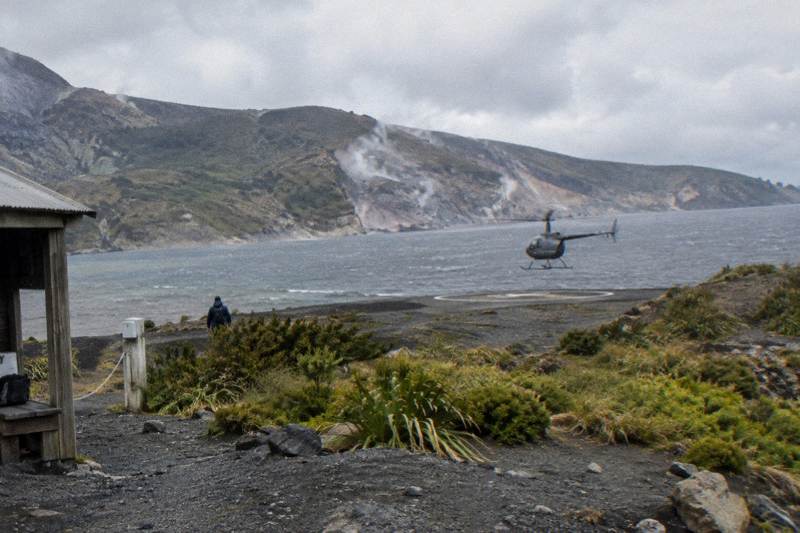
How Risky Is A Helicopter Tour? Safety Questions Answered
Nervous about booking a helicopter flight? The answer is that risk in Rotorua scenic flying is managed by a regulated operator, a documented briefing, strict weight rules and a pilot with final say over every take-off and landing.
Short answer
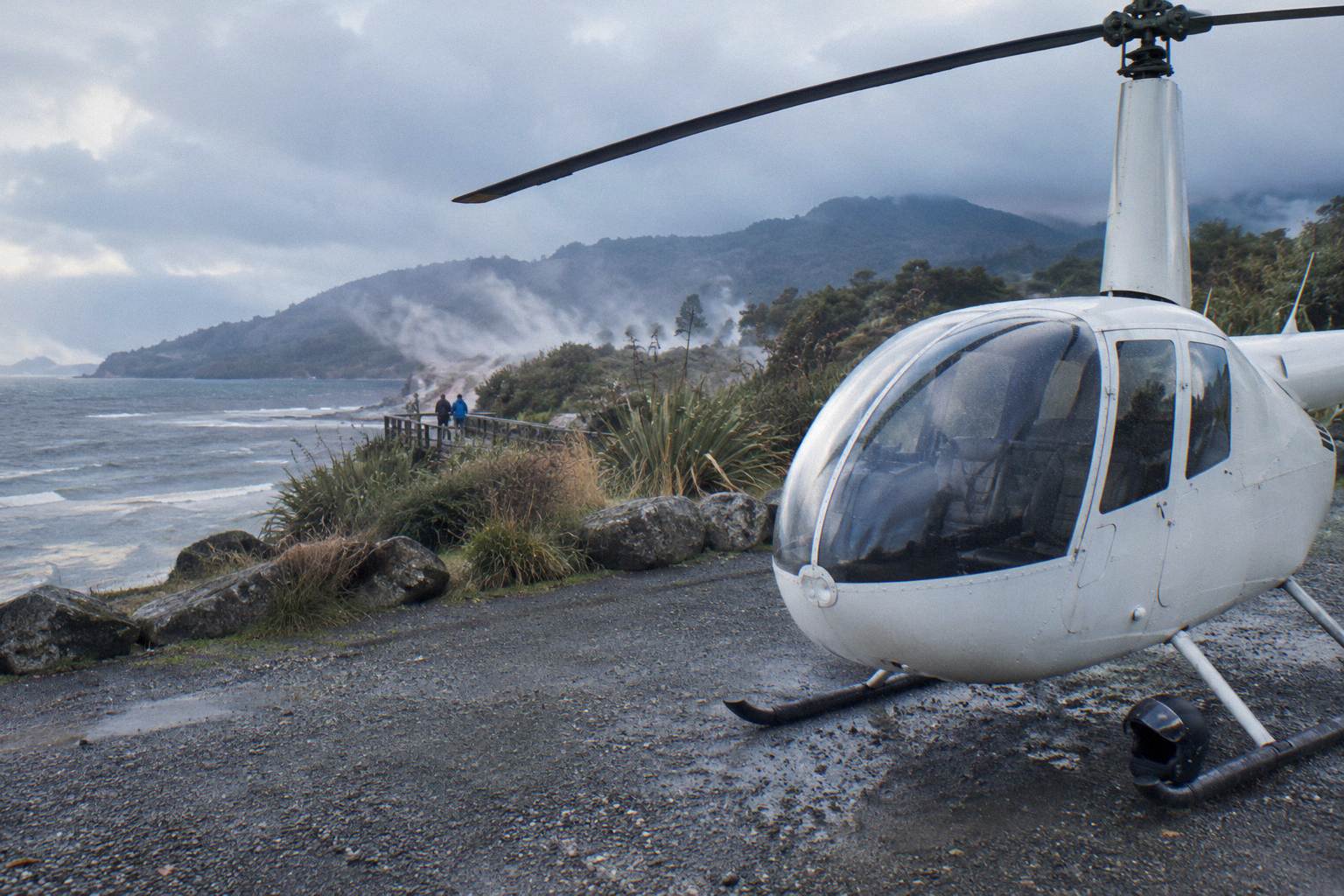
Helicopter tours in Rotorua are operated by a CAA-certified air operator, in the operator's own words. Every passenger is weighed, briefed and seated to keep the aircraft in balance, every flight is subject to suitable weather, and volcano landings happen only at the pilot's sole discretion. No form of flying is without risk, but the safeguards are systematic, not improvised.
The question "how risky is a helicopter tour" is usually asked at the moment of booking, when the excitement has faded and the practicalities begin. It deserves a calm, factual answer rather than reassurance. In Rotorua the entire scenic flight industry sits inside a regulated framework: an operator that describes itself as a "Civil Aviation Authority: Certified NZ air operator", a documented pre-flight briefing, mandatory weight declarations, and a pilot whose judgement governs whether a flight leaves the ground at all and whether it lands on a volcano.
In short
Scenic helicopter flying in Rotorua is run under Civil Aviation Authority rules, with a certified operator, a full safety briefing before every flight, individual passenger weighing for aircraft balance, and weather call-offs when conditions are not suitable. Volcano landings are never automatic: the terms state plainly that excursion landings are at the pilot's sole discretion and undertaken at your own risk. Nothing here removes risk, but every layer is written down and enforced before the rotors turn.
For a broader look at the city's flight scene, see the parent guide to Rotorua scenic flights, and for the deeper planning questions, whether helicopter tours are worth it.
| Quick Fact | Detail |
|---|---|
| Operator | Volcanic Air, flying in the region since 1992 |
| Certification | Operator wording: "Civil Aviation Authority: Certified NZ air operator" |
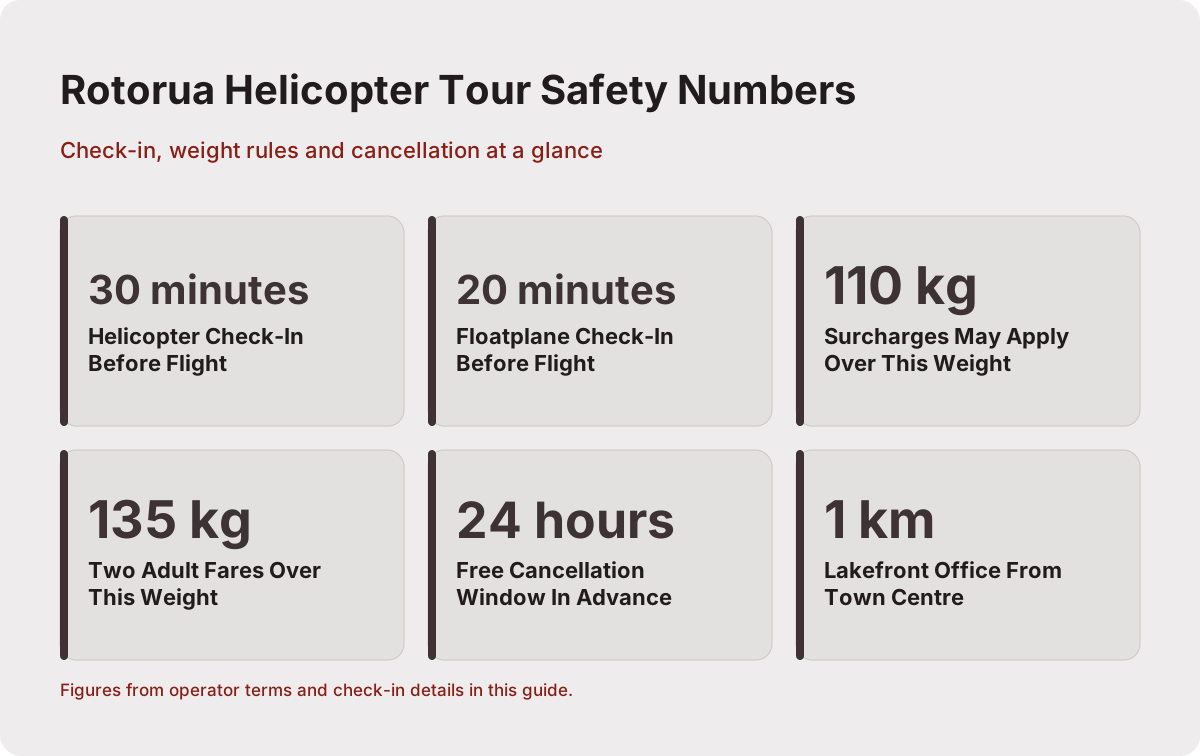
| Check-in | Lakefront office, 1 Lakefront Drive; helicopters 30 minutes prior, floatplanes 20 minutes prior |
| Weighing | Weight declared at booking, verified on arrival |
| Weather | Flights operate only in suitable weather and safe flying conditions |
| Volcano landings | At the pilot's sole discretion, undertaken at your own risk |
| Cancellation | Free cancellation up to 24 hours in advance on the flight's booking terms |
How Risky Is A Helicopter Tour, Really?
Helicopter tours do carry real risk, but Rotorua scenic flights are far from informal or unregulated. Every flight is run by an operator certified under Civil Aviation Authority rules, every passenger gets a full safety briefing at check-in, everyone on board is weighed so the aircraft stays within balance limits, and every departure depends on suitable weather. The framing is risk that is actively managed rather than ignored.
That framing matters because the question behind the question is usually "can I trust the people running this?" The answer sits in what happens before the aircraft even moves. Arriving at the Lakefront office 30 minutes before a helicopter departure is not padding, it is when the safety briefing happens, when weights are confirmed, when seating is decided and when questions get asked. Volcanic Air has been flying in this region since 1992, an operator-stated history that spans more than three decades of scenic operations over the same volcanoes and lakes flown today.
What the operator does not do is promise outcomes. Its terms are explicit that tour duration, flight times and inclusions may vary due to weather conditions, volcanic activity and passenger loadings, and that excursion landings are undertaken at your own risk and at the pilot's sole discretion. This language can read as alarming to a first-time buyer, but it is the opposite: it is a company putting the limits of what it controls in writing. A safer operator is one that names the conditions under which it will not proceed.
For a nervous buyer, the practical takeaway is that the safeguards are procedural and happen in a fixed order: certification and aircraft standards at the company level, briefing and weighing at check-in, weather assessment on the day, and pilot discretion at every landing. Each of the following sections takes one of those layers in turn, using the operator's own FAQ, its terms, and the regulatory framework, so the decision to book rests on documented practice rather than marketing comfort.
Who Regulates Rotorua Helicopter Flights?
Rotorua helicopter tours operate inside New Zealand's civil aviation rules. Civil Aviation Rule Part 135, titled "Air operations: helicopters and small aeroplanes", governs this class of flying, and the rules apply to the "holder of an air operator certificate". Volcanic Air describes itself as "Civil Aviation Authority: Certified NZ air operator" and says it is independently assessed through a quality assurance programme. Certification is the operator's own claim, and the rule framework is public record.
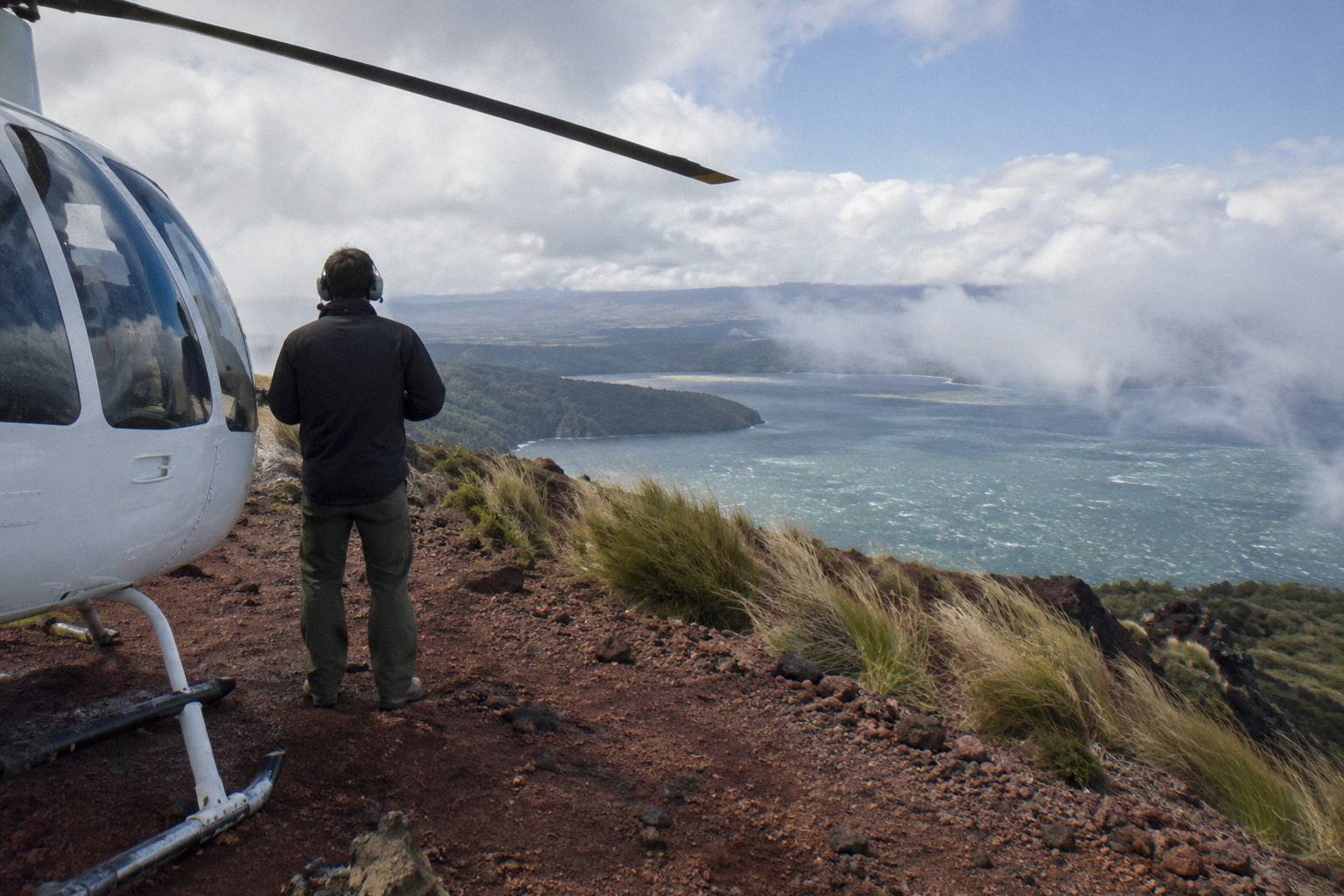
The regulatory layer is the part nervous passengers least often look at and benefit from most. Part 135 is not a marketing badge; it is the rule set under which helicopter and small aeroplane operations in New Zealand are conducted, covering how an air operator must be certificated to fly passengers for hire. The legislative text refers to the "holder of an air operator certificate", which is the formal status a company like Volcanic Air operates under when it sells seats on scenic flights.
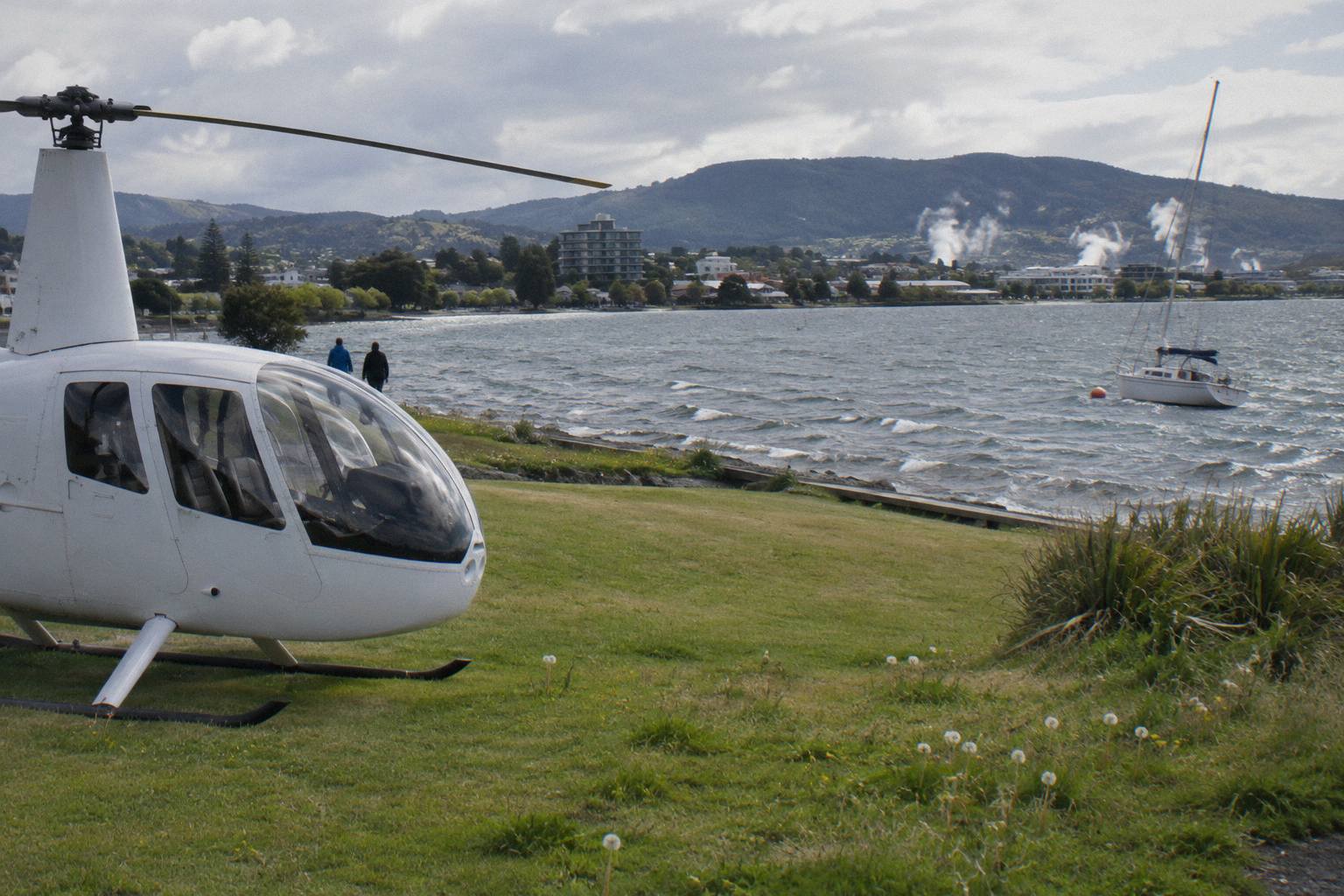
Volcanic Air's own description of its standing is stated on its home page: "Civil Aviation Authority: Certified NZ air operator" and "Qualmark Gold: Tourism NZ quality assured". Those are the operator's words about the operator, and they are presented here as exactly that. What the wording tells a nervous buyer is that the company positions itself inside a regime of external assessment rather than as an independent operator making up its own rules.
For background on the company itself, its history and its fleet, the guide to Volcanic Air as an operator covers what is documented. The safety-relevant point is simple: certification, aircraft maintenance standards and operational rules are the invisible layer beneath every flight, and they exist whether or not a passenger ever reads them. More on the day-to-day experience of flying with the company is on its FAQ page, which covers check-in, weight, children, weather, pregnancy and mobility questions in the operator's own words: the operator's FAQ.
Within that framework, three flights in particular suit a first-time flyer weighing up risk against spectacle. The Mt Tarawera Helicopter Tour with Volcano Landing, rated 4.9 from 43 reviews, is the classic summit experience; the 15-Minute Crater Lakes Flight by Helicopter from Rotorua is the short, low-commitment first flight; and the Mount Tarawera Volcanic Adventure by Helicopter is the longer option for those who want more air time. All three are flown from the same Lakefront base under the same rules.
What Happens At Check-In And The Safety Briefing?
The check-in window is a deliberate part of the safety system, not an administrative chore. The operator's FAQ confirms that guests check in at the Lakefront office prior to the flight for a full safety briefing, with the two arrival windows differing by aircraft type. Those minutes cover aircraft-specific instructions, boarding procedure, seating allocation and the secure-while-seated expectation that also appears in the operator's mobility guidance: every passenger must follow the safety briefing, stay seated and secured, and board and leave the aircraft with any assistance agreed in advance.
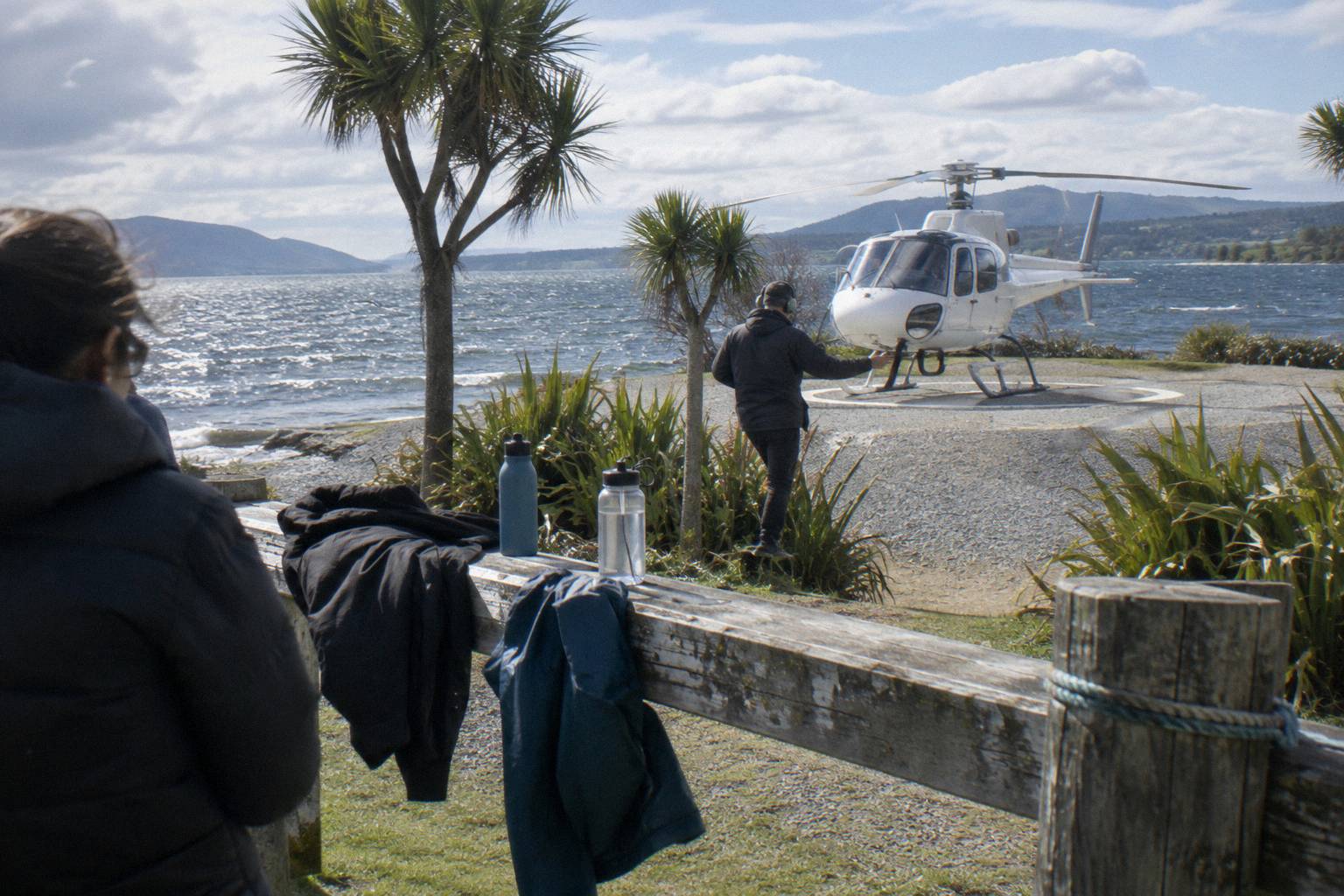
The base itself is easy to reach, which removes one common stressor. The meeting point is the Rotorua City Lakefront at 1 Lakefront Drive, Rotorua, under 1 km from the town centre, and both helicopters and floatplanes leave from the Lakefront, with floatplanes taking off from Lake Rotorua at the lakefront pier. Hotel pickup is not part of standard flights, so building in the walk or short drive is part of arriving with the full briefing window intact.
A few practical points make the briefing hour smoother. Cameras, sunglasses and a jacket are the operator's suggested kit, and closed-toe comfortable footwear is recommended for flights that include landings, because volcano terrain is uneven. Children of all ages are welcome, with under-2s on a parent's or guardian's lap and child rates for ages 2 to 11. Pregnancy and mobility restrictions are not automatic barriers, but the operator asks to be told at booking so assistance can be arranged.
| Check-In Detail | Helicopters | Floatplanes |
|---|---|---|
| Arrival before flight | 30 minutes | 20 minutes |
| Location | Lakefront office, 1 Lakefront Drive | Lakefront office, 1 Lakefront Drive |
| Take-off point | Lakefront helicopter pad | Lake Rotorua, lakefront pier |
| Briefing | Full safety briefing | Full safety briefing |
| Footwear advice | Closed-toe for landing flights | Closed-toe for landing flights |
The Mt Tarawera Helicopter Tour with Volcano Landing follows exactly this routine, and it is the trip most nervous buyers ask about first: the summit walk lasts around 15 minutes on the mountain, per the operator's landing flight wording, after a briefing and a pilot-decision on whether the landing proceeds that day.
Why Are Passengers Weighed Before A Rotorua Helicopter Flight?
Passengers are weighed because an aircraft only flies safely inside its weight and balance limits, and those limits depend on where each person sits and how much they weigh. Weight must be declared at booking and is verified on arrival; the operator's terms state that a deviation from the declared weight may mean rescheduling, a surcharge or cancellation. Weighing is a physics requirement, not a judgement about any passenger.
This is the question that catches the most people off guard, and it is the one with the clearest technical answer. A helicopter's centre of gravity shifts with every body on board, and seating is planned around declared individual weights. The operator's FAQ puts it plainly: guests provide individual weights at the time of booking so the aircraft can be safely and balanced-ly seated, and passengers are weighed on arrival so the aircraft stays within balance limits.
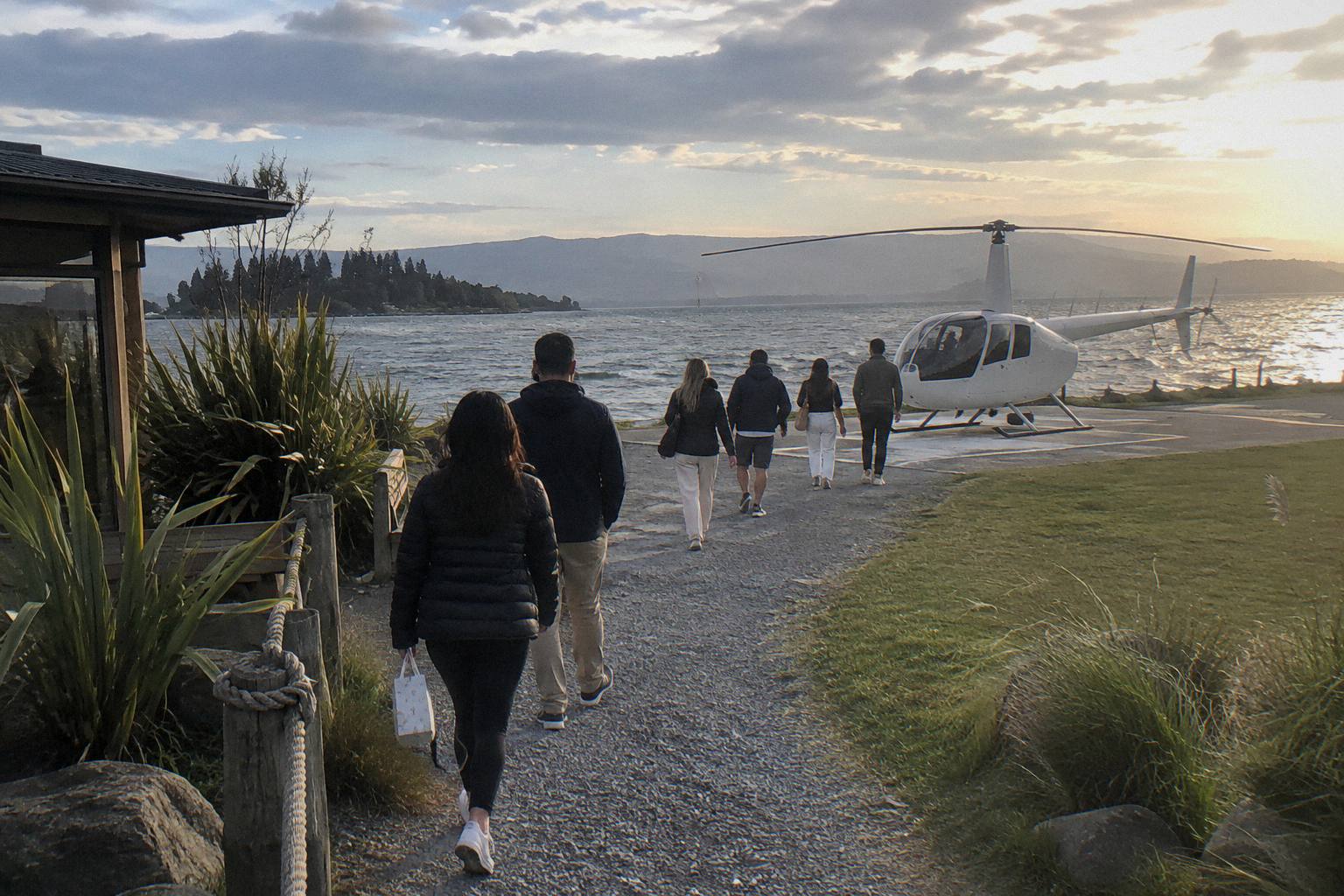
The terms add the enforcement side in clause 1.16: any deviation from the declared weight may result in a flight being rescheduled, a surcharge being applied, or a booking being cancelled, at Volcanic Air's sole discretion. Two further thresholds appear in clause 1.17: over 110 kg a surcharge may apply at the operator's sole discretion, and over 135 kg as weighed requires two adult fares. One listed trip, the Mount Tarawera Volcanic Adventure by Helicopter, caps its bookings at six travellers with a stated total weight per passenger of 110 kg.
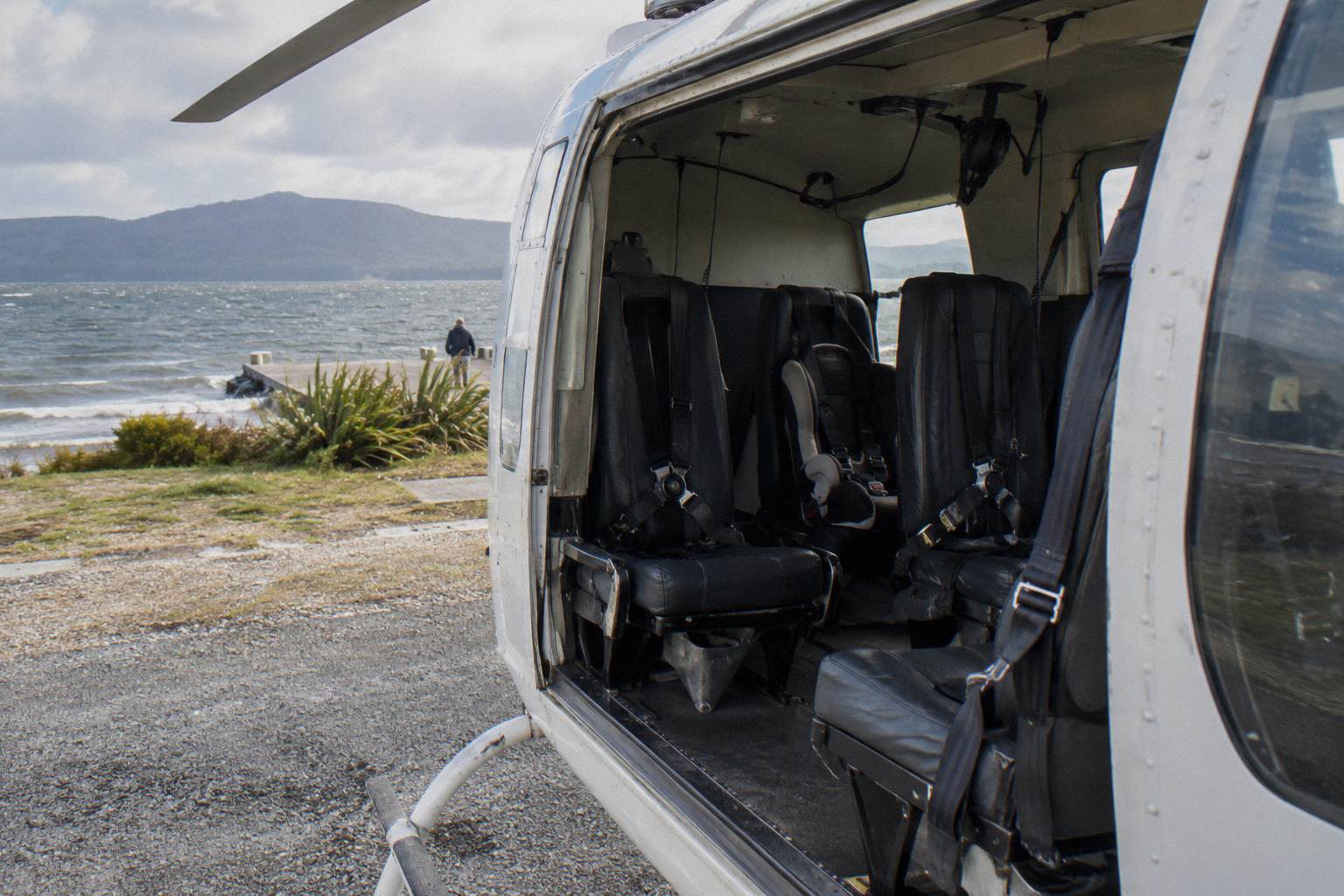
Nervous passengers sometimes read the weighing step as embarrassing. Framed differently, it is the single most concrete evidence that the operator treats each flight as a computed exercise rather than a shuttle run. The weighing, the seating plan and the briefing all exist because the aircraft's performance envelope is calculated, per flight, for the exact people on board. The full weight clauses are published in the operator's terms, readable before booking: Volcanic Air terms and conditions.
| Weight Rule | What The Terms Say |
|---|---|
| Declaration | Individual weights declared at booking |
| Verification | Passengers weighed on arrival |
| Deviation | May cause rescheduling, surcharge or cancellation at the operator's sole discretion |
| Over 110 kg | A surcharge may apply at the operator's sole discretion |
| Over 135 kg | Two adult fares required |
More detail, including the front-seat question nervous flyers often ask next, is in the site's guide to Rotorua helicopter flight weight limits.
Who Decides Whether A Flight Goes Ahead?
The operator and the pilot make that call, not the passenger and not the calendar. Per the operator's FAQ, all flights operate subject to suitable weather and safe flying conditions; if weather prevents a flight, the operator will work with the passenger to reschedule or issue a full refund. Terms clause 1.20 also provides a full refund when the operator cancels before commencement for circumstances beyond its control, including weather and volcanic activity.
This is the layer that most often saves lives in commercial aviation generally: the willingness to cancel. One listed floatplane trip carries the operator's blunt wording that the tour is weather dependent and will not go ahead if it is not safe to do so, or if the views cannot be seen. That second clause matters as much as the first: a scenic flight with no view is not delivered, and the operator treats it that way. The full index of guides sits on Rotorua Helicopter Tours.
Rotorua's climate explains why the escape hatch exists. The region flies year round, with the operator's business listing showing all months of operation during daylight hours, and rainfall in Rotorua running from a monthly average of 86.8 mm in November to 137.4 mm in July on 1991 to 2020 normals. The local tourism body notes that the driest and warmest weather runs from late spring in October until early autumn in April. None of that guarantees a clear day, which is precisely why the refund-and-reschedule policy exists.
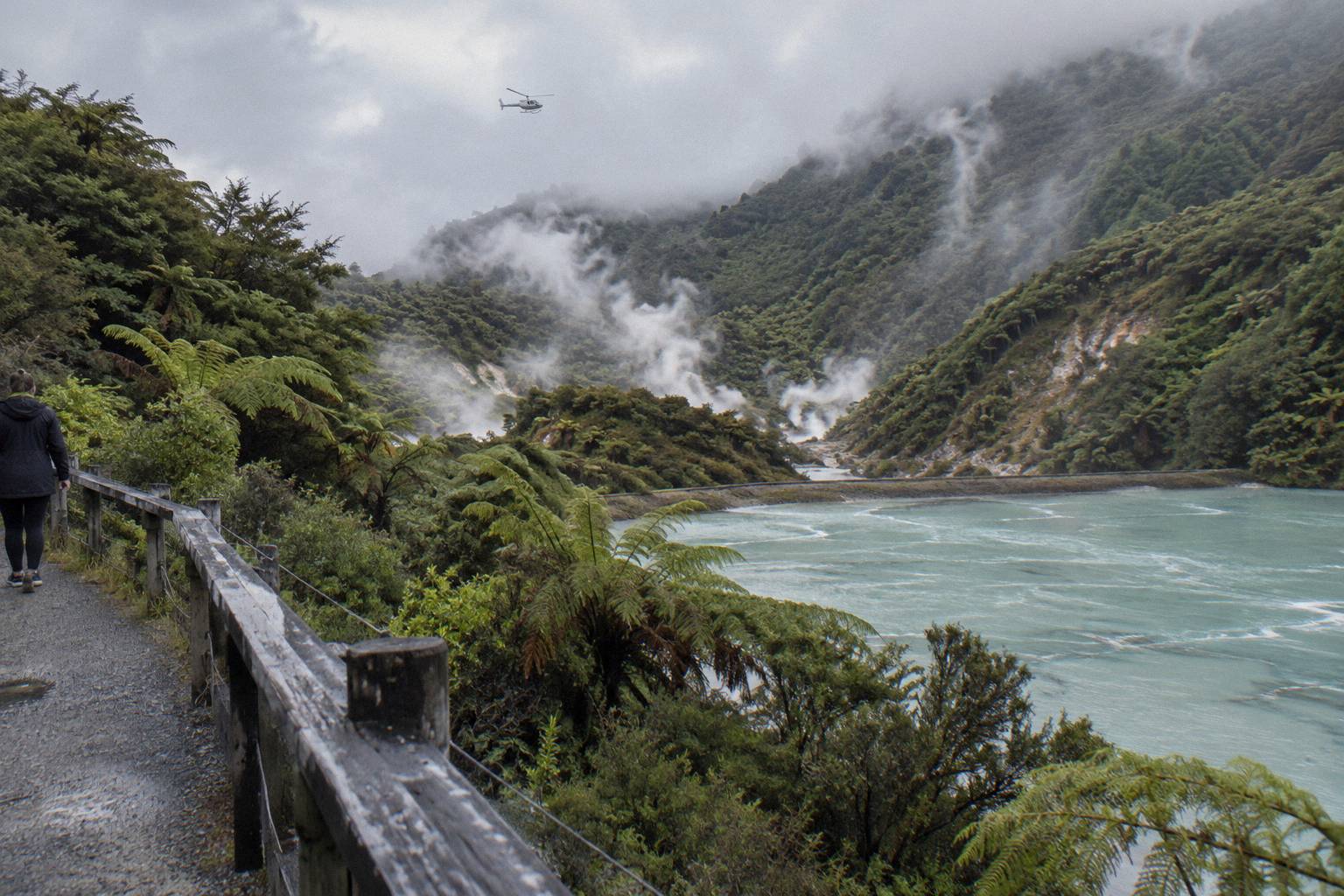
The operator's seasonal guidance is that mornings often give the calmest weather and smoothest flying with softer photo light, while afternoons can bring warmer temperatures and late-day colour, especially in winter, with no hard and fast answer because it depends on the weather that day. If conditions are unsuitable, the operator tries to reschedule. The full picture, including what happens to a booking when weather intervenes, is covered in the guide to Rotorua helicopter weather.
| Weather Decision | What Happens |
|---|---|
| Conditions unsuitable | Flight does not go ahead |
| Operator rescheduling | Offered when weather prevents the flight |
| Operator cancels before start | Full refund under terms clause 1.20 |
| Passenger cancellation | Free up to 24 hours in advance on the flight's booking terms |
| Views not visible | Treated as grounds not to fly on weather-dependent trips |
Is Landing On A Volcano By Helicopter Safe?
Landing on Mt Tarawera is permitted only through authorised access, and the landing itself is always at the pilot's sole discretion and undertaken at your own risk, in the operator's own wording. Access to the summit is not open to independent walkers, and Volcanic Air operates as a concessionaire alongside Ngati Rangitihi, the iwi that holds kaitiakitanga of the maunga. The mountain is flown, and landed on, under a documented arrangement, not on a whim.
The access story is the part almost nobody reads before booking. Mt Tarawera is governed by the Ruawahia 2B Trust, which reinvests most tourism concession revenue in conservation, and Volcanic Air operates as a partner concessionaire working alongside Ngati Rangitihi. Independent summit access is not permitted; access is through authorised guided tours or approved helicopter landings. For a nervous buyer, that means the landing site is a managed location with an iwi-backed concession behind it, not an ad hoc touchdown on whatever slope looks flat.
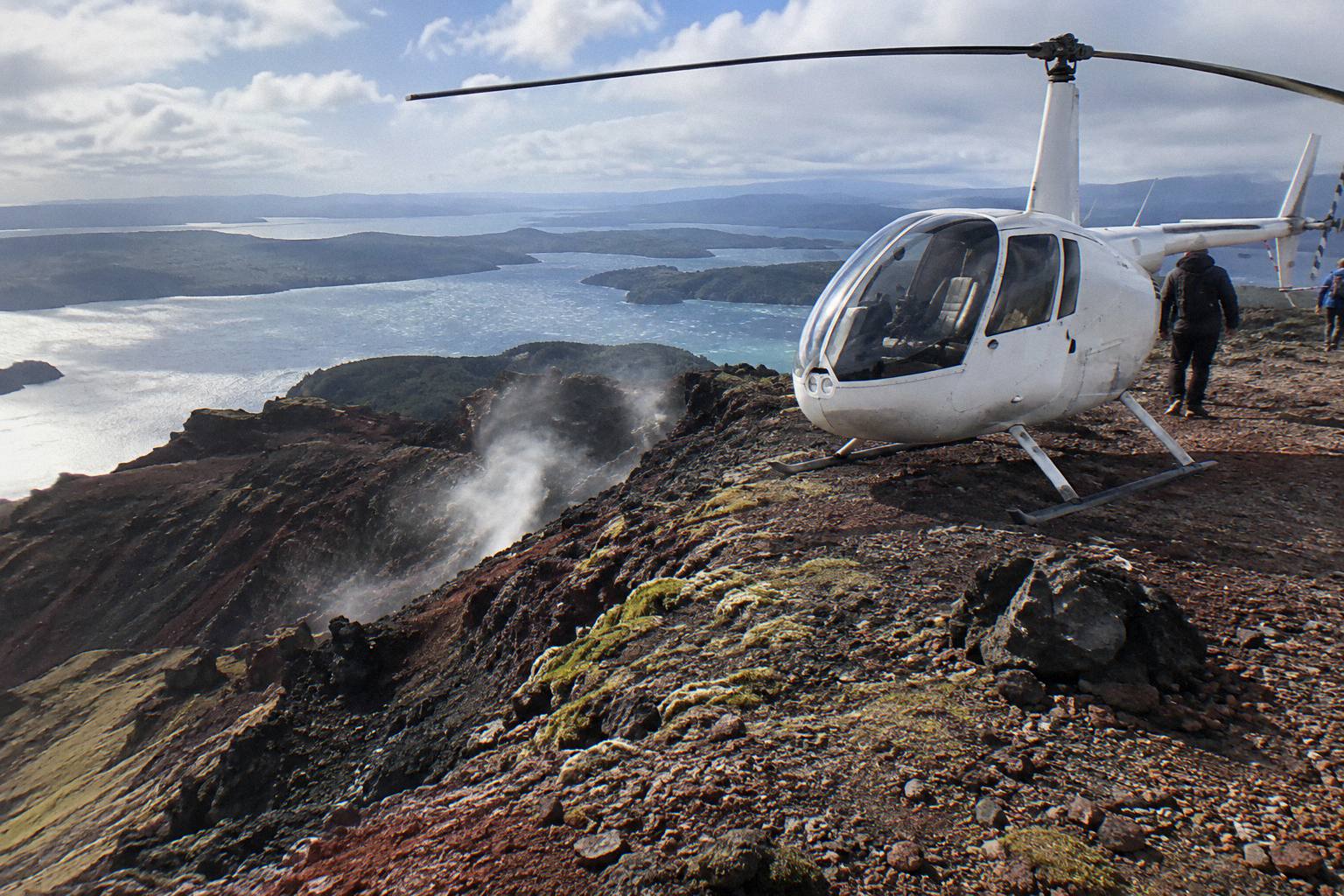
The operator's landing flight wording is direct: "Fly over Mt Tarawera's 8km rift and craters", then "Land on the summit of Mt Tarawera for a 15 minute guided walk", with the standing caveat that excursion landings are at your own risk and at your pilot's sole discretion. For contrast, GNS Science describes the full 1886 rift as 17 km long, running across the mountain top, through Lake Rotomahana and into the Waimangu Valley area; the operator's 8 km figure is its own description of the rift section flown over the mountain. A landing is never guaranteed, and no description of these trips should promise one.
What the on-ground experience involves, and whether the extra cost of a landing is worth it over a flyover, is covered in the site's Mt Tarawera helicopter landing guide. The Mount Tarawera Volcanic Adventure by Helicopter is the one-hour option built around the same summit landing decision, flown to the same pilot-discretion rule.
For passengers who want the volcanic landscape without a landing at all, the Rotorua: Scenic Flight over Mt Tarawera & Waimangu Valley is a 30-minute floatplane flyover with no landing, from NZ$395 per person, rated 4.9 from 28 reviews. Amounts on this page are New Zealand dollars.
What Risks Do The Operator's Own Terms Spell Out?
The operator's terms name their risks in plain language: flights land and take off on hard terrain or water, and natural hazards include earthquakes, geothermal activity, landslides and fast changing weather. Excursion landings are undertaken at your own risk at the pilot's sole discretion. Reading this wording before booking is the clearest risk briefing a nervous passenger can get, because it comes from the company that carries the liability.
Most tour marketing never mentions hazard lists; Volcanic Air's terms publish one. That transparency is worth something when weighing up risk. The terms also set out the guest-side obligations: declaring accurate weights, following the safety briefing, and accepting that durations and inclusions may vary with weather, volcanic activity and passenger loadings. A buyer who reads the risks section and still books is making an informed choice, which is the only kind of choice worth making.
| Terms Topic | Plain-Language Summary |
|---|---|
| Terrain | Flights land and take off on hard terrain or water |
| Natural hazards | Earthquakes, geothermal activity, landslides, fast changing weather |
| Landings | At your own risk, at the pilot's sole discretion |
| Weight accuracy | Declared at booking, verified on arrival, discrepancies may cost the flight |
| Variability | Duration, flight times and inclusions may vary with conditions |
One boundary worth knowing: Whakaari / White Island. Landings there are suspended, with the official tourism site stating there are currently no boat tours to, or helicopter flights that land on, the island, and its volcanic status is monitored live by GeoNet. Rotorua flights over the island are flyovers only, a restriction that illustrates the system working: when risk is judged too high, the landing is withdrawn.
For the fuller safety picture around volcano landings, see whether it is safe to land a helicopter on a volcano.
Which Rotorua Flight Suits A Nervous First-Timer?
For a nervous first-timer, the shortest flight with the fewest variables is usually the right start: the 15-Minute Crater Lakes Flight by Helicopter stays over the lakes close to base with no landing decision involved. From there, a Tarawera flyover adds the volcanic landscape, and a landing trip adds the summit walk only if the pilot judges conditions right on the day. Escalating in steps turns one big decision into three small ones.
The logic is about control and exposure. A 15-minute flight over the crater lakes, Rotoiti, Okataina, Tarawera, Okareka, Rotomahana, Rotokakahi and Tikitapu among them, gives the full briefing, weighing and pilot-command experience in the smallest dose. The floatplane version takes off from the lake itself. Both are flown under the same certification and the same weather rules as the longest trips; nothing about a short flight is amateur hour.
The next step up is a flyover with volcanic scenery but still no landing. The step after that is the landing experience, where the Mt Tarawera Helicopter Tour with Volcano Landing, 4.9 from 43 reviews, is the line-up's most-reviewed Tarawera landing trip. At the far end of commitment, the Rotorua: Volcano Landing and Geothermal Park Helicopter Tour, from NZ$1,490 per person, pairs a Tarawera summit landing with Orakei Korako across three hours, the longest exposure and the most variables in one day.
| Trip | Format | Landing | Time | Notes |
|---|---|---|---|---|
| Crater Lakes By Helicopter, 15 Minutes | Helicopter | No | 15 minutes | Shortest first flight |
| Scenic Floatplane, Tarawera And Waimangu | Floatplane | No | 30 minute flight | From NZ$395, 4.9 from 28 reviews |
| Helicopter Volcano Landing | Helicopter | Mt Tarawera summit | Landing flight | 4.9 from 43 reviews |
| Geothermal Park Landing, 3 Hours | Helicopter | Tarawera and Orakei Korako | 3 hours | From NZ$1,490 per person |
Motion sickness, seating and cameras are covered in the site's posts on whether you get motion sick on a helicopter flight and taking a GoPro on a helicopter tour.
Mistakes That Catch Nervous Passengers Out
The recurring mistakes are arriving too late for the briefing, under-declaring weight, treating a landing as guaranteed, and assuming bad weather means losing the money. Arriving inside the check-in window protects the safety briefing, accurate weights protect the booking, the pilot's discretion governs every landing, and operator weather cancellations come with a full refund or reschedule. Avoiding these four turns a nervous booking into a well-prepared one.
Under-declaring weight deserves its own warning because it feels like a courtesy and behaves like a safety breach. The aircraft is loaded to a calculated balance using declared weights, and a material deviation on the scales at the lakefront can cost the flight entirely, at the operator's sole discretion. Accurate declaration at booking is the cheapest insurance available.
The second trap is building an itinerary that depends on a landing or on specific views. The terms say plainly that excursion landings are at the pilot's sole discretion, and weather-dependent trips will not fly if the views cannot be seen. Booking with a free afternoon afterwards, so a rescheduled flight still fits the trip, costs nothing and removes the pressure.
The third is assuming rather than asking. Pregnancy, mobility and children's questions all have answers in the operator's FAQ, and the operator asks to be told at booking so arrangements can be made. The mistakes, in short, are all solvable before check-in.
Common Questions About Helicopter Flight Safety
How Risky Is A Helicopter Tour?
Scenic helicopter flying carries real risk, and the operator's terms name it: hard terrain and water landings, earthquakes, geothermal activity, landslides and fast changing weather. What manages that risk is an operator that describes itself as a CAA-certified air operator, a full safety briefing, verified passenger weights for balance, weather call-offs with refunds, and pilot discretion on every landing.
Is The Operator Certified And Regulated?
Volcanic Air describes itself as a "Civil Aviation Authority: Certified NZ air operator" and says it is independently assessed via a quality assurance programme. Helicopter and small aeroplane passenger operations in New Zealand fall under Civil Aviation Rule Part 135, "Air operations: helicopters and small aeroplanes".
Will My Flight Be Cancelled For Weather?
It may be. All flights operate subject to suitable weather and safe flying conditions, and if the flight cannot go ahead the operator works with you to reschedule or provide a full refund. Operator cancellations for circumstances beyond its control, including weather and volcanic activity, carry a full refund under the terms.
Is Landing On Mt Tarawera Guaranteed?
No. The operator's wording states that excursion landings are undertaken at your own risk and are at your pilot's sole discretion, and that tour duration, flight times and inclusions may vary due to weather conditions, volcanic activity and passenger loadings.
Why Do I Have To Be Weighed?
Individual weights, declared at booking and verified on arrival, let the operator seat the aircraft within its balance limits. Over 110 kg a surcharge may apply, and over 135 kg as weighed requires two adult fares, both at the operator's sole discretion.
Can Children, Pregnant Passengers Or People With Mobility Needs Fly?
Children of all ages are welcome, with under-2s on a lap and child rates for ages 2 to 11. Pregnancy and mobility needs are not automatic barriers, but the operator asks to be told at booking so assistance can be arranged; passengers must follow the safety briefing and stay seated and secured.