How Much Does A Helicopter Ride Cost In New Zealand?
Scenic flights in New Zealand are priced per person, per trip, and the only figures worth planning around are the booking-page from-prices. In Rotorua they run from NZ$395 for a 30 minute floatplane flyover to NZ$1,490 for a three hour helicopter day with two landings.
Short answer
Rotorua flights start at NZ$395 per person for a 30 minute floatplane flyover and reach NZ$1,490 for a three hour helicopter trip with volcano and geothermal park landings. A 40 minute helicopter landing trip on Mt Tarawera is from NZ$675. All amounts are New Zealand dollars, per person.
For a wider view of the flying on offer around the lake, start with the Rotorua scenic flights overview and come back here for the money question.
| Quick Facts | |
|---|---|
| Cheapest priced flight | Scenic Floatplane, Tarawera And Waimangu, from NZ$395 per person |
| Cheapest priced helicopter landing trip | Helicopter Landing, Guided Summit Walk, from NZ$675 per person |
| Most expensive priced trip | Geothermal Park Landing, 3 Hours, from NZ$1,490 per person |
| Currency | New Zealand dollars, per person, from-prices |
| Cancellation | Free cancellation up to 24 hours before departure on the priced trips |
| Operator and base | Volcanic Air, Lakefront, 1 Lakefront Drive, Rotorua |
The Short Answer On NZ Helicopter Flight Prices
New Zealand helicopter flights are priced per person and per trip, with from-prices spanning NZ$395 to NZ$1,490 in Rotorua. A 30 minute Scenic Floatplane, Tarawera And Waimangu trip starts at NZ$395 per person, a 40 minute helicopter landing on Mt Tarawera starts at NZ$675, and the three hour Geothermal Park Landing helicopter trip starts at NZ$1,490. All figures are from-prices, so the final cost can change.
One scope note before anything else: only the Rotorua trips flown from the Lakefront base are priced in this guide. No national average exists in any verifiable form, and fares in Queenstown, Auckland or the West Coast are different markets with different aircraft and different concession costs, so no comparison to them is made here.
The spread inside one small city is still wide enough to be useful. A quarter of an hour in the air, a half hour, a mountain landing, a geothermal park landing and a half day with two landings sit at very different price points, and the differences are not random. They track flight minutes, landing fees and ground time almost linearly. Understanding that ladder is the whole trick to paying for exactly the experience wanted rather than more of it.
The single operator at the Lakefront, Volcanic Air, has been flying in the region since 1992 and describes itself as a CAA-certified air operator, with both helicopters and floatplanes leaving from the same pier at 1 Lakefront Drive. That matters for price shopping, because the floatplane options are frequently cheaper than the helicopter options for similar scenery, and they sit on the same booking schedule.
It also matters that every trip departs from the same physical point. There is no ferry transfer to an airfield, no drive out of town and no hidden positioning leg built into any fare: the aircraft are based at the city lakefront, the floatplanes take off from Lake Rotorua itself, and the quoted experience begins where the quoted price begins. Travellers staying centrally can walk to check-in, which keeps the true cost of any flight close to its from-price rather than inflated by transport.
What Drives The Price: Minutes, Landings And Aircraft
Three variables explain nearly every dollar of difference between these fares: time in the air, whether the aircraft touches down somewhere, and which aircraft flies. Flight minutes are the base cost, a landing adds a concession and ground component on top, and helicopter trips generally price above floatplane trips of similar length. A 15 minute crater lakes flight, a 30 minute flyover and a 40 minute landing trip make the ladder visible.
Minutes first. The two 15 minute crater lakes flights, one by helicopter and one by floatplane, are the shortest trips on the schedule, while the Scenic Floatplane, Tarawera And Waimangu trip is a 30 minute flight wrapped in a 40 minute total experience, from NZ$395 per person, rated 4.9 from 28 reviews. Doubling the air time does not double the fare, but it reliably raises it.
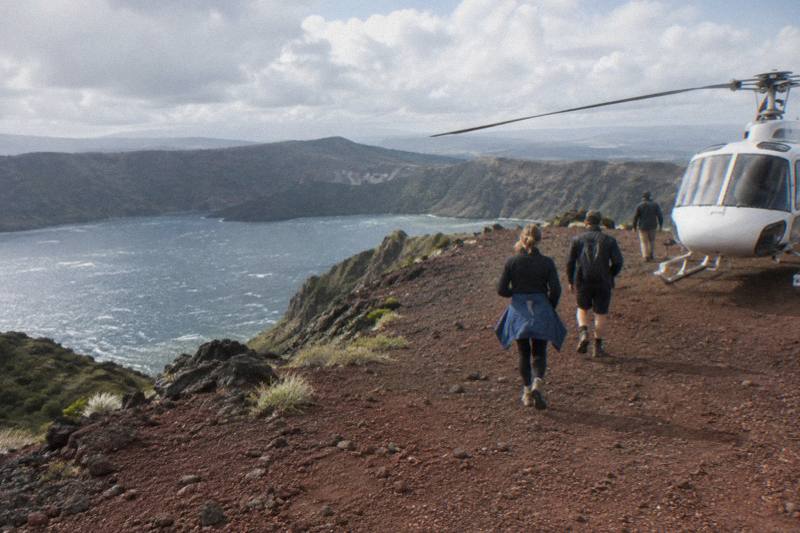
Landings are the bigger step. Mt Tarawera is privately governed maunga: the Ruawahia 2B Trust governs the mountain and reinvests most tourism concession revenue in conservation, and Volcanic Air operates as an approved concessionaire alongside Ngati Rangitihi. That concession structure is part of why a landing trip prices well above a flyover, and it is also why independent summit access is not permitted, so the flight is one of the few ways onto the mountain at all.
Aircraft type is the third lever. Helicopters cost more per hour to operate than floatplanes, and the line-up reflects it: the cheapest priced helicopter landing trip sits at NZ$675, while the priced floatplane flyover sits at NZ$395. The trade is not purely price, since helicopters land on the mountain summit itself and floatplanes land on water, a distinction that shapes what each fare buys.
There is a fourth, quieter factor worth naming: geography. Rotorua's headline sights, the Tarawera rift, the crater lakes and the Waimangu valley, all sit within a short flight of the lakefront base, so minutes in the air convert efficiently into scenery. The two hour floatplane trips that reach out toward Whakaari cost more partly because the island lies about 48 km off the coast of Whakatane, a long way from the departure pier, and distance flown is paid for like any other minute.
If the budget question is open, the trio below spans the whole range: the low-cost flyover, the mid-price volcano landing and the top-of-range dual-landing day.
For a deeper look at the specific mountain fares, the Mt Tarawera helicopter price guide breaks down that one trip family in more detail.
What The Rotorua Trips Cost, Trip By Trip
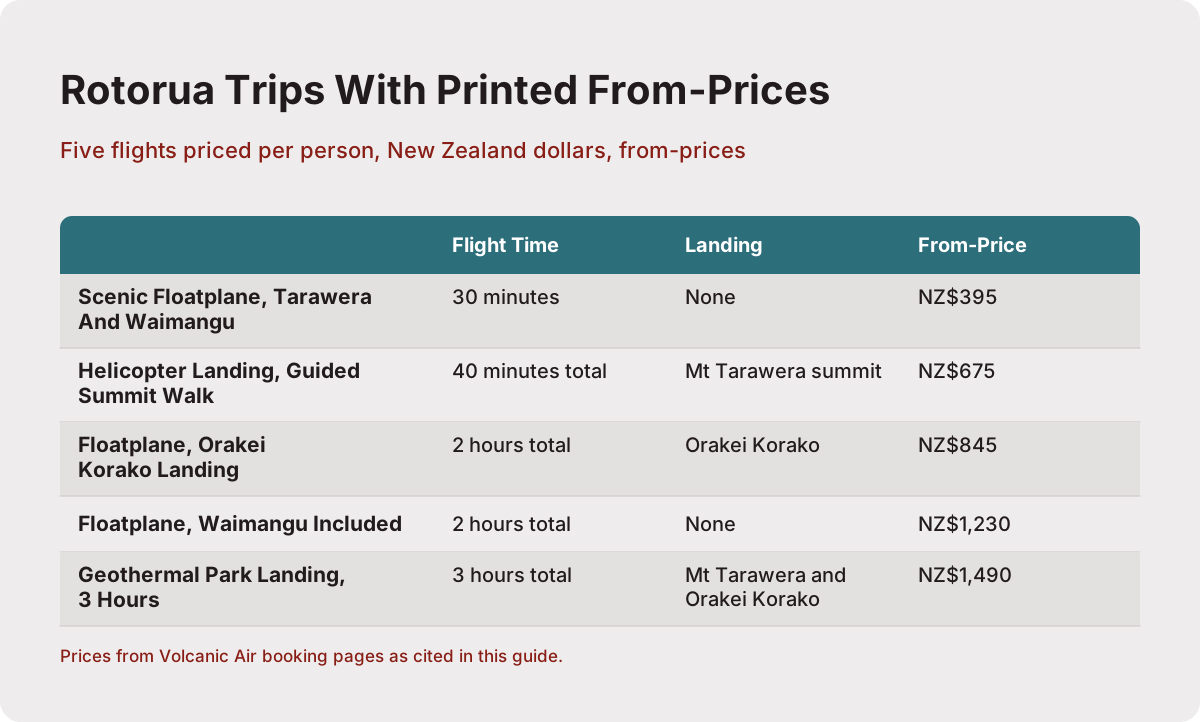
Five of the thirteen flights carry a published booking-page from-price: NZ$395, NZ$675, NZ$845, NZ$1,230 and NZ$1,490 per person. The remaining trips have no from-price, and no number should be guessed for them. The five priced trips cover a flyover, a volcano landing, a geothermal landing, a floatplane river landing and a long-range floatplane, which is enough to plan against.
The table below lists every flight with a published from-price, tied to its own trip. Amounts are New Zealand dollars per person.
| Trip | Aircraft | Flight time | Landing | From-price per person |
|---|---|---|---|---|
| Scenic Floatplane, Tarawera And Waimangu | Floatplane | 30 minutes | No landing (flyover) | NZ$395 |
| Helicopter Landing, Guided Summit Walk | Helicopter | 40 minutes total | Mt Tarawera summit | NZ$675 |
| Floatplane, Orakei Korako Landing | Floatplane | 2 hours total | Orakei Korako | NZ$845 |
| Floatplane, Waimangu Included | Floatplane | 2 hours total | No landing (flyover) | NZ$1,230 |
| Geothermal Park Landing, 3 Hours | Helicopter | 3 hours total | Mt Tarawera and Orakei Korako | NZ$1,490 |
Two of these deserve a comment. The Mt Tarawera Helicopter Tour with Volcano Landing, the mid-price helicopter option, has no from-price but carries a 4.9 rating from 43 reviews, the largest review pool of any trip on the schedule. The Geothermal Park Landing trip is the fare ceiling: a three hour helicopter day that lands on the Tarawera summit and again at Orakei Korako, where the geothermal field is reached by a short ferry ride across the lake from the visitor centre, as the park's own visit page explains.
The Floatplane, Waimangu Included trip shows why reading the landing column matters. At NZ$1,230 it prices near the helicopter landing trips but makes no landing: the fare buys a two hour airborne circuit that reaches out over Whakaari, described by the operator as New Zealand's only permanently active offshore volcano, and back across Tarawera and the Waimangu area. Length, not touching down, is what is being paid for there.
The trips without a fare are not invisible on this question; they simply need to be priced by asking. A quick way to frame the whole schedule is by what each tier of traveller is shopping for, which the table below sets out alongside the price ladder itself.
| Budget tier | What the fare buys | Trips that fit |
|---|---|---|
| Entry | A short airborne circuit, no landing | Scenic Floatplane, Tarawera And Waimangu (NZ$395); the two 15 minute crater lakes flights |
| Mid | A volcano summit landing with a guided walk | Helicopter Landing, Guided Summit Walk (NZ$675); Helicopter Volcano Landing; One-Hour Volcanic Adventure |
| Upper mid | A geothermal landing or a long-range flyover | Floatplane, Orakei Korako Landing (NZ$845); Floatplane, Waimangu Included (NZ$1,230) |
| Top | A half day combining both landing types | Geothermal Park Landing, 3 Hours (NZ$1,490); Dual Landing Thermal Explorer |
Full trip details for the three headline options, including live dates, sit on the Geothermal Park Landing helicopter tour page, with Geothermal Park Landing, 3 Hours beside it if the dates matter to the decision.
Is the budget question settled enough to hold a seat?
Every priced trip on the schedule carries free cancellation up to 24 hours before departure, so a tentative date costs nothing to lock in and nothing to release.
Why A Summit Landing Costs More Than A Flyover
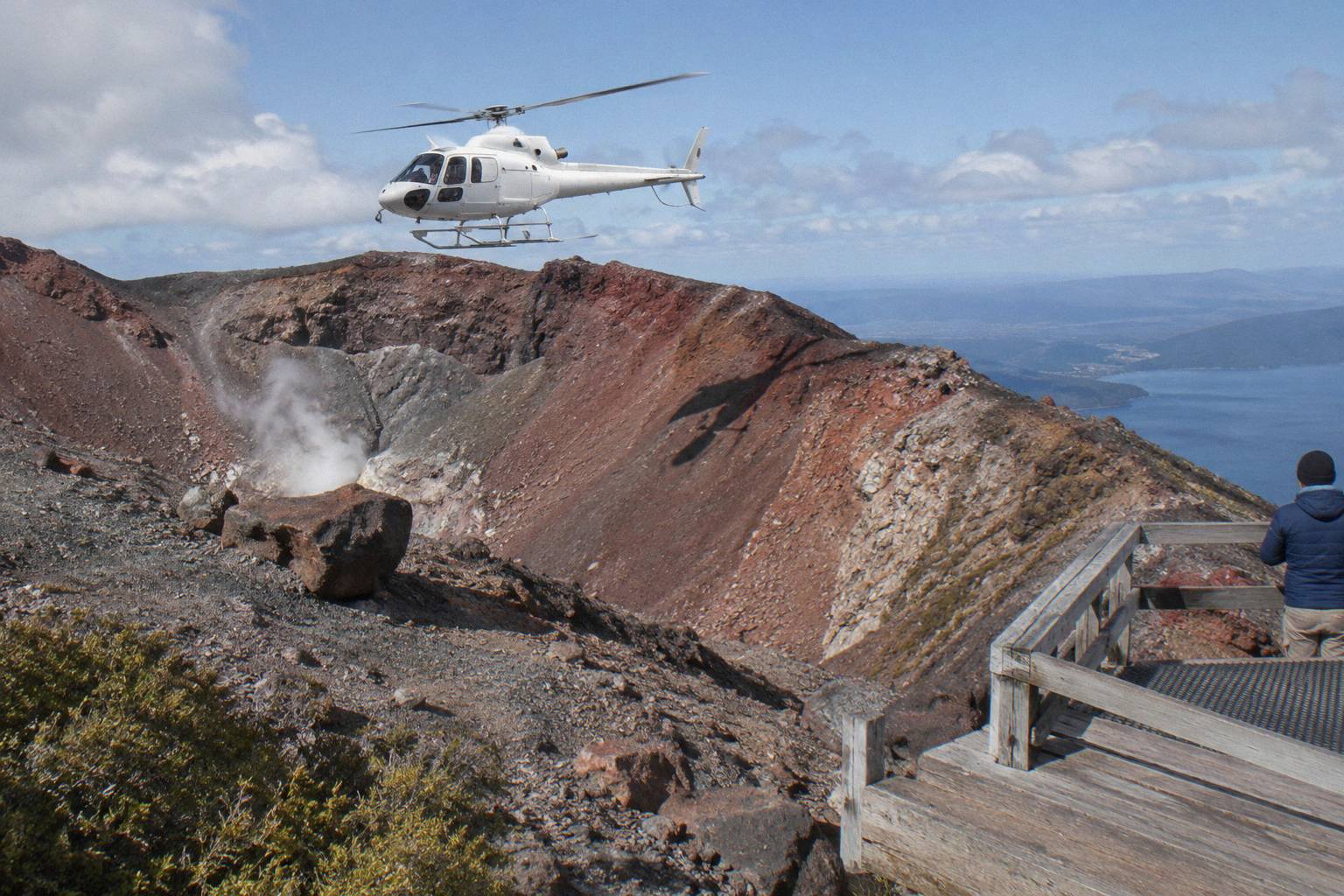
A Mt Tarawera summit landing is the largest price step on the schedule because it stacks three costs a flyover avoids: a longer positioning flight, the mountain concession, and ground time for the guided walk. The Helicopter Landing, Guided Summit Walk trip, from NZ$675 per person for 40 minutes total, sits well above the NZ$395 flyover for exactly this reason. The landing is at the pilot's sole discretion, so the fare buys the attempt.
The operator's own Tarawera landing page is explicit on both points: the flight covers the 8 km of rift across the mountain top and lands on the summit for a 15 minute guided walk, and excursion landings are undertaken at the passenger's own risk, at the pilot's sole discretion, with duration and inclusions varying with weather, volcanic activity and loadings. Paying for a landing trip means paying for the whole apparatus that makes a legal, safe summit visit possible.
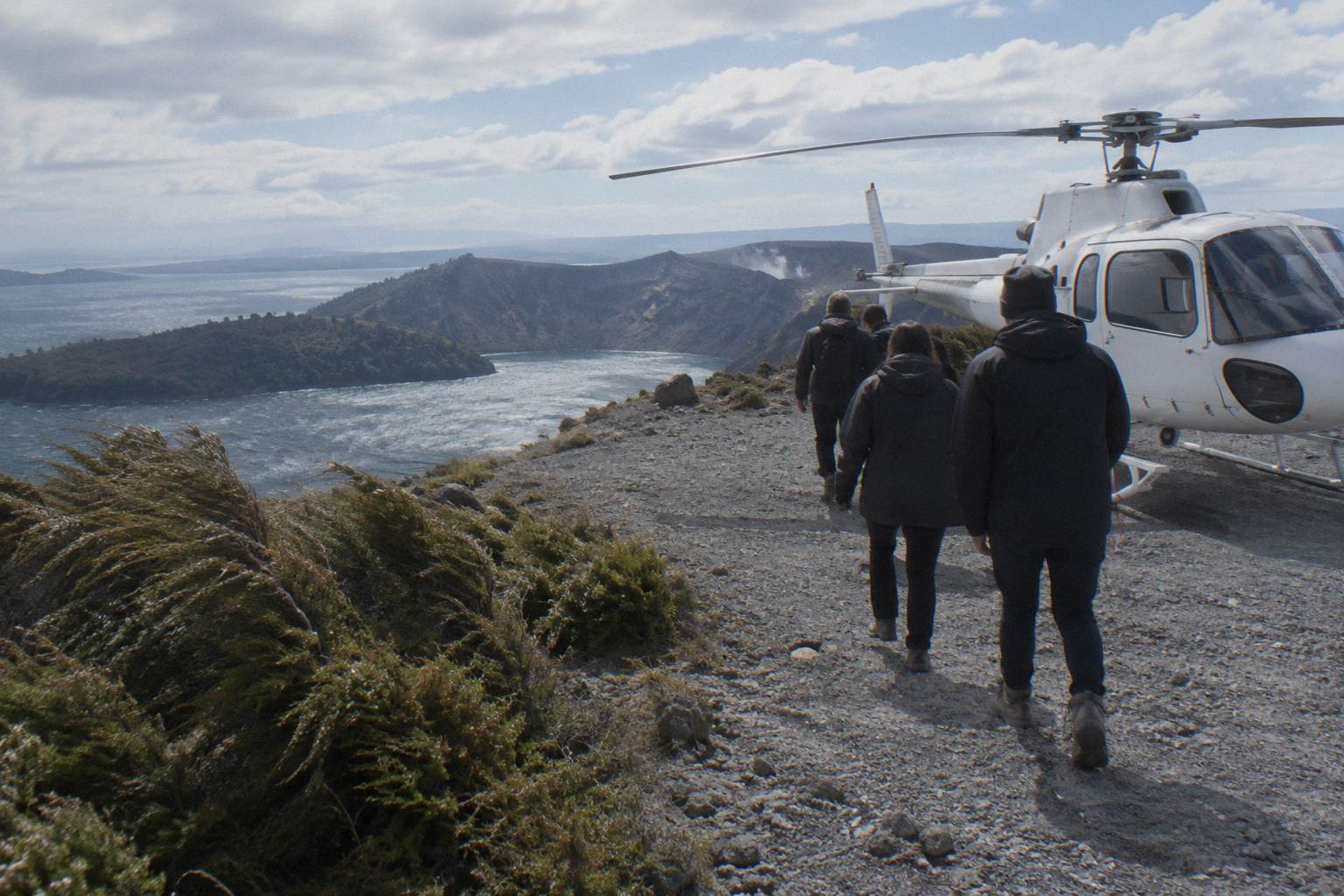
Against that, the flyover options deliver the same rift and crater views with none of the ground infrastructure, and the floatplane Tarawera and Waimangu trip is specifically a flyover, not a mountain landing. For a reader weighing the two, the comparison is between 30 airborne minutes at the NZ$395 flyover price and a 40 minute total experience including a summit walk at the NZ$675 landing price. Whether the walk on the mountain is worth the difference is the whole decision, and the cost of a summit visit by any other route is not zero either, since independent access is not permitted and guided ground alternatives carry their own fares.
There is a third way to buy the summit. The Helicopter Landing, Guided Summit Walk trip is the entry landing option, while the Mount Tarawera Volcanic Adventure by Helicopter stretches to an hour of flying with the same summit landing. Neither the One-Hour Volcanic Adventure nor the dual-landing trips carry a published from-price, so the NZ$675 entry point is the anchor to plan around.
The mountain itself explains part of the premium in a way no price table can. The summit stands 1,111 m above sea level, the highest of three lava domes, and the 1886 eruption tore a 17 km rift across the mountain top and down through Lake Rotomahana into the Waimangu area, in the GNS summary of the event. That landscape is what the concession, the positioning flight and the guided walk all exist to put a traveller on top of, and it exists nowhere else in the country.
How The Floatplane Options Compare On Price
The priced floatplanes split cleanly into two tiers: the NZ$395 short flyover and the NZ$845 to NZ$1,230 two hour trips. The gap is flight minutes and distance, not luxury. The Orakei Korako landing trip at NZ$845 buys a river landing and a geothermal walk, while the NZ$1,230 Waimangu Included trip buys distance instead, flying out toward Whakaari with no landing at all.
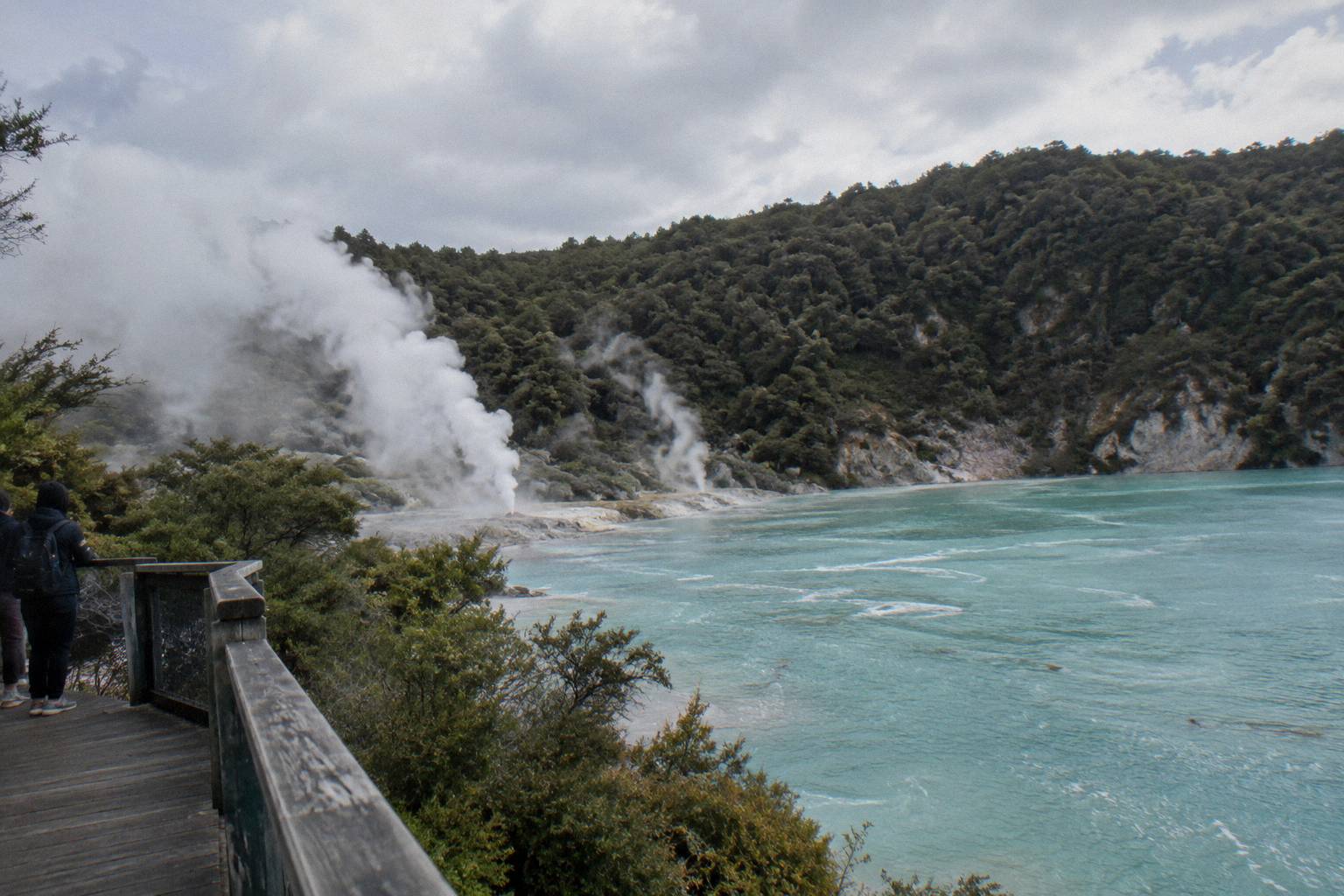
The Floatplane, Orakei Korako Landing trip is the clearest value case among the two hour options. From NZ$845 per person, the pilot touches down on the Waikato River, and the Hidden Valley geothermal field at Orakei Korako is only reachable by boat from the visitor centre side, so the flight itself delivers the access. The park claims up to 23 active geysers and a cave over 36 m deep, in the operator's own wording. The rest of the planning pages sit on Rotorua Helicopter Tours.
The Dual Landing Thermal Explorer is the helicopter equivalent of the same idea, pairing the Tarawera summit with Orakei Korako in one trip, though it carries no from-price. Between the two, the aircraft choice decides whether the geothermal leg begins from a mountain summit or from a river landing.
For readers simply wanting the cheapest possible seat in the air over volcanic country, the short flyover is the floor of the whole schedule, and it is the trip featured alongside the landing trips. The cheapest helicopter-only alternative, the 15 minute Crater Lakes Flight by Helicopter, carries no from-price, so no figure is offered for it here.
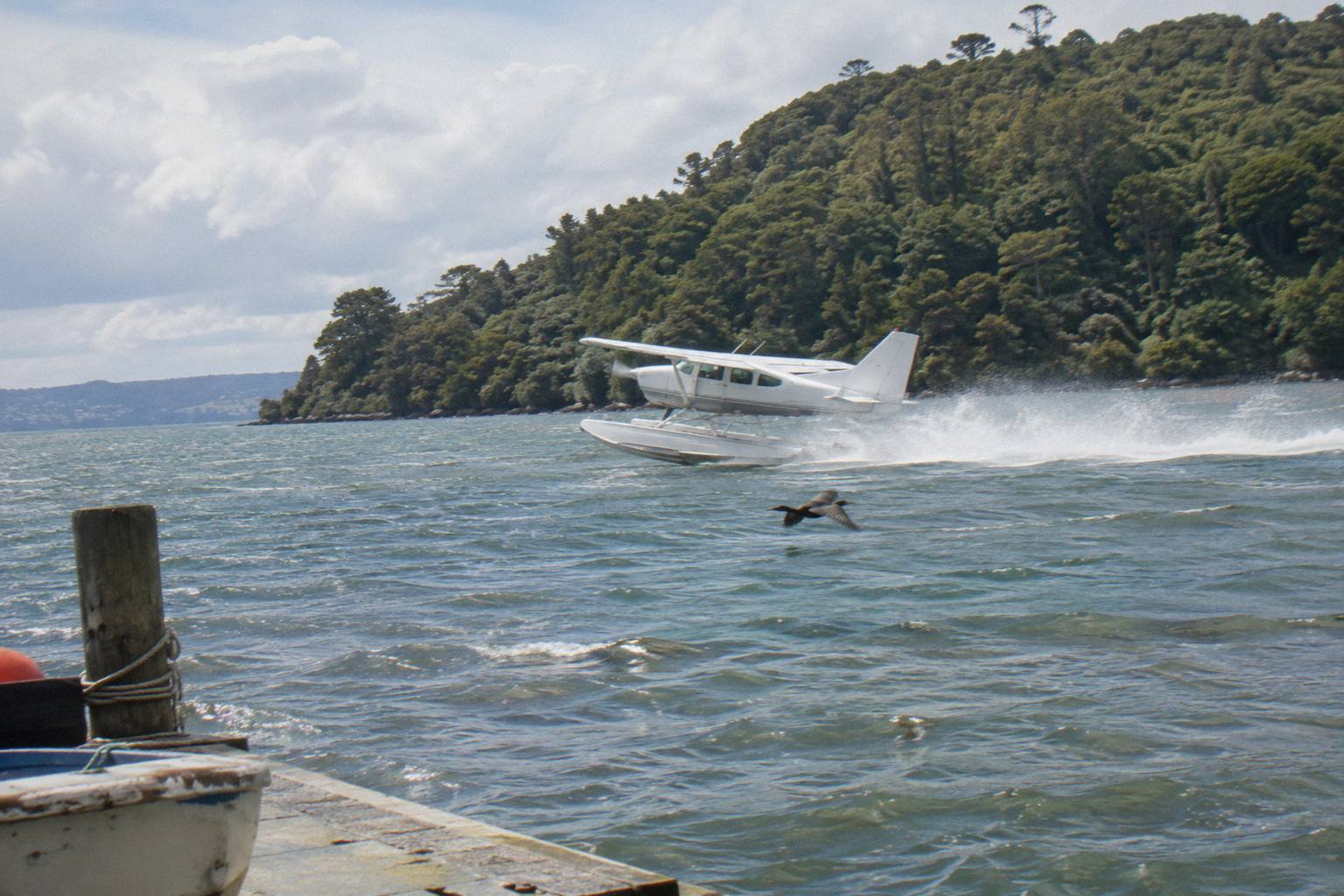
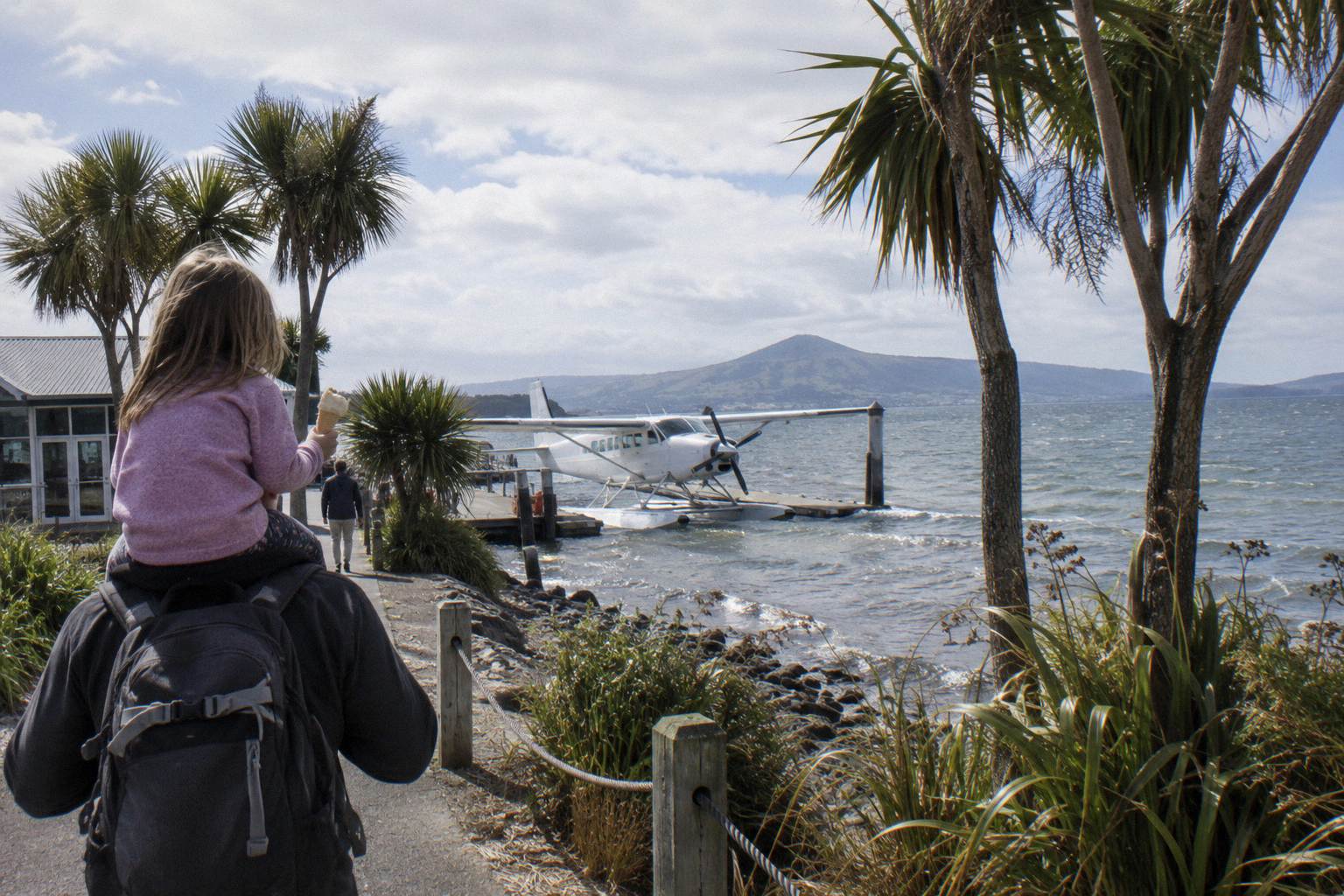
One structural point helps the floatplane case further: the water take-off and landing are part of the experience rather than a compromise. Floatplanes depart from the lakefront pier and lift off from Lake Rotorua itself, and on the Orakei Korako trip they touch down on the Waikato River before the return leg over farmland and the Paeroa Range, in the operator's description. A traveller comparing fares should weigh what each departure feels like as part of the product, not treat the two aircraft as interchangeable seats with different stickers.
The full field of flying options, including the trips with no fare, is laid out in the guide to Rotorua helicopter versus floatplane choices, which weighs the aircraft question on its own merits rather than on price alone.
What Is And Is Not Included In The Fare
The from-price covers the flight itself, the safety briefing and, on landing trips, the guided ground component. It does not cover hotel transport, food, or weight surcharges: declared weights are checked on arrival, a passenger over 110 kg may attract a surcharge at the operator's sole discretion, and over 135 kg as weighed requires two adult fares. Children under 2 fly on a lap, and ages 2 to 11 pay child rates.
The transport point catches people out. Hotel pickup is not part of standard flights, and direct pick-ups are offered only for bespoke charters, so every fare assumes the traveller reaches the Lakefront office at 1 Lakefront Drive. Check-in is 30 minutes before departure for helicopters and 20 minutes for floatplanes, time that needs budgeting alongside the money. The base sits under 1 km from the Rotorua city centre, so most visitors walk it.
Weight is the one surcharge with published thresholds. The operator asks for individual weights at booking to keep the aircraft within balance limits, and the terms are direct: any deviation from the declared weight may result in rescheduling, a surcharge or cancellation of the booking, at the operator's sole discretion. Declaring accurately at booking is the cheapest move available.
What to bring costs nothing: camera, sunglasses, a jacket, and closed-toe comfortable footwear on flights with landings. The full packing logic, including the clothing question, is covered in what to wear on a helicopter flight.
| Extra cost or inclusion | Applies to | Detail |
|---|---|---|
| Check-in time | All flights | 30 minutes prior, helicopters; 20 minutes prior, floatplanes |
| Weight surcharge | Over 110 kg as weighed | At the operator's sole discretion |
| Second seat | Over 135 kg as weighed | Requires two adult fares |
| Child rates | Ages 2 to 11 | Under 2 on a guardian's lap |
| Hotel pickup | Not included | Bespoke charters only |
| Cancellation | Priced trips | Free up to 24 hours before departure |
Cancellation deserves its own sentence because it is a money question. Every priced trip carries free cancellation up to 24 hours before departure on its booking terms, and if the operator cancels for weather or volcanic activity before commencement, the terms provide a full refund or a reschedule. The operator's FAQ states it plainly: if a flight cannot go ahead due to weather, they will work to reschedule or provide a full refund.
When To Book And How Weather Affects What You Pay
Booking timing does not change the from-price, but weather changes whether the flight happens at all, and the free 24 hour cancellation window on every priced trip is the practical protection. The operator flies all year during daylight hours, the driest stretch in Rotorua runs from October to April, and mornings tend to give the calmest conditions. A missed flight for weather costs nothing beyond the day, since rescheduling or a full refund follows.
The seasonal picture supports booking ahead in the dry months. Rotorua's monthly rainfall normals from NIWA data put July as the wettest month at 137.4 mm and November as the driest at 86.8 mm, a meaningful spread for a sightseeing flight that does not go ahead if the views cannot be seen. The regional tourism body's own note is that the driest and warmest weather runs from late spring in October to early autumn in April.
Within any day, the operator's FAQ advises there is no hard and fast best time: mornings often give the calmest weather and smoothest flying with soft photo light, while afternoons can bring warmer temperatures and late day colour, especially in winter. For a reader holding a booking and watching a forecast, the FAQ and terms pages are the primary references on weather handling and refunds.
The month by month rainfall pattern also hints at which fares are safest to book far ahead and which are better held close to the date. The table below groups the calendar into booking-planning bands drawn from the rainfall normals, a planning range rather than an operator promise.
| Season | Months | Rainfall pattern (1991-2020 normals) | Booking angle |
|---|---|---|---|
| Late spring to early autumn | October to April | Driest stretch; October 92.9 mm and November 86.8 mm are among the lowest | Book early; dates fill in peak season |
| Shoulder | September, May | Mid-range; September 106.6 mm, May 130.2 mm | Good value windows with fewer travellers |
| Winter | June to August | Wettest; July 137.4 mm is the peak | Hold flexibly; expect possible reschedules |
The booking-side mechanics, including how far ahead to reserve, are covered in how far in advance to book a Rotorua helicopter flight, and the weather question in full sits in the Rotorua helicopter weather guide.
The cheapest seat on the schedule also happens to be one of the most reviewed, which makes it a sensible first booking for a price-conscious traveller.
Mistakes That Cost People Money On NZ Helicopter Flights
The costly mistakes are consistent: comparing trips by total duration instead of flight minutes, assuming a landing is guaranteed, under-declaring weight, skipping the ferry detail at Orakei Korako, and booking a flyover when a landing was the actual goal. Each one either wastes the fare or triggers a surcharge. Reading the landing column and the weight rules before paying prevents nearly all of them.
Duration is the trap that most often misleads. A trip labelled three hours includes ground time, check-in excluded entirely, while its flight minutes may be closer to an hour. The fare follows the whole package, but the experience being judged should follow the airborne minutes and the landing column, both listed per trip above.
The landing assumption is the second. The operator's wording is unambiguous: excursion landings are at the pilot's sole discretion and undertaken at the passenger's own risk, with duration and inclusions varying with weather, volcanic activity and loadings. A booking made expecting a guaranteed summit touchdown is a booking made on the wrong premise; the flight, the rift views and the attempt are what is purchased.
Weight and timing are the avoidable ones. Declare accurately at booking, arrive at the Lakefront with the full 30 or 20 minute check-in margin, and remember no hotel pickup exists on standard flights. Finally, match the trip to the goal: a reader who wants to stand on a volcano should not buy the NZ$395 flyover, and a reader who only wants the view should not pay for a landing. The bands below frame that final choice at every price level.
Common Questions About Helicopter Flight Prices
How Much Does A Helicopter Ride Cost In New Zealand?
Only the Rotorua trips can be priced with verifiable figures: from NZ$395 per person for a 30 minute floatplane flyover, from NZ$675 for a 40 minute helicopter landing on Mt Tarawera, and from NZ$1,490 for a three hour helicopter trip with two landings. All amounts are New Zealand dollars per person.
Why Do Landing Trips Cost More Than Flyovers?
A landing adds flight time to position the aircraft, a mountain concession on Tarawera, and ground time for the guided walk. A flyover covers the same scenery with none of that, which is why the priced flyover and the priced landing trip sit well apart for broadly the same views.
Are Floatplane Flights Cheaper Than Helicopter Flights?
On comparable routes, yes. The priced floatplane flyover is from NZ$395 and the two hour floatplane trips run from NZ$845 to NZ$1,230, while the cheapest priced helicopter landing trip is from NZ$675. Helicopters land on the mountain summit itself, where floatplanes land on water.
Can A Weight Surcharge Change The Price?
Yes. Passengers over 110 kg as weighed may attract a surcharge at the operator's sole discretion, and over 135 kg as weighed requires two adult fares. Weights declared at booking are checked on arrival, so declaring accurately avoids rescheduling or cancellation.
Do Children Pay Full Price?
Child rates apply for ages 2 to 11, and children under 2 sit on a parent or guardian's lap. On the Mt Tarawera landing flight, children aged 2 to 11 pay 75 percent of the adult fare, with a minimum of two adult fares per booking.
What Happens To The Money If Weather Cancels The Flight?
If the operator cancels before the flight for weather or volcanic activity, the terms provide a full refund, and the FAQ says the operator will work to reschedule or refund in full. Guest cancellations on the priced trips are free up to 24 hours before departure.