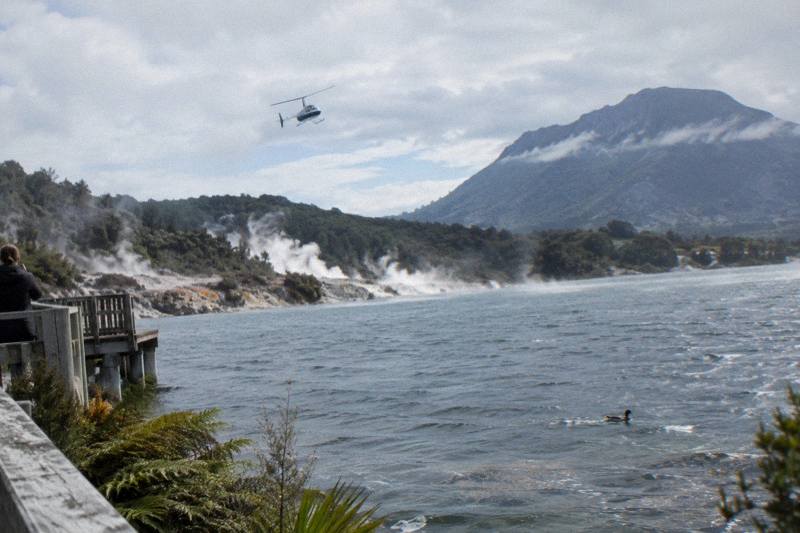
Do Rotorua Helicopter Flights Land At The Geothermal Parks?
Which Rotorua flights actually land at Orakei Korako and Mt Tarawera, which parks are flyover only, and what the landing terms say before you book.
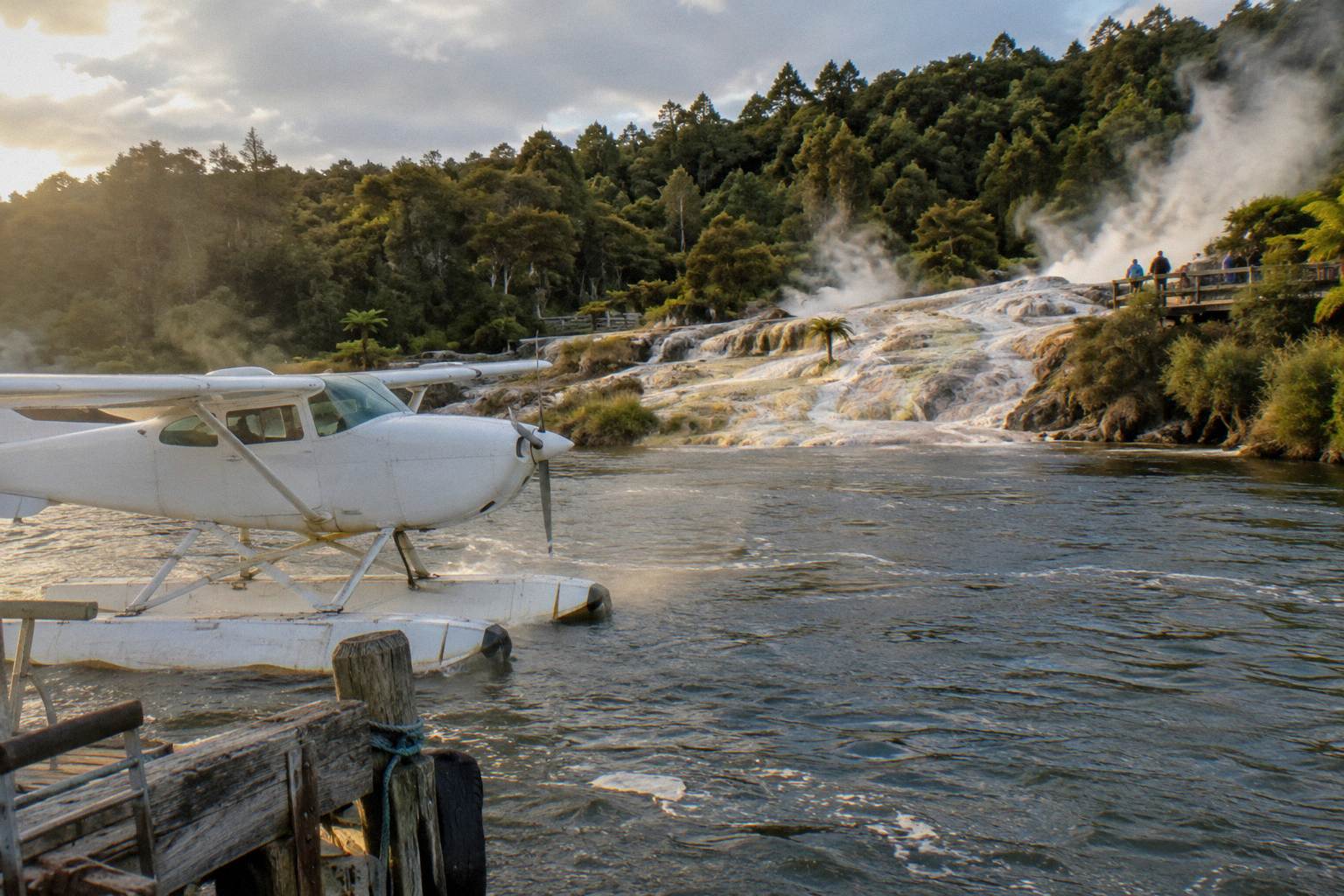
Yes, some do. The landings on offer from Rotorua are Mt Tarawera summit landings, an Orakei Korako stop reached by floatplane on the Waikato River or by helicopter on a dual-landing or three-hour geothermal park itinerary, and nothing at Hell's Gate or Waimangu, which appear on itineraries as flyovers only. Every landing sits with the pilot's sole discretion and the conditions on the day, so no landing on any of these flights is a promise.
In short: Three kinds of landing exist on the Rotorua roster. Helicopters land on the summit of Mt Tarawera, a volcano rather than a park. Floatplanes land on the Waikato River and transfer into Orakei Korako, and two helicopter itineraries add an Orakei Korako stop. Waimangu Volcanic Valley is crossed in the air, never landed in. Hell's Gate does not appear on the roster at all. All amounts in this article are New Zealand dollars.
For the wider picture of scenic flights around the city, see the Rotorua scenic flights overview.
Quick Facts
These quick facts distill everything you need before your trip: how to get there, the best time to visit, typical costs, and how long to stay. Use them as a fast reference to plan your itinerary, budget your days, and decide which highlights deserve the most time. They are drawn from the same guidance found throughout this article.
| Question | Answer |
|---|---|
| Which parks can a flight land at? | Orakei Korako, by floatplane or helicopter |
| Which volcano can a flight land on? | Mt Tarawera summit, by helicopter |
| Does any flight land at Waimangu? | No, Waimangu is a flyover on floatplane routes |
| Is there a Hell's Gate landing? | No Hell's Gate product exists on the roster |
| Where do flights depart from? | Volcanic Air, Lakefront, 1 Lakefront Drive, Rotorua |
| Check-in | Helicopters 30 minutes prior, floatplanes 20 minutes prior |
| Can a landing be called off? | Yes, landings are at the pilot's sole discretion |
Do Rotorua Helicopter Flights Land At The Geothermal Parks?
The direct answer is that landings happen at Orakei Korako and on Mt Tarawera itself, and nowhere else on the current roster. Orakei Korako is the geothermal park with a landing product, reached by floatplane touching down on the Waikato River or by helicopter on two multi-stop itineraries. Waimangu Volcanic Valley appears on routes as scenery from the air. Hell's Gate, Rotorua's other famous geothermal attraction, has no landing flight at all.
The distinction matters because the words "geothermal" and "volcanic" get used loosely in Rotorua marketing. Mt Tarawera is a volcano, the mountain that erupted on the night of 10 June 1886, and the helicopter landing there puts you on a cratered summit rather than inside a fenced park. Orakei Korako is a geothermal field on the Waikato River at Lake Ohakuri, between Taupo and Rotorua, and it is the one park where a flight genuinely sets you down and walks you in.
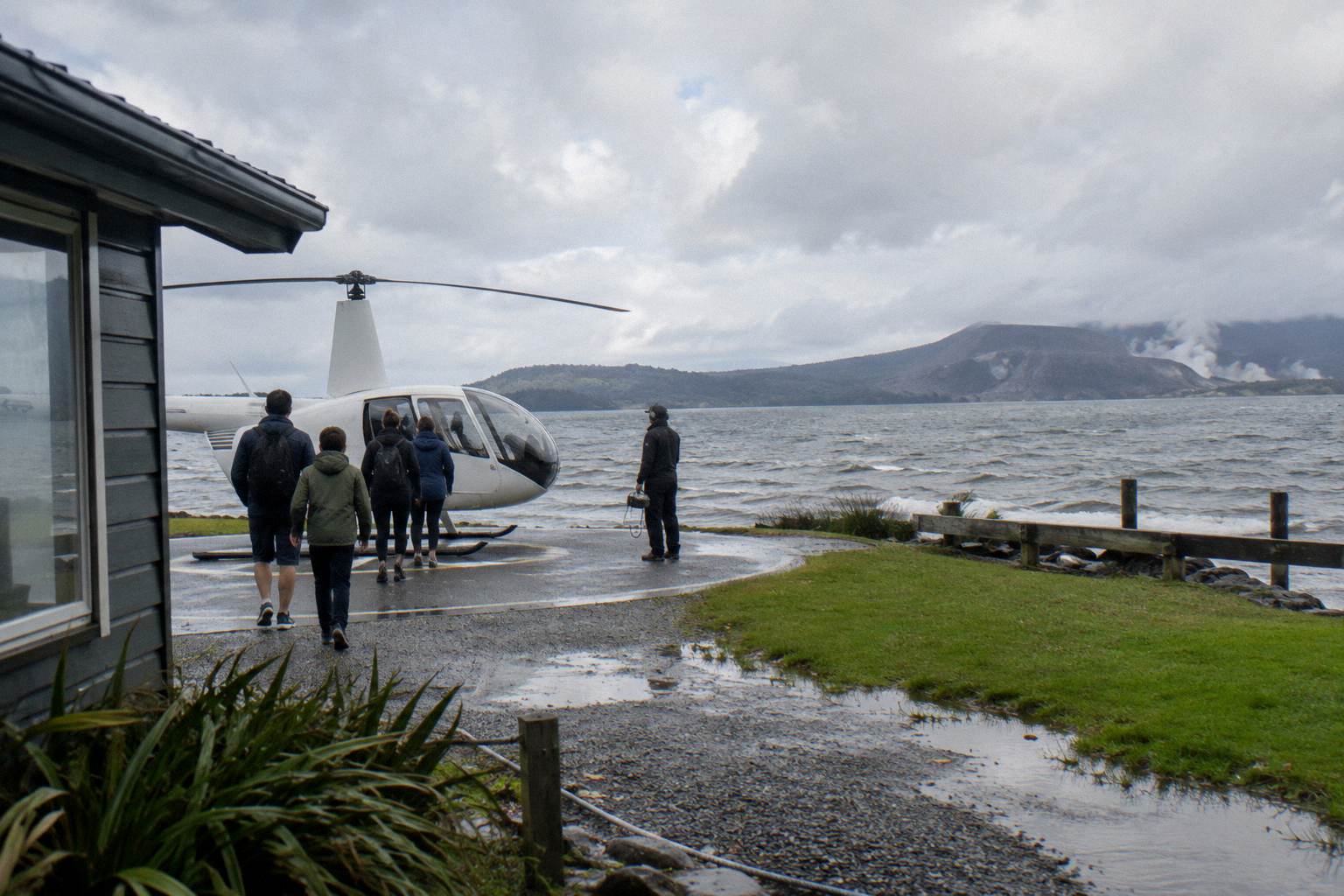
Every flight on the roster departs from the same place: the Volcanic Air base at 1 Lakefront Drive, on the Rotorua lakefront, under a kilometre from the town centre. Helicopters check in 30 minutes before departure and floatplanes 20 minutes, with a full safety briefing at the office before anyone walks to the aircraft. Hotel pickup is not part of standard flights; the operator offers direct pick-ups only for bespoke charters.
The three flights below cover the landing options at different price points and formats: a floatplane river landing, a dual-landing helicopter itinerary, and a three-hour helicopter version with the widest scope.
Which Flights Touch Down, And Where Exactly?
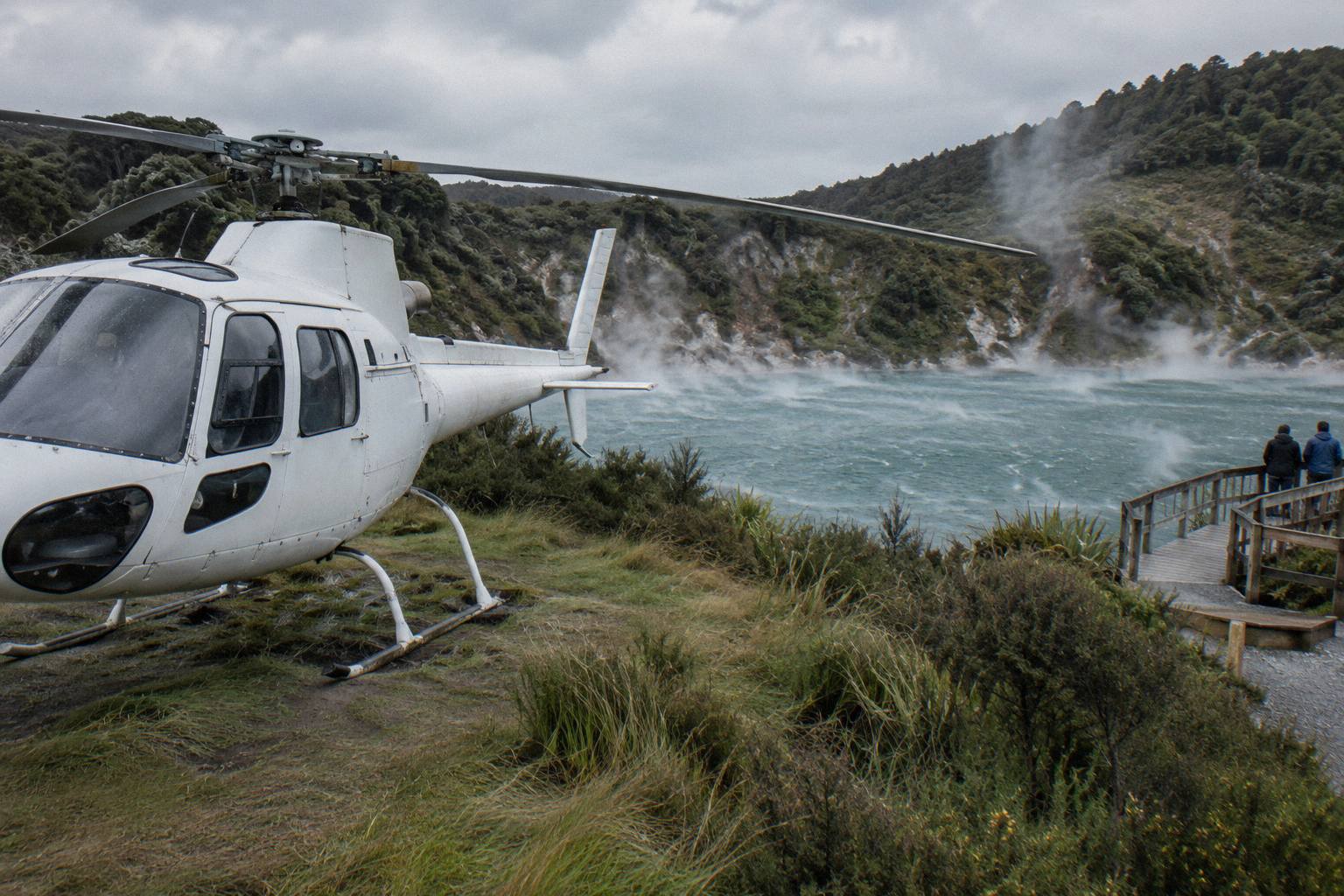
Four options cover the spread: two floatplane and helicopter flights with an Orakei Korako landing, plus two volcano tours that touch down on Mount Tarawera itself. The Orakei Korako floatplane trip runs about two hours with a Waikato River touchdown, the Thermal Explorer dual landing pairs both stops by helicopter, and the Volcano Landing and Geothermal Park tour is the long version at three hours total, from NZ$1,490 per person.
Here is the full landing picture across the roster, so nothing gets confused by similar-sounding product names. All prices are from-prices per person, tied to each flight.
| Flight | Aircraft | Landing | Total time | Price |
|---|---|---|---|---|
| Floatplane, Orakei Korako Landing | Floatplane | Orakei Korako, Waikato River | 2 hours | from NZ$845 |
| Dual Landing Thermal Explorer | Helicopter | Mt Tarawera and Orakei Korako | Varies | No printed from-price |
| Geothermal Park Landing, 3 Hours | Helicopter | Mt Tarawera summit and Orakei Korako | 3 hours | from NZ$1,490 |
| Helicopter Volcano Landing | Helicopter | Mt Tarawera summit | Varies | No printed from-price |
| Helicopter Landing, Guided Summit Walk | Helicopter | Mt Tarawera summit | 40 minutes | from NZ$675 |
| Floatplane, Waimangu Included | Floatplane | None, flyover only | 2 hours | from NZ$1,230 |
The "Mt Tarawera Helicopter Tour with Volcano Landing" carries a 4.9 rating from 43 reviews, the largest review pool among the landing flights, and the short "Scenic Floatplane, Tarawera And Waimangu" flyover holds 4.9 from 28 reviews. Several other flights on the roster have review pools too small to treat a number as meaningful, so no rating is quoted for them here.
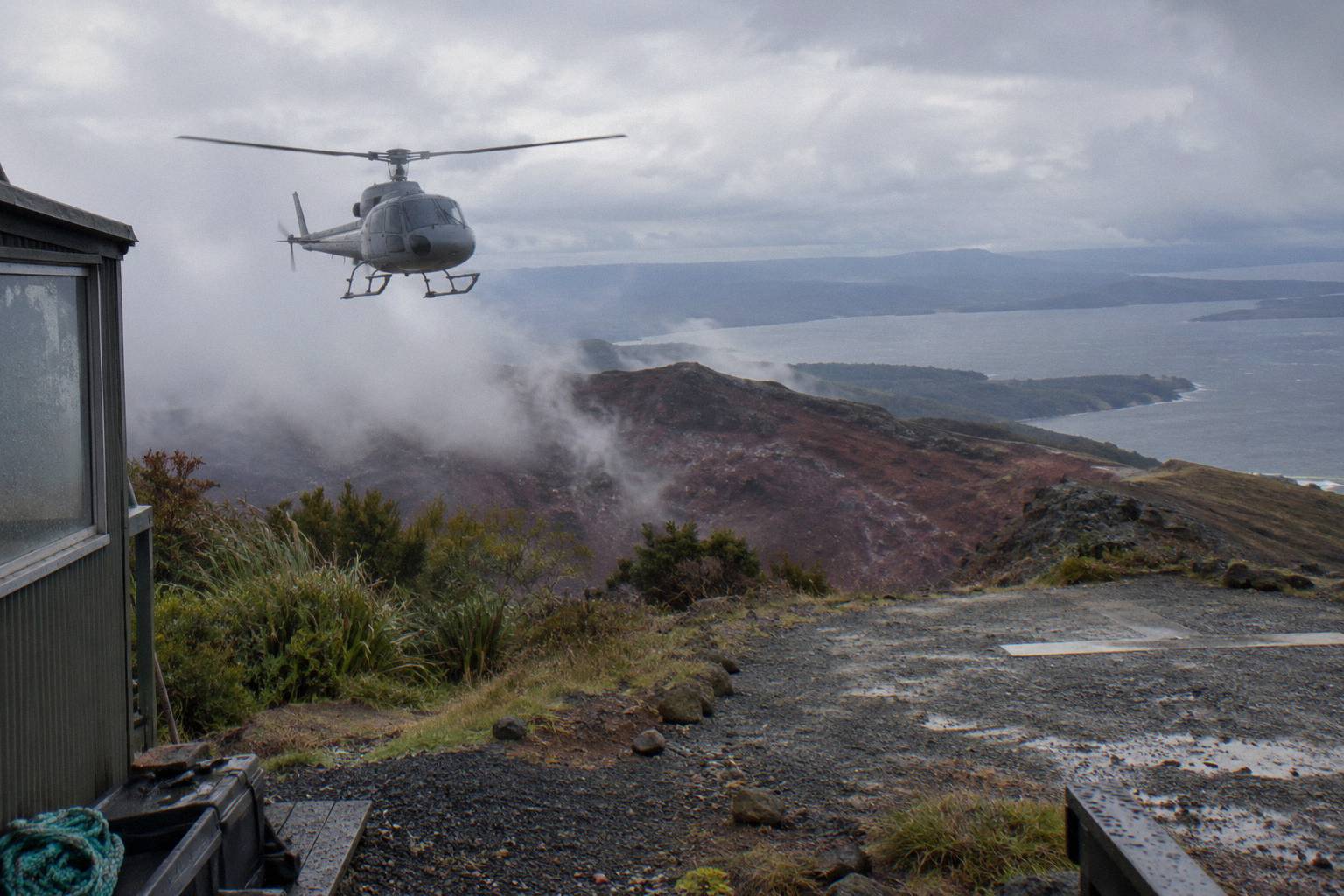
The dual-landing itinerary is the one that answers the question in this article's title most directly: one booking, a Tarawera summit landing and an Orakei Korako stop, both by helicopter. The operator's own landing wording for Tarawera flights is explicit that "tour duration, flight times and inclusions may vary due to weather conditions, volcanic activity and passenger loadings" and that "excursion landings are undertaken at your own risk and such landings are at your pilot's sole discretion", per the operator's Tarawera landing page.
What The Orakei Korako Landing Actually Involves?
The floatplane version touches down on the Waikato River, and from there the park is reached by boat. Orakei Korako's own visitor page says the geothermal field "is only accessible by boat, a short ferry ride across the lake from the Visitor Centre to the geothermal field", with boats leaving on request rather than to a timetable. The operator's flight wording describes the touchdown plainly: "Your pilot will touch down on the winding Waikato River."
That river landing is the structural reason Orakei Korako works as a fly-in destination at all. The field sits at Lake Ohakuri on the Waikato, roughly a 45 minute drive from Rotorua by road, which is why the aerial route saves most of a day compared with driving there and back. The park describes itself as lying in the Taupo Volcanic Zone between Taupo and Rotorua, and its visitor operations are documented on the official Orakei Korako visit page.
The park's own claims, which are worth repeating as operator wording rather than independent measurement, run to up to 23 active geysers and Ruatapu Cave, over 36 m deep, leading down to the "Pool of Mirrors". What a visitor sees on any given day depends on geothermal activity, weather and how the walk is timed, so treat those numbers as the park's ceiling, not a checklist.
The helicopter dual-landing and three-hour itineraries reach the same park by air and land nearby rather than on the river itself, then pick up the same boat-access field. The three-hour "Geothermal Park Landing" flight wraps a Tarawera summit landing and the Orakei Korako stop into one itinerary, from NZ$1,490 per person, with free cancellation up to 24 hours in advance per the booking-page terms. For a deeper look at that specific park pairing, the Orakei Korako helicopter guide works through the decision in full.
The floatplane alternative, "Rotorua: Floatplane Flight with Orakei Korako Landing", runs about two hours total at from NZ$845 per person. Its return leg, per the operator's route wording, crosses farmland and the Paeroa Range, which gives the flight a different character from the helicopter versions even though the park stop is the same.
Is Waimangu A Flyover Only?
Yes. Waimangu Volcanic Valley appears on the roster as air scenery, not as a landing. The "Rotorua: White Island, Mount Tarawera & Waimangu Volcanic Valley Floatplane Flight" crosses the valley in the air, and its listing states no landing. No helicopter or floatplane product on the roster lands inside Waimangu, so anyone wanting to walk it needs to visit by road separately.
That is not a limitation of the flying so much as a fact of the valley's geography. Waimangu sits at 587 Waimangu Road, about 14 km south of Rotorua on SH5 and then 6 km along Waimangu Road, roughly 25 minutes from the city centre by car, per the valley's own getting-here page. Its geothermal system dates to the 1886 Tarawera eruption, which opened the rift that GNS Science describes as 17 km long, running across the mountain top, through Lake Rotomahana and into the Waimangu Valley area.
From the air, the 1886 story is unusually readable. The rift line, the lakes it created or enlarged, and the valley it opened all sit in one view, which is why the Tarawera and Waimangu flyover routes hang together as a single product. The short scenic floatplane version, "Rotorua: Scenic Flight over Mt Tarawera & Waimangu Valley", is 30 minutes in the air and 40 minutes total, from NZ$395 per person, rated 4.9 from 28 reviews. For background on what the eruption left behind, the 1886 eruption seen from above guide maps the route against the history.
If walking Waimangu matters to you, the practical answer is to fly the volcano route first and drive the valley another morning, or reverse the order. Trying to compress both into one day is possible on paper but leaves the valley walk rushed. Everything else covered here is indexed on Rotorua Helicopter Tours.
What About Hell's Gate And The Other Geothermal Sights?
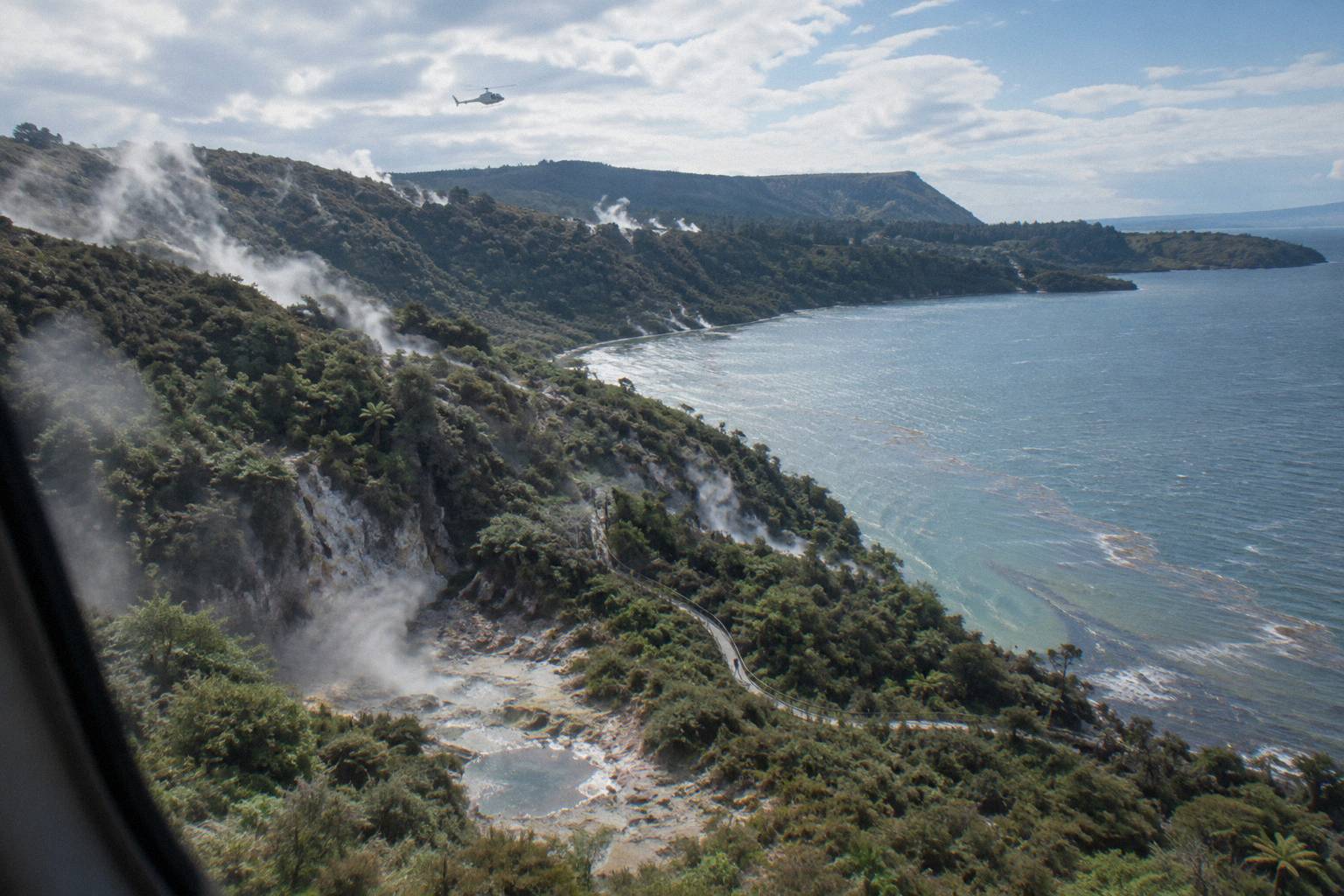
Hell's Gate has no landing product on the roster at all; it is not a stop, a landing or an overfly waypoint on any listed flight. Whakaari / White Island, the one genuinely active volcano in the picture, is flyover only because landings have been suspended there, and the crater lakes flights carry no landings of any kind. The geothermal landing menu is therefore short: Tarawera and Orakei Korako, and that is the whole of it.
The Whakaari point deserves precision. New Zealand's official travel information states plainly that "there are currently no boat tours to, or helicopter flights that land on the island", per newzealand.com's Whakaari page. Flights from Rotorua over the island do operate, and the roster carries both a floatplane and a long helicopter version, but they are scenic flights, not landings. Volcanic status there changes, and GeoNet publishes the live Whakaari volcanic status rather than any page like this one carrying it as a fixed fact.
The remaining geothermal-adjacent sights around Rotorua, Sulphur Bay, Mokoia Island and the crater lakes, all appear as air scenery. The 15-minute crater lakes flights, by helicopter or floatplane, have no landing at all; they climb around Mokoia Island, described by the operator as a native bird sanctuary, and circuit lakes including Tikitapu (Blue Lake), Rotokakahi (Green Lake), Okareka and Okataina.
How Much Do The Landing Flights Cost?
The cheapest way into the air over the geothermal landscape is the 30-minute Tarawera and Waimangu scenic floatplane at from NZ$395 per person. The cheapest landing is the Tarawera guided summit walk flight at from NZ$675 per person for 40 minutes total. The Orakei Korako floatplane landing starts at NZ$845, the Waimangu-including floatplane at NZ$1,230, and the three-hour dual-stop helicopter itinerary at NZ$1,490.
Price in this market tracks three things: aircraft type, total duration and the number of landings. Helicopters cost more per minute than floatplanes but land on the mountain; floatplanes land on water, which is exactly what the Orakei Korako river stop needs. Duration is total time including briefings and ground stops, not wheels-off time, so the three-hour figure on the geothermal park flight includes the summit walk and the park stop rather than three hours in the air.
| Flight | What drives the price | From-price |
|---|---|---|
| Scenic Floatplane, Tarawera And Waimangu | Shortest flight, no landing | NZ$395 |
| Helicopter Landing, Guided Summit Walk | Helicopter plus summit landing | NZ$675 |
| Floatplane, Orakei Korako Landing | Floatplane plus park stop | NZ$845 |
| Floatplane, Waimangu Included | Longer floatplane route, no landing | NZ$1,230 |
| Geothermal Park Landing, 3 Hours | Helicopter, two stops, longest itinerary | NZ$1,490 |
Every flight listed carries the booking-page free-cancellation terms: cancel up to 24 hours in advance for a full refund. That is the term that matters to a reader comparing options, and it is worth holding onto the booking confirmation so the window is easy to find if plans move.
Where a flight has no printed from-price, none is quoted here, and where a review pool is small the rating is left off rather than dressed up. The "Mt Tarawera Helicopter Tour with Volcano Landing" at 4.9 from 43 reviews is the one landing flight whose rating reflects a substantial pool.
What The Landing Terms Actually Say
Landings are conditional, and the operator's terms say so in plain words: excursions are undertaken at the passenger's own risk and at the pilot's sole discretion, with duration and inclusions varying for weather, volcanic activity and passenger loading. Weather cancellation by the operator brings a full refund or a reschedule. Passenger weights must be declared at booking, and passengers are weighed on arrival.
The weight rules are the ones that surprise people. A declared weight that turns out to be off can mean a rescheduled flight, a surcharge or a cancelled booking at the operator's sole discretion. Over 110 kg a surcharge may apply, and over 135 kg as weighed requires two adult fares. None of this is a judgement about anyone; it is aircraft balance, and the operator's terms page sets out the clauses in full.
Children are welcome on all flights, with under 2s on a parent's or guardian's lap and child rates for ages 2 to 11. On the Tarawera landing flight specifically, the operator's page specifies a minimum of two adult fares, with ages 2 to 11 paying 75% of the adult fare. Pregnancy and mobility constraints are not automatic barriers: the operator asks to be told at booking so seating and assistance can be arranged, and the operator FAQ covers both.
For what to bring, the FAQ keeps it short: camera, sunglasses, a jacket, and closed-toe comfortable footwear on any flight with a landing, which in practice means the Tarawera walks, where you step out onto rough volcanic ground. Whether a landing feels worth the money is a separate question, tackled in is the Tarawera crater landing worth it.
The "Mt Tarawera Helicopter Tour with Volcano Landing", the summit-landing flight with the deepest review pool at 4.9 from 43 reviews, is subject to exactly the same conditions: the landing happens if the pilot judges it safe on the day, and the flight still runs as a scenic route if not.
Mistakes People Make Booking Geothermal Landings
The recurring mistakes are assuming every flight with "geothermal" in the description lands somewhere, booking a Waimangu flyover expecting a valley walk, misreading the two rift figures as a contradiction, and arriving at check-in without knowing the weight rules. Each one is avoidable in a few minutes of reading before booking rather than at the lakefront on the morning of the flight.
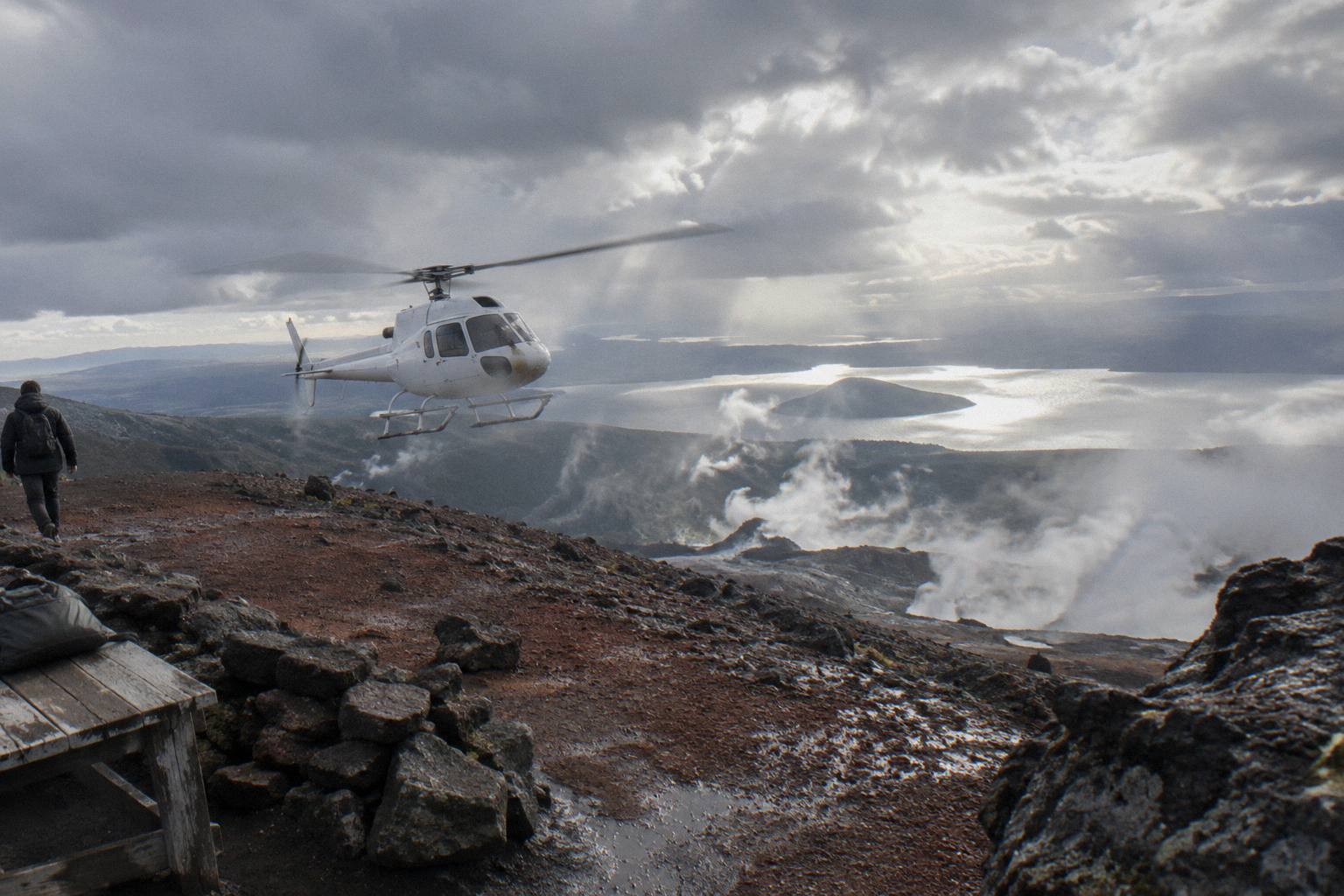
Assuming "landing" means "park" is the most common. A Tarawera landing is a landing on a volcanic summit, a cratered ridge at 1,111 m, not a geothermal park with boardwalks and geysers. If the thing you want is geysers and silica terraces, Orakei Korako is the landing that matches; if the thing you want is standing on a volcano, Tarawera is it. The dual-landing and three-hour itineraries are the only products doing both.
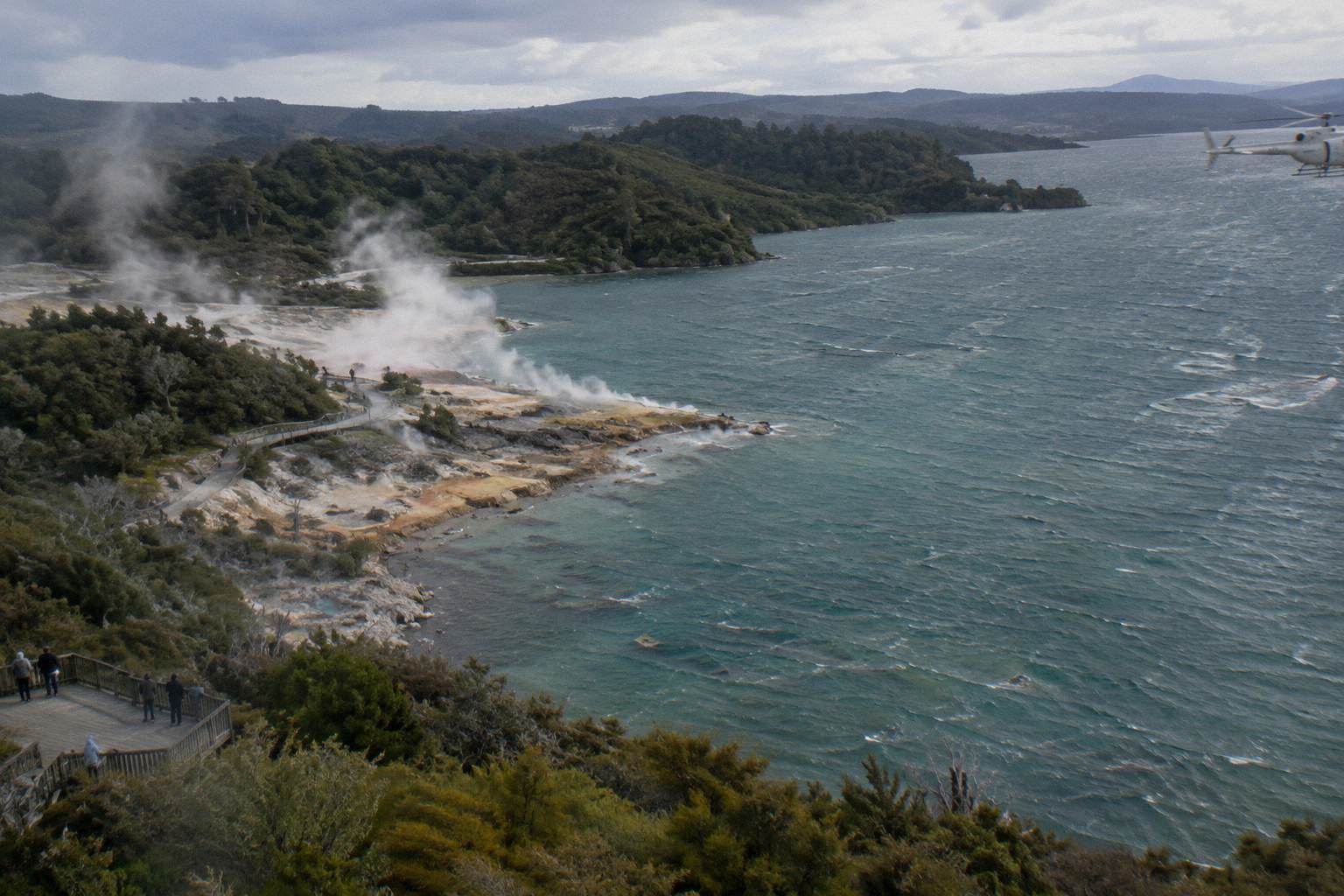
Second, confusing the rift figures. GNS Science describes the 1886 rift as 17 km long, end to end across the mountain, through Lake Rotomahana and into the Waimangu area. The operator's flight wording says "8km rift" for the portion over the mountain. Both are correct for what they measure, and treating them as rival claims leads nowhere.
Third, weight and check-in. Weights declared at booking are checked on arrival, and helicopters check in 30 minutes before departure, floatplanes 20. Arriving late or with a declared weight well off the mark risks the flight itself, not just a delay.
Fourth, weather expectations. Rotorua's driest, warmest stretch runs from late spring in October to early autumn in April, per Rotorua's official tourism information, but any single day can differ. Book the day's flight with slack in the itinerary: if conditions are unsuitable the operator works to reschedule or refund, and a schedule with no room to move wastes that flexibility.
How To Choose Between The Landing Options
Pick the Orakei Korako floatplane if the geysers and terraces are the point and you want the shortest route to them. Pick the dual-landing helicopter if you want volcano and park in one booking. Pick the three-hour version if time on the ground at both stops matters more than price. Pick a scenic flyover if the view is the whole point and a landing is nice but not necessary.
The floatplane river landing is the distinctive one: a water touchdown on the Waikato, a boat crossing, and a walk through a field the park says holds up to 23 active geysers. It runs about two hours total, from NZ$845 per person, and it is the product that most literally answers yes to this article's question.
The helicopter dual landing swaps the water touchdown for a summit one and adds Orakei Korako as the second stop. It suits a traveller who wants the 1886 story in full, the rift from above and the terraces on foot, and who would rather book one flight than two. Its review pool is small, so no rating is quoted, but the itinerary speaks for itself.
The three-hour geothermal park flight is the commitment option: from NZ$1,490 per person, Tarawera summit landing and Orakei Korako both included, free cancellation up to 24 hours ahead. And if all of this sounds like more flight than needed, the NZ$395 scenic floatplane over Tarawera and Waimangu shows the same landscape without setting down anywhere.
Common Questions About Geothermal Landings From Rotorua
Do Rotorua Helicopter Flights Land At The Geothermal Parks?
Yes, at Orakei Korako, reached by floatplane landing on the Waikato River or by helicopter on the dual-landing and three-hour itineraries. Mt Tarawera summit landings are on the volcano itself rather than in a park. Waimangu is a flyover only and Hell's Gate has no landing product.
Can You Land At Waimangu Volcanic Valley By Air?
No. Waimangu appears on floatplane routes as scenery from the air. The valley is walked by road access, about 25 minutes from central Rotorua, and pairs naturally with a scenic flight over the 1886 rift rather than a landing.
Which Is The Cheapest Flight That Lands Somewhere Geothermal?
The cheapest landing is the Tarawera guided summit walk flight at from NZ$675 per person for 40 minutes total. The cheapest Orakei Korako landing is the floatplane version at from NZ$845 per person for about two hours. All amounts are New Zealand dollars.
Is The Orakei Korako Landing Guaranteed?
No landing is guaranteed. The operator's terms state that excursion landings are undertaken at the passenger's own risk and at the pilot's sole discretion, with inclusions varying for weather, volcanic activity and passenger loadings. Weather cancellations by the operator bring a reschedule or a full refund.
Do Any Flights Land On Whakaari / White Island?
No. Landings on Whakaari are suspended, and official New Zealand travel information states there are currently no boat tours or helicopter flights landing on the island. Flights from Rotorua over the island operate as scenic flyovers only.
Can Children Go On A Geothermal Landing Flight?
Yes, all ages are welcome. Under 2s sit on a parent's or guardian's lap, and child rates apply for ages 2 to 11. On the Tarawera landing flight the operator specifies a minimum of two adult fares, with ages 2 to 11 paying 75% of the adult fare.