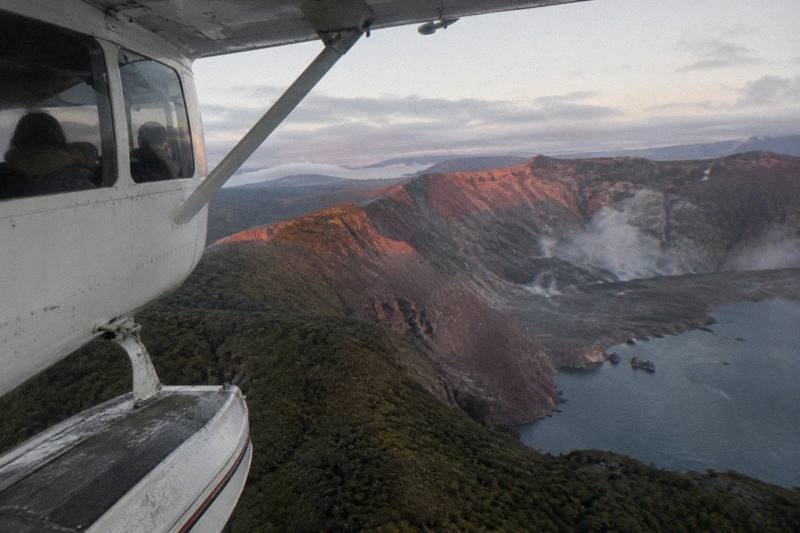
Can You Fly Over Whakaari In A Helicopter?
Yes, scenic flights over Whakaari / White Island operate from Rotorua, but landings are suspended and the roster's flyovers are floatplane trips, with one helicopter combo that lands on Tarawera instead.
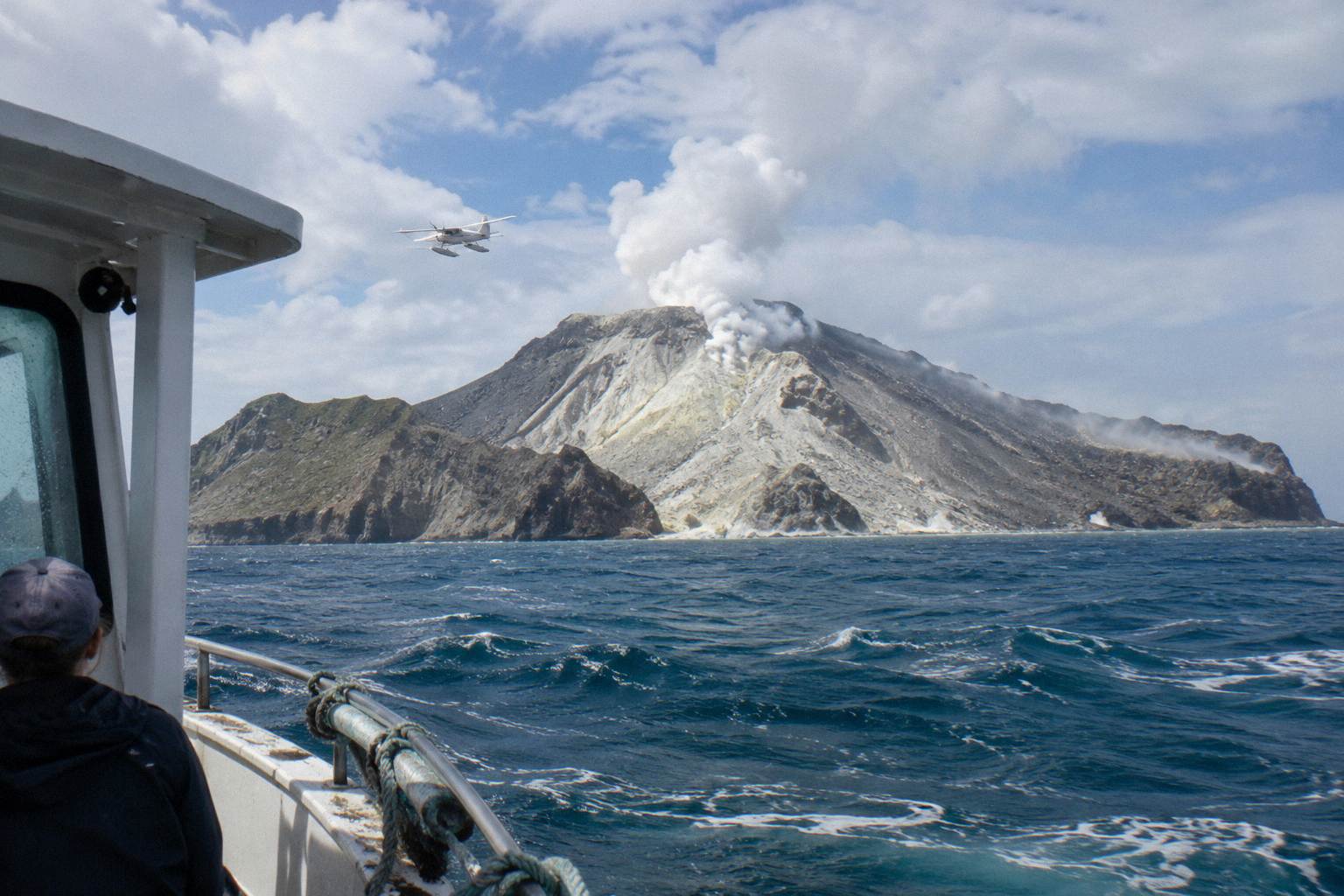
Yes. Scenic flights over Whakaari / White Island operate from Rotorua, and flights do not land on the island: landings are suspended, so every Whakaari experience currently sold is a flyover. The detail that surprises most people is the aircraft. The Rotorua flyover trips in the current roster are floatplane flights, not pure helicopter flights over the island, and the one helicopter option that pairs White Island with Mount Tarawera lands on Tarawera, not on Whakaari.
Whakaari Flyover Facts At A Glance
- Landings on Whakaari are suspended: no boat tours and no helicopter flights land on the island.
- Whakaari lies about 48 km off the coast of Whakatane, and scenic flights over it depart from Rotorua.
- The 9 December 2019 eruption resulted in the deaths of 22 people and injury to 25 others.
- GeoNet monitors the volcano continuously and its status can change on any given day.
Whakaari, also called White Island, sits about 48 km off the coast of Whakatane in the Bay of Plenty. The operator Volcanic Air describes it as "New Zealand's only permanently active offshore volcano", which is exactly why it draws so much curiosity from travellers basing themselves in Rotorua. Since the island's landings stopped, the air has become the only way to take in its crater, steam and sulphur-stained slopes. This article walks through what a flyover involves, which trips do it, what they cost, and the practical questions around weather, cancellation and safety briefings. All prices are in New Zealand dollars.
Yes, a scenic flight over Whakaari is available from Rotorua, though the exact aircraft matters more than most people expect. Landings on the island are suspended, so every trip is a flyover only. The flyover trips in the Rotorua roster are flown by floatplane, while the roster's one helicopter journey that includes White Island is a longer combination trip that overflies the island and lands, if the pilot approves, on Mount Tarawera instead.
That distinction trips up a lot of searches. Someone typing "helicopter over White Island" usually wants the shortest answer, and the honest answer is that the floatplane flights are the direct route to a Whakaari flyover from Rotorua. Floatplanes take off from Lake Rotorua itself, off the lakefront pier, which is part of the appeal: the departure alone is a water takeoff rather than a helipad lift. The helicopter combination, meanwhile, is a bigger day out that folds White Island into a Tarawera landing itinerary.
The suspension on landings is not a temporary weather call. New Zealand's official travel information states that there are currently no boat tours to, and no helicopter flights that land on, the island. So the flyover is the product, and the flyover is what you should plan around. For the wider picture on what a landing used to involve and what the rules say now, the companion piece on whether you can land on White Island by helicopter covers the history in depth.
A third point worth knowing before anything else: the volcano is live in every sense. GeoNet, the official monitoring service, publishes Whakaari's volcanic alert status and updates it whenever activity changes, and a bulletin can shift the picture for aviation on any given day. Operators watch those notices, and flights are planned around both weather and volcanic activity. Nothing about the island is static, which is also part of why it holds such a strong pull from the air.
Which Flights From Rotorua Actually Overfly Whakaari?
Three trips in the Rotorua roster include Whakaari: two floatplane journeys and one helicopter combination. The "Floatplane, Waimangu Included" trip (from NZ$1,230 per person) overflies White Island, Mount Tarawera and Waimangu Volcanic Valley in about two hours. The "Floatplane, White Island And Tarawera" trip covers the same two volcanoes, and the "Volcanic Extremes" helicopter trip flies a one hour 45 minute route over both with a Mount Tarawera summit landing.
All three depart from the Volcanic Air base at the Rotorua City Lakefront, 1 Lakefront Drive, Rotorua, which sits under a kilometre from the town centre. Check-in is 30 minutes before a helicopter flight and 20 minutes before a floatplane flight, with a full safety briefing at the Lakefront office. Hotel pickup is not part of standard flights; the operator offers direct pick-ups only for bespoke charters.
| Trip | Aircraft | Route highlights | Landing | From price per person |
|---|---|---|---|---|
| Floatplane, Waimangu Included | Floatplane | White Island, Mount Tarawera, Waimangu Volcanic Valley | None | NZ$1,230 |
| Floatplane, White Island And Tarawera | Floatplane | White Island and Mount Tarawera | None | No price shown |
| Volcanic Extremes, 1h45m Helicopter | Helicopter | White Island and Mount Tarawera | Mount Tarawera summit | No price shown |
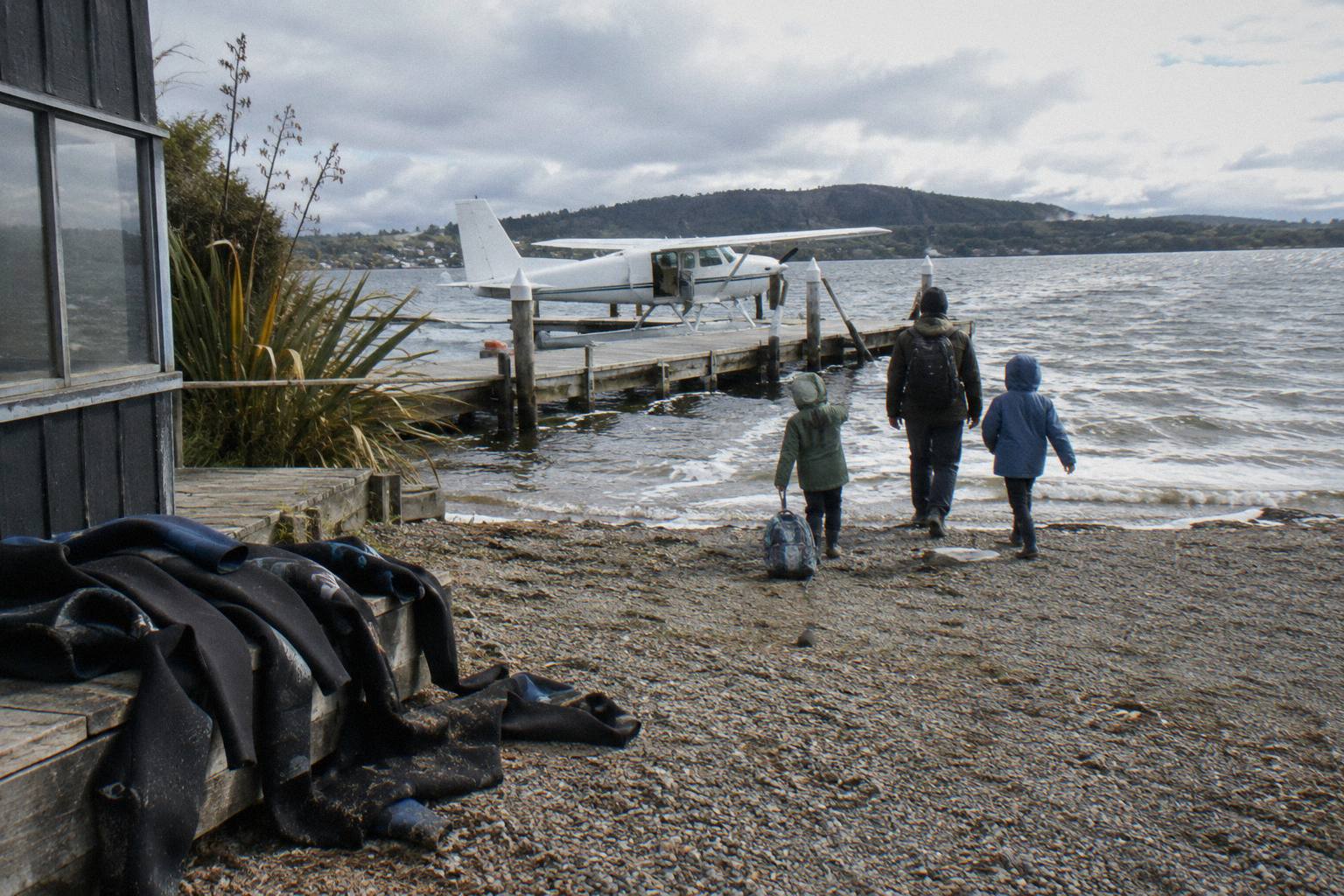
The floatplane trips take off from Lake Rotorua, climbing away from the lakefront pier and out across the Bay of Plenty towards the island. The helicopter trip is the one to pick if standing on a volcano matters to you, because its landing is on Tarawera, where landings are permitted through the concession system, rather than on Whakaari, where they are not. That single fact organises the whole decision, and it is worth being clear about it before comparing anything else.
Whakaari's pull is easy to understand from the numbers alone. An active marine volcano, offshore, steaming, roughly 48 km from the nearest coast at Whakatane: there is nothing else like it in New Zealand's sightseeing inventory. From the air, the crater floor, the sulphur workings and the rusted remains of the old mining operation read like a landscape from another century, because in a sense they are. The island's human history, from sulphur mining attempts to scientific monitoring, sits on top of a volcano that has never stopped breathing.
Why Can't Helicopters Land On Whakaari Any More?
Landings stopped after the eruption of 9 December 2019, which resulted in the deaths of 22 people and injury to 25 others, with the bodies of two victims not recovered. Since then, no boat tours or helicopter landings have operated on the island, and official New Zealand travel guidance states that clearly. The airspace above Whakaari was reopened to overflight by the Civil Aviation Authority in 2020, which is why scenic flyovers run today.
The coronial record of the eruption is the clearest summary of what happened that day, and it is the reason the island's tourism model changed completely. What followed was a long period of legal and regulatory reckoning, along with a shift in how New Zealand thinks about volcanic risk and guided access. The island itself did not close in a geological sense: Whakaari remains an active volcano, monitored around the clock, and GeoNet's bulletins describe ongoing volcanic unrest at varying levels. What changed is access.
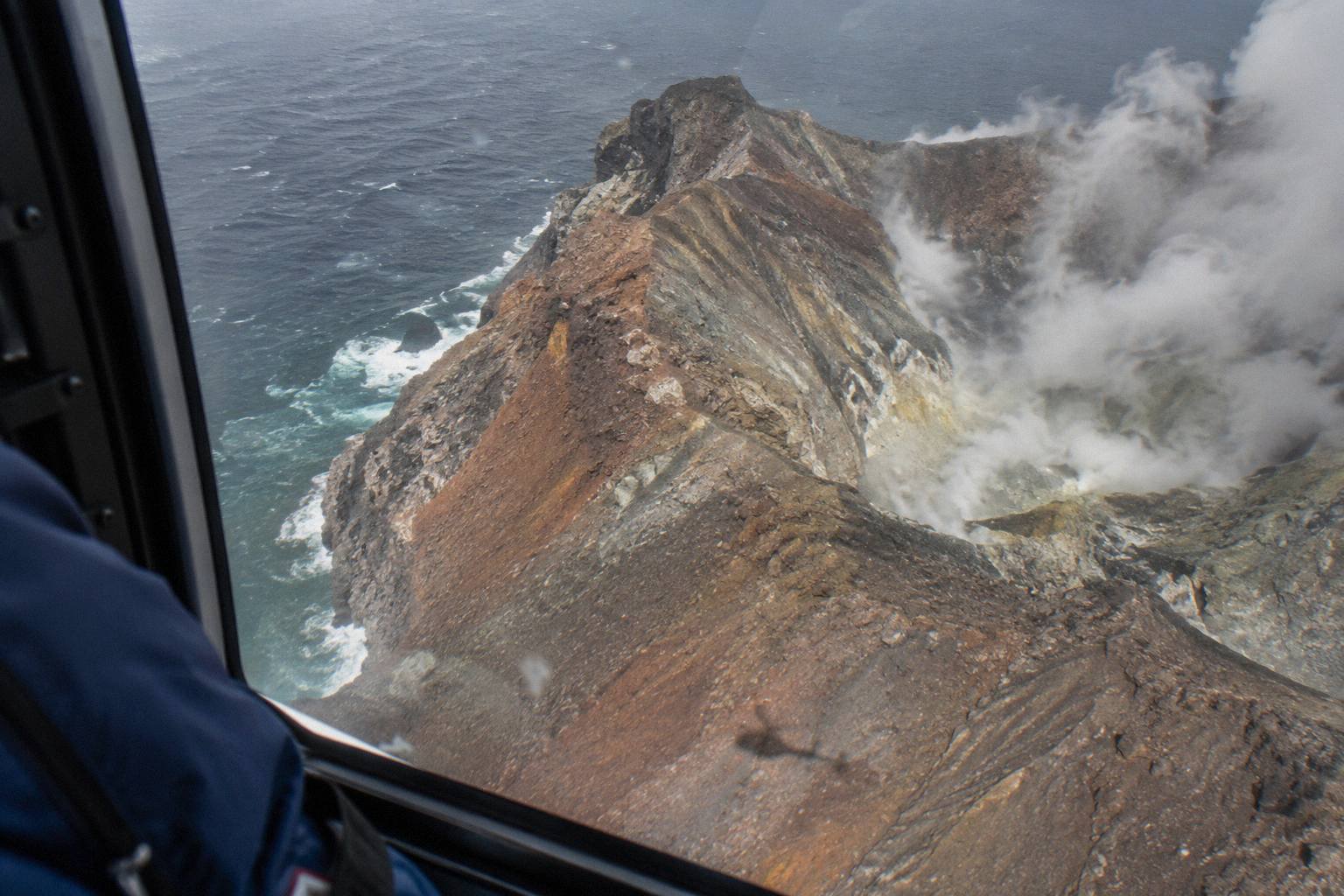
For travellers, the practical upshot is simple. You can see Whakaari, from a comfortable and legally permitted distance, on a scheduled scenic flight. You cannot set foot on it, and no operator in New Zealand is currently offering to take you there. Any page or advertisement suggesting a Whakaari landing is describing something that does not exist in the current market, and the official guidance on Whakaari / White Island is the reference point for that.
The flyover, in truth, delivers much of what people imagine a landing would. The island's scale, its steam plumes and its crater structure are all visible from a low overflight, and the aircraft can circle the island in a way that gives every side of the cabin a view. The pilot's commentary, on flights that include it, adds the mining history and the monitoring story that you would otherwise miss. What you give up is the smell of sulphur and the ground-level detail, and what you gain is the volcano seen whole, in its ocean setting, which is a perspective no landing ever offered.
What Can You Actually See From A Whakaari Flyover?
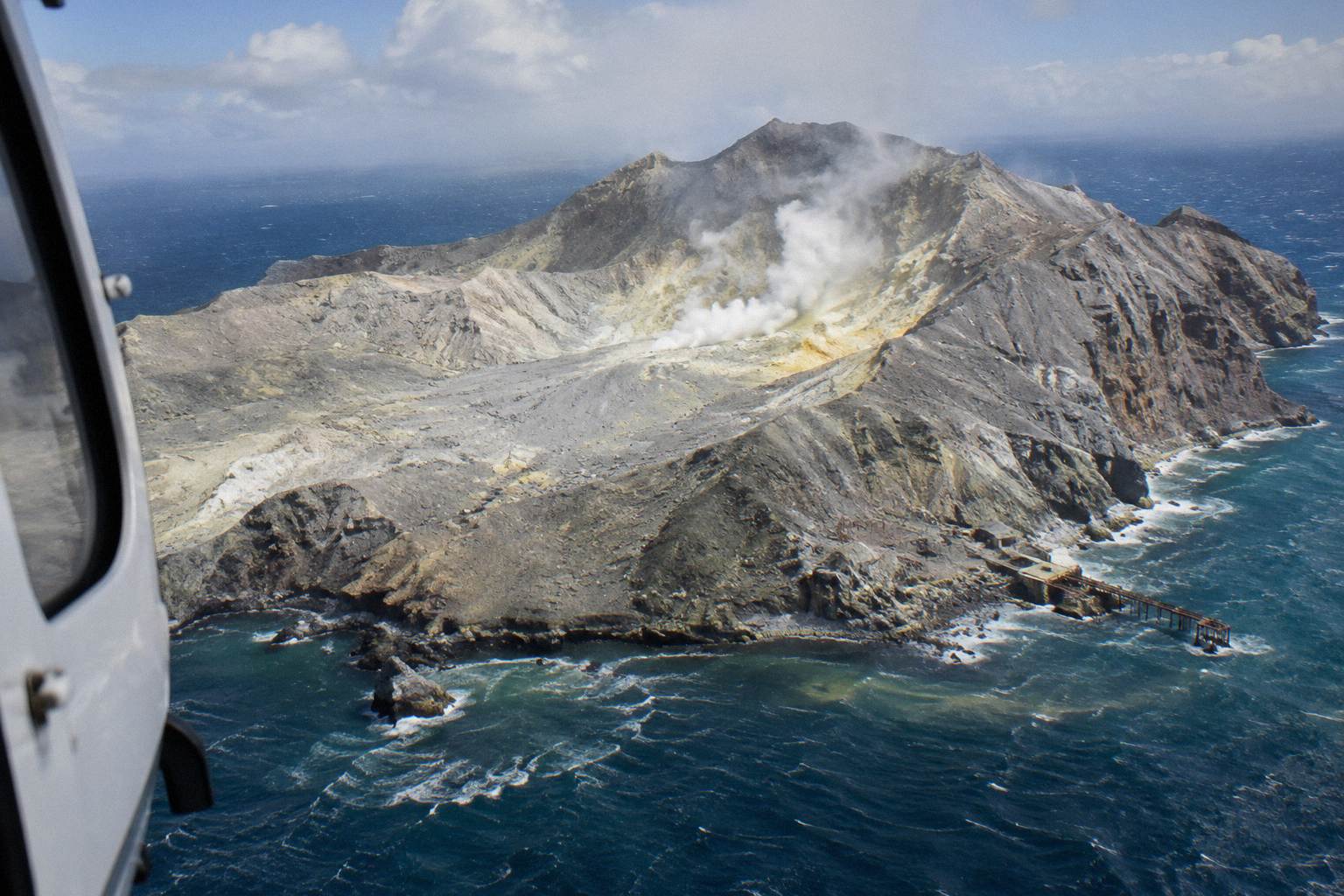
From a flyover, passengers look down on the island's crater, its steaming vents and fumaroles, the acid-yellow and white sulphur staining across the slopes, and the corroded remains of the old sulphur mining works on the shore. Beyond the island itself, the Bay of Plenty coastline and the open Pacific form the backdrop. Exactly how close the aircraft flies, and how much steam is rising, depends on conditions and on the pilot's judgement on the day.
The mining ruins are the detail that stays with people. Whakaari was worked for sulphur in several short-lived attempts over its settled history, and the remains of those operations, along with a more recent monitoring installation, sit on the island's flank like a ghost settlement. From a few hundred metres up, the geometry of the crater and the gullies cut by acidic water reads clearly, and the colour contrast between the white sulphur terrain and the deep blue sea is striking on a clear day.
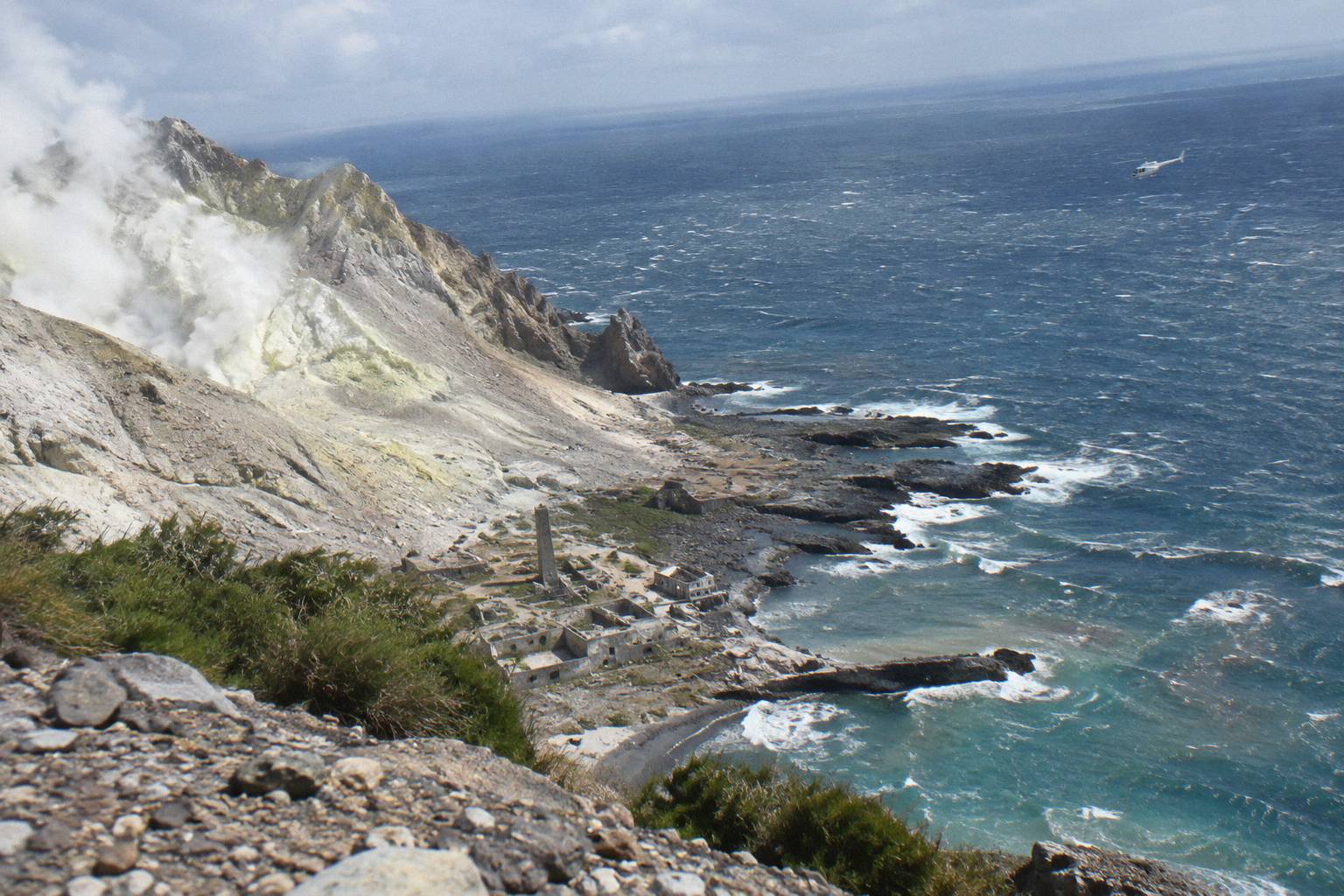
Steam is the variable. Whakaari's plume can be vigorous or subdued depending on its internal activity, and GeoNet's Whakaari monitoring page shows how the volcano's state shifts over time. A flyover does not promise any particular level of visible activity, and no operator would sensibly claim it could. What the flight does promise is the island itself, in full, from the air, which is more than any land-based viewpoint in the Bay of Plenty can offer.
The trip out is part of the experience. From Rotorua, the route crosses the forestry and farmland of the Bay of Plenty before the coastline falls away and the island appears on the horizon. On the combination trips, the return leg brings you back over Mount Tarawera and, on the Waimangu itinerary, over the volcanic valley that the 1886 Tarawera eruption created. That pairing is unique to Rotorua-based flying: two volcanoes, one active offshore and one whose landscape was rewritten overnight in 1886, in a single flight. For more on the second half of that story, the guide to flying over Lake Tarawera and the Blue Lake is the natural next read.
Helicopter Or Floatplane For A Whakaari Flyover?
If the goal is purely the Whakaari flyover at the lowest complexity, the floatplane trips are the direct answer: they overfly the island and return via Tarawera. If standing on a volcano summit is the deeper goal, the helicopter combination is the only roster trip that delivers a landing, and that landing is on Mount Tarawera, not on Whakaari. Neither aircraft type lands on the island, so the choice is about the rest of the itinerary, not about access.
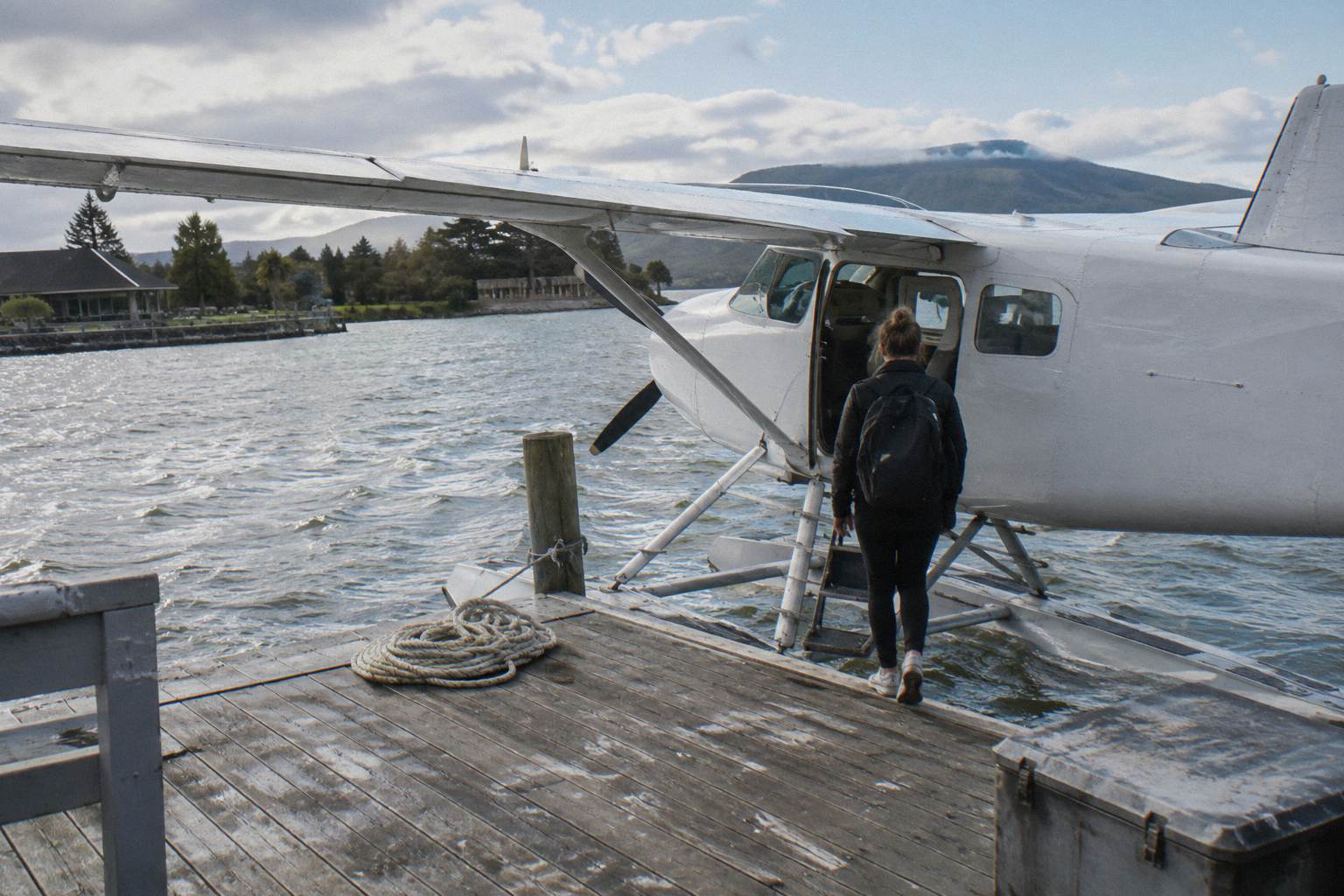
The floatplane experience starts differently: you board at the lakefront pier and take off from the water of Lake Rotorua, a genuinely unusual departure in New Zealand scenic flying. The helicopter experience is the more familiar one, vertical lift from the Lakefront and a summit landing on Tarawera at the pilot's sole discretion, subject to weather and volcanic activity. Both give window views over Whakaari; neither gives you a door-open hover, which is not how these trips operate.
| Consideration | Floatplane trips | Helicopter combination |
|---|---|---|
| Whakaari overflight | Yes | Yes |
| Landing offered | None | Mount Tarawera summit, pilot's discretion |
| Departure | Water takeoff from Lake Rotorua | Helicopter from the Lakefront |
| Total duration | Around 2 hours | 1 hour 45 minutes |
| Who it suits | Photographers, first time flyers, lake takeoff appeal | Travellers who want to stand on a volcano |
Durations deserve a note. The "Floatplane, Waimangu Included" trip runs about two hours door to door, while the "Volcanic Extremes" helicopter trip is listed at 1 hour 45 minutes including the Tarawera landing walk. Tour duration, flight times and inclusions may vary due to weather conditions, volcanic activity and passenger loadings, in the operator's own words, so treat every time figure as an itinerary outline rather than a timetable. The comparison piece on Rotorua helicopter versus floatplane flights works through the aircraft differences in more detail.
One honest limitation to flag: none of the three Whakaari trips carries a rating worth printing. The floatplane Waimangu trip has only 7 reviews, the White Island and Tarawera floatplane 8, and the Volcanic Extremes helicopter 2. Those pools are too small to support any claim about what guests think, so this article makes none. The trips' itineraries, aircraft and prices are the solid ground to decide on, and the Rotorua Helicopter Tours roster pages carry the live availability for each.
How Much Does A Whakaari Flyover Cost?
The one roster Whakaari trip with a printed from-price is the "Floatplane, Waimangu Included" journey at from NZ$1,230 per person. The other two Whakaari trips do not display a from-price, so the live availability check is the way to see their current fares. All prices are per person, in New Zealand dollars, and every roster trip carries free cancellation up to 24 hours in advance for a full refund.
That 24 hour cancellation term matters when the product is this weather sensitive. The operator's own weather policy is generous in the direction you would want: if your flight cannot go ahead due to weather, they will work with you to reschedule or provide a full refund, and the operator cancels before commencement for circumstances beyond its control, including weather and volcanic activity, on a full refund basis. So the risk profile is: you can change your mind up to 24 hours out, and if nature cancels on the day, you are refunded rather than charged.
Children are part of the pricing picture too. All ages are welcome, under 2s sit on a parent or guardian's lap, and child rates apply for ages 2 to 11. On Tarawera landing flights specifically, the operator's page sets a minimum of 2 adult fares, with children aged 2 to 11 paying 75% of the adult fare. For the Whakaari overflights, the floatplane trips have no landing component, which broadens who can fly; families weighing the whole question can read the longer guide to children flying on a helicopter tour in Rotorua.
Weight is the other number that affects the booking. Individual weights are declared at booking, passengers are weighed on arrival, and deviations from the declared weight can result in rescheduling, a surcharge or cancellation at the operator's sole discretion. Over 110 kg a surcharge may apply, and over 135 kg as weighed requires two adult fares. These are safety calculations for aircraft balance, not judgements, and declaring accurately at booking avoids any surprise at check-in. The full detail lives in the guide to Rotorua helicopter flight weight limits.
Weather, Safety And Booking Practicalities
Every Whakaari flight operates subject to suitable weather and safe flying conditions, and a trip will not go ahead if it is not safe or if the views cannot be seen. The operator flies year round during daylight hours, mornings often give the calmest air, and the driest, warmest stretch in Rotorua runs from October to April. If conditions are unsuitable, the standard response is to reschedule or refund in full.
The weather reality of the Bay of Plenty is worth respecting. Rotorua's monthly rainfall averages between 86.8 mm and 137.4 mm across the year on the 1991 to 2020 normals, with July the wettest month at 137.4 mm and November the driest at 86.8 mm. Those are town figures, and conditions over an offshore volcano 48 km out to sea are their own world: wind, sea state and cloud can all differ from the lakefront. The official Rotorua weather note is a fair summary of the seasonal pattern, and the operator's own FAQ answers the best-time question honestly by saying there is no hard and fast answer, it depends on the weather that day.
Booking practicalities are straightforward. Check in at the Lakefront office, 30 minutes before a helicopter flight or 20 before a floatplane, for the safety briefing. Bring a camera, sunglasses and a jacket; closed-toe comfortable footwear is recommended for flights with landings, which applies to the Volcanic Extremes helicopter trip with its Tarawera summit walk. Pregnancy and mobility considerations are not automatic barriers: the operator asks expectant mothers to talk to a maternity carer, especially from 28 weeks, and asks guests with mobility considerations to raise them at booking so assistance can be agreed in advance. The operator's FAQ page covers each of these in full.
| Practicality | Detail |
|---|---|
| Meeting point | Rotorua City Lakefront, 1 Lakefront Drive, Rotorua 3010 |
| Check-in, helicopters | 30 minutes before the flight |
| Check-in, floatplanes | 20 minutes before the flight |
| Hotel pickup | Not part of standard flights, offered only for bespoke charters |
| What to bring | Camera, sunglasses, a jacket; closed-toe footwear for landing flights |
| Months of operation | All months of the year, daylight hours |
On safety governance: Volcanic Air describes itself as a CAA-certified New Zealand air operator, and the relevant Civil Aviation Rule Part 135 is titled "Air operations: helicopters and small aeroplanes". Scenic flights of this kind sit inside that regulatory frame, with aircraft weight, balance and weather minimums set by rule. Volcanic Air has been flying in the region since 1992, in the operator's own words. The wider safety picture, including how landing decisions are made, is laid out in the guide to whether helicopter tours are safe.
Mistakes To Avoid When Booking A Whakaari Flight
The most common mistakes: assuming a helicopter trip lands on Whakaari when no aircraft does; booking a flyover without checking the island's current volcanic status; under-declaring passenger weight at booking; and treating the flight time as a fixed timetable when durations vary with weather, volcanic activity and passenger loadings. Each mistake is avoidable in under a minute of checking before you book.
The first mistake is the expensive one. Searches for White Island helicopter landings still surface old articles and outdated listings, and travellers occasionally book a Tarawera landing trip believing it includes a Whakaari landing. It does not, because none exists. Read the itinerary: if the word "landing" appears, check where. On the roster, the only landing attached to a Whakaari-including trip is on Mount Tarawera.
The second is expecting a particular level of volcanic drama. Whakaari's activity rises and falls, and GeoNet's bulletins describe the current state in plain language. A flyover is a flight over an active volcano, not a scheduled eruption. The third is the weight declaration, covered above: declare accurately, because being reweighed at the lakefront against a lowballed number can cost you the slot. The fourth is scheduling too tightly. A morning flight on your last day in Rotorua leaves no room to reschedule if the weather turns; a flight with a spare day behind it gives the operator the chance to move you to better conditions. The blog post on how far in advance to book a Rotorua helicopter flight has the timing detail.
A closing note on expectations: the flyover is best booked as a landscape flight, not a thrill ride. The aircraft flies at sightseeing speeds and altitudes chosen for viewing, the cabin is enclosed, and the experience is closer to a moving observation deck than an aerobatic run. Guests who arrive expecting calm, extraordinary scenery tend to rate the day; guests expecting a helicopter stunt sequence are choosing the wrong product. For what the camera side of the trip involves, the guide to helicopter flight photography covers windows, light and gear.
Common Questions About Whakaari Flyover Flights
Can You Fly Over Whakaari In A Helicopter?
Yes, scenic flights over Whakaari / White Island operate from Rotorua. In the current roster the flyover trips are floatplane journeys, and the one helicopter itinerary that includes White Island, the Volcanic Extremes trip, overflies the island and lands on Mount Tarawera instead. No aircraft lands on Whakaari.
Can You Land On Whakaari By Helicopter?
No. Landings are suspended: official New Zealand guidance states there are currently no boat tours to, or helicopter flights that land on, the island. Flyover flights are the only air product offered.
Is White Island Still Active?
Yes. GeoNet monitors Whakaari continuously and its bulletins describe ongoing volcanic unrest at varying levels. The status can change on any day, which is one reason flights are planned around both weather and volcanic activity.
How Much Does A Whakaari Flyover Cost?
The "Floatplane, Waimangu Included" trip starts at NZ$1,230 per person. The other two Whakaari-including trips do not display a from-price, so check live availability for current fares. All amounts are in New Zealand dollars, and every roster trip carries free cancellation up to 24 hours in advance.
How Long Is The Flight To Whakaari From Rotorua?
The floatplane Waimangu itinerary runs about two hours in total, and the helicopter Volcanic Extremes trip is listed at 1 hour 45 minutes including the Tarawera landing. Durations can vary with weather, volcanic activity and passenger loadings.
What Happens If The Weather Cancels The Flight?
If your flight cannot go ahead due to weather, the operator works with you to reschedule or provides a full refund, and operator cancellations for circumstances beyond its control are refunded in full. Cancel up to 24 hours in advance yourself for a full refund.