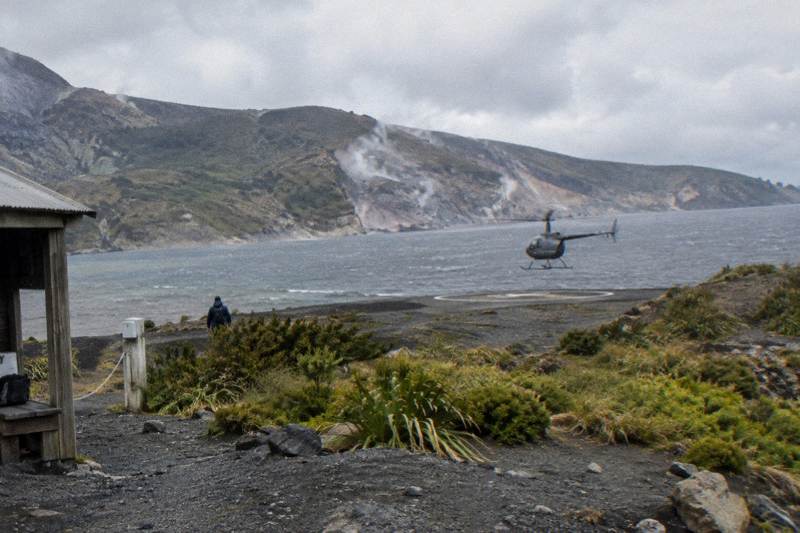
Getting To Your Rotorua Helicopter Flight: Pickup, Parking, And Transfers
Every flight on the line-up leaves from one address: 1 Lakefront Drive, Rotorua. There is no hotel pickup on standard flights, so the whole arrival plan comes down to getting to the Lakefront on time.
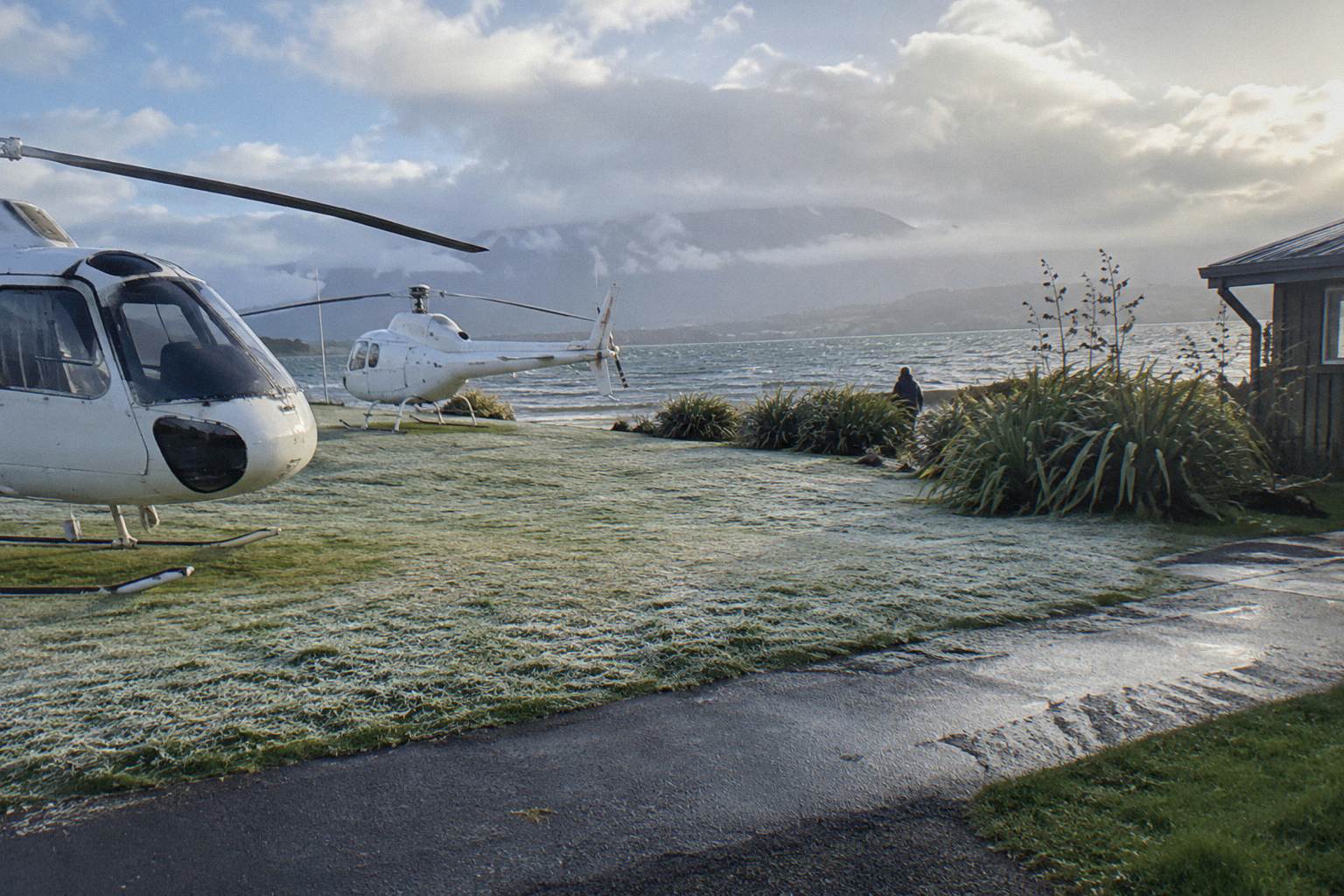
Short answer
All Volcanic Air flights in the line-up meet at the Lakefront, 1 Lakefront Drive, Rotorua, under 1 km from the town centre. Hotel pickup is not part of standard flights. Arrive 30 minutes before a helicopter departure or 20 minutes before a floatplane for the safety briefing, and declare accurate passenger weights at booking.
The single biggest logistics fact about flying in Rotorua is also the simplest: there is only one departure point to plan around. Whether the day's flight is the "Helicopter Volcano Landing" over Mt Tarawera or a 15-minute Crater Lakes loop, the address on the ticket is the same Lakefront office. That collapses what could be a complicated transfer question into a short walk or a brief ride for almost anyone staying in or near the town centre, and it means the timing rules matter far more than the transport ones. Everything below works through pickup, check-in windows, walking distance, what to carry and the booking details that shape an arrival.
For the wider picture of choosing a flight once the logistics are settled, the guide to helicopter rides in Rotorua covers the options, and the one day Rotorua itinerary with a flight shows how a departure slots into a full day.
| Quick fact | Detail |
|---|---|
| Meeting point | Volcanic Air, Rotorua City Lakefront, 1 Lakefront Drive, Rotorua 3010 |
| Helicopter check-in | 30 minutes before departure |
| Floatplane check-in | 20 minutes before departure |
| Hotel pickup | Not part of standard flights; only for bespoke charters |
| Distance from town centre | Under 1 km |
| Floatplane take-off | From Lake Rotorua, off the lakefront pier |
| Operator history | Flying in Rotorua since 1992 |
Where Do Rotorua Helicopter Flights Depart From?
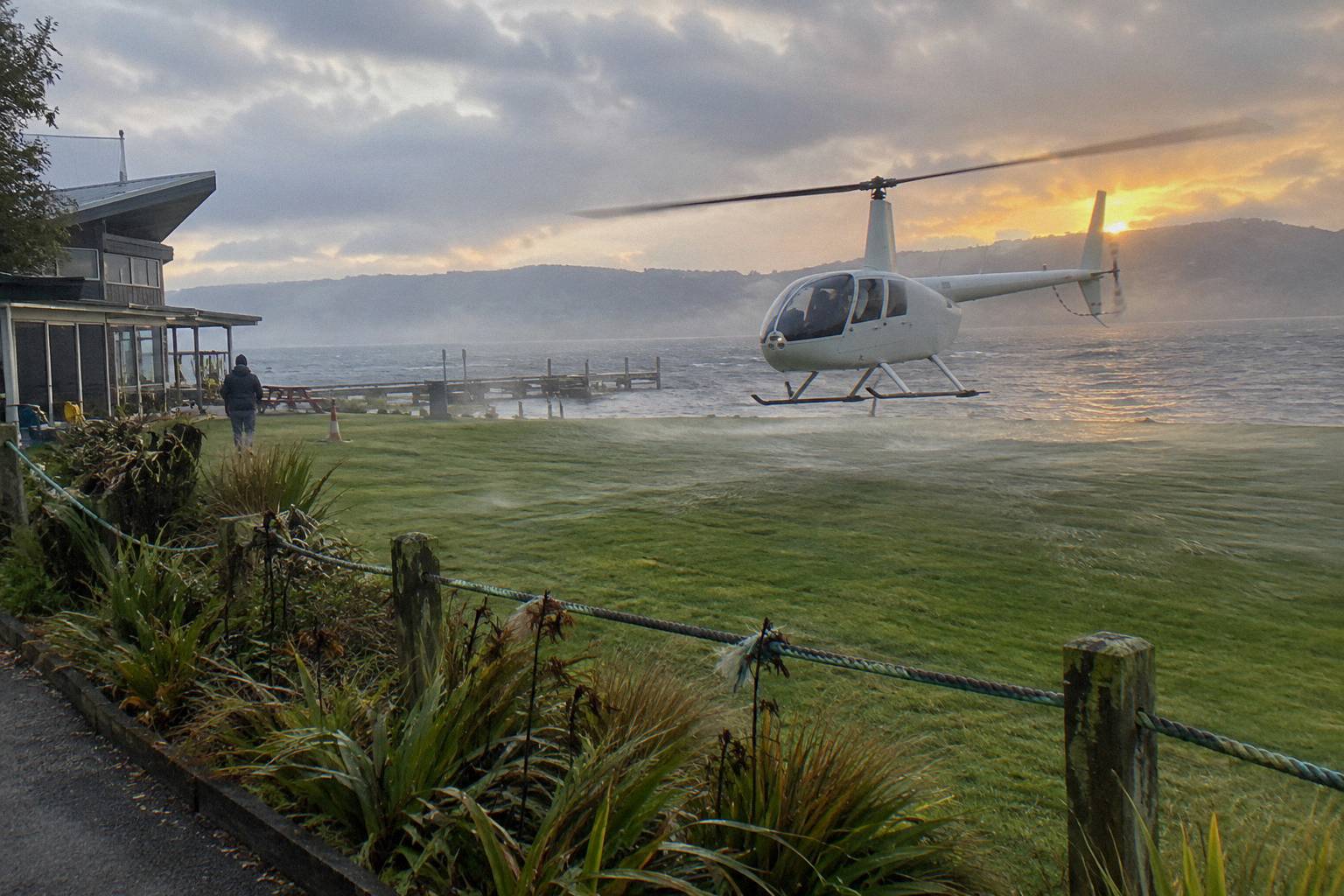
Every Rotorua helicopter flight on the line-up departs from the Volcanic Air base at the Rotorua City Lakefront, located at 1 Lakefront Drive, Rotorua 3010. Floatplane departures use the same base. There is no second departure point anywhere in the region, so travelers should plan to arrive at this single lakefront location for every flight option offered. The address is the same for all 13 trips, from the 15-minute Crater Lakes flights to the three-hour Geothermal Park Landing. Helicopters lift off from the Lakefront grounds, while floatplanes board at the lakefront pier and take off from the water of Lake Rotorua itself, a detail worth knowing because the two check-in counters and boarding points sit metres apart at the same base, so no flight choice changes where you have to be.
The operator's own FAQ puts it plainly: check in at the Lakefront office before your flight for a full safety briefing. That briefing is not a formality; it covers seating, harnessing and the landing procedures for trips such as the Mt Tarawera summit walk, and it is the reason the check-in windows exist. Turn up at the departure minute rather than the check-in minute and the briefing has to happen in a rush, or the slot can be missed entirely.
The base doubles as the operator's shopfront. Volcanic Air has been flying in Rotorua since 1992, describes itself as a CAA-certified NZ air operator and holds Qualmark Gold under Tourism New Zealand's quality programme, in the operator's own wording. Practically, this means the Lakefront site is a permanent, staffed facility with offices, briefing space and aircraft on the lawn, not a seasonal pop-up, so the address you plan around today is the same one that has served flights for over three decades. The operator's FAQ page covers the arrival basics in its own words.
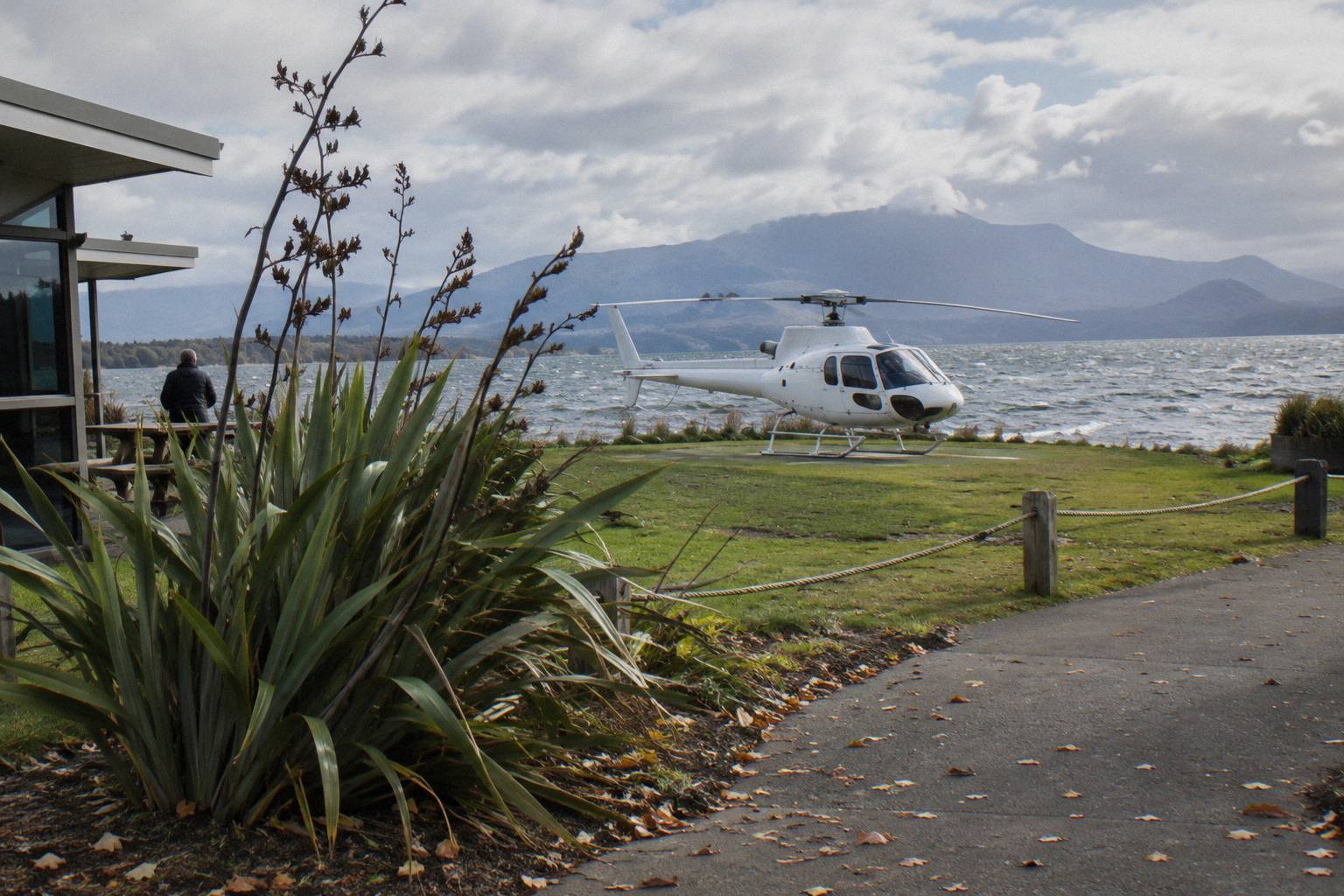
Is Hotel Pickup Available For Rotorua Helicopter Flights?
No, hotel pickup is not included on standard Rotorua helicopter flights. Travellers make their own way to the base at 1 Lakefront Drive, which sits under 1 km from the Rotorua town centre, so most people staying centrally can walk there in minutes. Direct hotel pick-ups are only available for bespoke charters arranged directly with the operator, not for standard flights.
The distinction matters because many Rotorua experiences, thermal park shuttles and some lake cruises among them, do run hotel collections, and travellers reasonably assume a flight works the same way. It does not. The operator's FAQ is unambiguous on the point, and planning around it early removes the one mistake that genuinely costs people their slot: budgeting zero minutes between an accommodation door and the Lakefront check-in counter.
What a charter changes is only the pickup side. A bespoke charter can be arranged with a direct pick-up, per the operator's FAQ, and for groups this is worth asking about when booking. For everyone else, the three practical arrival patterns are: walk from central accommodation, ride from further out, or arrive as part of a wider day that already passes through the town centre. The flight comparison that follows shows how the same departure point serves very different trip lengths.
| Flight | Type | Landing | Total time |
|---|---|---|---|
| Helicopter Volcano Landing | Helicopter | Mt Tarawera summit | Price shown at booking |
| Crater Lakes By Helicopter, 15 Minutes | Helicopter | No landing (flyover) | 15 minutes |
| One-Hour Volcanic Adventure | Helicopter | Mt Tarawera summit | 1 hour |
Short flights compress the arrival math in an unexpected way. A 15-minute Crater Lakes loop still carries the same 30-minute helicopter check-in, so the door-to-trip time is closer to an hour once walking is counted. The Volcanic Adventure, by contrast, spreads that same fixed arrival overhead across a full hour in the air over the Tarawera rift, and the Volcano Landing trip, rated 4.9 from 43 reviews, spends its window on the summit itself. Same address, same check-in, very different proportions of a morning.
All three meet at the same Lakefront address with the same 30-minute helicopter check-in, so the pickup and transfer planning in the rest of the article applies to each of them identically. Choose on flight length and landing ambition, not on logistics, because the logistics do not differ.
How Early Should You Check In For Your Flight?
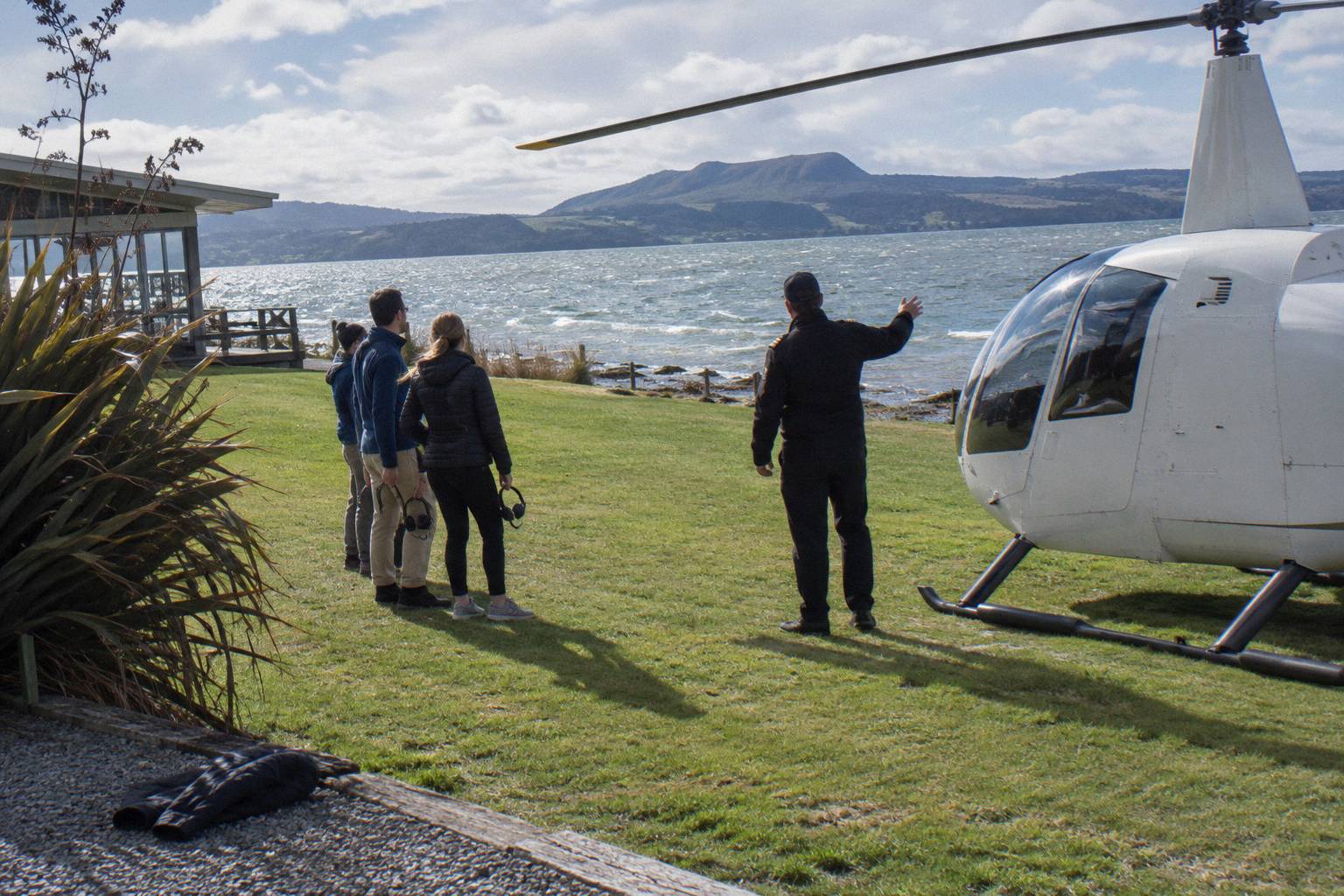
For helicopter flights, check in 30 minutes before departure; for floatplane flights, 20 minutes. Treat these windows as strict requirements, not suggestions, since check-in includes a full safety briefing on seating, harnessing, and landing conduct, and on landing flights it anchors the ground arrangements. These operator-FAQ timings apply to every trip, so add your walking or riding time on top of them, never instead of them.
Build the plan backwards. For a 10am helicopter departure, the target arrival is 9.30am at 1 Lakefront Drive, which for a central hotel means leaving around 9.15am at a relaxed pace. Floatplane travellers get a slightly shorter window, 20 minutes, but floatplanes take off from the lake itself via the pier, so allow a few extra steps between the office and the water. Travellers combining a flight with a fuller day can see how the timing chains together in the one day itinerary built around a flight.
| Aircraft | Check-in window | Boarding point |
|---|---|---|
| Helicopter | 30 minutes prior | Lakefront grounds |
| Floatplane | 20 minutes prior | Lakefront office, then the pier |
The briefing is also where weights are confirmed. Passengers are weighed on arrival so the aircraft stays within balance limits, which is one more reason the window exists: it gives the crew time to reseat or, rarely, reschedule around a declared weight that turns out to be off. The operator's terms spell out that a deviation from a declared weight can mean a rescheduled flight, a surcharge or a cancelled booking, at the operator's sole discretion. Arriving early turns all of that from a scramble into routine.
Should you be settling a departure before the rest of the itinerary is fixed? Every flight carries free cancellation up to 24 hours in advance on its booking terms, so the flight can be locked in first and the travel plan fitted around it afterwards.
How Far Is The Lakefront Base From Central Rotorua?
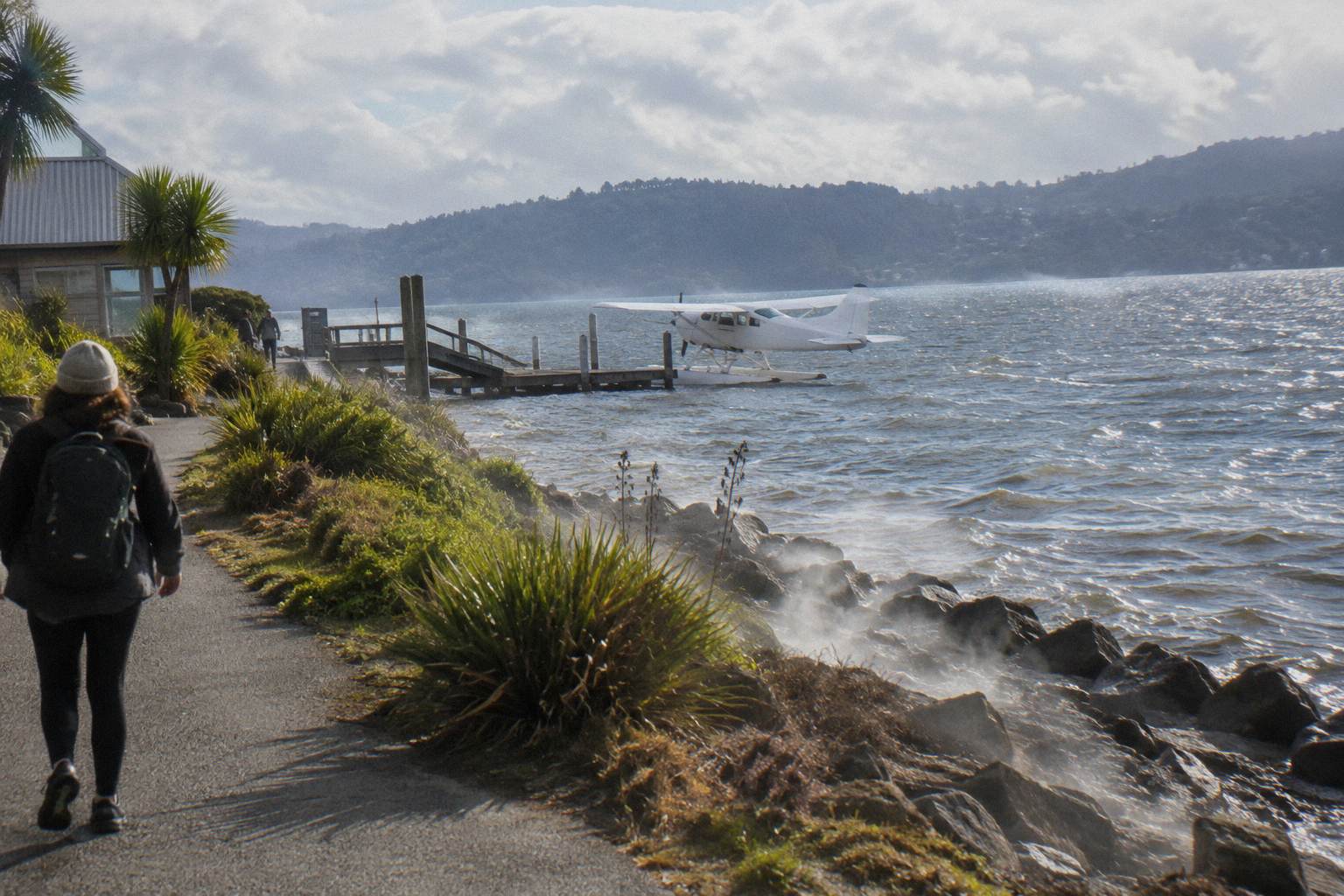
The Volcanic Air base at 1 Lakefront Drive sits under 1 km from central Rotorua, so walking is the natural transfer choice for anyone staying in the town centre. The route follows the lakefront reserve past Sulphur Bay rather than busy traffic corridors, and it stays flat, signposted and pleasant throughout. Visitors based outside the centre simply need to reach the town centre, where the short walk takes over.
The geography rewards a small amount of overplanning. Rotorua's centre is compact, and the Lakefront is its lakeside frontage: the same stretch that holds the jetty, the lawns the helicopters sit on and the pier the floatplanes use. Because both aircraft types operate from the one site, a traveller weighing a helicopter against a floatplane does not need two arrival plans. The helicopter versus floatplane comparison works through the in-flight differences; the getting-there part is identical.
For visitors based outside the centre, the same under-1 km figure still shapes the plan, because any transfer, hotel shuttle to an activity, bus into town, or rental car, only needs to reach the town centre for the walk to take over. Allow margin for morning traffic around the lakefront road and for finding the exact office rather than the general area: the address is 1 Lakefront Drive, Ohinemutu, Rotorua 3010 on the booking page, and the Ohinemutu end of the lakefront is the landmark to aim for.
What Should You Bring To The Lakefront Check-In?
Bring a camera, sunglasses and a jacket, plus closed-toe comfortable footwear for any flight that includes a landing, and have every passenger's individual weight ready at booking rather than worked out on the day. The clothing and kit advice comes from the operator's own FAQ, and the weight part matters directly at the Lakefront because everyone is weighed at check-in, so accurate declared weights are what keep arrival smooth, seating balanced and departure on time.
The jacket advice surprises visitors in summer, but flights in an unpressurised aircraft at Rotorua's elevations run cooler than the lakefront lawn, and Tarawera summit landings are at 1,111 m where conditions change fast. Sunglasses matter on bright days over water and pale crater surfaces. Closed-toe shoes are specifically listed for flights with landings, which on the line-up means the Tarawera summit trips and the Orakei Korako dual-landing flights; the short scenic loops without a landing are more forgiving, though sturdy shoes never hurt.
| Item | Why | Applies to |
|---|---|---|
| Camera | Aerial photo opportunities | All flights |
| Sunglasses | Glare off lakes and pale terrain | All flights |
| Jacket | Cooler air at altitude and on the summit | All flights, landing flights especially |
| Closed-toe footwear | Operator advice for landing flights | Tarawera and Orakei Korako landings |
| Declared weights | Weighed on arrival; balance limits | All passengers |
Two categories of traveller should also reach out at booking rather than at the counter. Pregnancy is not automatically a barrier, but the right flight depends on weeks and whether the pregnancy is uncomplicated, and the operator asks expectant travellers to talk with a maternity carer, especially from 28 weeks, and to make contact with the due date. Mobility is similar: not automatically a barrier, but the operator asks to be told at booking so boarding assistance can be agreed in advance. Both conversations are easiest had by message days before, not at a busy Lakefront check-in.
The full rules behind the weight questions, including the surcharge thresholds, sit with the operator's terms and conditions, and the practical side is covered in the weight limits guide in more depth.
Weight, Children And Booking Details That Shape Your Arrival
Declare each passenger's individual weight at booking, expect to be weighed at the Lakefront, and know the child rules before you arrive: under 2s fly on a lap, ages 2 to 11 fly at child rates, and Tarawera landing flights need a minimum of two adult fares. The weighing is not a judgement of anyone; the aircraft has balance limits, and the numbers determine seating. Problems at check-in almost always trace back to weights declared inaccurately at booking.
The surcharge structure is operator-wide. Above 110 kg a surcharge may apply at the operator's sole discretion, and above 135 kg as weighed, two adult fares are required. The One-Hour Volcanic Adventure lists a maximum of six travellers and a total weight per passenger of 110 kg. None of this needs to be a surprise at the counter; it is all settled with real numbers at the time of booking, which is exactly why the FAQ asks for individual weights per person rather than estimates for a group.
Families have it easier than the fine print suggests. All ages are welcome, infants under 2 sit on a parent or guardian's lap, and children 2 to 11 pay child rates, with the Tarawera landing page listing 75% of the adult fare for that flight and the two-adult-fare minimum. The families flying guide unpacks which flights suit which ages, and the arrival-side takeaway is simple: book children with their real ages and weights, and check-in becomes routine.
The One-Hour Volcanic Adventure is a good illustration of why the booking details and the arrival plan are one subject. Six travellers maximum, 110 kg per passenger, a Tarawera summit landing at the pilot's discretion, and the same 30-minute Lakefront check-in as every other helicopter trip on the line-up. Get the numbers right at booking and the whole arrival is a short walk, a weighing and a briefing.
When Should You Schedule Your Flight Around Travel Days?
Operate on the assumption that any departure slot can move: flights run in daylight hours, all year, but every one is subject to suitable weather and safe flying conditions, and the operator reschedules or fully refunds when weather cancels a flight. Mornings often give the calmest conditions and smoothest flying with softer photo light, while afternoons can offer warmer air and late-day colour, especially in winter. There is no best hour that beats the day's actual weather.
That has direct consequences for arrival planning. A morning slot booked on your first day in Rotorua, rather than your last, leaves room for a weather reschedule without losing the flight entirely. The driest and warmest stretch of the local year runs from late spring in October to early autumn in April, per Rotorua's official tourism FAQ, but Rotorua sees measurable rain in every month of the year, with July the wettest of the 1991 to 2020 normals at 137.4 mm and November the driest at 86.8 mm. The deeper version of the argument is in the best time for a flight guide.
The cancellation side is worth knowing before you book rather than after. These flights carry free cancellation up to 24 hours in advance on their booking terms, and if the operator cancels before the flight for circumstances beyond its control, weather or volcanic activity, the terms provide a full refund. What happens when the sky turns on the day is covered in detail in what happens when a flight is cancelled for weather. The arrival-planning version: keep the morning of day two in Rotorua flexible.
A short Crater Lakes loop is the flight most sensitive to scheduling arithmetic, precisely because it is so brief. Fifteen minutes of flight still means a 30-minute check-in at the Lakefront, so even the quickest loop is really close to an hour of commitment from the town centre once walking is counted. It fits neatly before breakfast or between other plans, as long as the fixed overhead is respected rather than assumed away.
Which Rotorua Flights Leave From The Pier Rather Than The Lawn?
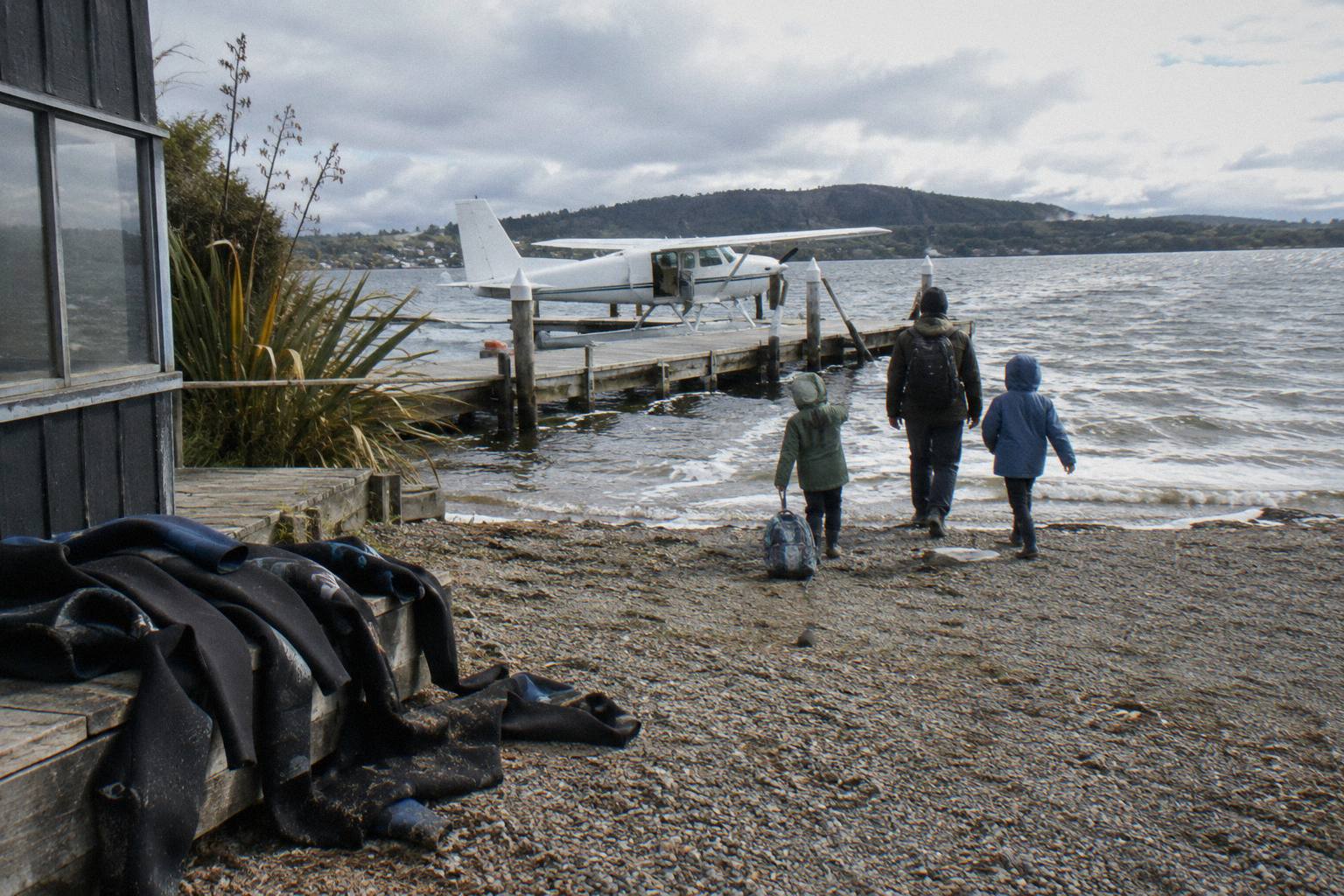
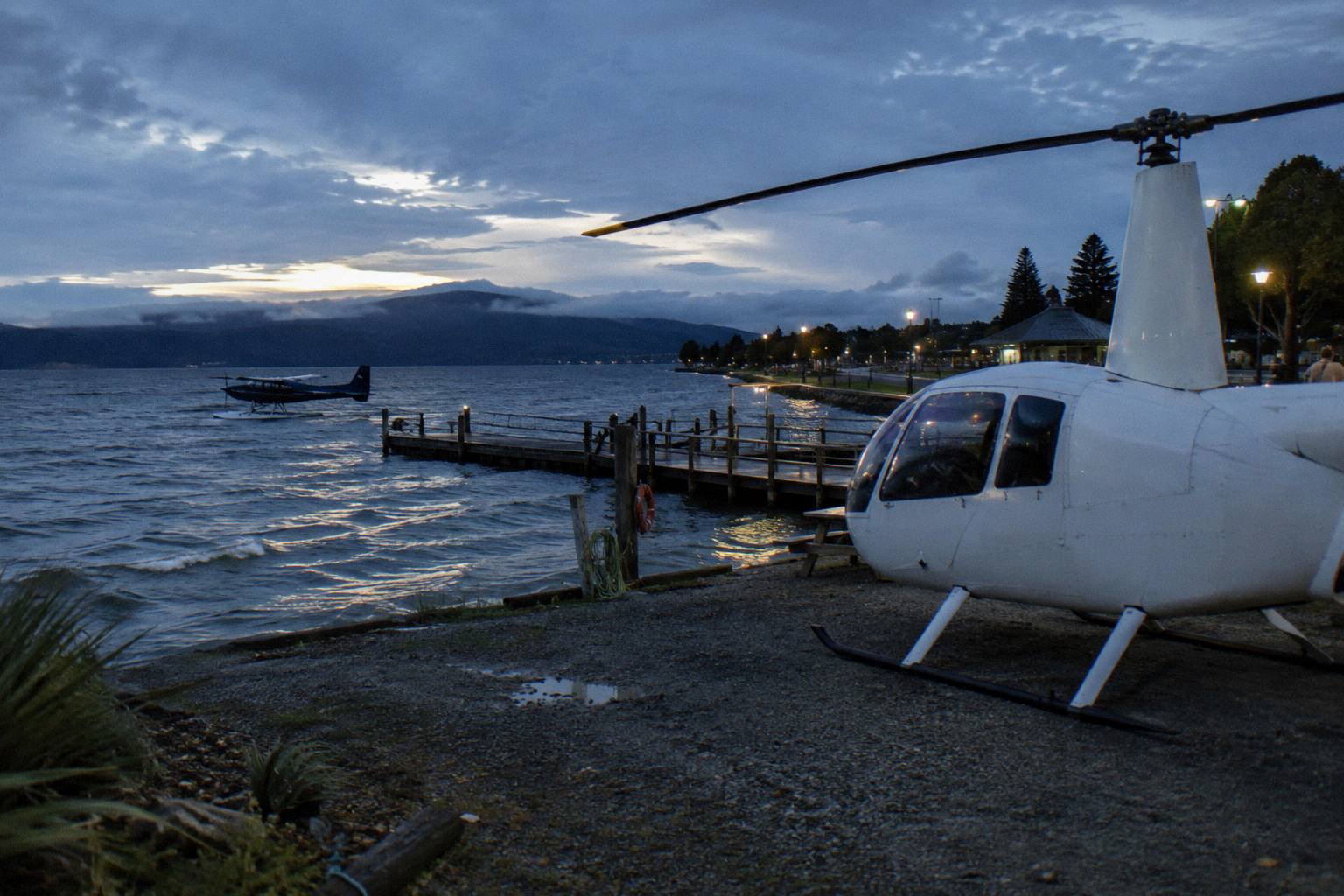
Floatplane flights at Lake Rotorua depart from the pier rather than the lawn. All floatplane departures board at the Lakefront office and take off from the lake via the lakefront pier, while helicopter flights operate from the lawn beside it. The aircraft type you book therefore changes only your walking route by a few metres, not your plan by minutes. The check-in counter, the briefing and the address are shared between both aircraft types. If your itinerary includes an Orakei Korako floatplane landing or a Waimangu flyover, you are a pier passenger; if it is a Tarawera landing or a crater lakes loop by helicopter, you board on the grass.
The floatplane side of the line-up includes some of the longer journeys. The "Floatplane, Orakei Korako Landing" trip runs about two hours total, from NZ$845 per person, and includes a landing on the Waikato River at the Hidden Valley, where the geothermal field is reached by a short ferry ride across Lake Ohakuri, with boats leaving on request rather than to a timetable. The "Floatplane, Waimangu Included" flight, from NZ$1,230 per person, overflies Tarawera and the volcanic valley without a landing. The Orakei Korako side of things is unpacked in the Orakei Korako helicopter and landing guide.
| Flight | Aircraft | Boarding | Landing |
|---|---|---|---|
| Floatplane, Orakei Korako Landing | Floatplane | Pier, Lake Rotorua | Orakei Korako, via the Waikato River |
| Floatplane, Waimangu Included | Floatplane | Pier, Lake Rotorua | No landing (flyover) |
| Helicopter Volcano Landing | Helicopter | Lakefront lawn | Mt Tarawera summit |
The pier take-off has one planning advantage worth naming. Floatplane check-in is 20 minutes rather than 30, and the take-off from the water is itself part of the spectacle, with the climb out around Mokoia Island, described by the operator as a native bird sanctuary. Allow the same total arrival budget as for a helicopter anyway, the few saved minutes are better spent as buffer than banked.
Common Mistakes Travellers Make Getting To A Rotorua Flight
The mistakes that cost flights are predictable: assuming a hotel pickup exists, arriving at departure time instead of check-in time, miscounting the walk from central accommodation, guessing passenger weights, and booking the flight for the final morning of a trip with no room to reschedule. Each one is avoidable with a single decision made at booking: real weights, a realistic arrival budget, and a date early enough in the stay that weather can be waited out. The rest of the arrival is a short, simple journey.
The Geothermal Park Landing flight shows the compounding version of the same mistakes. It is the longest commitment on the helicopter side, three hours total with landings at both the Tarawera summit and Orakei Korako, from NZ$1,490 per person, and it still uses the identical Lakefront check-in and the identical 30-minute window. A late arrival does not just cost 15 minutes of a 15-minute flight here; it costs the centrepiece of a full morning, which is why the fixed overhead deserves respect in proportion to the day, not to the airtime.
A closing note on assumptions. The phrase "rotorua helicopter pickup" turns up in searches constantly, and the answer to it is the one given above: standard flights do not include pickup, and the reason the question keeps being asked is that people expect it from other Rotorua experiences. Rotorua Helicopter Tours exists to answer exactly the questions the itineraries raise, and the arrival question is the one with the least wiggle room: one address, two check-in windows, and a walk most travellers can do in ten minutes. Amounts on the line-up are in New Zealand dollars throughout.
Common Questions About Getting To Your Flight
Is There Hotel Pickup For Rotorua Helicopter Flights?
No. Hotel pickup is not part of standard flights. The operator offers direct pick-ups only for bespoke charters. All standard flights meet at the Volcanic Air base, 1 Lakefront Drive, Rotorua 3010.
How Early Do I Need To Arrive For A Helicopter Flight In Rotorua?
Check in 30 minutes before a helicopter departure and 20 minutes before a floatplane departure. Check-in includes a full safety briefing, and passengers are weighed on arrival, so the window is a firm requirement rather than a suggestion.
Can I Walk To The Lakefront From Central Rotorua?
Yes, for most central accommodation. The Lakefront base is under 1 km from the Rotorua town centre, and the route runs through the lakefront reserve. Allow a comfortable ten minutes or so plus buffer for finding the office.
Where Do Floatplanes Take Off From In Rotorua?
From Lake Rotorua itself. Floatplane passengers check in at the same Lakefront office and board at the lakefront pier, where the aircraft take off from the water. Helicopters use the lawn beside the same base.
What Happens If I Am Late For Check-In?
The check-in window exists for the safety briefing and weighing, and flights board from it. A late arrival risks missing the briefing and the flight, so build walking or transfer time on top of the 30 or 20 minute window, not instead of it.
Do I Need My Exact Weight When Booking A Rotorua Flight?
Yes. Individual weights are requested at booking, and everyone is weighed at check-in so the aircraft stays within balance limits. A significant deviation from a declared weight can lead to a rescheduled flight, a surcharge or a cancelled booking at the operator's sole discretion.