Is It Safe To Land A Helicopter On A Volcano Like Mount Tarawera?
How Tarawera summit landings work, who decides whether they happen, what CAA certification covers, and why volcanic activity can cancel a flight.
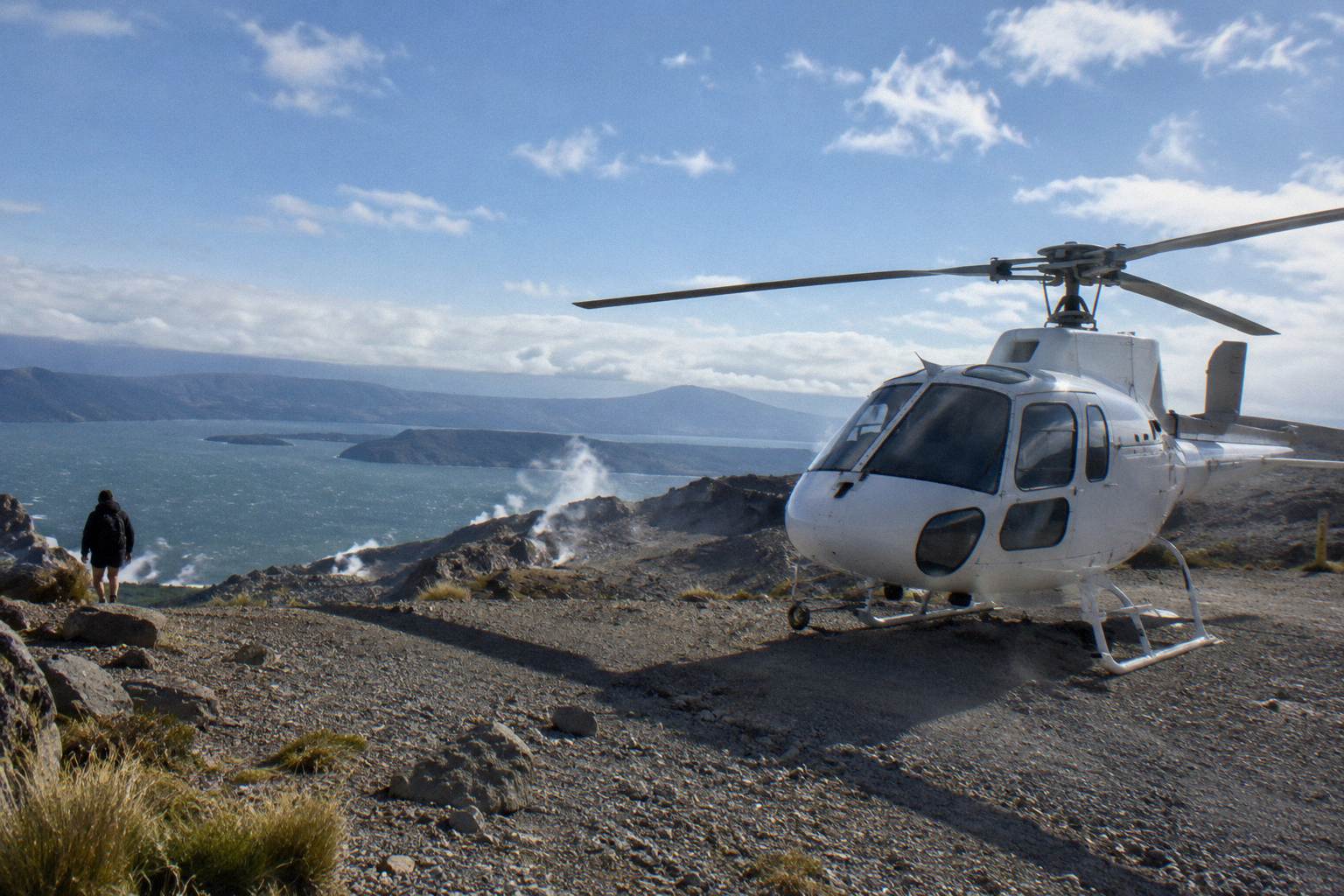
Volcano landings are among the most requested flights in Rotorua, and they are also the ones surrounded by the most questions. The short version: the flights are run by a certified operator under national aviation rules, but the landing element is treated as conditional from the moment you book. Weather, volcanic activity and the aircraft's weight and balance all have a say, and the pilot has the final one.
In short: Yes, within a regulated system. Volcanic Air describes itself as a Civil Aviation Authority certified New Zealand air operator, flying in the region since 1992, and New Zealand's Civil Aviation Rule Part 135 sets the general rules for air operations using helicopters and small aeroplanes. But the operator's own terms state that excursion landings are undertaken at your own risk and at the pilot's sole discretion, so a landing is a planned part of the flight rather than a promised one.
More detail on the broader category sits in the Rotorua helicopter ride overview, and the landing-specific mechanics are covered in the Mount Tarawera helicopter landing guide.
| Quick Facts | Detail |
|---|---|
| Operator | Volcanic Air, based at 1 Lakefront Drive, Rotorua |
| Operator wording | CAA-certified NZ air operator |
| Landing decision | Pilot's sole discretion, at your own risk, per operator terms |
| Cancellation triggers | Weather, volcanic activity, passenger loading |
| Tarawera summit height | 1,111 m, per the GNS fact sheet |
| Whakaari landings | Suspended; flyover flights only |
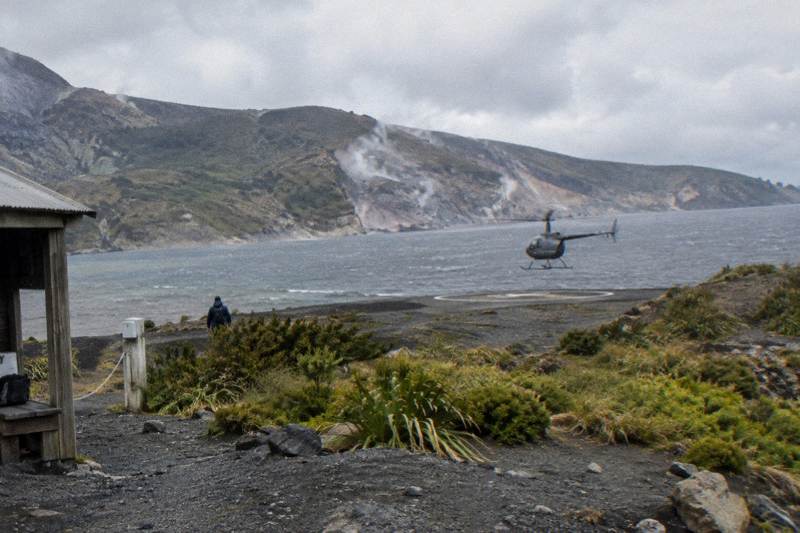
Yes, landing a helicopter on a volcano like Mount Tarawera can be safe, but only under strict conditions. Operators rely on multiple layers of protection, including monitored volcanic activity, regulated flight procedures, and experienced pilots. Because the volcano is not currently erupting, landings are permitted on designated surfaces, though conditions can change and flights may be cancelled when volcanic or weather risks rise. First, the operator holds certification from the Civil Aviation Authority and describes independent assessment through a quality assurance program. Second, the flight itself, take-off, cruise, approach and landing, follows the same operational rules as any other commercial helicopter flight in New Zealand. Third, the volcano landing is added on top with an explicit condition attached: the pilot alone decides whether it happens, and the operator's terms place the undertaking at your own risk. Nothing in that structure promises a landing, and nothing about it hides the risk either.
The aircraft side of the question is the least mysterious part. A helicopter landing on a rocky summit ridge is aerodynamically the same manoeuvre as landing anywhere else: the pilot reads the wind, selects a touch-down point, and sets the aircraft down within its performance limits. What changes on a volcano is the environment. Volcanic terrain is uneven, often loose underfoot, and, on Tarawera, high enough that weather can move in quickly. GNS science places Tarawera inside the Okataina volcanic centre, and the mountain's surface is the scar of the night of 10 June 1886, when a 17 km rift, in GNS's description, opened across the mountain top, through Lake Rotomahana and into the area that later became the Waimangu Valley.
That history matters for how the flights are run today. The craters passengers walk beside on a summit landing are not decoration; they are the physical evidence of an eruption that killed more than 100 people in nearby villages and buried Te Wairoa, the settlement now known as the Buried Village. An operator flying guests onto that landscape treats it as an active volcanic environment, not a static viewpoint, which is exactly why the terms reserve the right to vary or cancel landings when volcanic activity changes.
The three flights above cover the realistic ways to engage with the volcano. The Mt Tarawera Helicopter Tour with Volcano Landing, rated 4.9 from 43 reviews, is the classic landing attempt. The Helicopter Landing, Guided Summit Walk, from NZ$675 per person, adds a longer guided component on the summit, and all amounts on the page are New Zealand dollars. The Scenic Floatplane, Tarawera And Waimangu, from NZ$395 per person, stays in the air entirely, which some readers decide is the better fit once they read how conditional the landing is.
Who Actually Decides Whether The Landing Happens?
The pilot makes the call on the day. Volcanic Air's published wording on its Tarawera landing flight says that tour duration, flight times and inclusions may vary due to weather conditions, volcanic activity and passenger loadings, and that excursion landings are undertaken at your own risk and such landings are at your pilot's sole discretion. That clause is not fine print reserved for disputes. It is the operating reality of the flight, and it means the same route can include a summit landing on Tuesday and a flyover only on Wednesday, with the difference made by wind, cloud or ground conditions nobody can control.
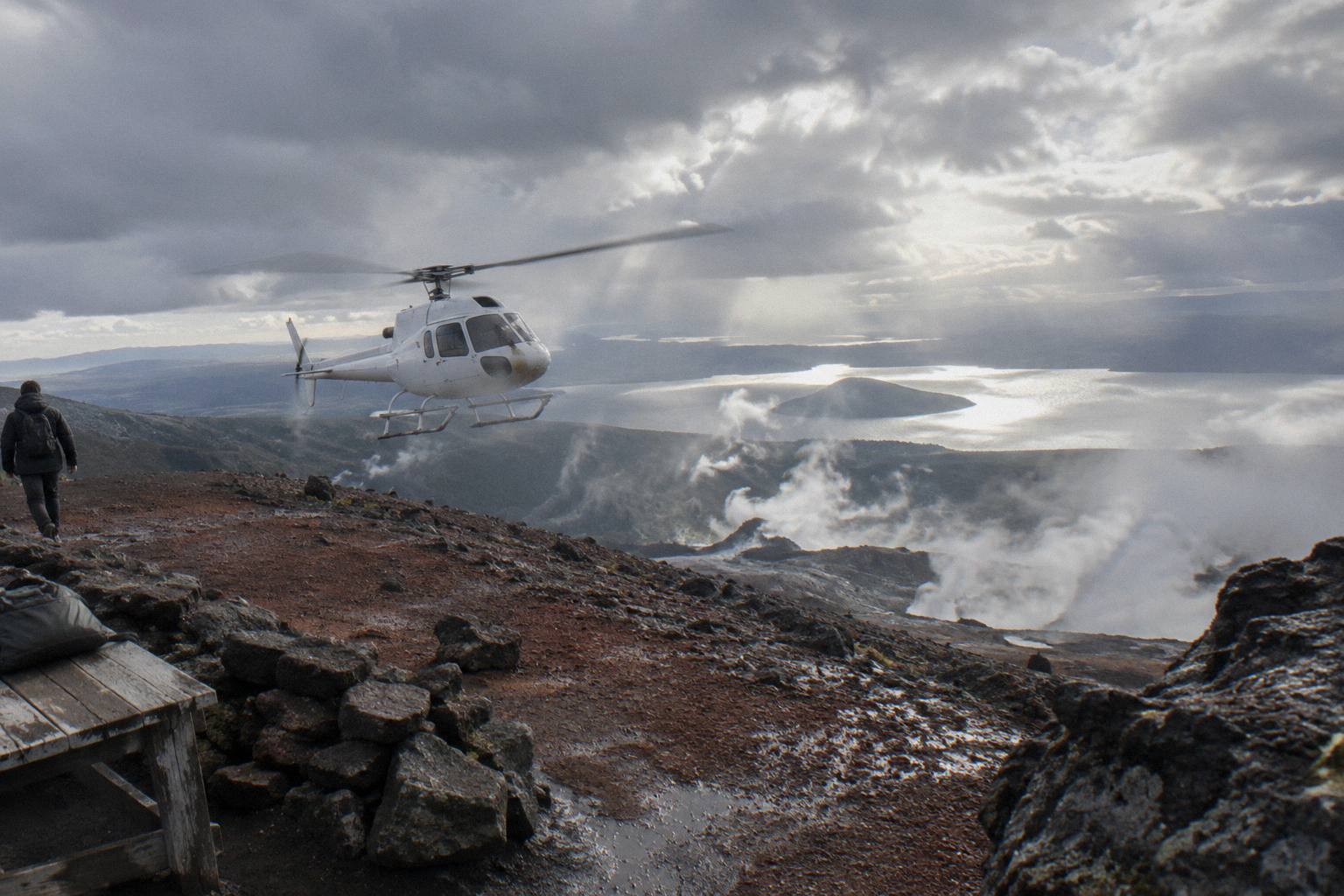
Understanding why the clause exists helps set expectations correctly. A commercial pilot holds legal responsibility for the safety of the flight, and that responsibility cannot be signed away by a tour description or a sales page. If the wind across the summit ridge is outside limits, if cloud has settled on the craters, or if the volcanic hazard picture has changed, the pilot's obligation is to the aircraft and its passengers first. The clause quoted above simply makes the commercial promise match the legal one.
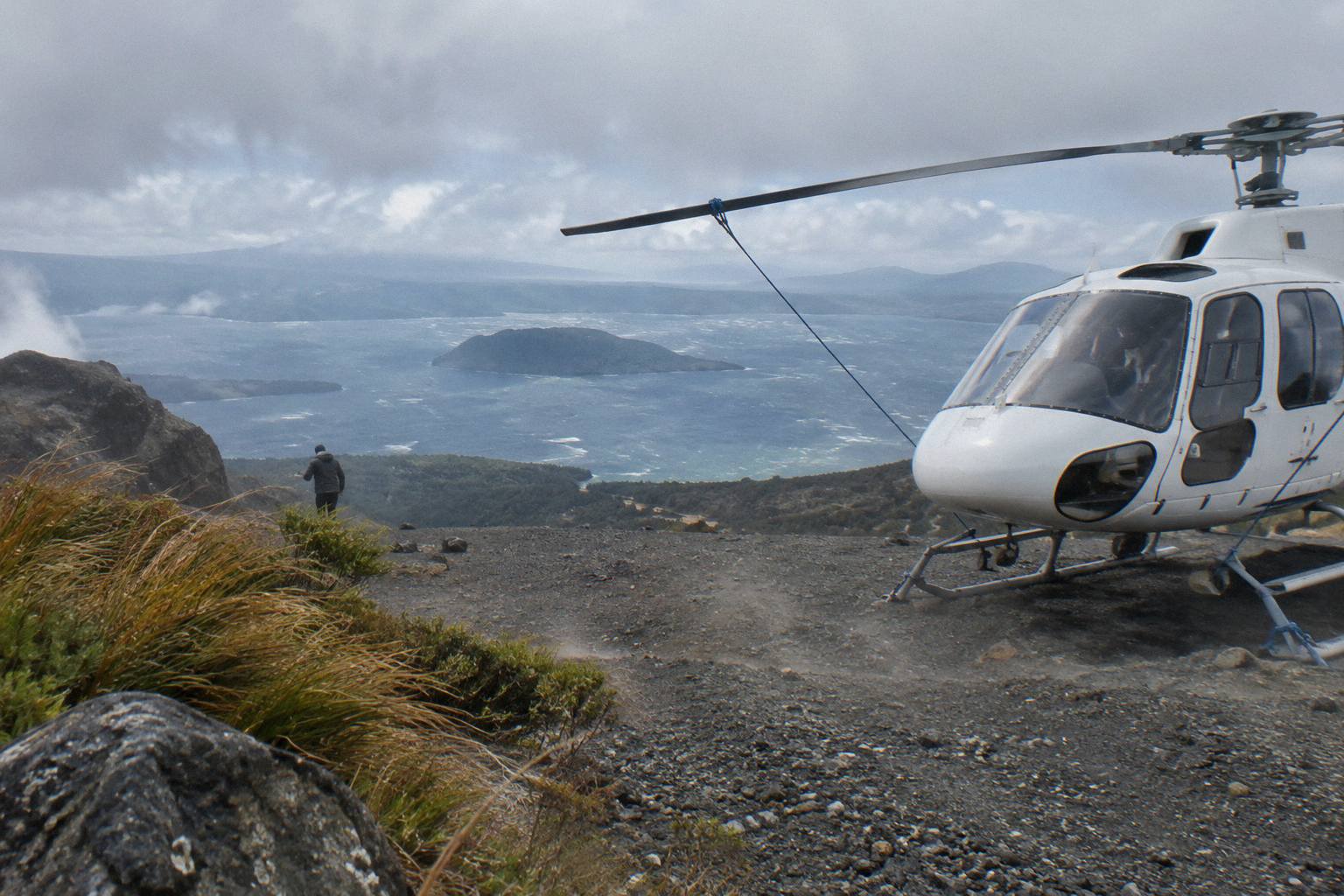
The terms also spell out what happens when the operator cancels before the flight commences for circumstances beyond its control, including weather and volcanic activity: a full refund. The operator's FAQ says the same in plainer language, that if a flight cannot go ahead due to weather, the team will work with passengers to reschedule or provide a full refund. So the downside of a cancelled landing is disappointment, not a financial loss, and every trip on this site's roster carries free cancellation up to 24 hours in advance on its booking terms.
The featured flight for anyone weighing this question is the Mt Tarawera Helicopter Tour with Volcano Landing, and you can read more in the Tarawera volcano landing guide.
What Does CAA Certification Actually Cover?
CAA certification covers the aircraft and its operation: airworthiness, pilot licensing, maintenance standards, and compliance with aviation regulations. It does not cover the volcanic conditions themselves, and it cannot guarantee that flying near an active volcano is free of risk, so passengers should still weigh the operational safeguards against the environmental hazards involved. Civil Aviation Rule Part 135 is titled "Air operations: helicopters and small aeroplanes", and the rules refer to the holder of an air operator certificate as the party authorised to run these flights. Certification means the operator's aircraft, maintenance, pilot qualifications and operational procedures have been assessed against those rules. It does not mean the regulator has certified a patch of crater as a permanent landing pad, and it does not transfer the landing decision away from the pilot.
Volcanic Air describes itself on its own pages as approved by the New Zealand Civil Aviation Authority and independently assessed via a quality assurance program, alongside a Qualmark Gold tourism rating. The company has been flying in the region since 1992, which in practical terms means more than three decades of operating the same lakefront base at 1 Lakefront Drive, under 1 km from the centre of Rotorua. Those facts describe an established operator, and that is the honest limit of what they claim: no aviation certificate makes a mountain landing automatic, and none is needed to make one safe when conditions are right.
| What The Rules Cover | What Stays With The Pilot |
|---|---|
| Aircraft airworthiness and maintenance | Whether wind is within limits at the summit |
| Pilot licensing and flight reviews | Whether cloud allows a safe approach |
| Operational procedures | Whether the selected landing spot suits the load |
| Passenger weight and balance requirements | Whether volcanic activity has changed the picture |
Readers who want the deeper comparison between aircraft types can follow the helicopter versus floatplane analysis, since the certification frame is the same for both.
How Does Volcanic Activity Cancel A Volcano Landing?
Volcanic activity cancels a volcano landing because it is one of the named cancellation triggers for such tours, and operators treat it as a live risk that is actively monitored rather than assumed away. When monitoring detects concerning activity, the landing is called off to keep passengers safe. Tarawera sits within the Okataina volcanic centre, and the operator's terms list volcanic activity alongside weather as a circumstance beyond its control that can end a flight before it starts, with a full refund. Unlike weather, which a pilot can read off the wind sock, volcanic activity is tracked by scientists: GeoNet publishes monitoring pages for Okataina, the volcanic centre that contains Tarawera, and airlines and operators respond to that science rather than to folklore.
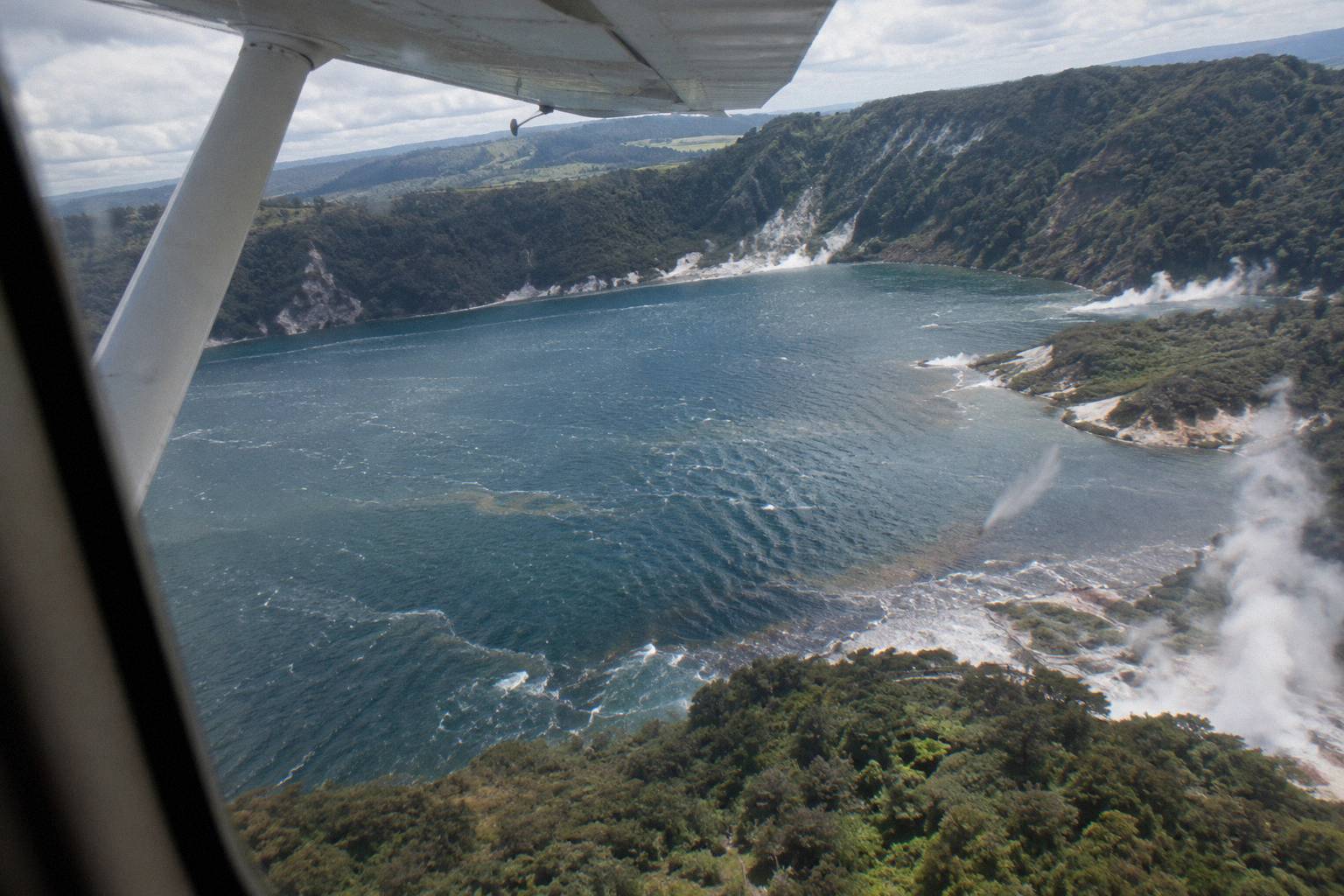
The distinction matters because travellers sometimes assume a dormant-looking mountain is inert. Tarawera's last eruption was 1886, and the landscape it left behind, the rift across the summit, the buried Pink and White Terraces, whose remnants GNS suggests may lie at the bottom of Lake Rotomahana, is studied precisely because the volcanic story is not finished in a geological sense. For a flight operator, the practical question is narrower: is the current monitoring picture consistent with landing people on the summit today? When the answer is no, flights are varied or cancelled, per the terms quoted earlier.
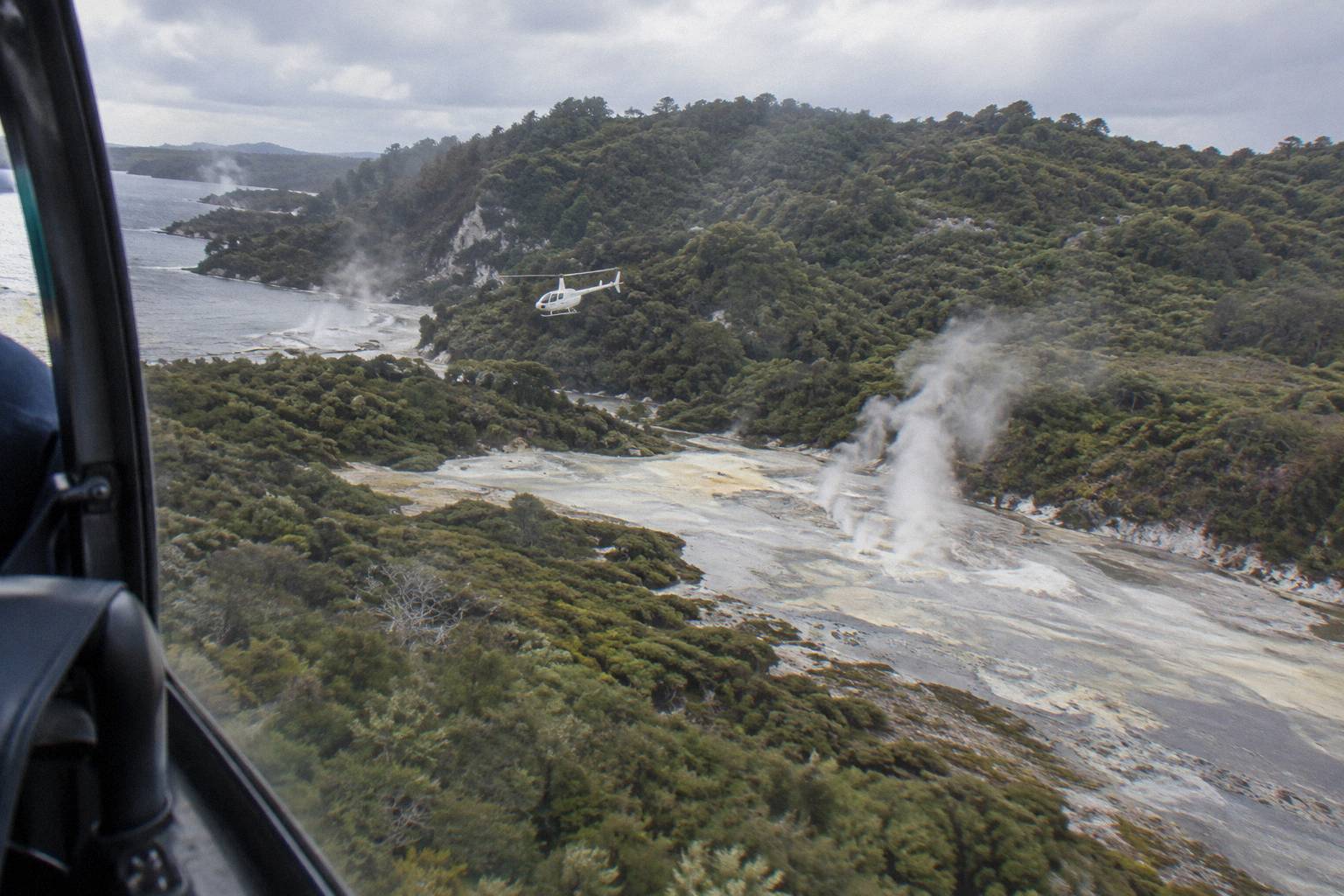
Whakaari, or White Island, is the case study that explains how seriously the industry takes this. After the eruption of 9 December 2019, which the coronial inquiry records as causing the deaths of 22 people and injury to 25 others, landings on the island stopped entirely. Official New Zealand guidance states there are currently no boat tours to the island and no helicopter flights that land on it, and GeoNet maintains the live volcanic status of Whakaari for anyone checking before a flyover flight. Volcanic Air's Whakaari flights are aerial only, and the site's Whakaari flyover or landing guide covers that split in detail.
How Do Weight, Terrain And The Summit Walk Fit Into Safety?
Your declared weight is a safety control, not an upsell, because pilots use it to calculate fuel, balance, and landing approach, while the terrain at the summit shapes both how the helicopter lands and how demanding the walk afterward will be. Accurate weight figures and realistic expectations about the summit terrain are therefore essential parts of planning a safe trip. Volcanic Air's terms require each passenger's weight to be declared at booking, and passengers are weighed on arrival so the aircraft stays within balance limits. The terms state that any deviation from a declared weight may result in a flight being rescheduled, a surcharge applied, or a booking cancelled. Over 110 kg a surcharge may apply, and over 135 kg as weighed requires two adult fares. None of that is about appearance or embarrassment; a helicopter's centre of gravity is a number, and the number has to be right before anything lifts off.
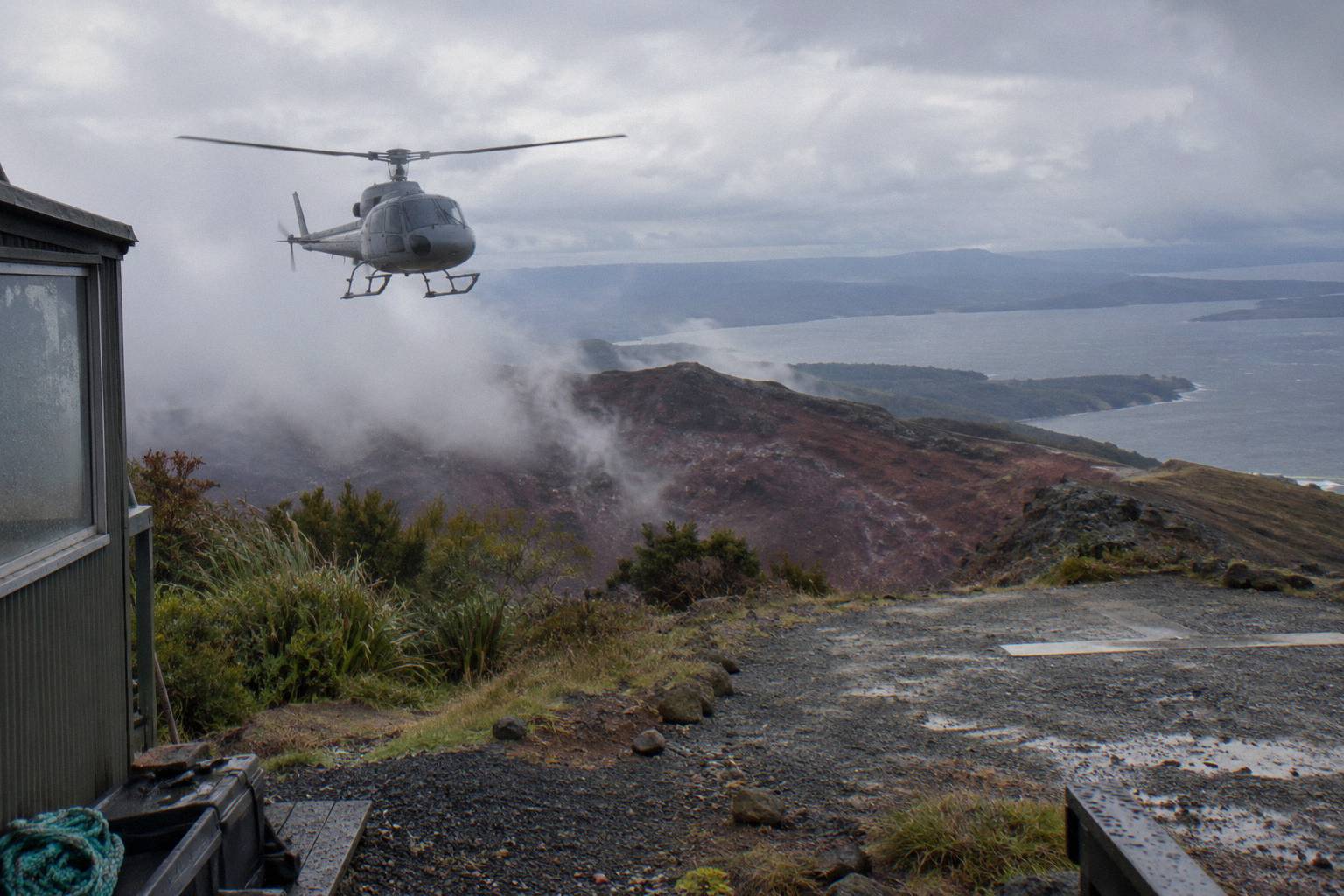
The landing side is paired with ground rules. The operator's Tarawera landing page describes the flight as crossing the 8 km of rift over the mountain, a figure that is the operator's own flight wording and describes the span across the summit rather than the full 17 km rift documented by GNS, and landing on the summit for a 15 minute guided walk. The word guided is doing real work there. Independent summit access is not permitted on Tarawera; access runs through authorised guided tours or approved helicopter landings, with the Ruawahia 2B Trust governing the mountain and reinvesting most tourism concession revenue in conservation alongside Ngati Rangitihi, who hold kaitiakitanga of the maunga.
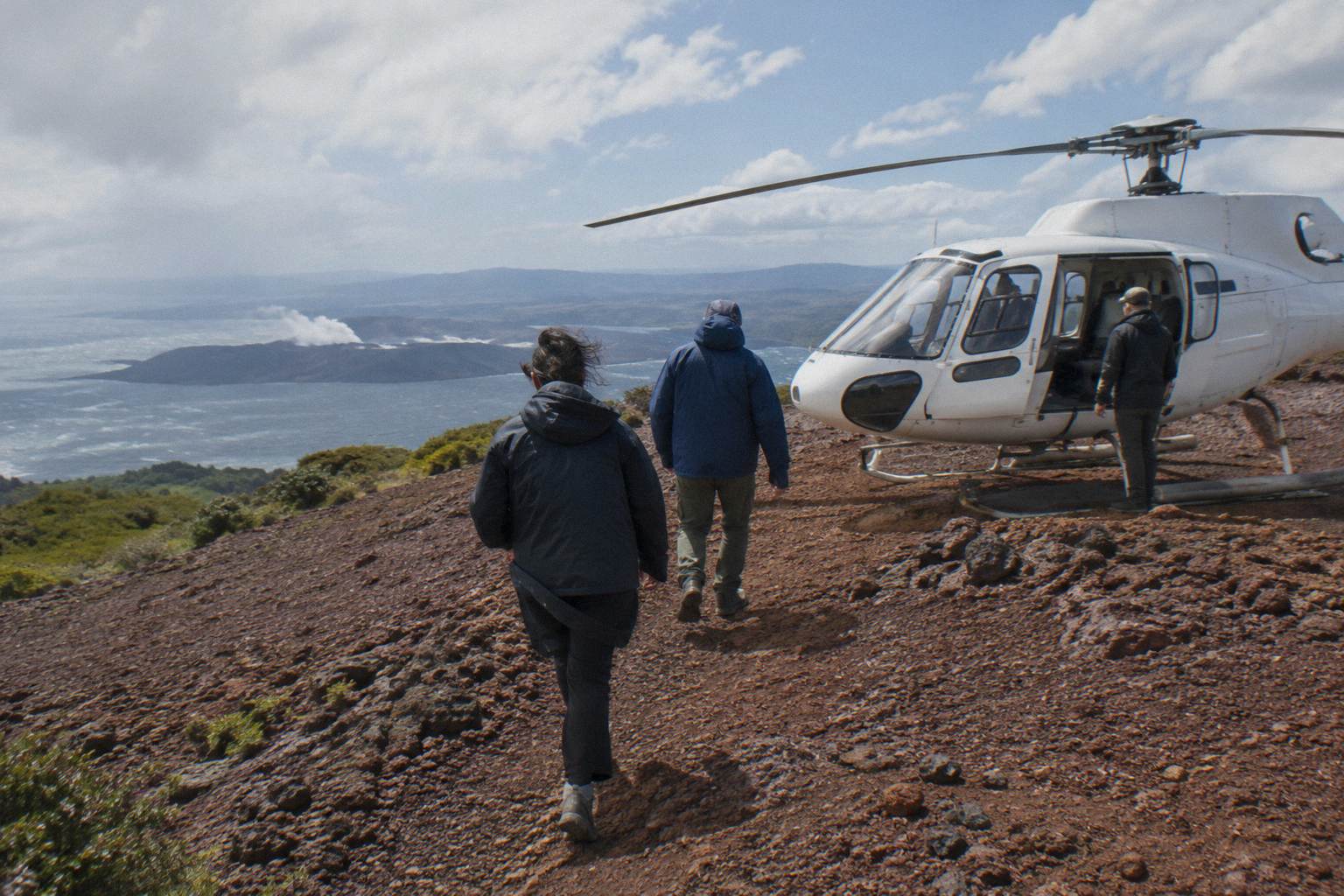
Access to the mountain is not just about the summit walk itself. The operator's FAQ asks guests to bring closed-toe comfortable footwear for flights with landings, plus a camera, sunglasses and a jacket, because the summit surface is loose volcanic rock and the weather at 1,111 m rarely matches the lakefront. The guided element exists partly because the terrain rewards it: uneven ground, exposed ridge lines and fast-changing cloud mean an unguided wander would be a poor idea even if it were allowed.
The longer version of that experience, the Rotorua: Helicopter Flight and Guided Walk on Mt Tarawera, pairs the crossing of lakes Okareka, Okataina and Tarawera with a guided summit walk on the same principle, from NZ$675 per person. If the walk sounds more attractive than the landing itself, the comparison in whether a helicopter beats the hike up Mount Tarawera is worth a read.
What If You Would Rather Not Land At All?
If you prefer to skip the landing entirely, scenic flight tours let you experience every destination purely from the air. One of the most popular options is a flight that never touches down at all, giving you the full experience from takeoff to landing back where you began. The Scenic Floatplane, Tarawera And Waimangu runs a 30 minute flight, 40 minutes door to door, over Mount Tarawera and the Waimangu Volcanic Valley, the geothermal system that formed along the 1886 rift, from NZ$395 per person, rated 4.9 from 28 reviews. It removes the landing question entirely while keeping the two landscapes most people associate with Tarawera's eruption story, and for nervous flyers it is a legitimate answer rather than a compromise.
The floatplane also demonstrates that the safety question is really a family of questions. A no-landing flight still depends on weather, still operates under the same aviation rules, and still checks weights, but it deletes the variables specific to setting down on a volcano: the summit wind, the loose ground, the walk, the discretion clause. Readers who want the full comparison can start with the Rotorua scenic flights overview, and families weighing the practical side have a dedicated piece on children flying helicopter tours in Rotorua.
| Flight | Landing | Suits | From Price |
|---|---|---|---|
| Mt Tarawera Helicopter Tour with Volcano Landing | Mt Tarawera summit, at pilot discretion | The classic volcano landing attempt | 4.9 from 43 reviews |
| Helicopter Landing, Guided Summit Walk | Mt Tarawera summit plus guided walk | Longer time on the mountain | NZ$675 per person |
| Scenic Floatplane, Tarawera And Waimangu | None | Seeing both landscapes without landing | NZ$395 per person |
| Geothermal Park Landing, 3 Hours | Mt Tarawera summit and Orakei Korako | Maximum ground time across two sites | NZ$1,490 per person |
Every option above carries free cancellation up to 24 hours in advance on its booking terms, which matters when the outcome depends on a day's weather.
What Mistakes Do People Make When Booking A Volcano Landing?
The most common mistakes are expecting a guaranteed landing, since weather and volcanic conditions can force cancellations at any time; misdeclaring body weight, which affects aircraft safety limits; planning a tight same-day schedule with no buffer for delays; and dressing for the lakefront rather than the summit, leaving travelers unprepared for cold, wind, and rough terrain at the crater. The landing clause is published before you pay, the weigh-in happens before you board, the weather call is made on the day, and the summit is colder and rougher underfoot than the departure point. Travellers who read the conditions first and leave schedule slack around the flight consistently report fewer surprises, which is a statement about planning, not about any individual experience.
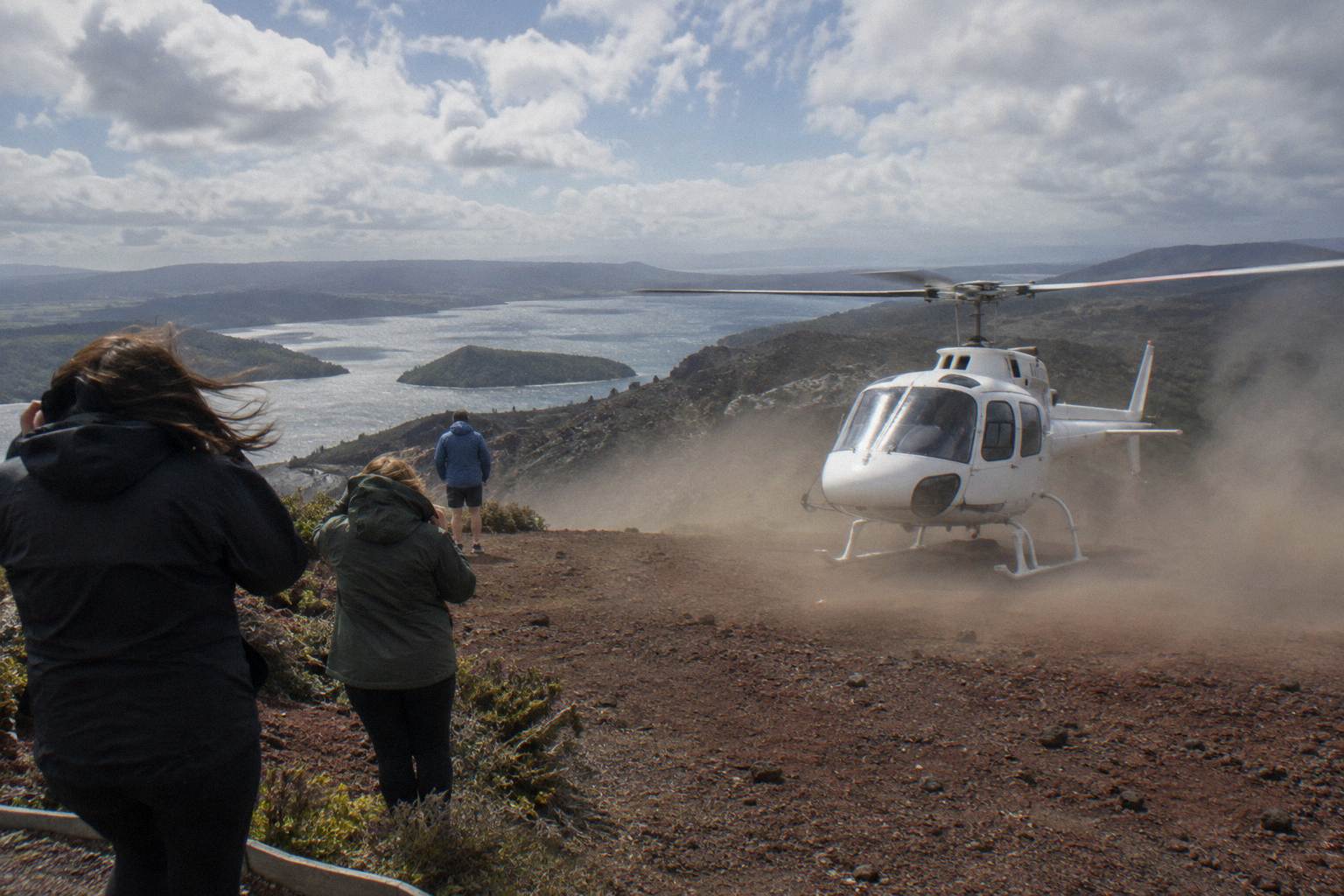
The fix for each mistake is small. Read the operator's terms and conditions before booking rather than after, so the discretion clause and weight rules arrive as information rather than surprise. Declare weight accurately, since the terms allow rescheduling or cancellation on deviation. Book a flight with a spare half-day either side, because a weather reschedule is a routine outcome rather than a failure. Wear closed-toe shoes and bring a jacket, as the FAQ advises for landing flights. And check in early: helicopters ask for check-in 30 minutes before departure, floatplanes 20, at the Lakefront office, where the full safety briefing happens.
| Mistake | What Goes Wrong | Simple Fix |
|---|---|---|
| Expecting a guaranteed landing | Disappointment when the pilot flies over only | Treat the landing as a best-case outcome |
| Misdeclaring weight | Reschedule, surcharge or cancellation on arrival | Give an accurate figure when booking |
| Zero schedule slack | A weather reschedule derails the day | Leave half a day free either side |
| Lakefront clothing | Cold, rough summit conditions | Closed-toe shoes and a jacket |
| Arriving at departure time | Missed safety briefing | Arrive 30 minutes early for helicopters |
One scheduling note belongs here: mornings often give the calmest weather and smoothest flying, though the operator is explicit that there is no hard and fast answer, since it depends on the day. Rotorua's driest and warmest window runs from late spring in October until early autumn in April, which is worth knowing if rescheduling options would be limited. Rotorua's official visitor information covers the seasonal picture.
Common Questions About Volcano Landing Safety
Is It Safe To Land A Helicopter On A Volcano Like Mount Tarawera?
The operator describes itself as CAA-certified, but the landing itself is conditional: the operator's terms state that excursion landings are undertaken at your own risk and at the pilot's sole discretion, and may vary with weather, volcanic activity and passenger loadings.
Can A Tarawera Landing Be Cancelled On The Day?
Yes. Weather, volcanic activity and loading can all change the flight, and if the operator cancels before commencement for circumstances beyond its control the terms provide a full refund. The FAQ says the team will work with passengers to reschedule or refund.
Why Can't Helicopters Land On Whakaari, Or White Island?
Landings are suspended. Official New Zealand guidance states there are currently no boat tours to the island and no helicopter flights that land on it, following the 9 December 2019 eruption. Flights from Rotorua over Whakaari operate as flyovers.
Does The 17 Km Rift Get Flown In One Trip?
GNS describes the 1886 rift as 17 km long, running across the Tarawera summit, through Lake Rotomahana and into the Waimangu area. The operator's own flight wording refers to 8 km of rift over the mountain, which describes the summit span rather than the whole line.
Is The Summit Walk Guided?
Yes. The Tarawera landing flight includes a 15 minute guided walk on the summit, and independent summit access is not permitted; access runs through authorised guided tours or approved helicopter landings under arrangements with Ngati Rangitihi and the Ruawahia 2B Trust.
What Happens If My Weight Declaration Is Wrong?
Passengers are weighed on arrival, and the terms allow a flight to be rescheduled, a surcharge applied or a booking cancelled if the declared weight deviates. Over 110 kg a surcharge may apply, and over 135 kg as weighed requires two adult fares.
The honest summary is that a Tarawera landing sits inside a system built to say no when no is the right answer. Certification covers the aircraft and crew, the pilot holds the landing decision alone, volcanic science is monitored rather than assumed, and a full refund stands behind a cancellation. Readers still weighing the options can compare outcomes further in whether helicopter tours are worth it or browse Rotorua Helicopter Tours for the full range of flights.